Pyrls
- 25.00
- 4.4
- Installs
- 10.00K
- Price
- Free

Screenshots
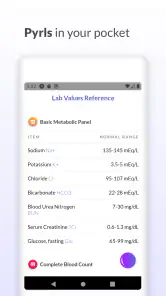
Analysis by Reviewed
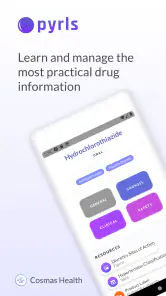
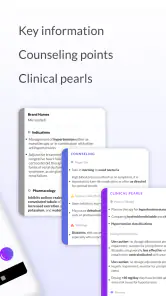
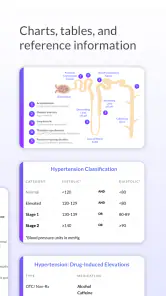
Pyrls is a medical reference app from Cosmas Health, Inc. that I found most useful when I needed to organize practical drug information quickly rather than search through scattered web pages. It is free to install, aimed at everyone, and available for Android devices running Android 7.0 or later. The app has built a modest but encouraging audience, with an average rating of 4.4 from around 93 ratings and more than 10K installs. Those figures suggest a focused tool rather than a mainstream consumer health platform, and that is exactly how I approached it: as a handy reference companion, not as a replacement for a pharmacist, doctor, or urgent medical service.
The central appeal is simple. Instead of treating medicine information as something I only look up during a crisis, Pyrls encourages a more organized way to learn and manage the details that matter in everyday situations. That can be useful for students, caregivers, people managing several prescriptions, and anyone who wants a clearer starting point before asking a healthcare professional a question. My experience also showed that the first few minutes matter. If the app feels confusing or slow to become useful, the problem may be the setup path, the device, or the way the information is being searched rather than the medical content itself.
Where the first-use experience can become frustrating
The most common friction with a specialized medical app is not necessarily a broken feature. It is the gap between what a user expects and what the app is designed to do. Pyrls is better understood as a practical drug-information workspace than as a personal diagnosis tool. Someone opening it while worried about a new symptom may expect an instant answer about what is wrong. That is the wrong job for it. Its value is in helping me understand medication-related information and prepare better questions, not in telling me whether I should self-treat.
I also had to adjust to the fact that drug information is detail-heavy. A medicine may have several names, forms, strengths, and uses, and a search that feels obvious to me may not always be the best way to locate the relevant entry. When I searched with a brand name, I found it more useful to think about the generic name or the exact medicine form if the initial result did not look right. This is a small but important habit: search by the clearest medication identity you have, then verify the result before relying on it.
Another point of friction is the difference between learning information and managing a personal treatment plan. Pyrls can help me review practical drug knowledge, but I would not use a general reference entry as permission to change a dose, stop a prescription, combine medicines, or interpret a serious reaction on my own. The app should sit beside professional advice, not compete with it. If the situation involves breathing trouble, severe swelling, fainting, chest pain, confusion, or another urgent symptom, I would contact emergency services or a qualified professional instead of spending time navigating an app.
Users may also wonder whether the free label means every part of the experience is unlimited. The app is free to download, while in-app purchases are listed from $9.99 to $179.99 per item. That makes it important to pay attention to any purchase screen and understand what is being offered before confirming anything. I would not assume that a free installation means every advanced learning or management element is included without charge. This is not a reason to avoid Pyrls, but it is a reason to move carefully through optional paid areas.
What I would prepare before opening it
For a smoother start, I would gather the exact names of the medicines I want to review, including spelling from the packaging. If I am helping a family member, I would also note the strength and form, such as tablet, liquid, cream, or inhaled product. I would avoid relying on memory when two medicines have similar names. This preparation makes the app more useful and reduces the chance that I will read about a related product instead of the one actually being taken.
More From Our News Desk

Clash of Clans Is Won Between the Battles

Android Auto Makes the Case for Quieter Car Software

MobiOffice: Transforming Mobile Productivity with Seamless Integration

EA SPORTS FC™ Mobile Soccer: Redefining Mobile Sports Gaming

How Microsoft OneDrive Became a Mobile Productivity Giant

How Google Translate Breaks Language Barriers Effortlessly
I would also decide what question I am trying to answer. “What is this medication generally used for?” is a reasonable reference question. “Can I take another dose now?” is a treatment decision that needs the label, a pharmacist, or a prescriber. Separating those two kinds of questions prevents Pyrls from being used beyond its safe role.
Setup checks that prevent avoidable problems
Pyrls runs on Android 7.0 and newer, so the first practical check is the operating system. If the app cannot install or behaves unexpectedly, I would confirm the device version before assuming the application is at fault. I would then check available storage, the device’s connection, and whether the app has finished updating. These are ordinary checks, but they matter more for a reference tool because a partial installation or interrupted update can make a simple search feel unreliable.
The current version is 3.113.0, which means I would keep the installed copy current when an update is available. Updating is not a guarantee that every problem disappears, but it gives the app the best chance of working as intended. I would not repeatedly reinstall it as a first response, especially if I had already entered notes or preferences. A safer order is to close the app, reopen it, check the connection, and then consider an update or reinstall only if the issue continues and I understand what information might need to be restored.
Connection quality is another overlooked factor. A medical reference app may need to retrieve or refresh content, and a weak connection can look like an empty result, a stalled screen, or an incomplete page. When a search appears to fail, I would try again on a stable connection before concluding that the medicine is not covered. I would also avoid testing the app for the first time in the middle of an urgent medication decision. A calm setup at home is a much better way to learn how the interface responds.
Notifications and device settings can also affect the experience, although I would treat them as convenience settings rather than medical safeguards. I would not depend on a phone notification, app reminder, or saved reference to determine whether a dose is due unless that function is clearly presented and I have checked it against the official instructions. The package label and professional guidance remain the dependable sources for personal dosing.
Privacy deserves a practical approach. I would enter only the information needed for the task and avoid placing unnecessary personal medical details into any general reference tool. If I am using the app for someone else, I would ask whether I actually need to record their identity or whether I can simply look up the medicine by name. This keeps the workflow cleaner and reduces the risk of turning a quick reference session into an unnecessarily detailed personal record.
A better way to test the app
Rather than opening Pyrls with a difficult or urgent question, I would test it with one familiar medicine whose label is available. I would compare the result with the packaging and make sure I can distinguish the medicine name from the information I am trying to learn. This gives me a low-pressure way to understand the search process, the amount of detail presented, and whether the text is comfortable to read on my phone.
I would then try a second medicine with a different name and form. That small test can reveal whether I am searching too broadly or overlooking an important distinction. The lesson is not to collect information for its own sake; it is to learn a repeatable method before I need it. For caregivers, this is especially useful because a household may contain several products that look similar in a drawer but serve very different purposes.
One of my more useful habits was to keep a question beside the information I found. For example, if an entry raised a concern about an interaction or a precaution, I would write down the medicine names and ask a pharmacist directly. That turns Pyrls into a preparation tool. It does not make the app responsible for the final answer, and it prevents me from trying to resolve a complicated issue by repeatedly searching the same page.
Recovering a workflow when something goes wrong
If a search does not produce what I expect, I would first simplify the query. I would remove extra words, check spelling, and try the generic medicine name if I started with a brand name. I would also verify that I am not confusing a product name with a symptom. A search for “headache” is a different task from looking up the medicine used for a headache, and mixing those goals can make the results feel less relevant.
If the app opens but a page does not load properly, I would close it completely and reopen it, then test the same action on a reliable connection. If the problem affects only one entry, I would avoid repeatedly tapping the screen and would instead note the medicine name and try again later. If every search is affected, the issue is more likely to involve the device, connection, installation, or a broader service problem. This distinction saves time and helps me describe the problem clearly if I need technical support.
When information appears incomplete, I would not fill the gaps with assumptions. I would compare the medicine name and form with the physical label, then ask a pharmacist or prescriber about anything that affects personal use. A reference app can be excellent for orientation while still being unsuitable for confirming an individualized dose, a substitution, or a change in schedule. That boundary is especially important when a person takes several medicines or has kidney, liver, pregnancy-related, allergy, or other health considerations.
For students, a useful recovery strategy is to separate study notes from real treatment decisions. I would use the app to build familiarity with drug terminology and practical distinctions, but I would not treat an entry as a substitute for course materials, clinical supervision, or an official prescribing reference. For a caregiver, I would keep the workflow even narrower: identify the exact medicine, review the relevant general information, and take unresolved questions to a professional.
Paid content can create another moment of uncertainty. Because purchases range from $9.99 to $179.99 per item, I would read the purchase description carefully and avoid confirming anything simply because a page appears locked or because I want to move quickly. If the free portion already answers my general question, there may be no reason to buy more. If I am considering a purchase for study or repeated use, I would first decide whether the additional material solves a real problem in my routine rather than paying out of curiosity.
When reinstalling is not the answer
Reinstallation is tempting because it feels decisive, but it can be the wrong move when the real problem is an unclear search, a poor connection, or an expectation that the app should provide personal medical advice. I would reinstall only after basic checks and only after considering whether any local settings or saved work could be affected. If the same issue returns immediately, the installation was probably not the main cause.
I would also avoid judging the app from a single difficult medicine search. Drug information is full of naming variations, and a failed first attempt may reflect the input rather than the coverage. Trying the exact name from the package, then checking the form and strength, gives a fairer test. If the information still does not answer the question, that is the point to involve a pharmacist rather than forcing the app to do a job it was not designed to do.
When Pyrls is not the cause of the problem
Some concerns belong to the wider healthcare situation, not to the application. If a medication label is unclear, the safest solution is to contact the dispensing pharmacy. If a person has missed a dose, the correct response depends on the specific medicine and timing, so I would not use a general reference page to improvise. If two medicines may interact, I would provide the complete list to a pharmacist or clinician, including nonprescription products and supplements, rather than checking only one pair in isolation.
The same applies to side effects. Reading about a possible reaction can be useful preparation, but it does not tell me whether a symptom is mild, expected, or dangerous in a particular person. I would use the app to understand terminology and then judge the next step with professional help. In an emergency, the app is not the right first stop.
Pyrls is also not the best choice for someone who wants a full appointment, prescription delivery service, symptom triage system, or a tightly integrated medication schedule. A general health portal may be better for communicating with a clinic, while a pharmacy app may be more convenient for refills. A medication reminder may be preferable for someone whose main need is alarms and adherence tracking. Pyrls makes more sense when the priority is practical drug knowledge and a clearer way to prepare for medication conversations.
Its audience size reinforces that focused identity. With over 10K installs and 25 reviews, it is not a giant health platform with a huge community around it. I see that as both a limitation and a benefit. There may be less social proof than with a famous consumer health brand, but the app can feel less cluttered by unrelated services. The 4.4 average is encouraging, while the relatively small review pool means I would still test it against my own workflow instead of assuming it will suit every phone or every medical routine.
Because the app is rated for everyone, it is approachable for general readers and families. That does not mean every medical topic is suitable for independent interpretation by every age group. I would supervise younger users, explain that the information is educational, and make sure any real medication decision goes through a responsible adult and a healthcare professional.
My practical verdict after using it
I would recommend Pyrls to a friend who regularly needs to understand medicines, wants a more organized reference than random web searches, or is studying drug-related information and needs a convenient starting point. The best results come from using it deliberately: search with the exact medicine name, confirm the form, compare what you read with the label, and turn uncertain points into questions for a pharmacist or doctor.
I would not recommend making it the sole tool for urgent symptoms, individualized dosing, missed-dose decisions, interaction clearance, or diagnosis. Those situations need professional judgment. I would also be cautious about optional purchases and would not assume that paying for additional material automatically makes it authoritative for personal treatment.
For me, the strongest use case is a short preparation session before speaking with a healthcare professional. I can identify unfamiliar terms, gather the medicine names, and arrive with a focused question instead of a vague worry. The most valuable trade-off is that Pyrls offers more structure than casual searching, but it still requires careful interpretation. It rewards users who slow down enough to verify what they are reading.
Cosmas Health, Inc. has positioned this free medical app as a practical learning and management aid, and that purpose comes through clearly. The current version, 3.113.0, is worth trying if your device meets the Android requirement and you want drug information close at hand. My final advice is simple: set it up before you need it, test a familiar medicine, keep your searches precise, and treat every result as a conversation starter rather than a personal prescription. Used that way, Pyrls is a useful companion for informed medication questions, even though it is not a substitute for care from a qualified professional.
Pyrls Frequently Asked Questions
Is Pyrls suitable for learning about medications before I download it?
Pyrls is a medical app from Cosmas Health, Inc. Its focus is practical drug information, and its summary says it can help users learn and manage that information. It may be useful if you want medication-related material in an app, but it should not replace advice from a healthcare professional. The app is free to download, with in-app purchases available.
What is Pyrls and what can I use it for?
Pyrls is an app designed to help users manage and organize their personal information in one place. Depending on the version and available features, it may be useful for saving notes, keeping track of important details, or accessing content more conveniently. Before downloading, check the current store description because the app’s tools, supported platforms, and intended use may change over time.
Is Pyrls free to download and use?
Pyrls is free to download, but it offers in-app purchases ranging from $9.99 to $179.99 per item. The exact price may depend on the purchase you choose and your region. I recommend reviewing the app-store listing carefully before installing, especially the purchase terms and whether the features you want are available without paying.
Does Pyrls require an account or an internet connection?
The requirements depend on how Pyrls handles data and synchronization. Some features may work locally on your device, while others could require an account and an internet connection to save information, synchronize content, or access online services. Check the permissions and sign-in requirements shown during setup. If offline access is important to you, confirm that specific functionality is supported before relying on the app.
Is my personal information safe when using Pyrls?
Because Pyrls may be used to store or manage personal information, privacy should be considered before installation. Review the developer’s privacy policy to learn what data may be collected, why it is processed, whether information is shared with third parties, and how deletion requests are handled. Avoid entering highly sensitive details until you understand the app’s security practices and available protection options.
Pros
- Simple interface makes browsing and saving content easy.
- Useful for discovering fresh ideas through curated visual posts.
- Fast loading keeps navigation smooth on most modern devices.
- Personal collections help organize inspiration by topic.
- Sharing options make it easy to send finds to friends.
Cons
- Some content may feel repetitive after extended browsing.
- Search results can vary in relevance for specific queries.
- Requires an account for access to some features.
- Limited offline functionality when you lose internet access.
- Privacy settings may need review before saving personal content.
- Category
- Medical
- Version
- 3.113.0