PractiScore Competitor
- 59.00
- 4.5
- Installs
- 10.00K
- Price
- $9.99

Screenshots
Analysis by Reviewed
When an app deals with match results, I care about more than whether the screens look tidy: I want to know what it helps me do, what choices I can actually make, and where I should be cautious. PractiScore Competitor is a paid sports app by Eugene Kuleshov, aimed at people following practical-shooting competitions. Its focus makes it more specialized than a general fitness tracker, and that specialization is useful when the match formats it supports are already part of your routine.
Where this specialist app fits
Practical-shooting results are most useful when they help connect a match-day outcome to a training decision. I would approach this app as a place to inspect competition performance, not as a complete coaching system or a general-purpose sports diary. That distinction matters: the value comes from returning to match records and thinking carefully about them, rather than simply collecting numbers.
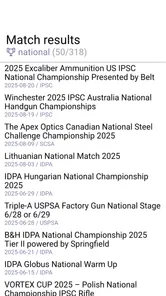
The supported disciplines span different match formats, including IPSC, USPSA, Steel Challenge, IDPA, ICORE, NRA events and 3Gun. If you compete across more than one of these, it is worth considering whether you actually want one results-focused tool for those activities. If you only need to log practice sessions, equipment changes or personal reflections, a notebook or a training log designed around those details may be a better fit.
Using match results with confidence
First things first, installing the app was a breeze. Available on both Android and iOS, it’s a handy tool designed for shooters looking to track their scores, analyze performance, and improve their skills. As soon as I launched the app, I was greeted with a clean, user-friendly interface that made navigation a walk in the park.
The app is rated for Everyone, and its current version is 2.1.0, with Android support starting at version 5.0. It costs $9.99, so I’d think of it as a purchase for someone who expects to return to match results, rather than a casual download to try once. Its 4.5 average from around 160 ratings, alongside over 10,000 installs, suggests an established audience, though those figures alone can’t tell me whether its workflow suits a particular club or shooter.
Making results useful after match day
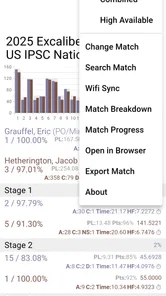
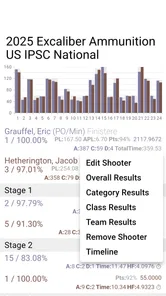
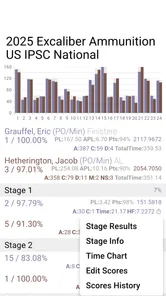
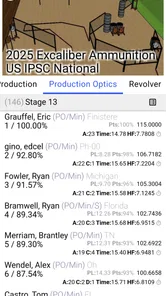
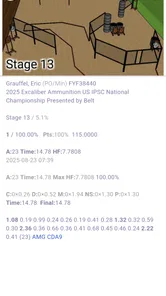
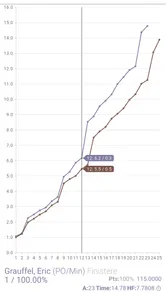
One of the standout features of the app is its ability to offer detailed analytics. Whether you’re shooting IPSC, USPSA, or Steel Challenge, it provides comprehensive insights into your performance. I found the stage breakdowns particularly useful, allowing me to pinpoint where I lost time and where I excelled.
That kind of breakdown is most valuable when I compare like with like. After a match, I’d look at the stages that repeatedly cost me time and note whether the same pattern appears across several results, rather than drawing a big conclusion from one difficult course. A small habit that helps: jot down a quick note about a stage while the match is still fresh, then use the results later to give that memory context. The score can show where a run went differently; it won’t, by itself, explain why.
More From Our News Desk

 Gmail
Gmail in a Busy Inbox: Who Benefits Most?
From first account to crowded workday, Gmail earns its place through dependable search and flexible sorting—but its best fit depends on how much inbox maintenance you can tolerate.

 Prime Video
Switching to Prime Video: What Changes in Your Viewing Routine
Prime Video can make a compelling second home for streaming, but switching means learning a different catalog, rental layer, and route from browsing to playback.

 Universal TV Remote Control
 Works Best as a Reliable Backup
A phone remote earns its place through quick setup and reliable habits. Here is how to get more from Universal TV Remote Control—and where its limits show.

 Weather - By Xiaomi
Weather by Xiaomi Review: Clear at a Glance, Less Clear Up Close
Xiaomi’s weather app makes everyday forecasts quick to scan, but its calm surface can leave useful details and recovery paths harder to find than they should be.

 X
X Under Pressure: Can It Recover When Posting Goes Wrong?
A resilience-focused review of X, examining setup, mistaken posts, interruptions, weak connections, and the gaps that matter when recovery needs to be dependable.

 Clash of Clans
 Is Won Between the Battles
Its raids are quick; its community is a long-term project of coordination, teaching, rivalry, and shared responsibility—with all the friction that entails.
Latest News



Another feature that I found incredibly useful is the app’s offline capabilities. You can enter your scores and analyze them even in areas with no internet connection. This is a lifesaver during competitions held in remote locations where Wi-Fi is as rare as hen's teeth!
Offline access also suits a practical post-stage routine: I can review what is available without relying on a connection at the range, then handle any sharing or syncing when conditions allow. I’d still keep the match information I need close at hand and check that the results I’m reviewing are the intended ones before making decisions based on them. For a competitor, the useful trade-off is clear: local access can make a weak signal less disruptive, but it doesn’t remove the need to pay attention to how results are entered and matched.
Trust, sharing, and the limits of what I can judge
It doesn't just stop at being a score tracker. It also connects you with a community of shooters. You can share results, compare scores, and engage with fellow competitors. That social side may be welcome if match comparisons motivate you, but it is not essential to the results-review use case.
Sharing is also the point where I’d slow down and make a deliberate choice. Match results can matter to a shooter’s reputation and training plans, so I’d review what I’m about to share and who will see it before sending it beyond my own use. The app’s social angle may be a plus for someone who enjoys comparing performances, but it may feel unnecessary to a competitor who only wants a private record. If that describes you, the main value is the results and analysis, not the community layer.
I’m careful not to treat a clean interface or a long-running audience as proof of a particular privacy practice. I would check the permissions shown by my device and any choices presented in the app, and grant only what makes sense for the tasks I plan to use. If I’m deciding whether to keep sensitive match information in any app, I also want to understand the account and sharing controls available to me before relying on it. That cautious approach matters more than assuming anything about data handling that I can’t see.
Practical choices before relying on it
For someone comparing options, the main alternative is often not another app but a different habit. Paper records can be easy to keep private and flexible enough for notes about a stage, conditions or practice goals, but they take more effort to compare over time. A broad sports tracker may suit someone who wants activity records across several kinds of exercise, yet it is less directly centered on match results. This app makes the most sense when competition scoring is the thing you want to revisit.
I would also separate the match’s official result from my own interpretation of it. A result can help me identify a stage worth reviewing, but I would not treat one poor placement or one strong run as a complete measure of ability. For useful comparisons, I’d choose events and divisions that make sense to compare, then pair the figures with brief notes about what I remember. That small discipline can prevent the app’s analytics from becoming a source of misleading certainty.
A club workflow is another practical consideration. If the people organizing your matches already use PractiScore tools, the connection may make it easier to get relevant results into your review routine. If they do not, I would first ask how the club publishes results and whether those records work with the way I plan to use the app. That question is more useful than buying it on the assumption that every club’s setup will match mine.
Who will get the most from it?
The app is not just about tracking scores; it’s about improving your game. I appreciated the tips and tricks section that offers advice from seasoned shooters. It’s like having a coach in your pocket, ready to offer guidance whenever you need it.
For a realistic use case, imagine finishing a weekend match, then reviewing the stage results on the way home or during the next practice session. I’d use the breakdown to choose one area to work on, rather than trying to fix every weak stage at once. A regular competitor who shoots the supported disciplines can make that loop—compete, review, practise—part of a routine. A newcomer who has not yet settled on a discipline, or someone looking for general exercise tracking, is less likely to get enough value from a tool built around match performance.
There is also a useful difference between checking results immediately and studying them later. At the range, I might only want to confirm that the relevant match information is available; in a calmer setting, I can compare stages and decide what to practise. If the app becomes part of that second, reflective step, it can complement hands-on coaching and deliberate practice. It should not replace either: results identify questions, while practice and coaching help answer them.
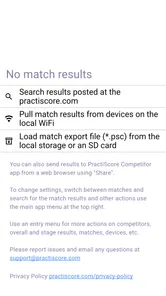
Moreover, its ability to sync with other PractiScore apps means your club can upload match results, making it easier for competitors to keep track of multiple matches without a hitch.
That connection can be especially handy when a club already uses other PractiScore tools to handle match results. Before depending on a particular workflow, I’d check that the club’s process lines up with the app and that the results I want are available to me. Compared with a paper notebook, it offers a more structured way to revisit recorded performances; compared with a broad sports app, its appeal is its focus on shooting matches. But if your club uses another system, or you simply prefer writing notes by hand, the extra purchase may not solve a problem you actually have.
What to check before making it part of your routine
Before paying, I’d ask myself how often I review match performance and whether stage-level analysis would change what I do at practice. If I compete regularly and already have results available through a compatible club process, the case is straightforward. If I have only taken part in one event or mainly want to record personal observations, I would try a simpler method first and see whether I miss structured comparisons.
On privacy and user control, I would keep the decision practical rather than guessing. Check the permissions your device presents, inspect any account or sharing choices you encounter, and decide whether those choices fit your intended use. I would be especially deliberate before sharing results outside my own review, and I would avoid treating an offline workflow as a guarantee about every aspect of information handling. The useful standard is to make choices based on what is visibly available to you.
Another question is whether the app is suitable for someone who is just starting out. It can be relevant if a beginner is already participating in supported matches and wants to learn from recorded results. But a newcomer who needs rules instruction, a structured training plan or broad equipment notes should not expect a match-results app to cover all those needs. I’d pair it with instruction and keep a separate training journal if those are important parts of my routine.
A measured recommendation
In a nutshell, it is a focused option for people serious about competitive shooting. It is intuitive, feature-rich, and connects you with a community that shares your interest. Whether you’re a seasoned competitor or a novice shooter, it can be a useful companion when your goal is to review match performance. I would not call it essential for every shooter, though: its value depends on whether its supported disciplines and results workflow match your habits.
My recommendation is more specific: I’d consider it if I regularly follow match results in the supported disciplines, want to review performance by stage, and will use the connection with PractiScore match workflows. I’d skip it if I rarely compete, mainly need a general training log, or don’t want the social or syncing aspects. Its strongest case is as a focused companion for reviewing competition performance; its weaker case is as an all-purpose shooting journal. That distinction makes the paid price easier to judge against your actual habits.
Ultimately, I would buy it for a clear recurring task, not simply because I shoot. If I can name the matches I want to review, the patterns I hope to spot and the practice decisions those observations could inform, the price is easier to justify. If I cannot, I would wait until match review becomes a regular need. That cautious approach lets the app’s specialization work in its favor without expecting it to do more than a results companion should.
PractiScore Competitor Frequently Asked Questions
What devices and operating systems can run PractiScore Competitor?
PractiScore Competitor is available for Android, with support for devices running Android 5.0 or later. Before downloading, check your device’s operating system version to make sure it meets that requirement. The app is intended for competitive shooting, so it may be most useful on a phone or tablet you can conveniently access when reviewing match information.
Who makes PractiScore Competitor, and what is its age rating?
PractiScore Competitor is developed by Eugene Kuleshov and is rated Everyone. Its sports-focused purpose is reflected in the kinds of competition results it handles, including matches for IPSC, USPSA, Steel Challenge, IDPA, ICORE, NRA, 3Gun, and other disciplines. That makes it relevant to a broad range of competitive shooting participants, while the age rating indicates its general audience classification.
What is PractiScore Competitor and what features does it offer?
PractiScore Competitor is a comprehensive app designed for competitive shooters to track and analyze their performance in various shooting sports. It offers features such as match management, detailed scoring, and performance statistics. Users can input scores, view match results, and analyze shooting patterns, making it a valuable tool for improving shooting skills and preparing for competitions.
Is PractiScore Competitor free to use, or are there any costs involved?
PractiScore Competitor costs $9.99 to download. Consider that purchase price before installing, particularly if you are comparing it with free sports apps. Its purpose is to help competitive shooters follow match results, so whether the price feels worthwhile will depend on how often you participate in events and how useful its scoring and performance tools are to you.
How user-friendly is PractiScore Competitor for beginners?
PractiScore Competitor is designed with user-friendliness in mind, making it suitable for both beginners and experienced shooters. The interface is intuitive, with easy navigation and clear instructions for inputting scores and accessing match data. Beginners will find it straightforward to learn and utilize the app’s features, while experienced users will appreciate the depth of analytical capabilities available.
Pros
- User-friendly interface for quick navigation
- Detailed performance tracking and analysis
- Supports multiple shooting sports
- Offline functionality available
- Regular updates enhance features
Cons
- Limited free features
- many require purchase
- May require registration for full access
- Occasional sync issues reported
- Not optimized for older devices
- In-app purchases can be costly