Potty with Pull-Ups ft. Disney
- 73.00
- 4.1
- Installs
- 100.00K
- Price
- Free

Screenshots

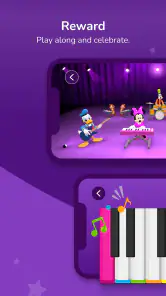
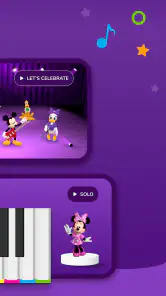

Analysis by Reviewed
Potty training can turn an ordinary morning into a negotiation, especially when a child is tired, distracted, anxious, or simply not ready to stop playing. I spent time with Potty with Pull-Ups ft. Disney to see whether it feels like a genuinely useful companion for families or merely a cheerful layer placed over the same familiar advice. My impression is that it works best as a shared routine: an adult sets the tone, the child gets a playful reason to participate, and progress becomes easier to talk about without making every bathroom visit feel like a test.
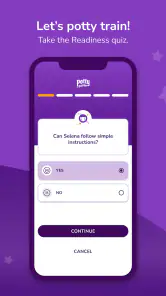
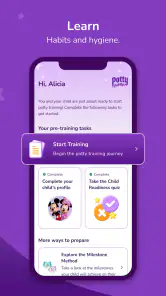
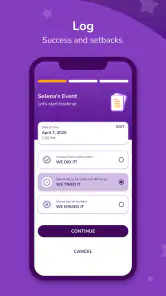
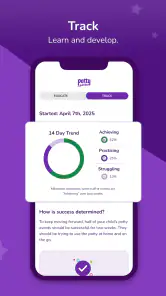
This is a free education app from Kimberly-Clark Corporation, aimed at Everyone. Its central idea is straightforward: help families train, keep track of progress, and offer rewards through a Disney-themed Pull-Ups experience. The app has reached over 100 thousand installs and holds a 4.1 average from around 700 ratings, which suggests that many families find it useful while still leaving room for mixed experiences. I would not treat it as a complete potty-training method, but I do see value in using it as a visual and motivational aid.
How the experience works for different children and family routines
Readable screens and a navigation style children can understand
The strongest part of the design is its attempt to make potty training feel concrete. Young children often understand a picture, character, or reward more quickly than an explanation about long-term progress. The Disney presentation gives the experience a familiar emotional entry point, while the Pull-Ups identity keeps the purpose clear. In my view, that combination is more approachable than handing a child a plain checklist and expecting them to understand why it matters.
For an adult, the important question is not whether the app looks cheerful, but whether it can be used quickly during a busy routine. Potty training already asks parents to notice timing, accidents, attempts, and changes in confidence. A useful app should not turn that observation into paperwork. I found the best way to use this one was to decide in advance what I wanted to track, then keep entries brief rather than trying to document every small event.
That approach matters for readability too. A child may recognize a character or reward image but still struggle with a screen full of instructions. I would sit beside a child for the first sessions, read the words aloud, and let the child respond through the visual parts of the experience. This is not an app I would hand to a newly training toddler and expect them to navigate independently from the start.
Parents should also remember that a child’s interest in Disney can vary widely. Some children will be drawn in immediately; others may respond better to animals, vehicles, songs, stickers, or a simple family chart. The themed presentation is a helpful doorway, not a guarantee of motivation. If your child does not care about the characters, the tracking and reward structure needs to carry more of the experience.
Motor, sensory, and communication considerations
Potty training involves more than understanding a reward. A child may need to recognize body signals, pause an activity, manage clothing, sit safely, communicate with an adult, and tolerate a bathroom environment that feels noisy, cold, bright, or unfamiliar. An app can support the conversation around those steps, but it cannot replace the physical practice. I see this app as most useful when the adult connects its digital encouragement to one small real-world action.
More From Our News Desk

Clash of Clans Is Won Between the Battles

Android Auto Makes the Case for Quieter Car Software

MobiOffice: Transforming Mobile Productivity with Seamless Integration

EA SPORTS FC™ Mobile Soccer: Redefining Mobile Sports Gaming

How Microsoft OneDrive Became a Mobile Productivity Giant

How Google Translate Breaks Language Barriers Effortlessly
For a child with limited speech, the app may still provide a way to point, choose, or show interest, but I would not assume that every visual interaction covers the child’s communication needs. Some children need picture cards, gestures, a consistent phrase, or a more personalized routine. In that situation, the app can sit alongside those tools rather than becoming the main communication system.
Motor differences deserve the same practical attention. A child who cannot easily tap small controls, hold a device steadily, or reach the toilet without help may enjoy the reward while still needing an adult to operate the app. That is not a failure; it simply changes who the app is for. The child can remain the decision-maker while a parent handles the device.
Sensory preferences can also change the result from one child to another. Bright character imagery may be engaging for one child and distracting for another. A child who becomes highly focused on earning the next reward could feel disappointed when the physical skill takes longer than expected. I recommend presenting the app as encouragement rather than a promise: the goal is learning a routine, not collecting a perfect record.
One useful adjustment is to keep the device away from the toilet itself. Use it before the attempt to explain what is happening, or afterward to mark a success, rather than making screen time part of sitting on the toilet. This reduces the chance that the child starts treating the bathroom as a place for extended device use. It also keeps the adult focused on comfort, posture, hygiene, and reassurance.
Using it at home, outside, and across caregivers
The app makes the most sense when the adults around a child use the same language. A parent might say “try before we leave,” while a grandparent uses a completely different approach and a childcare setting follows another routine. Even without turning the app into a formal care record, it can help a family agree on what counts as progress and how to respond calmly to accidents.
A realistic everyday scenario is a family preparing for a short trip. Before leaving, the parent uses the app as a reminder to talk through the bathroom visit, then gives the child a chance to participate in the reward routine afterward. The app does not solve the unfamiliar toilet, the rushed schedule, or the public-bathroom noise. What it can do is make the conversation predictable, which may lower resistance for a child who benefits from advance notice.
It can also fit a bedtime routine, although I would keep the session short. A quick review of what went well during the day may help a child feel proud without turning nighttime into another performance check. If the child had accidents, I would avoid using the app to emphasize failure. The more useful role is to celebrate attempts, communication, and gradual independence when those are the parts the family has chosen to encourage.
For separated parents or several caregivers, consistency is more important than perfect synchronization. I would agree on a small set of phrases and expectations rather than asking everyone to record every detail. If one adult treats the reward as a bribe and another treats it as praise, the child may become confused about the purpose. The app works better when it supports a shared plan instead of becoming the plan itself.
Where it is stronger than a paper chart, and where it is not
A paper chart has one major advantage: it is visible, flexible, and easy to adapt. A parent can draw a symbol, add a note, or change the reward without learning an interface. For children who enjoy physically placing stickers or who need a completely customized visual schedule, paper may be the better choice. It also avoids the problem of a dead battery, a misplaced phone, or a child asking for the device at unrelated times.
This app has a different strength. It packages the tracking and encouragement into a child-friendly digital setting, which can make the routine feel less like an adult assignment. The Disney theme may give a hesitant child a reason to look, listen, and participate. Compared with general habit trackers, it is more closely shaped around the emotional reality of potty training rather than adult productivity.
Compared with parenting articles or videos, the app is more interactive, but it is also less personal than advice from a pediatric professional who knows the child. I would use it to reinforce a plan, not to diagnose a delay, explain persistent pain, or decide whether a behavior is medically concerning. When a child is distressed, withholding stool, experiencing discomfort, or showing a sudden change, the right next step is adult attention and appropriate professional guidance, not more rewards.
The current version is 1.3.1, and I found the overall concept easier to understand than a complicated training program would be. Still, families should approach any app update with the same practical caution they use elsewhere: check that the child still understands the routine, and do not let a new visual change disrupt a method that was working. The product should remain a tool in the background, not the authority in the bathroom.
Remaining barriers for inclusive use
The biggest barrier is that the app cannot adapt the physical environment. A child may need a step stool, a smaller seat, clothing that is easier to pull down, extra time, or a quieter bathroom. None of those needs disappears because a digital reward is available. In fact, an attractive reward can sometimes make adults move too quickly, assuming motivation will overcome a child’s balance, coordination, anxiety, or sensory difficulty.
There is also a risk of overtracking. Some parents feel reassured by records, while others become tense when the day does not produce the expected pattern. If recording creates pressure, simplify the routine. Mark only the milestones that matter to your family, or use the app for a short period while the child learns the sequence. A tool that makes the adult more anxious is not helping, even if the child likes it.
Device access can be another practical limitation. A family may share one phone, limit screen exposure, or avoid handing a device to a child in the bathroom. That does not make the app unusable, but it means the adult will need to guide the interaction. I would prepare the app before the child arrives, keep the phone clean and away from wet surfaces, and treat the digital part as a brief check-in rather than an always-available activity.
The Everyone age rating makes it suitable in broad terms for family use, but suitability is still personal. A toddler who is not developmentally ready may interpret rewards as pressure. An older child who feels embarrassed about using a babyish theme may reject it even if the tracking idea is helpful. The best choice depends less on the label and more on whether the child feels respected by the presentation.
Families should also decide how to handle rewards before starting. If every successful attempt produces a large celebration, the child may focus on the prize instead of noticing body signals and building independence. I prefer small, predictable acknowledgment and occasional verbal praise for effort, communication, and trying again. The app can support that balance, but the adult has to set it.
My inclusive verdict for families considering the download
I would recommend Potty with Pull-Ups ft. Disney to parents who want a gentle digital companion for a child who responds to familiar characters and simple progress cues. It is especially promising for families that need a shared way to talk about attempts and rewards without building a complicated system from scratch. Being free removes an important barrier, and the education focus keeps the purpose clearer than a general game would.
I would skip it, at least for now, if your child is overwhelmed by screens, dislikes Disney imagery, needs a highly individualized communication system, or becomes distressed by reward-based expectations. I would also choose a paper chart or a professional-led plan when the main challenge is environmental, medical, or developmental rather than motivational. No app should be used to push a child past discomfort.
My most practical recommendation is to test it as a short family routine: introduce it when the child is calm, explain that it is a way to notice progress, and pair it with one concrete bathroom step. Keep the device outside the physical task, let an adult handle navigation when needed, and watch whether the child becomes more confident or more pressured. The best result comes from using the app to support autonomy, not to measure a child against a schedule.
Kimberly-Clark Corporation has made a focused education app rather than a broad parenting platform, and that focus is both its appeal and its boundary. It can make potty training more visible, playful, and easier to discuss, but it cannot replace patience, accessibility adjustments, caregiver consistency, or professional advice when concerns arise. For the right child, it is a useful extra layer; for every other situation, a simpler or more personalized approach may be kinder.
Potty with Pull-Ups ft. Disney Frequently Asked Questions
Who develops Potty with Pull-Ups ft. Disney, and what type of app is it?
Potty with Pull-Ups ft. Disney is an education app developed by Kimberly-Clark Corporation. It focuses on helping families bring a playful, structured element to toilet training, with Disney-themed content and tools for tracking and rewarding progress. Its purpose is to support everyday learning and routines, while parents remain responsible for choosing what works best for their child.
What is Potty with Pull-Ups ft. Disney?
Potty with Pull-Ups ft. Disney is a toilet-training app designed for toddlers and preschoolers. It uses familiar Disney characters, interactive activities, encouragement, and progress-oriented features to make potty training feel more engaging. The app is intended to support parents and children during daily routines rather than replace a parent’s guidance or professional medical advice.
Is Potty with Pull-Ups ft. Disney suitable for every child?
The app is mainly aimed at young children who are beginning or currently working through toilet training. Its Disney-themed rewards and playful presentation may appeal to many toddlers, although children develop at different speeds and may respond differently to digital activities. Parents should use the app as an optional motivational tool and adapt potty-training expectations to their child’s age, comfort, and readiness.
Does the app require an internet connection or in-app purchases?
Requirements can vary depending on the version, device, operating system, and distribution store listing. Some features or media may need an internet connection, while other parts may work after installation. Before downloading, parents should check the current Google Play or App Store description for connectivity requirements, advertising information, subscriptions, and any available in-app purchases.
Is Potty with Pull-Ups ft. Disney safe for children to use?
Because the app is made for young children, parents should review its privacy settings, permissions, advertising policy, and parental controls before allowing independent use. It is also wise to supervise the child, keep the device updated, and download only from an official store. The app can encourage routines, but it should not be used to diagnose or treat toilet-training difficulties.
Pros
- Fun Disney characters make potty training more engaging for children.
- Interactive activities help introduce bathroom routines in a friendly way.
- Pull-Ups branding makes the app familiar to children using training pants.
- Simple controls are suitable for preschool-aged users.
- Can encourage parent-child conversations about potty training.
Cons
- Content may feel repetitive after several uses.
- The app is mainly useful during the potty-training stage.
- Some features may require an internet connection or external resources.
- Disney branding may not appeal to every child or family.
- Progress tracking may be limited compared with dedicated training apps.
- Category
- Education
- Version
- 1.3.1