Pie: Free Events, Cool People
- 31.00
- 4.6
- Installs
- 10.00K
- Price
- Free

Screenshots


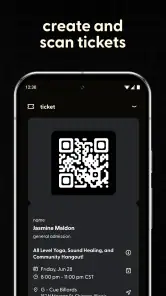

Analysis by Reviewed
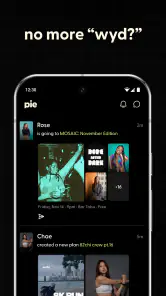
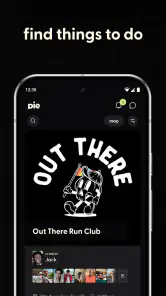
I approached Pie as an events app with a simple promise: help me find places worth going to and people I might actually enjoy meeting there. That focus makes it feel different from a standard calendar, ticketing service, or social network. Instead of treating an event as only a date, time, and location, it puts the surrounding social experience at the center.
That distinction matters because choosing an event is rarely just about the event itself. I also want to know whether it fits my mood, whether I can go alone without feeling awkward, and whether there is a realistic chance of meeting people rather than standing at the edge of a crowd. Pie, developed by pie, is built around that decision. It is free, aimed at teen users and older, and currently available for devices running Android 7.0 or later.
After spending time with it, my main impression is that its value depends less on how many events I can browse and more on whether I use it as a planning tool for getting out of my usual routine. It is most interesting when I treat the app as a bridge between discovering an activity and deciding to show up. If I only want a formal event directory or a reliable ticket wallet, a more specialized service may suit me better.
Pie makes the social side of events the main feature
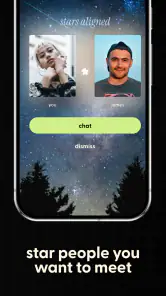
The central capability is the connection between event discovery and meeting people. That sounds straightforward, but it changes the way I evaluate what appears in the app. A listing is not merely something to save for later. I look at it as a possible answer to a more personal question: “Would I enjoy being there, and would I feel comfortable going?”
That makes Pie particularly appealing for casual plans. A concert, workshop, local gathering, or activity can be easy to ignore when I am browsing alone, but the possibility of finding people with similar interests gives the listing more context. I found myself thinking less about collecting events and more about choosing one realistic plan for the week.
The store presents the app with the idea of places to go and people to meet, and that short description is a fair summary of its purpose without explaining why the combination is useful. In my experience, the people side is what gives the app its identity. Many event tools help me locate something happening; Pie is more concerned with making the decision to participate feel social.
There is also a useful psychological effect here. When I use a normal calendar, an event can become another obligation. When I use a ticketing app, the transaction often ends once I have reserved entry. Pie encourages me to think about the experience before and around attendance. That can make a spontaneous plan feel more approachable, especially when I do not already have a group arranged.
The strongest idea in Pie is not simply finding an event; it is lowering the friction between “that sounds interesting” and “I will actually go.” The app cannot replace genuine chemistry or guarantee that a gathering will feel right, but it gives the social question a place in the planning process.
How the experience works in practice
I found it helpful to approach Pie with a specific intention rather than opening it with no plan. For example, I might be looking for something relaxed after work, an activity for a free weekend afternoon, or a place where going alone would not feel unusual. That mindset makes the discovery process more useful because I am judging events by fit, not just by novelty.
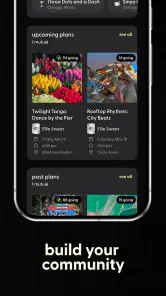
The practical workflow is best understood as a three-step habit. I first browse for something that matches the kind of outing I want. Then I consider the social setting: would I be comfortable arriving without friends, and does the event seem suited to meeting new people? Finally, I decide whether to turn that interest into a concrete plan. This sounds obvious, but making those questions explicit prevents the common problem of saving many ideas and attending none.
One non-obvious advantage is that the app can help me separate an event’s appeal from my hesitation about attending. Sometimes I do want to try an activity, but I am really worried about going alone. In that situation, the social framing is more useful than another paragraph of event details. It encourages me to evaluate whether the app can help me find company or at least make the setting feel less unfamiliar.
I would not use Pie as my only source of logistical certainty. For important plans, I would still verify the final practical details through the organizer or the relevant official channel before leaving home. That is not a criticism of its central concept; it is simply good event-planning discipline. A discovery-focused app and an official event source serve different purposes.
Another useful habit is to decide quickly whether an event is a genuine possibility. If I keep every interesting listing in mind, the app becomes another stream of distractions. I get more from it when I choose one or two promising options, check whether they fit my schedule and comfort level, and then act. Pie works better as a prompt for decisions than as an endless collection of possibilities.
A realistic everyday use case
Imagine I have moved to a new area and have a free Saturday. I could search a general events website, scroll through social media, or ask friends who may not know the local scene. Those alternatives can find activities, but they leave the social problem mostly untouched. I still have to decide whether I want to attend alone and how I might meet anyone there.
With Pie, I would begin by looking for an outing that matches my energy level rather than choosing the most impressive-looking option. A small creative activity or informal gathering may be more useful than a major event if my real goal is conversation. I would then use the people-oriented context to judge whether it seems like a place where introductions could happen naturally.
If I found a suitable option, I would make a simple plan: decide when to leave, identify one reason I am interested, and avoid expecting the event to transform my social life immediately. That last point is important. Pie can make it easier to take the first step, but the outcome still depends on how I participate. I would treat the app as a way to create an opportunity, not as an automatic friendship generator.
This scenario shows where the app feels most practical. It is not necessarily about finding the biggest or most popular event. It is about finding a plausible reason to leave the house and giving myself a better chance of sharing the experience with other people. For someone trying to build a routine in a new city, that can be more valuable than a long list of conventional listings.
Where it differs from familiar alternatives
A traditional calendar is excellent for events I already know about, but it rarely helps with discovery or social confidence. A ticketing platform is usually stronger when I need official booking, payment, venue information, or proof of entry. A general social network may offer event posts, but those are often mixed into a much larger feed and can be difficult to evaluate as actual plans.
Pie occupies a narrower space. Its appeal is the combination of discovering places and considering the people around those experiences. That makes it less of a replacement for ticketing tools and more of a companion to them. I would use Pie to decide what I want to do and where I might fit in, then rely on the appropriate official source when the plan requires final logistics.
It also differs from a private group chat. A chat is useful when I already have friends to invite, while Pie is more relevant when I want to expand beyond my existing circle. The trade-off is that a group chat gives me more certainty about who will attend, whereas an open discovery experience involves more uncertainty. I see that uncertainty as part of the reason to use Pie, but not everyone will enjoy it.
The app’s average rating is 4.6 from around 130 ratings, and it has passed 10 thousand installs. Those figures suggest that it has found a receptive audience, although they should not be treated as proof that every local area will feel equally active. An events app is highly dependent on what is happening near me and whether enough people in that area are using it.
The trade-offs I noticed before recommending it
The biggest limitation is the network effect. Pie can be conceptually strong and still feel less useful if my area has few suitable events or little activity from people I would want to meet. This is not a flaw that can be solved by browsing more carefully. The app’s social value grows with local participation, so my experience may vary substantially from someone in a busier community.
There is also a difference between discovering people and trusting a social situation. Anyone considering meeting new people through an events app should use ordinary judgment: choose public settings, tell someone where they are going, and avoid sharing more personal information than feels appropriate. The app can support a first connection, but it cannot make every interaction safe or compatible.
Another trade-off is that the social angle may be distracting if I already know exactly what I want. If I am attending a specific performance, need a formal registration process, or simply want a clean list of dates, the extra emphasis on meeting people may not add much. In those cases, a venue page, calendar, or ticketing service is likely faster.
I also think users should manage expectations. The app can encourage me to attend, but it cannot guarantee that I will find close friends at the first event. A better measure of success is whether it helps me make more intentional choices and try places I might otherwise overlook. That is a quieter benefit, but it is more realistic than expecting instant social results.
The age rating is Teen, which is worth considering before recommending it to a younger user or a family. I would still explain basic online and in-person safety rather than assuming the rating removes the need for supervision or judgment. The free price makes trying it easy, but “free” does not mean the user should approach social discovery without boundaries.
Small strategies that make the app more useful
My first tip is to search according to the kind of interaction I want, not only the activity itself. If I want conversation, I should favor settings that naturally allow it. If I want to ease back into social plans, I should choose something with a clear focus and a manageable time commitment. This prevents me from selecting an event that looks exciting but does not match my actual comfort level.
Second, I would use Pie to create a repeatable outing habit. Rather than waiting for a perfect event, I would choose one reasonable possibility at regular intervals. The benefit is cumulative: each outing teaches me more about what I enjoy, what kind of crowd suits me, and whether the app is active enough in my area.
Third, I would separate the discovery decision from the attendance decision. I can mark an event as interesting, but I should later make a deliberate choice based on timing, location, energy, and social expectations. This two-stage approach keeps browsing enjoyable without allowing a long list of saved ideas to replace real plans.
A fourth insight is to judge an event by the quality of the possible conversation, not only by its headline appeal. A highly popular event may be difficult for a newcomer to navigate, while a smaller interest-based gathering may offer a more natural opening. Pie’s people-centered approach becomes more valuable when I use it to think about that difference.
Finally, I would keep a backup plan for the first few outings. That might mean knowing how I will get home, deciding how long I want to stay, or choosing a nearby alternative if the atmosphere is not right. Having an exit plan reduces pressure and makes it easier to attend in the first place.
Who is likely to gain the most from Pie?
I think Pie is a strong fit for people who want to be more active socially but do not always have friends available for every plan. It can also help newcomers who are learning a city, students looking beyond their existing circle, and anyone who prefers interest-based introductions over starting a conversation from nothing.
It is especially useful for someone who often says, “I would go if I had someone to go with.” The app addresses that exact hesitation better than a plain event directory. It gives the decision a social context and may make solo attendance feel like a deliberate choice rather than a sign that a plan is missing.
On the other hand, I would not make it my first recommendation for a user who wants comprehensive ticket purchasing, detailed venue logistics, or a private way to coordinate with close friends. Those needs are better served by specialized services. Pie is at its best before the final transaction, when I am still deciding what kind of experience I want and whether I am open to meeting people.
The current version is 5.30.0, and the app supports Android 7.0 and later, so compatibility should be straightforward for many Android users. I would still keep the app updated when possible, particularly with a service whose usefulness depends on current event and community activity. Its free access also lowers the barrier to testing it in my own area without committing money first.
My final view after using it
Pie is a focused events app that puts social discovery ahead of formal event administration. I like that it recognizes a practical truth: people often need more than information before they will go somewhere. They need a reason to choose that place, a sense that they may fit in, and sometimes a path toward meeting others.
Its limitations are just as clear. Local activity can determine whether the experience feels lively or empty, and the app cannot guarantee meaningful connections. It is also not a complete substitute for official event sources when I need confirmed logistics or entry details. Those are important boundaries, but they do not undermine the central idea.
For me, the best way to use it is selectively: browse with a specific social goal, choose realistic events, verify practical details, and treat attendance as the real outcome rather than endless discovery. If that sounds like the kind of help you need, Pie is worth trying. It is free, available for Android 7.0 and later, and its growing audience gives the concept a reasonable starting point. I would recommend Pie to anyone looking for a more human way to decide where to go next, while keeping a conventional event or ticketing app nearby for the final details.
Pros
- Discover local events tailored to your interests and location.
- Useful way to meet people beyond your existing social circle.
- Clean interface makes browsing upcoming activities simple.
- Event details help you decide quickly whether to join.
- Free to download and focused on real-world social experiences.
Cons
- Event availability may be limited outside larger cities.
- Some activities may require separate payment or reservations.
- User activity can vary
- making smaller communities feel quiet.
- Location access may be needed for the app’s core features.
- Event quality and attendance depend on individual organizers.

- Category
- Events
- Version
- 5.30.0