PetOne Vet
- 216.00
- 4.7
- Installs
- 50.00K
- Price
- Free

Screenshots
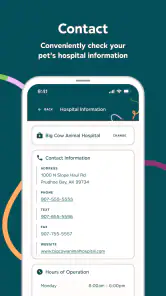
Analysis by Reviewed
I approached PetOne Vet as a practical medical app for pet owners rather than as a replacement for a veterinary clinic. That distinction matters. Its focus is the everyday side of pet parenting: keeping veterinary-related tasks easier to manage, finding the right information at the right moment, and reducing the small bits of friction that can make caring for an animal feel more complicated than it should.
My overall impression is positive, especially for someone who already uses veterinary services connected with National Veterinary Associates. The app is free, aimed at everyone, and available for Android devices running version 7.0 or later. It has reached over fifty thousand installs, with a 4.7 average from around nine hundred ratings, so there is a meaningful base of users behind it rather than just a freshly published experiment.
Still, I would not choose it simply because it has a polished medical label. The useful question is whether it fits your relationship with your veterinary provider and whether you are comfortable using a digital tool for pet-care administration. In my experience, that is where its value is decided.
What kind of trust does PetOne Vet create?
The developer is National Veterinary Associates, which gives the app a clear veterinary context. That does not automatically make every digital interaction perfect, but it is more reassuring than using an anonymous pet-information utility with no obvious connection to professional care. The app feels designed around a real veterinary workflow, not just around general animal advice or a collection of loosely connected articles.
That context is important when deciding what to use it for. I would trust it as a companion for organizing and accessing routine veterinary-related information. I would not treat it as an emergency diagnostic service, and I would not delay a call to a clinic because an app feels convenient. A digital tool can help me prepare, remember, and communicate; it cannot physically examine an animal.
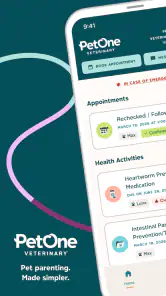
The store summary, “Pet parenting. Made simpler,” is brief, but it points toward the app’s strongest role: reducing administrative effort. That is a different promise from diagnosing illness. For a busy owner, simplicity can mean having fewer details scattered across messages, paper documents, and memory. For a first-time pet owner, it can mean having a more structured relationship with veterinary care instead of trying to reconstruct everything after the fact.
I also appreciate that the age classification is Everyone. That makes the app approachable for households where more than one person helps care for a pet. A teenager may be able to check an appointment-related detail, while an adult remains responsible for medical decisions. The rating does not mean every feature is equally suitable for every situation, but it does make the app less intimidating as a household tool.
A useful companion, not a digital veterinarian
The most responsible way to use this app is to place it between your own notes and your veterinary practice. I would use it before a visit to gather questions, during routine care to keep track of what needs attention, and afterward to make sure instructions do not disappear into a crowded inbox. That workflow is more realistic than expecting the app to solve an urgent health problem on its own.
For example, imagine noticing that your dog has been scratching more often during a busy workweek. I would use the app to prepare for a conversation with the clinic: note when I noticed the change, collect questions, and make sure I have relevant veterinary information available. I would still contact the clinic directly if the condition looked serious or changed quickly. The app can make the conversation more organized, but it should not become a reason to wait.
The same principle applies to medication. A veterinary app can help me stay connected to care, but I would never alter a dose or stop treatment based only on a general screen or reminder. The safest workflow is to use digital information as a prompt for a professional conversation, then follow the instructions given by the veterinary team.
Controls, privacy choices, and moments that deserve care
When I review a medical app, I pay attention to user control more than visual polish. Pet health information may not be human medical data, but it can still be personal. It may reveal where someone receives care, which animals live in a household, and how often a person interacts with a veterinary provider. That is why I look for clear choices around accounts, access, notifications, and the information I am asked to provide.
PetOne Vet is easiest to judge by the choices visible while using it. I would read each setup screen instead of tapping through automatically, especially if the app asks for an account or requests access to device functions. A sensible approach is to provide only what is needed for the task I want to complete, keep notifications limited to useful reminders, and revisit settings if the app becomes noisy.
This is not a criticism unique to PetOne Vet. Medical and veterinary apps often become less helpful when they send too many alerts or make the user feel that every permission is mandatory. My advice is simple: pause at each permission prompt. If a request does not make sense for the feature I am trying to use, I would decline it initially and see whether the core experience still works.
Account control is another area where I would be deliberate. If more than one person in a household cares for the same animal, I would decide who should have access before sharing login details. Convenience can tempt people to pass credentials around, but that makes it harder to know who changed information or who received a notification. A shared household routine is better when access is intentional rather than improvised.
The safest habit is to treat every visible choice as a decision, not as a formality. I would review notification settings after setup, avoid storing unnecessary personal details in free-text fields, and check that the contact details associated with veterinary care are current. These steps are small, but they give me more control over how the app fits into daily life.
Where data sensitivity matters most
The most sensitive moments are not necessarily dramatic. They can happen when creating an account, entering a pet’s details, linking a household member, or receiving a notification on a shared lock screen. A reminder that appears at the wrong time may reveal information to someone nearby. I would therefore use a discreet notification style when possible and avoid assuming that a phone is always private.
I would also be cautious with notes. Free-form fields are useful for recording questions or observations, but I would keep them focused on the pet and the upcoming veterinary conversation. There is no reason to add unrelated family information, workplace details, or other personal material that does not help the clinic care for the animal.
If I change phones, share a tablet, or stop using a veterinary provider, I would make account housekeeping part of the transition. That means checking whether I still need the app, removing access from devices I no longer use, and making sure important medical information is available through the clinic or another dependable record. An app should support continuity of care, not become the only place where essential information exists.
One trade-off is unavoidable with connected services: convenience usually depends on some account or data exchange. I am comfortable with that only when the benefit is clear. If I am using the app for a real veterinary relationship, the exchange may feel worthwhile. If I only want generic pet-care advice, a simpler offline note or a direct clinic call may expose less information and be more appropriate.
How much control does the owner really have?
User agency is strongest when I can choose how deeply to use the app. I do not need to turn every available function into part of my routine. I can use it for occasional preparation before a visit, or I can make it part of a broader household system. That flexibility is useful because pet owners have very different needs: one person may care for a single healthy cat, while another manages multiple animals with regular appointments.
I would start with the smallest useful workflow. First, install the app and understand what it asks for. Next, set up only the pet or veterinary relationship I actually need. Then I would test whether the notifications and information flow save time. If they do, I would expand my use gradually. If they create more maintenance than value, I would scale back rather than feeling obligated to keep every option active.
This approach also helps answer a common concern: is the app suitable for an entire family? It can be, but I would establish clear responsibility. One person should remain the final decision-maker for medical instructions, while others can help with reminders and preparation. That avoids a situation where several people assume someone else saw an important message.
Another practical question is whether the app replaces phone calls. In my view, it should not. A direct call remains better when an animal is deteriorating, when instructions are unclear, or when the situation does not fit a routine task. The app is more useful when I already know the appropriate veterinary channel and want to make ordinary communication less scattered.
It is also worth considering device compatibility. The minimum Android requirement is version 7.0, which makes the app accessible to many older phones, but compatibility alone does not guarantee a smooth experience on every device. I would keep the operating system updated where possible and make sure notifications are not being blocked by battery-saving settings if reminders are important to me.
Everyday strengths and practical friction
The app’s biggest strength is focus. It is not trying to be a general social network for animal lovers or an entertainment product. Its identity is tied to veterinary care, and that gives the experience a more useful purpose for owners who want one place to support routine pet parenting.
I also find the connection with National Veterinary Associates meaningful for users whose care already sits within that ecosystem. The app has a clearer reason to exist for them than for someone who simply wants broad advice about feeding, training, or behavior. If my clinic is not part of the relevant workflow, I would first confirm that the app offers something I can actually use before spending time setting it up.
The main friction is that a focused veterinary app may feel unnecessary between visits. Owners with healthy pets and simple routines may prefer a calendar, a paper folder, or a direct relationship with their clinic. Adding another account and another notification stream is not automatically an improvement. The app earns its place when it saves me from searching, remembering, or repeating information.
That is why I would not recommend it equally to everyone. It is a strong candidate for owners who want more structure, households sharing responsibilities, people preparing for recurring veterinary care, and anyone who tends to lose track of questions between appointments. I would be less enthusiastic for someone who wants emergency guidance, a broad training library, or a standalone pet diary with no veterinary connection.
Compared with a generic calendar, PetOne Vet should be more relevant to veterinary-related tasks, while the calendar may remain better for unrelated household scheduling. Compared with a paper record, the app may be easier to access when away from home, but paper can be simpler and more private. Compared with calling the clinic, the app may reduce small administrative steps, while the phone remains superior for urgency and ambiguity. The right choice depends on which problem I am trying to solve.
My recommended setup and usage routine
I would begin by deciding what outcome I want: fewer missed reminders, better preparation for appointments, easier household coordination, or a more organized connection with veterinary care. That decision prevents the app from becoming another unused icon. Once the purpose is clear, I would enable only the notifications that support it.
Before a routine visit, I would spend a few minutes reviewing what I need to ask. I would write down changes in appetite, behavior, mobility, or medication routines rather than relying on memory. This is one of the less obvious benefits of a structured veterinary tool: it can improve the quality of the conversation even when the app itself does not provide a diagnosis.
After the appointment, I would check that I understood the next step and record a short, practical reminder for myself. I would avoid turning the app into a long personal journal. Concise notes are easier to review, easier to share with the appropriate caregiver, and less likely to contain unnecessary personal information.
For multi-pet households, I would use consistent names and keep each animal’s information separate. Mixing details is a serious practical risk, especially when pets have similar appearances or overlapping care schedules. A few seconds spent checking the correct profile can prevent a much more frustrating mistake later.
Finally, I would review the setup after a few weeks. If the app is helping me act sooner, prepare better, or coordinate care, I would keep it. If it is producing clutter without a clear benefit, I would reduce notifications or return to a simpler method. Good digital care is not about using more features; it is about making the important actions easier.
My cautious verdict
PetOne Vet is a sensible choice for pet owners who want veterinary care to feel more organized and who have a practical connection to National Veterinary Associates. Its free price removes the main financial barrier, and the Everyone rating makes it approachable for shared household use. The current version, 3.1.4, shows that the app is an actively maintained product rather than a one-off listing.
I would recommend it to a friend who regularly forgets questions before appointments, coordinates care with another person, or wants a more deliberate way to manage veterinary-related tasks. I would explain that its value comes from supporting real care, not from replacing professional judgment. I would also encourage that friend to review permissions, notification behavior, and account access instead of accepting every setup choice automatically.
I would skip it if I wanted an emergency medical service, a broad pet-training platform, or a completely offline record. In those cases, a direct veterinary call, a specialist service, or a simple private note may be better. The app is most convincing when used for the middle ground between “I need help organizing this” and “I need immediate professional attention.”
After weighing convenience against privacy and maintenance, I see PetOne Vet as a useful companion rather than an essential tool for every owner. Its strongest quality is the way it can bring routine veterinary responsibilities into a more manageable workflow. My final advice is to start small, keep sensitive information purposeful, and judge it by whether it improves your actual relationship with veterinary care. If it does, the app deserves a place in your pet-care routine.
Pros
- Easy access to veterinary care and pet health information
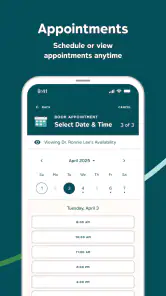
- Convenient appointment booking from a mobile device
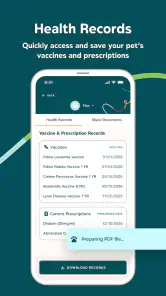
- Helps keep your pet’s medical details organized
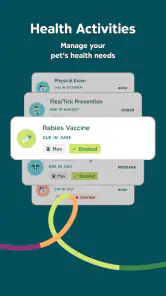
- Useful reminders can support regular preventive care
- Saves time compared with calling the clinic directly
Cons
- Availability may depend on participating PetOne clinics
- Some features may require an account or personal information
- App usefulness can vary by location and local services
- Not a replacement for urgent veterinary treatment
- Technical issues could affect access to appointments or records

- Category
- Medical
- Version
- 3.1.4