ParkMyRig, Truck Parking Guide
- 103.00
- 4.1
- Installs
- 10.00K
- Price
- Free

Screenshots
Analysis by Reviewed
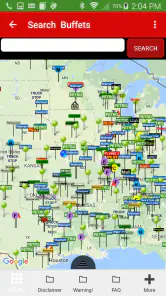
Finding a safe, suitable place to stop a truck is a very different problem from finding a café or a passenger-car parking space. Vehicle size, exit access, route restrictions, opening hours, and the simple question of whether a space is practical for a working driver all matter. ParkMyRig, a free Travel & Local app from ParkMyRig LLC, is built around that specific problem. I approached it less like a general navigation tool and more like a pocket reference for truck parking and exits.
My first impression was that its value depends on how often truck-related parking decisions are part of your routine. If you drive a heavy vehicle regularly, a focused guide can be more useful than scrolling through a general map full of places that were designed for ordinary cars. If you only need a truck stop once in a while, however, the app has to earn its place quickly, because another navigation app may already be familiar and convenient.
What using ParkMyRig feels like in the first week
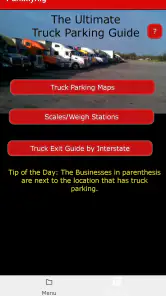
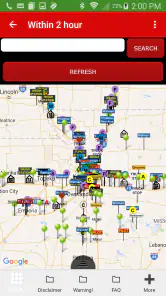
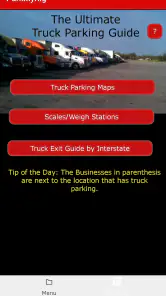
The appeal during the first few days is easy to understand: the app gives the parking problem its own space. Instead of treating truck parking as a minor detail inside a broader map, it presents itself as a Truck Parking Guide with a Truck Exit Guide. That focus changes the way I think about a route. I am not merely asking where I can stop; I am considering whether the stop and the way out make sense for a larger vehicle.
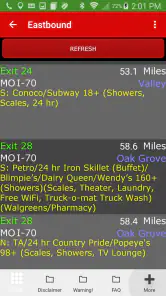
That distinction is important in real life. A location can look close on a map and still be awkward because of a tight entrance, a poor turning path, or an exit that sends a driver in an inconvenient direction. A dedicated exit guide is therefore more than a decorative extra. It encourages me to plan the departure as carefully as the arrival, which is one of the more practical ideas behind the app.
A realistic use case would be a driver approaching the end of a long shift and wanting to avoid making a rushed parking decision. I would check the guide before reaching the area, compare the available options with the route I am already following, and keep the likely exit in mind instead of waiting until the vehicle is parked. That small change in timing can reduce stress, particularly when turning around or changing direction is difficult.
The app is free to install, which makes trying it less of a commitment. It is rated for Everyone, so its presentation is not aimed at a narrow age group. The current version is 1.0.49, and the project has been available since October 19, 2016. Those details suggest a product with a long presence rather than a brand-new experiment, although longevity alone does not guarantee that every location or road detail will suit today’s conditions.
Its public reach is still fairly modest, with over ten thousand installs. I do not see that as an automatic weakness, but it does affect how I judge a location-based guide. A smaller user base can mean less visible community momentum than the biggest mapping services. On the other hand, a focused tool does not need to be popular with every phone owner to be useful to the drivers who actually need truck-specific information.
More From Our News Desk

Clash of Clans Is Won Between the Battles

Android Auto Makes the Case for Quieter Car Software

MobiOffice: Transforming Mobile Productivity with Seamless Integration

EA SPORTS FC™ Mobile Soccer: Redefining Mobile Sports Gaming

How Microsoft OneDrive Became a Mobile Productivity Giant

How Google Translate Breaks Language Barriers Effortlessly
The exit-first habit is the strongest idea
During initial use, I found the exit angle more valuable than the simple act of locating a parking place. Many parking searches stop at “there is a place nearby.” For a truck, that is only half the decision. I would use ParkMyRig to form a habit of asking three questions: can I get in, can I position the vehicle sensibly, and can I leave without creating a new problem?
That workflow is also a useful safeguard against overtrusting a pin on a screen. I would still inspect road signs, follow current restrictions, and use common sense at the location. A guide can help me prepare, but it cannot replace a driver’s judgment about weather, construction, temporary closures, congestion, or conditions that have changed since information was recorded.
Another practical tip is to check the guide before the final stretch of a journey rather than while already tired and committed to one road. That gives me time to compare a parking option with the direction of the next departure. It also makes the app more useful as a planning companion than as an emergency button pressed at the last possible moment.
Where it fits beside ordinary navigation apps
General navigation apps remain better for turn-by-turn routing, traffic awareness, and the broad search habits most people already know. They are the natural choice when I need to reach a customer, find fuel, or react to a changing route. ParkMyRig is more specialized: its reason to exist is the truck parking and exit question, not the entire journey.
That means I would not replace my main navigation app with it. I would use the two roles separately. The everyday map handles the route, while ParkMyRig helps me think about the stop itself. This combination makes sense for a professional driver who wants a second layer of preparation. It is less compelling for a passenger-car driver or someone who rarely needs truck-accessible parking.
The trade-off is simplicity versus breadth. A general map may offer more familiar search tools and a larger ecosystem, while a specialist guide can keep attention on a narrower but more relevant task. In my view, ParkMyRig earns its first-week trial when truck parking is a recurring concern, not merely because it carries a specialized label.
Whether it keeps earning space after the novelty
Month-to-month value comes from routine, not curiosity
After the initial appeal fades, the question becomes whether I would open it repeatedly. The answer depends on my driving pattern. A long-haul driver, fleet worker, or anyone regularly planning overnight or extended stops has a clear reason to return. For that person, the app can become part of a pre-arrival checklist: review the parking possibility, consider the exit, then confirm the actual road situation.
For occasional users, the value is more episodic. I might keep it installed because the next difficult parking decision could come at an inconvenient time, but I would not expect to use it every day. That is not necessarily a failure. Some tools are valuable precisely because they are available when a specialized problem appears. Still, an app that is opened only in emergencies has less chance of becoming a dependable habit.
The average rating is 4.1 from around one hundred forty ratings, with just over one hundred written reviews. I read that as a generally positive but not unanimous signal. It supports trying the app, especially because the basic download is free, but it does not justify treating every result as equally reliable. My own approach would be to use the guide as one input in a decision, then verify the final choice with visible signs and current road information.
The in-app purchase range runs from $2.49 to $24.99 per item. That makes the free entry point useful for testing the basic workflow, while also reminding me to pay attention before committing to paid extras. I would first establish whether the app’s core parking-and-exit guidance fits my routes and habits. Only then would I consider spending money, and only if a paid item directly solves a repeated problem for me.
A good long-term workflow is to treat the app as a planning checkpoint rather than a passive directory. Before a trip, I would identify likely stopping areas. During the journey, I would reassess them if the route changes. Near arrival, I would check the exit logic again. This three-stage use gives the app more recurring value than opening it once, choosing the nearest result, and forgetting about it.
Maintenance is the quiet test of a location guide
Location information ages differently from ordinary app content. Roads are redesigned, businesses change their access arrangements, signs are replaced, and a place that was comfortable for one vehicle configuration may feel much less convenient later. Because of that, the maintenance burden is shared between the developer and the driver. ParkMyRig LLC has to keep the guide useful, but I still need to confirm what I see on the ground.
The app’s release history and current version give me some confidence that it has not simply been abandoned after launch. Even so, I would not confuse an updated application package with a guarantee that every parking detail is current. The most responsible use is to combine the guide with live observation and, when relevant, information from the facility or road authority.
This is one of the app’s less obvious trade-offs. A specialized guide can save time by narrowing the search, but specialization also raises my expectations. If I open it for truck parking, I am not looking for a rough suggestion; I want information that respects the physical realities of a large vehicle. The more important the stop, the more cautious I become about relying on a single source.
I would also avoid building a rigid route around one listing too early. A better method is to keep a backup option in mind, especially before a long overnight run. That does not mean the app is unreliable; it reflects the fact that parking availability and road conditions can change independently of any app. The guide is strongest when it helps me prepare alternatives rather than promising that one result will solve everything.
What can create fatigue over repeated use
The first source of fatigue is repetition. If every trip begins with the same manual checking process, the app may start to feel like another task rather than a shortcut. I can reduce that feeling by using it only at decision points: before entering an unfamiliar area, before committing to a stop, and before leaving. Opening it constantly would add effort without necessarily adding better judgment.
The second is the difference between listed suitability and actual comfort. A parking location may technically serve trucks but still be inconvenient at a particular time, in poor weather, or with a specific load. I would not expect a guide to capture every temporary condition. That is why the app works better as a filter for possibilities than as a final authority.
The third is the temptation to use it while moving. That is a poor trade-off. I would set up the search before driving or ask a passenger to help, then keep attention on the road. The app’s usefulness disappears if the act of consulting it creates a safety problem.
There is also a financial fatigue question. Because the app is free but offers in-app purchases, I would want to understand what I am getting before paying. A professional driver who uses the guide often may find a paid item worthwhile, while an occasional user may be satisfied with trying the free experience and returning only when needed. The right choice depends on repeated benefit, not on the mere presence of an upgrade.
Who should make it part of a regular toolkit?
I would recommend ParkMyRig to drivers who regularly deal with truck parking, especially those who dislike discovering too late that a convenient-looking stop has an inconvenient departure. It is also a sensible companion for route planning when the parking decision matters as much as the destination. The focused purpose makes it easier to think about vehicle access rather than treating a truck as an oversized car.
I would be more hesitant to recommend it as a primary navigation tool. If my main need were live traffic, detailed turn-by-turn directions, or broad local discovery, I would choose a general navigation service first. Likewise, if I drove a normal passenger vehicle and rarely needed specialized parking, the app would probably add little to my routine.
It is also not the right choice for anyone who wants to delegate every parking decision to a phone. The driver still needs to read the road, obey restrictions, assess the entrance, and judge whether the exit is genuinely workable. ParkMyRig can improve preparation, but it cannot remove responsibility or uncertainty from the final decision.
My long-term verdict
After the novelty wears off, ParkMyRig’s lasting value rests on one clear strength: it treats truck parking and truck exits as a dedicated planning problem. That focus is more meaningful than a generic nearby-place search when I am driving a large vehicle and need to think beyond the arrival point.
I would keep it installed if truck parking appeared regularly in my work or travel. I would use it alongside, not instead of, a full navigation app, and I would make verification part of the routine. The most useful habit is to check early, consider the departure, and keep a backup rather than relying blindly on the closest result.
The limitations are equally clear. It may be unnecessary for casual drivers, it cannot replace current road awareness, and paid items deserve a deliberate decision rather than an automatic purchase. Its moderate reach and 4.1 average make it worth testing, not something I would accept without judgment.
My bottom line is simple: ParkMyRig earns lasting space for the driver who repeatedly needs truck-specific parking guidance and wants the exit considered as part of the stop. For everyone else, it is a specialized free tool to try when the usual map search feels too vague. I would recommend it to a friend in the first group, with the practical warning that the app should support good driving decisions, never replace them.
ParkMyRig, Truck Parking Guide Frequently Asked Questions
What devices can run ParkMyRig, Truck Parking Guide?
ParkMyRig is a mobile app for truck drivers who want a dedicated parking guide on a compatible device. It is listed for Android devices running version 8.1 or later, so checking your phone’s operating system before downloading can help avoid compatibility surprises. If your device meets that requirement, you can consider whether the app’s parking information fits the way you plan trips.
Does ParkMyRig include more than parking information?
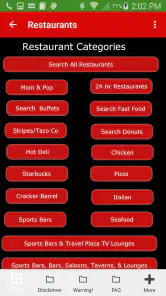
ParkMyRig is presented as a Truck Parking Guide that also includes a Truck Exit Guide. That makes it relevant to drivers looking for practical travel information beyond parking alone. It is best approached as a guide to support trip preparation, rather than as a substitute for checking current conditions or confirming that a stop is appropriate for your truck.
What is ParkMyRig, Truck Parking Guide?
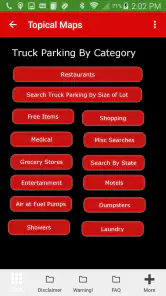
ParkMyRig, Truck Parking Guide is a mobile resource designed to help truck drivers find and evaluate parking options during their journeys. It focuses on practical information such as available locations, parking suitability, and trip-planning considerations. Before relying on it, drivers should confirm that listings are current and suitable for their vehicle, since parking availability, restrictions, and local conditions can change quickly.
Who can benefit most from using ParkMyRig?
The app is primarily useful for professional truck drivers, long-haul operators, fleet personnel, and anyone planning routes that require dependable truck parking. It may also help drivers compare possible stopping areas before reaching a destination. However, the most useful features and coverage can depend on the region, so users should check whether their regular routes and preferred parking areas are supported.
Does ParkMyRig guarantee that a parking space will be available?
No mobile parking guide can guarantee an open space unless it provides a clearly stated, real-time reservation service. ParkMyRig should be treated as a planning and information tool rather than a promise of availability. Conditions can change because of traffic, time of day, closures, private restrictions, or other drivers arriving first. It is wise to prepare a backup location, especially on busy routes.
Pros
- Helps locate truck-friendly parking areas during long-haul trips.
- Useful reference for planning stops before reaching busy destinations.
- May reduce time spent searching for suitable spaces at night.
- Focuses on parking information relevant to commercial truck drivers.
- Can support safer route decisions by highlighting available stopping options.
Cons
- Parking availability may change before you arrive at a listed location.
- Coverage and accuracy can vary between regions.
- Some locations may have limited amenities or restrictive opening hours.
- It may not provide live
- guaranteed space reservations.
- Drivers should verify local rules
- fees
- and vehicle-size restrictions.
- Category
- Travel & Local
- Version
- 1.0.49