OurHome
- 17.00
- 3.2
- Installs
- 50.00K
- Price
- Free

Screenshots

Analysis by Reviewed
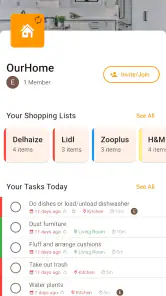
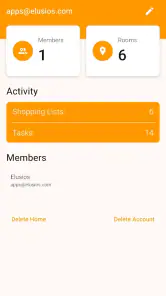
I found OurHome most useful when I treated it as a shared household board rather than a full personal productivity system. It brings shopping and everyday tasks into one place, with the main idea that roommates can see what needs doing and coordinate without relying on scattered messages. That sounds simple, but in a busy home, a single shared space can remove a surprising amount of repeated asking.
My overall view is positive but measured. This is a free house-and-home app from Elusios, and its focus is narrow enough to be understandable quickly. It is not trying to replace every calendar, note-taking tool, or chat app. Instead, it works best for people who need a lightweight way to divide household responsibilities and keep a common shopping list visible. The trade-off is that anyone expecting a deeply customizable planning platform may find the experience too limited or may prefer tools they already use.
How OurHome fits into everyday household life
The first thing I noticed is that the app makes more sense when everyone in the home agrees to use it consistently. A shared list only helps if people add items before they are forgotten, and a task only becomes useful when the person responsible for it marks it as handled. OurHome cannot solve a communication problem by itself, but it gives that communication a practical place to live.
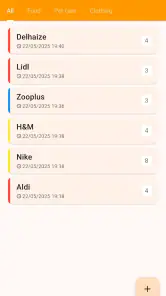
For example, imagine a shared apartment where one roommate notices that detergent, rice, and light bulbs are running low. Instead of sending three separate messages, they can put the items into the household shopping area. Someone already heading to the store can check the list and deal with the urgent items. At the same time, a task such as taking out recycling can remain visible for the person who agreed to do it. The benefit is not dramatic automation; it is fewer loose reminders.
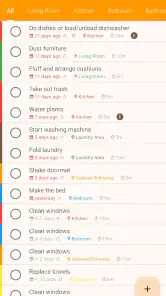
I also like the distinction between shopping and tasks. These are related parts of home management, but they are not the same kind of responsibility. A shopping list answers “what should someone bring home?” A task answers “what needs to be done?” Keeping those ideas separate makes the app easier to scan than a single note filled with unrelated entries.
The store summary describes the app as a way to manage shopping and tasks collaboratively, and that matches the practical experience. I would not install it just to maintain a private grocery list. A standard notes app may be faster for one person, especially if that person already has a familiar checklist. The reason to choose this app is the shared-household context.
The strongest part is shared visibility
In my experience, the real strength is the reduction of uncertainty. With an ordinary group chat, a grocery request can disappear below dinner photos, jokes, and unrelated questions. With a household-focused app, the relevant information has a better chance of staying organized around the home itself.
That matters most when several people contribute in different ways. One roommate may do most of the shopping, another may handle cleaning, and a third may only help with occasional errands. A visible task system gives everyone a common reference point without requiring one person to remember every promise made in conversation.
There is also a useful psychological difference between a message and a shared item. A message can feel like a request that still needs discussion. A list entry feels more like a small piece of household administration. That makes it easier to review quickly and harder to overlook when the app becomes part of the normal routine.
Still, I would set expectations carefully. The app should not be treated as proof that a task has been completed merely because it was assigned. Someone still has to update the item, and housemates still need basic trust. If your household avoids shared systems or rarely checks common lists, OurHome will become another neglected app.
A practical workflow that worked for me
I found the app easier to use when I separated urgent items from routine ones. Shopping entries that affect tonight’s dinner belong in the list immediately, while items such as spare batteries can wait until the next normal shop. Likewise, recurring household jobs should be kept distinct from one-off requests so that the board does not become a wall of equally important reminders.
A useful habit is to review the shared space at a fixed moment, such as before leaving for work or before the weekly grocery trip. This avoids the common mistake of adding items but never checking what other people have added. The app is at its best when it supports a short household ritual rather than expecting everyone to monitor it constantly.
Another practical tip is to write shopping entries in a way that another person can understand without asking follow-up questions. “Coffee” may be enough in one home, while “decaf ground coffee” is more useful in another. The app can hold the item, but the person entering it still needs to provide the context. This small detail makes a bigger difference than adding a long list of low-priority items.
For tasks, I would avoid vague wording such as “clean up.” A clearer entry like “wipe the kitchen counters” gives the household a shared idea of what completion means. This is not a special feature; it is a workflow choice that makes the app’s task structure more effective and reduces arguments about whether something was actually done.
Where the experience feels less convincing
The main weakness is that a simple shared system can feel too simple once a household becomes complicated. If you need detailed schedules, extensive project planning, rich notes, or a broad set of integrations, a dedicated productivity platform may be a better match. OurHome’s appeal comes from keeping the focus on home coordination, but that focus also limits how far it can stretch.
I also think the app depends heavily on adoption by the whole household. A single organized person can create lists and tasks, but the experience loses much of its value if the other residents continue using private notes or chat messages. Before introducing it to roommates, I would explain the exact problem it is meant to solve: shopping visibility, task ownership, or both. A vague “let’s all use this” request is less likely to stick.
The average rating is 3.2 from around 238 ratings, which suggests that the experience has not been universally smooth for everyone. I would read that as a reason to approach the app with realistic expectations rather than as an automatic rejection. A focused household tool can be genuinely helpful for the right group while still frustrating people who want more polish, flexibility, or depth.
There is also a small but important financial consideration. The app is free to install, but in-app purchases cost $2.49 per item. I would check which optional functions matter to my household before building a routine around them. For a basic shared shopping-and-task workflow, the free starting point makes it easy to try; however, users should be aware that some extras may involve additional spending.
Because the content rating is Everyone, it is presented as suitable for a broad audience. That makes sense for a household organizer, although suitability does not guarantee that every family, couple, or roommate group will find the workflow comfortable. The best test is whether the people sharing the home are willing to check one common place and keep it current.
Who should use it, and who should skip it
I would recommend OurHome to roommates who regularly lose track of groceries, cleaning responsibilities, or small errands. It is particularly suitable for homes where people have different schedules and do not always see one another in person. A shared board is useful when one person leaves early, another returns late, and verbal reminders are unreliable.
It can also work well for couples who want to divide routine chores without turning every responsibility into a conversation. The app is not a relationship counselor, and it will not make an unfair division fair by itself, but it can make the current arrangement more visible. That visibility can help people notice when one person is repeatedly carrying more of the household work.
Families may find it useful for straightforward shopping and home tasks, especially when several people contribute. I would keep entries clear and age-appropriate, and I would avoid using the app as a way to monitor every small action. Shared organization should make home life calmer, not create a constant scorekeeping exercise.
I would skip it if I live alone and already have a notes app that handles checklists comfortably. I would also look elsewhere if I need a robust personal planner, a detailed recurring schedule, or sophisticated project management. In those cases, the household angle may not justify adding another app to the phone.
The app was released on July 4, 2024, and the current version is 1.8.0. It supports devices running Android 7.0 or newer, which gives it a reasonably broad technical reach for Android users. The install base is over 50 thousand, so it has attracted a meaningful group of users without being something I would describe as universally established.
How it compares with familiar alternatives
The most obvious alternative is a shared note. Notes are excellent for speed: open one, type a list, and share it. For a household that only needs groceries, that may be enough. OurHome becomes more appealing when the home needs both shopping coordination and task management, because those activities have different purposes and can be reviewed together without building a custom note structure.
Group chat is another common substitute. Chat is better for discussion, questions, and quick decisions, but it is poor at preserving a clean list over time. A message saying “please buy soap” may be buried or forgotten. OurHome is better for the durable part of the request, while chat remains better for explaining which brand to choose or changing plans at the last minute.
General task managers usually offer more advanced organization. They may suit people who want labels, complex deadlines, or a single system covering work and personal projects. The disadvantage is that they can feel excessive for a home. OurHome’s narrower purpose is its strongest argument against those larger tools: household coordination stays separate from professional obligations and private productivity.
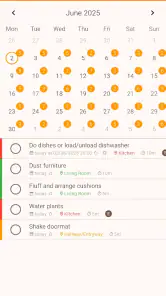
Calendar apps are useful for appointments and time-specific events, but many household chores do not belong on a calendar. Putting every small task into a calendar can make the schedule noisy. A task-focused household space is more natural for jobs that need completion but do not require a precise hour.
Details worth knowing before installing
The developer is Elusios, and the app is available free of charge as a starting point. I would think of the free installation as an opportunity to test household cooperation rather than as a promise that every possible function will remain cost-free. Since optional purchases are priced at $2.49 per item, the sensible approach is to begin with the basic workflow and only pay for something if the household clearly benefits from it.
One question many people will have is whether the app is useful without constant attention. My answer is yes, but only if the household chooses a predictable review habit. It does not need to be opened every few minutes. A quick morning check, a pre-shopping review, and a short evening update can be enough for many homes. The important part is consistency, not screen time.
Another likely question is whether it replaces conversation. It does not. I see it as the place for agreed actions, while conversations remain necessary for priorities, budgets, changes, and disagreements. If the household has a recurring dispute about chores, a list can document the arrangement, but it cannot decide a fair arrangement for you.
Users may also wonder whether it is better for shopping or tasks. I think the answer depends on the household. If grocery confusion is the main issue, the shopping side may deliver immediate value. If the bigger problem is uneven chore distribution, the task side matters more. The combination is what makes the app distinct, but you do not need to use both areas equally.
Finally, I would ask whether it is worth trying when the rating is only moderate. I think it is worth a cautious trial for the intended audience, especially because the app is free to start. I would not migrate every household routine immediately. Use it for one shopping cycle and a small set of tasks, then judge whether it actually reduces reminders and missed responsibilities.
My verdict after using it as a household organizer
OurHome succeeds when I judge it by its real purpose: giving roommates and families a shared place for shopping and everyday responsibilities. Its best quality is not a flashy feature but the way it turns scattered household requests into visible, actionable items. That can make a meaningful difference in homes where people are busy, schedules overlap poorly, or chores are often assumed rather than assigned.
Its limitations are equally clear. It is not the right choice for someone looking for a complete productivity suite, and it cannot create cooperation where there is none. The moderate 3.2 average rating also tells me to keep expectations grounded and to test the experience with the actual people who will use it.
My recommendation is specific: try it if your home needs a shared shopping list plus a simple way to divide tasks. Start small, write precise entries, agree on when everyone will check the app, and avoid turning it into a scorecard. If that routine works, the app can become a useful piece of household infrastructure. If your needs are mainly private notes, detailed scheduling, or advanced project planning, a familiar alternative will probably serve you better.
For the right household, the free starting point makes the experiment easy, and the Everyone rating keeps the app broadly approachable. I would not call it indispensable, but I would recommend it to a friend who is tired of repeating grocery reminders and asking who was supposed to clean what. Its value comes from making those small responsibilities visible without making home management feel like a second job.
Pros
- Shared tasks make household responsibilities easier to organize.
- Members can comment on tasks and keep communication in one place.
- Recurring chores help prevent routine household duties from being forgotten.
- The app can support shared shopping and household planning.
- Useful for families
- couples
- roommates
- and other shared homes.
Cons
- Some features may require a paid subscription or in-app purchases.
- Notifications can become excessive when many tasks are assigned.
- The app may feel unnecessarily complex for smaller households.
- Everyone must use the app regularly for shared lists to stay accurate.
- Privacy-conscious users may hesitate to store household details online.

- Category
- House & Home
- Version
- 1.8.0