Orthodox Bible & Calendar
- 294.00
- 4.7
- Installs
- 100.00K
- Price
- Free

Screenshots


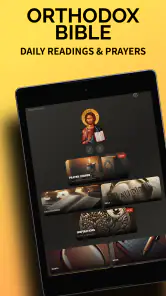
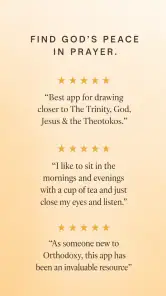
Analysis by Reviewed
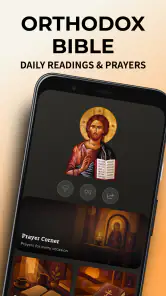
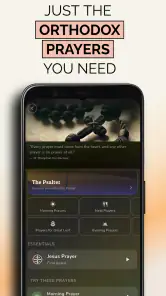
Choosing a Bible app is rarely just about finding a digital copy of Scripture. For me, the more important question is whether the app fits the way I actually practice, read, pray, and keep track of the church calendar. Orthodox Bible & Calendar is aimed at that narrower need. It brings an Orthodox Bible together with daily Orthodox prayers, the Psalter, reading plans, and a calendar, so I can move between regular reading and devotional use without keeping several unrelated apps open.
That focus makes it different from a general Bible reader. I would not choose it simply because I wanted the largest possible collection of translations or a broad library of study tools. I would consider it when Orthodox tradition is central to my routine and I want the surrounding rhythm of prayers, Psalter reading, and calendar observance in the same place. In my experience, that kind of concentration is its main reason to exist, and also the key question a potential user should ask before installing it.
How I judged the app for everyday Orthodox reading
I looked at it as a practical companion rather than as a replacement for a printed Bible, parish guidance, or a full academic study library. The useful test is simple: can I open it when I have a few quiet minutes, find the kind of Orthodox material I need, and return to a repeatable routine without unnecessary searching? The combination of Scripture, prayers, Psalter, reading plans, and calendar gives it a clear answer for that use case.
The app comes from Byteblocks, LLC and sits in the Books & Reference category. It is free to install, which makes trying the basic experience easy. There are in-app purchases ranging from $0.99 to $74.99 per item, so I would still check the purchase prompts carefully before assuming every part of the experience is included at no cost. That does not make the app unsuitable, but it does mean that “free” should be understood as a low-risk starting point rather than an automatic promise that every optional element is free.
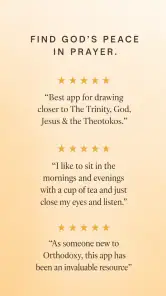
Its public reception is encouraging: it holds a 4.7 average from around 2K ratings, with 294 written reviews. It has also passed 100K installs, which suggests that it has found a real audience beyond a handful of early testers. I treat those figures as a useful signal, not as a substitute for personal fit. A highly rated app can still be wrong for someone who needs a different translation, extensive annotation, or a strictly offline workflow.
The app is rated for Everyone, and it runs on Android 7.0 or later. The current version is 7.1.1. That combination makes it accessible to many Android users, including people who keep an older phone for reading or prayer. I would still make sure the device has enough comfortable screen space for longer passages, because a small display can turn an otherwise calm reading session into constant scrolling.
The strongest reason to choose this focused approach
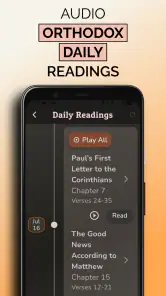
What I appreciate most is the way the app treats Orthodox reading as a connected practice. A general Bible app may be excellent at searching verses, comparing translations, or highlighting passages, while a prayer app may handle daily devotion better. Orthodox Bible & Calendar brings those needs closer together. I can begin with a reading plan, move into the Psalter, and then use the calendar as a reminder that Scripture is being read within a living liturgical context rather than as an isolated reference book.
More From Our News Desk

Clash of Clans Is Won Between the Battles

Android Auto Makes the Case for Quieter Car Software

MobiOffice: Transforming Mobile Productivity with Seamless Integration

EA SPORTS FC™ Mobile Soccer: Redefining Mobile Sports Gaming

How Microsoft OneDrive Became a Mobile Productivity Giant

How Google Translate Breaks Language Barriers Effortlessly
That matters on ordinary days when motivation is limited. If I have only ten minutes before work, opening one app is less friction than deciding which Bible, prayer book, Psalter, or calendar tool to use. The value is not merely the number of sections on the screen; it is the reduction in small decisions that often causes a reading habit to disappear.
A realistic routine would be to check the calendar in the morning, read the assigned portion from a plan during a break, and return to the prayers in the evening. I would not treat that as a rigid obligation. The better approach is to use the plan as a gentle structure, then adjust the pace when family, work, or parish responsibilities take priority. The app is most helpful when it supports consistency without making the routine feel like another task-management system.
Three practical habits that make it more useful
First, I would use the calendar as the starting point rather than opening the Bible at random every time. That creates a repeatable path through the app and helps connect reading with the Orthodox year. Even when I cannot complete a full session, checking the day and reading a smaller portion keeps the habit alive. This is more sustainable than waiting for a long, uninterrupted study period.
Second, I would separate “reading” from “prayer” in my expectations. A reading plan helps me progress through material, while daily prayers serve a different purpose: they shape attention and devotion. Trying to rush through both as one checklist can make the app feel mechanical. I get more from it when I choose one primary purpose for each opening and allow the other sections to remain available for later.
Third, I would use the Psalter deliberately instead of treating it as just another book in the menu. Psalms work well for short sessions because I can read a small portion when concentration is poor and still feel that the time was meaningful. For someone building a morning or evening rhythm, the Psalter may be the most approachable entry point, while the reading plans provide longer-term direction.
These are not flashy features, but they are the kind of workflow decisions that determine whether a devotional app remains installed. The app’s design is most valuable when I use its sections as parts of one routine rather than as unrelated content tabs.
Where it is more convenient than separate alternatives
Compared with a standard Bible app, this one wins on context. A general-purpose reader is often better for broad searches, study references, or switching among many versions, but it may leave Orthodox prayers, the Psalter, and the calendar outside the reading experience. Here, the surrounding material is part of the central purpose instead of an afterthought.
Compared with a standalone prayer app, the advantage is continuity with Scripture. I do not have to finish a prayer and then remember where I was in a separate Bible tool. Compared with a calendar-only app, the advantage is that the date leads directly toward reading and prayer rather than stopping at a list of observances. For me, fewer app changes means fewer opportunities to get distracted by notifications or unrelated phone activity.
There is also a useful psychological benefit to having a dedicated Orthodox space. A broad religious app can make me spend time configuring it before I read anything. A focused app tells me what kind of experience it is trying to provide. That clarity is especially helpful for someone returning to regular practice after a long break and looking for a simple place to begin.
Where another kind of app may be the better choice
I would look elsewhere if my priority were deep Bible study. Someone who regularly compares translations, consults extensive cross-references, marks up passages in detail, or needs advanced search may prefer a specialized Bible platform. I would not install this app expecting it to replace every scholarly resource or a well-organized physical study Bible.
I would also hesitate if I needed a very specific text tradition that the app does not present in the way I prefer. Orthodox readers can have strong and legitimate preferences about translation, language, liturgical usage, and presentation. Before making it the only Bible on a phone, I would open several familiar passages and confirm that the wording and reading experience feel right. That small check is more valuable than relying on a generic app description.
People who primarily want audio, social reading, extensive note-taking, or a large ecumenical library may also fit better with a broader alternative. The narrower the app’s focus, the more important it is to match that focus. Orthodox Bible & Calendar is not trying to be everything for everyone, and I see that as a strength until a user’s needs move outside its central purpose.
Small points of friction I noticed
The first limitation is the possibility of feeling divided between several modes: Bible reading, prayers, Psalter, plans, and calendar. The range is useful, but a new user may need a little time to decide which section should anchor the day. I recommend choosing one default route, such as calendar to reading plan, and using the other sections only when they serve a clear purpose.
The second is the presence of in-app purchases. Because the app is free to start but includes purchases, I would pay attention to what is offered during setup and browsing. This is particularly important for families or anyone trying to keep all devotional tools at no cost. The purchase range extends from $0.99 to $74.99 per item, so the difference between a small optional addition and a substantial purchase is meaningful.
The third is that a phone remains a phone. Even a well-focused prayer app can compete with messages, news, and other interruptions. I get a better experience when I silence notifications, set the device aside, and read in one short block instead of repeatedly checking the screen. That is not a defect unique to this app, but it affects whether its calm, devotional purpose survives contact with everyday mobile use.
I would also avoid treating the calendar as a substitute for personal pastoral direction. The app can help organize reading and prayer, but it cannot know my circumstances, explain every observance, or replace conversation with a priest or parish community. Its best role is as a dependable personal aid, not as an authority for every spiritual decision.
What switching to it is really like
The cost of switching is fairly low if I am moving from scattered tools. I can start with one habit, such as checking the calendar each morning, and add a reading plan later. There is no need to redesign my entire devotional life on the first day. This gradual approach also makes it easier to notice whether the app’s wording, navigation, and content fit me before I depend on it.
The cost is higher for someone already invested in another Bible system. If I have years of notes, carefully organized highlights, or a preferred cross-reference workflow elsewhere, moving everything may not be worthwhile. In that situation, I would keep the existing study app and use Orthodox Bible & Calendar specifically for prayers, Psalter reading, calendar awareness, or a structured plan. It does not have to be an all-or-nothing replacement.
For a household, I would decide whether the app is being used privately or as a shared routine. A parent might appreciate an Everyone content rating and a simple reading path, while still wanting to guide younger readers personally. The app can support a family habit, but the quality of that habit will come from the conversation around it, not from the presence of a calendar alone.
On an older Android phone, the minimum operating-system requirement of 7.0 is reassuring, but comfort matters as much as compatibility. I would test text size, scrolling, and the ease of returning to a passage. A device that technically runs the app but feels cramped may encourage shorter, more distracted sessions. If reading is central, a larger screen or a dedicated printed Bible may remain preferable for longer study.
My recommendation for different kinds of readers
I recommend it most strongly to Orthodox Christians who want one Android app for Scripture, daily prayers, the Psalter, reading plans, and calendar awareness. It is also a sensible starting point for someone trying to rebuild a regular routine and who does not want to assemble several separate tools. The focused design gives the app a clear identity, and the free entry point makes experimentation straightforward.
I recommend a mixed setup for serious students of Scripture. Keep a specialized study resource for detailed research, then use this app for the Orthodox devotional rhythm it handles more directly. That combination respects the strengths of both categories instead of forcing one app to do every job.
I would skip it if I mainly want a universal Bible database, advanced scholarly features, or a completely different tradition and reading style. I would also avoid making an immediate purchase before trying the free experience and deciding whether the navigation and content match my routine. The range of optional purchase prices makes that cautious approach sensible.
After using it as a decision rather than a feature-count exercise, my view is positive. Its real advantage is not simply having several Orthodox resources in one app; it is making a repeatable daily rhythm easier to start. That is a meaningful benefit when the alternative is opening a Bible occasionally and losing momentum.
Orthodox Bible & Calendar is best understood as a focused Orthodox companion, not a universal replacement for every Bible, prayer, and study tool. Byteblocks, LLC has chosen a clear direction, and the strong user response reflects how well that direction serves its intended audience. If that audience includes you, I would install it, begin with the calendar and one manageable reading habit, and let the rest of the app earn a place in your routine over time.
Orthodox Bible & Calendar Frequently Asked Questions
Is Orthodox Bible & Calendar free to download, and are there any paid features?
The app is free to download, so you can try its Orthodox Bible and calendar tools without an upfront purchase. It also offers optional in-app purchases, with prices ranging from $0.99 to $74.99 per item. Consider checking the purchase details in the app before confirming anything, especially if you only want its core reading and reference features.
What can I expect from the app’s reading plans and daily prayer features?
Orthodox Bible & Calendar brings together Bible reading plans and daily Orthodox prayers, alongside its Psalter and calendar. These features can help you build a regular devotional routine and keep prayer materials close at hand. The app is in the Books & Reference category, so it is intended as a practical religious reading companion rather than a substitute for guidance from your church.
What is Orthodox Bible & Calendar, and what can I use it for?
Orthodox Bible & Calendar is a faith-focused mobile app designed for users who want convenient access to Orthodox Christian scriptures and calendar information in one place. After exploring the app, its main purpose is to support daily reading, help users follow religious dates and celebrations, and provide a practical reference for Orthodox traditions. It can be useful for personal devotion, study, prayer planning, or simply learning more about the Orthodox liturgical year.
Does Orthodox Bible & Calendar include the complete Orthodox Bible?
The app is intended to provide access to Orthodox biblical content, but the exact books, translations, and language options may depend on the version available on your device and the developer’s current content licensing. Before downloading, users should check the app listing and internal settings to confirm whether the Old and New Testaments, deuterocanonical books, search tools, bookmarks, or reading-history features are included. This is especially important for users who require a particular Orthodox translation.
What information does the Orthodox calendar provide?
The calendar section is designed to help users keep track of Orthodox feast days, saints’ commemorations, fasting periods, and other important dates in the liturgical year. Depending on the selected calendar tradition or region, the displayed dates may follow a specific church calendar, such as the Julian or Revised Julian system. Users should review the settings carefully, because feast dates and fasting guidance can vary between jurisdictions and local Orthodox practices.
Pros
- Includes Orthodox Bible texts for convenient reading on mobile.
- Orthodox calendar helps track feasts
- saints
- and fasting periods.
- Useful reference for daily prayer and spiritual routines.
- Simple layout makes core content easy to browse.
- Suitable for users seeking Orthodox-focused religious resources.
Cons
- Some features or content may require an internet connection.
- Calendar details can vary by jurisdiction or Orthodox tradition.
- Older devices may experience slower loading or limited compatibility.
- The app may offer fewer customization tools than general Bible apps.
- Religious content may not suit users outside the Orthodox tradition.
- Category
- Books & Reference
- Version
- 7.1.1