Noise - Make Money Creating
- 815.00
- 4.5
- Installs
- 100.00K
- Price
- Free

Screenshots




Analysis by Reviewed
Creating online content is easy to start and surprisingly difficult to maintain. I often have ideas, useful observations, or small pieces of expertise, but turning them into something consistent takes time. Then comes the harder question: what happens after publishing? Noise - Make Money Creating approaches that recurring problem from a business angle, giving creators a place to post content while connecting that activity with the possibility of earning money.
My first impression was that Noise is less about replacing every tool in a creator’s workflow and more about giving the publishing step a clearer purpose. It comes from Noise Inc and sits in the Business category, which makes sense because the app treats content as something that can support an income stream rather than only as a social update. It is free to use and suitable for everyone, so the initial barrier is low.
The important distinction is that this is not simply another notes app, photo editor, or general social feed. Its appeal depends on whether I want to put ideas in front of an audience and explore their earning potential. If I only need a private place to write, a conventional notes app is more direct. If I want a complete production studio with advanced editing, scheduling, and analytics, I would look elsewhere. Noise is most interesting in the space between publishing casually and building a serious creator routine.
Turning scattered ideas into a repeatable publishing habit
The recurring problem Noise addresses is not a lack of content ideas. It is the gap between having something worth saying and actually publishing it often enough to matter. Many creators lose momentum because every post feels like a separate project. They think of a topic, prepare it somewhere else, decide where it belongs, publish it, and then start the process again without a clear connection between effort and outcome.
I found the business framing useful because it changes how I judge a post. Instead of asking only whether it looks polished, I can ask whether it communicates one clear idea, reaches the people who may value it, and gives me a reason to keep creating. That does not guarantee income, but it makes the workflow more intentional. Noise is at its best when I use it as a home for focused content rather than as a dumping ground for unfinished thoughts.
The app has a 4.5 average from around 6,200 ratings, with more than 800 written reviews. It has also passed 100,000 installs, which suggests that the idea has attracted a meaningful early audience. Those figures do not tell me whether every creator will earn from it, but they do make Noise feel more established than an empty experimental platform.
The first setup is about direction, not decoration
When I first approach an app like this, I resist the temptation to fill everything with random material. The most useful setup is deciding what I want my content to do. A freelance designer might share practical visual advice, a language tutor might publish short learning prompts, and a small business owner might explain how a product solves a specific problem. A defined subject makes each post easier to create and gives readers a reason to return.
More From Our News Desk

Clash of Clans Is Won Between the Battles

Android Auto Makes the Case for Quieter Car Software

MobiOffice: Transforming Mobile Productivity with Seamless Integration

EA SPORTS FC™ Mobile Soccer: Redefining Mobile Sports Gaming

How Microsoft OneDrive Became a Mobile Productivity Giant

How Google Translate Breaks Language Barriers Effortlessly
I would prepare a small bank of ideas before publishing regularly. Not finished articles, just prompts: a common customer question, a mistake I see repeatedly, a short explanation of a process, or an opinion backed by personal experience. This reduces the daily pressure to invent something from nothing. It also lets me use Noise as a consistent publishing channel instead of opening it only when inspiration happens to appear.
One practical insight is to separate content by its job. Some posts can attract attention with a clear observation, some can demonstrate expertise, and others can encourage a reader to take a next step. Mixing these purposes randomly makes it difficult to understand what is working. Even without relying on elaborate analytics, I can review my own posts and notice whether I am educating, starting conversations, or simply repeating announcements.
The app’s free price makes testing this routine straightforward. I can try a focused theme without committing money before knowing whether the publishing habit suits me. That is particularly helpful for a beginner who is still deciding whether content creation is a hobby, a lead-generation tool, or a possible source of revenue.
How I would use it during an ordinary week
Imagine I run a small photography service. On Monday, I could publish a short explanation of why indoor photos look dull and offer one practical adjustment. On Wednesday, I might share a behind-the-scenes lesson from preparing a shoot. On Friday, I could answer a question that potential customers often ask before booking. The value is not that each post becomes viral; it is that the three pieces create a small, understandable picture of my expertise.
For a solo professional, this approach removes a common source of friction: trying to make every update serve every audience at once. Noise works better when I give each post one clear purpose. A concise teaching post can stand alone, while a more personal update can show how I think. That variety feels more natural than repeating sales language, and it gives readers more than one reason to pay attention.
A student could use the same workflow differently. They might publish study explanations, summaries of a subject they understand well, or reflections on a project. The potential benefit is building a visible body of work while learning how to communicate clearly. The trade-off is that the creator still has to supply the knowledge and consistency; the app cannot turn vague material into valuable content on its own.
Another useful scenario is repurposing. If I already wrote a longer explanation elsewhere, I can extract one specific lesson for Noise rather than copying the entire piece. That makes the app part of a broader workflow. I would keep the original article, video, or portfolio as the deeper destination and use shorter posts to present individual insights. This prevents the platform from becoming an isolated chore.
Where Noise removes effort, and where it does not
The strongest friction removed is psychological. Publishing with an income-oriented purpose can make a small post feel worthwhile, even when it is not a direct sale. Instead of waiting until I have a perfect project, I can share a useful observation and gradually build a record of what I know. That lowers the threshold for starting, which is often more valuable than another sophisticated editing option.
It also helps me think in terms of an ongoing content pipeline. I can capture an idea, shape it around a reader’s problem, and publish it without treating the whole process as a major campaign. The more I repeat that loop, the easier it becomes to see which subjects I can explain well and which ones attract meaningful interest.
However, Noise does not remove the need for judgment. A post still needs a clear opening, a useful point, and enough context to make sense. If I publish vague motivational lines or recycled advice, the earning angle will not rescue the content. The app can provide a channel and a framework, but the creator remains responsible for originality, accuracy, and patience.
I would also avoid treating early activity as proof of a business model. Content income usually depends on trust, a recognizable subject, and an audience that sees repeated value. Noise may support that process, but I would not use it as my only customer-acquisition method. For a business that needs dependable sales, an owned website, direct client relationships, or an established marketplace may be more predictable.
Who should try it first
Noise is a good fit for people who have useful knowledge but struggle to publish consistently. Freelancers, independent consultants, educators, niche hobbyists, and small business owners can all benefit if they are willing to explain their work in public. It is also suitable for someone testing a creator path without paying for a complex professional platform at the beginning.
I think it is especially useful for creators who value short, focused communication. If I can turn one real experience into one practical lesson, I have enough material to begin. The app encourages me to think about the relationship between content and earning without requiring me to present myself as a large media operation.
On the other hand, I would skip it if my main goal is private writing, advanced media production, or a mature sales funnel. A private journal needs privacy-first simplicity. A video creator may need detailed editing and distribution controls. A retailer may need inventory, checkout, customer management, and advertising tools. Noise should not be judged as a replacement for all of those categories.
It may also disappoint anyone expecting instant returns. The phrase “make money” can create unrealistic expectations, but the practical value here is in creating and distributing useful work consistently. Earning potential is a reason to experiment, not a guarantee. I would give it time to prove whether my subject, style, and audience are a good match rather than measuring it by one or two posts.
Small workflow choices that make a difference
My first recommendation is to write for one identifiable reader at a time. “Advice for everyone” usually becomes too general. “A quick explanation for a new freelancer choosing an invoicing process” is more useful because it gives the post a clear boundary. This also makes it easier to decide what to leave out, which saves editing time.
Second, I would keep a simple record outside the app of the ideas I have already covered. Repetition is easy when posts are created quickly, especially around a narrow subject. A basic list of topics, audience questions, and follow-up angles helps me build a sequence instead of publishing disconnected fragments.
Third, I would treat responses as research rather than as a popularity contest. If people repeatedly ask for clarification, that signals an opportunity for a follow-up post. If a topic attracts attention but no meaningful interaction, I might change the explanation or question whether it supports my broader goal. This turns everyday publishing into a learning loop.
Finally, I would protect the quality of the earning conversation. I would be clear about what I know from experience, avoid promising results to readers, and make any recommendation proportionate to the problem. Trust is an asset that takes much longer to build than a post takes to publish. A short-term attempt to sound persuasive can weaken the very audience I want to develop.
What I noticed about choosing it over familiar alternatives
Compared with a standard social network, Noise feels more purposeful for someone who wants content to connect with earning potential. General networks are useful for reach and conversation, but their feeds can encourage quick reactions rather than a coherent body of work. Noise makes more sense when I want my posts to support a creator identity instead of disappearing among unrelated updates.
Compared with a blogging platform, it appears more approachable for short-form publishing. A blog offers stronger ownership and can support deeper evergreen material, but maintaining one often requires more setup and discipline. I would use a blog for long explanations, search-focused resources, and a permanent archive, while using Noise for more frequent ideas and experiments.
Compared with a professional freelance marketplace, Noise puts more emphasis on publishing than on responding to listed jobs. A marketplace can be better when I need immediate access to client requests and defined contracts. Noise is better suited to building visibility around what I know, which may take longer but can feel less dependent on competing for each individual assignment.
That comparison explains the app’s real trade-off. It reduces the distance between having an idea and sharing it, but it does not provide the same structure as a dedicated business system. I would combine it with tools that handle deeper work rather than expecting one free app to manage my entire professional life.
Practical expectations on compatibility and trust
The current version is 1.8.1 and runs on Android 7.0 or later, so people using older Android devices should check compatibility before planning their workflow around it. The Everyone content rating also makes it approachable for a broad audience, although the suitability of the content I publish still depends on my own judgment and subject matter.
Because the app involves publishing and possible earnings, I would read each screen carefully when setting up an account and keep copies of important original material elsewhere. That is not a criticism unique to Noise; it is sensible practice whenever creative work is placed inside a platform. I prefer having my source drafts, images, and business records available independently of any publishing service.
I would also decide in advance how much personal information belongs in public posts. A creator can be open without revealing private customer details, confidential project information, or unnecessary contact data. This matters particularly for freelancers and small businesses, where a casual example can accidentally expose more than intended.
My verdict after using it as a creator utility
Noise - Make Money Creating is most convincing when I treat it as a practical publishing habit with a business direction. It helps turn scattered expertise into visible, repeatable content and gives beginners a low-cost way to test whether sharing knowledge can lead somewhere useful. The developer, Noise Inc, has positioned it clearly enough that I do not confuse it with a private writing tool or a full professional marketing suite.
I like the way it encourages a smaller starting point: one useful idea, one audience, and one clear reason to publish. That approach saves time because it prevents me from overproducing content before I know what readers need. It also reduces friction by making consistency feel more achievable than a large, polished launch.
My reservations are just as important. The app cannot supply expertise, guarantee an audience, or replace the business systems required for dependable income. Creators who need advanced production tools, private storage, or immediate client work will probably be happier with alternatives designed specifically for those jobs. Noise is a poor choice if I expect the earning part to happen automatically.
For someone willing to create patiently and learn from each post, I would recommend trying it. Start with a narrow subject, prepare several useful prompts, publish with one reader in mind, and judge the routine by whether it saves effort and improves clarity. If that process feels natural, Noise can become a helpful part of a creator’s working week. If the real need is a portfolio, a private notebook, or a complete sales operation, another tool will be the better fit.
Noise - Make Money Creating Frequently Asked Questions
Who developed Noise - Make Money Creating, and what kind of app is it?
Noise - Make Money Creating is a business-focused app developed by Noise Inc. Its central idea is to let people post content and potentially earn money, bringing creation and social participation together. If you are considering downloading it, think about whether you want a platform centered on sharing your work and engaging with an audience, rather than simply browsing content.
What is Noise - Make Money Creating?
Noise - Make Money Creating is a social content platform designed for people who want to create, share, and discover short-form content while potentially earning money. The app focuses on creator participation, audience engagement, and community interaction. Before downloading, users should understand that available features, earning opportunities, and content formats may vary depending on location, account status, and the platform’s current rules.
How can creators make money with Noise?
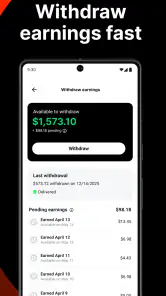
Noise may offer creators ways to earn through audience engagement, content activity, rewards, campaigns, or other monetization programs available inside the app. However, earnings are not guaranteed and usually depend on factors such as eligibility, content performance, participation requirements, and regional availability. Users should carefully read the current reward terms and withdrawal conditions before investing significant time or expecting regular income.
Is Noise - Make Money Creating free to download and use?
Noise is free to download, making it possible to try the app without paying an upfront purchase price. Users should still check the app’s terms for any optional purchases, subscriptions, or paid features before using them. Mobile data usage may also apply when watching or uploading content. If the app includes monetization tools, payment processing or withdrawal requirements could involve additional conditions that should be reviewed before use.
What type of content can users create and share on Noise?
Noise is intended for social content creation, so users may be able to publish posts, videos, audio, or other media supported by the current version of the app. Content rules apply, and creators are responsible for respecting copyright, privacy, and community standards. Anyone planning to upload regularly should review moderation policies carefully, since inappropriate or unauthorized material may be removed or lead to account restrictions.
Pros
- Simple interface makes creating short audio content easy.
- Offers multiple ways to discover and engage with creators.
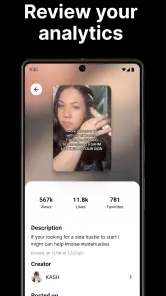
- Useful analytics help creators monitor audience activity.
- Supports community interaction through comments and reactions.
- Regular content updates keep the platform feeling active.
Cons
- Earnings may vary and are not guaranteed for every creator.
- Some features can require a learning curve for new users.
- Content quality depends heavily on the creator community.
- Notifications may become distracting without careful settings.
- Availability of monetization tools can differ by region.
- Category
- Business
- Version
- 1.8.1