National General
- 1.83K
- 4.6
- Installs
- 500.00K
- Price
- Free

Screenshots
Analysis by Reviewed
Insurance is usually something I think about only when I need proof of cover, want to check a policy detail, or have to deal with a problem on the road. National General is designed for those moments rather than for browsing or financial planning. It is a free finance app from National General Insurance, and its main appeal is putting insurance-related access on a phone instead of making me search through emails, paper documents, or a desktop account.
After using it, my overall impression is practical rather than exciting. The app makes the most sense for an existing National General customer who wants a more convenient way to manage insurance while moving around. It is also a useful companion when a quick connection is available and I need to retrieve account information without opening a full browser. However, it is not a replacement for comparing insurers, understanding every clause in a policy, or solving every complicated claim situation from a small screen.
How National General feels in everyday use
The app opens into a fairly focused insurance experience. That focus is a strength because it avoids the clutter I often associate with broader personal-finance apps. I am not being asked to track spending, connect bank accounts, or interpret investment charts. The purpose is narrower: give National General customers a mobile route to their insurance relationship.
That narrow purpose also explains who should install it. If my insurance is already with National General, having the app ready before I need it is sensible. If I am only shopping around, the value is more limited because the app is not a general marketplace for policies from different companies. Someone who prefers handling everything by phone or through an office may not gain enough from adding another account to a device.
The developer is National General Insurance, which gives the app a clear connection to the company whose services it represents. It is listed as a finance app, but I would describe it more specifically as an insurance-access tool. That distinction matters: the useful question is not whether it can replace a complete financial dashboard, but whether it reduces friction around insurance tasks.
Where connectivity changes the experience
The most important practical point is that the app is built around connected moments. When I have a reliable mobile or Wi-Fi connection, the phone becomes a convenient doorway into my insurance account. I can use it when I am away from a computer, when a document or policy detail is needed unexpectedly, or when I want to start dealing with an issue without waiting until I get home.
That convenience should not be confused with independence from the network. Insurance information is account-based and can change, so I treat the app as something that needs a working connection for its useful tasks. Before a long drive or a place with uncertain reception, I would prepare any information I might need rather than assume the app will be equally useful everywhere.
This creates a small but important habit: use the app while connected, not at the exact moment a signal disappears. If I know I may need insurance details during travel, I check the relevant information in advance and keep other essential travel documents accessible through a separate method. That is not a criticism unique to this app; it is simply the sensible way to handle a service whose value depends on reaching an online account.
A connected workflow is especially helpful after a minor incident. Instead of searching a website from a phone browser, I can begin with the insurer’s dedicated mobile route. The benefit is less about speed in every situation and more about reducing the number of places I have to look. When stress is already high, a familiar app icon can be easier to find than a saved email, a printed document, or a browser tab that may have expired.
Using it from the car, home, and other mobile settings
National General fits best into short, purposeful sessions. At home, I might use it while checking household paperwork or reviewing what information I have available for a vehicle. Away from home, I am more likely to open it for a quick account-related need. The phone format is valuable because insurance problems rarely wait for an ideal desk setup.
I would not use it while driving, and I would avoid trying to complete anything complicated on a roadside shoulder unless I was safely parked. A mobile insurance tool can make access easier, but it cannot remove the need for basic safety. In a realistic situation, I would first move to a safe location, then connect to a dependable network, then open the app and work through the available account path.
That order makes a difference. People often reach for their phone immediately after a stressful event, but the app is not a substitute for assessing injuries, contacting emergency services when necessary, or following local incident procedures. Its role begins after the urgent safety decisions, when I need to organize the insurance side of the situation.
For passengers, the mobile format can be more useful. A passenger can help retrieve account information while the driver concentrates on the road, provided the phone is handled safely. This is one of the more realistic advantages over a traditional desktop-only account: access is not tied to a particular room or computer.
The same flexibility can be a weakness if the screen is small or the connection is unstable. Reading policy language on a phone requires more concentration than reading a document on a larger display. For a quick lookup, that is acceptable. For careful comparison of coverage terms, exclusions, or complicated correspondence, I would rather use a larger screen or speak with a representative.
What happens when a session fails
Connected apps are convenient until a login session expires, reception drops, or a page takes too long to load. With National General, I would approach failure recovery methodically instead of repeatedly tapping buttons. First, I would check whether the phone has a stable connection. Then I would close and reopen the app, confirm that I am using the correct account details, and try again from a stronger network if possible.
This matters because a failed loading screen does not necessarily mean that an insurance request was lost. I would avoid assuming that a repeated tap created multiple submissions. If I had started an important process and the result was unclear, I would look for confirmation before trying again, and I would use the insurer’s normal support route if the status remained uncertain.
For a minor information lookup, that recovery process is usually manageable. For a time-sensitive claim or roadside problem, I would not let the app become the only channel. A phone call may be the better option when the situation requires immediate clarification, when the app will not load, or when I need to explain details that do not fit neatly into a mobile form.
This is one of the clearest trade-offs between the app and older alternatives. A browser account can sometimes be easier to inspect on a larger screen, while a phone call gives direct human guidance. National General’s app wins when I already know what I need and want a direct mobile route. It is less convincing when the issue is unusual, emotionally difficult, or dependent on a conversation.
I also recommend keeping the app updated. The current version is 1.90.778, and staying current is a sensible way to reduce avoidable compatibility problems. I would not update for the sake of changing settings immediately before a trip, though. My preference is to update while connected at home, open the app afterward, and confirm that I can still sign in before relying on it away from familiar surroundings.
Keeping mobile data under control
For most users, the app’s data-conscious use is straightforward because insurance tasks are usually occasional rather than continuous. I would open it for a specific purpose, complete that task, and close it instead of leaving it running throughout the day. That approach is better for battery and reduces the chance of using mobile data without realizing it.
Wi-Fi is my preferred option for reviewing several documents or handling a longer session. A strong home connection also makes it easier to read carefully and notice whether a request has completed. On a limited mobile plan, I would avoid repeatedly refreshing a slow page. If the app appears stuck, checking the signal first is more sensible than forcing several reloads.
There is also a privacy angle to using an insurance app in public. I would avoid opening account information on a crowded train or handing an unlocked phone to someone else. A connected service can be convenient, but convenience should not lead me to display personal insurance details where other people can see them. I would use the phone’s normal security protections and sign out or lock the device when appropriate.
Another useful habit is separating preparation from urgent action. While on a trusted connection, I can familiarize myself with the app and understand where account-related information is located. That makes a later mobile session shorter and less data-intensive. It also reduces the temptation to explore menus while dealing with a stressful real-world problem.
I would not treat the app as a document archive unless I have personally confirmed that a particular item remains accessible when needed. For important records, I prefer maintaining a second, legitimate way to retrieve them, such as the original account route or paperwork already associated with the policy. The app can be the convenient first stop without becoming my only backup.
Who will get the most from it
National General is a good fit for customers who already use National General Insurance and want account access in a mobile setting. It is particularly suitable for people who travel between home, work, and the car, or who dislike searching through email whenever an insurance question appears. The app also makes sense for users who are comfortable with online accounts and prefer self-service for routine needs.
It is less suitable for someone comparing multiple insurance companies. A comparison website or an independent agent is better for that decision because the app is tied to one insurer rather than designed to show a broad range of alternatives. I also would not choose it as my main tool if I need detailed financial planning, budgeting, or investment management; its finance classification should not be mistaken for those broader functions.
Customers who rarely use smartphones may find a call or desktop browser more comfortable. Likewise, anyone who needs extensive help interpreting coverage should not expect a mobile interface to replace professional guidance. The app can improve access, but it cannot turn a complicated policy question into a simple one.
Age suitability is broad: the app carries an Everyone rating, so its presentation is intended for a general audience. That does not mean every insurance task is equally easy for every user. A family member may need to help with account setup or reading documents, and that assistance should be handled carefully because insurance accounts contain sensitive information.
What the adoption figures suggest, and what they do not
The app has an average rating of 4.6 from around 5.1 thousand ratings, with roughly 1.8 thousand written reviews. It has also passed half a million installs, which tells me that it is not an obscure experiment and that many customers have chosen to try a mobile route to National General services.
I would still read those figures with context. A strong rating can indicate that the app solves routine access problems well, but insurance apps are often judged during very different situations. A smooth policy lookup and a stressful claim are not the same test. My own recommendation is therefore based on fit: it looks most valuable when the account is already established and the task is clear.
Version, cost, and the practical decision
National General is free to download, which removes the usual financial barrier to trying it. The more relevant cost is attention: I need to set it up, remember the login route, and keep it available before an urgent need arises. That small preparation is worthwhile only if I actually have National General insurance or expect to use its customer tools.
The release date is November 7, 2022, and the app supports operating systems from version 9 onward. That makes it accessible to many users with reasonably current phones, while anyone using an older device should check compatibility before planning around it. I would also leave enough storage and system stability for normal updates rather than treating an old phone as guaranteed support.
In my experience, the best way to judge this app is through a simple test: can I sign in while connected, find the information I commonly need, and understand what to do if the connection fails? If the answer is yes, it has earned a place on my phone. If I still need a browser, a phone call, and several saved documents for every ordinary question, its value becomes much smaller.
My connectivity verdict
National General works best as a connected insurance companion. Its strongest moment is not constant use but timely access: I am away from my desk, I need to check something related to my policy, and a working connection lets me reach the insurer through a focused mobile experience. That is a meaningful improvement over hunting through paperwork, even though it does not eliminate every other support channel.
The main limitation is equally clear. I would not depend on it as the sole resource during poor reception, an uncertain submission, or a complicated incident. Preparing ahead, using Wi-Fi for longer sessions, keeping the app updated, and knowing when to switch to direct support make the experience more dependable.
My recommendation is positive but specific: if you are a National General customer who wants convenient phone access, the free app is worth trying. I would install it before I need it, test it on a reliable connection, and keep a backup way to reach important insurance information. For shopping across insurers, detailed policy analysis, or situations requiring personal guidance, a different tool or a human representative will still be the better choice.
National General is most useful when it turns a connected phone into a prepared insurance tool, not when I expect it to solve every insurance problem by itself.
Pros
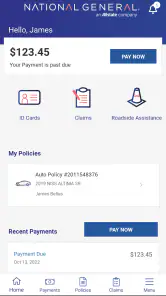
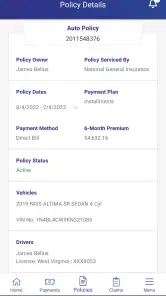
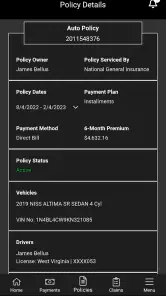
- Easy access to policy details
- coverage information
- and account documents.
- Lets users manage multiple insurance policies from one mobile app.
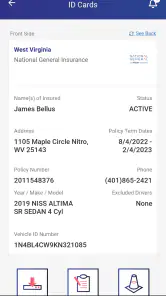
- Digital ID cards are convenient to retrieve when needed.
- Claim-related tools can simplify communication with the insurer.
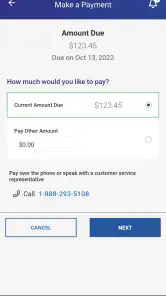
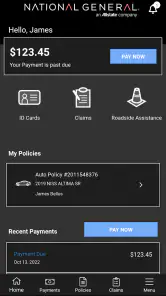
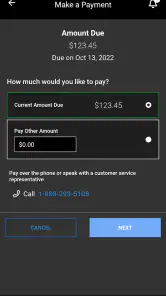
- Useful for checking billing details and payment status on the go.
Cons
- Some features may require an eligible National General policy.
- App performance and available tools can vary by insurance product.
- Certain requests may still require contacting an agent or support team.
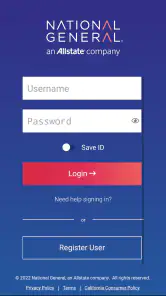
- Users may need to create or verify an account before accessing services.
- Availability of features can differ depending on location and policy type.

- Category
- Finance
- Version
- 1.90.778