MyShake Earthquake Alerts
- 1.29K
- 3.7
- Installs
- 1.00M
- Price
- Free

Screenshots
Analysis by Reviewed
What makes MyShake worth considering is its narrow, practical purpose: it can deliver earthquake early-warning alerts in California, Oregon and Washington. That is different from checking a general weather app after shaking starts. I see it as a chance to use a brief warning to begin a protective action, not as a promise that every quake will come with advance notice.
A warning is useful only if you know what to do
My advice is to decide on a simple response before an alert ever arrives. At home, that might mean getting away from windows and taking cover; at work, it could mean knowing which nearby sturdy desk or interior spot you can reach quickly. The notification itself cannot make a room safe, and a few seconds are best spent acting rather than trying to interpret a complicated plan.
This is also why I would treat the app as one part of preparedness, not the whole plan. It can help you react, while a household conversation about where to take cover and how to reconnect afterward handles the parts an alert cannot. If you are responsible for children or someone who may need assistance, agree on a response in advance instead of assuming everyone will make the same choice under pressure.
Where it fits alongside ordinary weather apps
A standard weather app is built around conditions such as rain, temperature, and forecasts; MyShake serves a different purpose by focusing on seismic alerts. I would not replace a weather app with it, or expect it to help plan a rainy commute. For someone in its supported region, the sensible setup is to keep ordinary forecasts for daily planning and use MyShake as a separate layer for earthquake awareness.
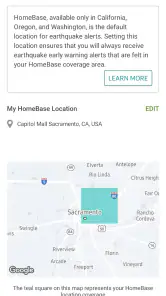
That regional focus matters. If you live outside California, Oregon, or Washington, the central early-warning use case may not match your needs, so I would not install it expecting broad earthquake coverage everywhere. Travelers can still find it relevant when visiting those states, but should check that their current location is the one they want alerts for rather than assuming a familiar setting follows them automatically.
For day-to-day expectations, it helps to remember that an alert is not a guarantee of advance notice. Earthquake early warning depends on the event and where you are in relation to it, so there may be little or no time to react. I would keep the phone accessible and avoid treating a quiet day as proof that the app is unnecessary; its value is in being available when circumstances allow a useful warning.
Make the phone part of the plan, not the plan itself
A useful way to think about an alert is as a prompt that works only if it reaches you at a moment when you can act. If the phone is buried in a bag across the room, left in another part of the house, or muted while you are focused on something else, the practical value of a warning can shrink. I would choose a usual place for the phone when I am at home or working, while still remembering that no placement guarantees I will notice every notification.
More From Our News Desk

Clash of Clans Is Won Between the Battles

Android Auto Makes the Case for Quieter Car Software

MobiOffice: Transforming Mobile Productivity with Seamless Integration

EA SPORTS FC™ Mobile Soccer: Redefining Mobile Sports Gaming

How Microsoft OneDrive Became a Mobile Productivity Giant

How Google Translate Breaks Language Barriers Effortlessly
It is also worth deciding what you will do if you are not in a familiar room. In a shop, station, or unfamiliar hotel, I would avoid rushing toward an exit just because an alert appears; instead, I would use the nearest safe option and follow the situation around me. The app can provide a cue, but it cannot assess obstacles, building layout, or the people beside you. Practicing a calm, simple response is more useful than trying to invent one after the alert arrives.
That distinction matters for anyone who expects an early-warning tool to behave like a personal safety guarantee. MyShake can support a decision; it does not make the decision for you. I would keep the response short enough to remember under stress, and discuss it with anyone who may need to act together with me.
A realistic day when a warning could matter
Imagine I am making breakfast at home in one of the supported states, with a mug in one hand and my phone nearby. If a warning appears, my first useful move is not to open screens and read every detail; it is to put down what I am holding and take the protective action I already chose for that room. If I am near a window, I would move away from it and take cover where possible. The value is not that the app predicts exactly what my kitchen will experience, but that it may give me a prompt to stop what I am doing and respond.
The same idea applies differently on a commute. If I am walking, I would pay attention to the immediate surroundings rather than staring at the display. If I am a passenger, I can react without trying to handle a phone while someone else is driving. These small adjustments are easy to overlook when discussing alerts in the abstract, but they shape whether a notification is useful in real life.
Afterward, I would use the moment to check in with family or coworkers according to a plan we had already discussed, not assume the app itself coordinates everyone. A household can decide where to reconnect and who may need extra help. That preparation is a separate task, but it makes the alert more actionable than a notification received with no shared expectations.
What the alert can and cannot settle
A warning cannot tell me that my exact building is safe, and I would not treat a phone notification as a substitute for instructions from emergency authorities. The right response can depend on where I am and what is immediately around me. I would use MyShake for its focused alert role, then rely on sound judgment and local guidance for broader decisions before or after an event.
Another practical question is whether it makes sense to keep the app when I am only visiting the region briefly. I think it can, if I will spend time in California, Oregon, or Washington and want the same alert channel available during that visit. But I would set expectations modestly: a short trip does not make an alert certain, and installing an app should not displace a quick look at the room, a simple safety plan, or awareness of local instructions.
People may also wonder whether a warning means they should stop everything and look for more information. My view is that the initial response should be simple and immediate; checking additional information is a later step, once it is safe and useful to do so. I would not let curiosity about an event delay a protective action.
How I would fit it into a small safety routine
I would keep the routine manageable: check that the app is set up for the place where I am spending time, keep my phone reasonably accessible, and choose a protective action for the rooms I use most. If I travel to a different supported area, I would review the location setting rather than assume the app will reflect my plans. These habits take less effort than constantly monitoring earthquake information, which would be distracting and unlikely to improve everyday readiness.
For a family, I would make the plan concrete without turning it into a long checklist. Agree on where to take cover in the rooms where people spend time, and decide how to check on one another afterward. If a child or another household member needs help moving or understanding an alert, assign that support in advance. An app notification cannot coordinate those choices in the moment.
There is a balance here: too little preparation leaves a warning hard to use, while overreliance on the phone can create false confidence. I would treat MyShake as one cue among several, keep ordinary emergency supplies and guidance in mind, and accept that an alert might not offer meaningful lead time. That is a more realistic reason to install it than expecting it to remove uncertainty.
Ever wondered if there’s a way to sense an earthquake before it actually hits? Well, with MyShake Earthquake Alerts, you’re kind of getting a head start. This app is not only smart but could very well be a lifesaver. As someone living in an earthquake-prone area, I decided to give it a whirl, and here’s what I found.
Getting Grounded with MyShake
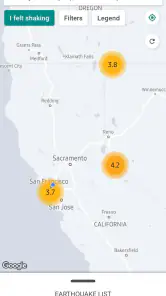
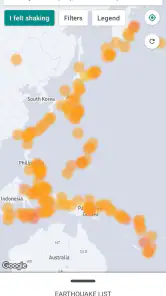
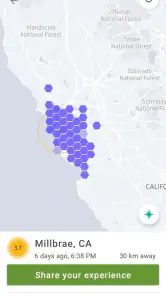
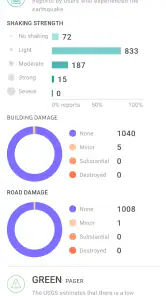
The first thing that caught my attention once I downloaded MyShake Earthquake Alerts was its intuitive interface. I mean, I'm no tech wizard, but the setup was a breeze. The app offers real-time earthquake information, which is pretty crucial when you’re in a region where the earth likes to, well, shake things up a bit.
Features that Rock
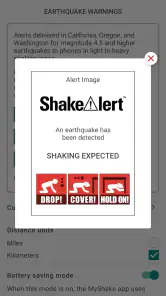
Let’s talk about what makes this app tick. The real star of the show is its ability to send you notifications about seismic activity. Imagine getting a heads-up about an impending earthquake! It’s like having a mini seismic expert right in your pocket.
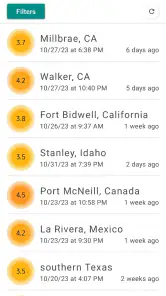
You can customize alerts based on your location, which is super handy if you’re traveling. Just pop in your new location, and the app adjusts accordingly. I also found the historical data feature fascinating. You can check out past quakes and their magnitudes, adding a bit of nerdy fun to your day.
Why It’s a Must-Have
Now, I’ve got to say, having MyShake Earthquake Alerts is like having a personal safety net. The app’s community-based approach means more data, which equals more accurate alerts. Plus, the app runs quietly in the background, only nudging you when it’s important. So, no unnecessary drain on your battery or data.
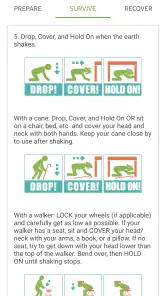
One of the most comforting aspects is its educational component. The app doesn’t just leave you hanging with alerts; it also provides safety tips and information on what to do before, during, and after an earthquake. It’s like a crash course in earthquake preparedness!
The Final Shake-Up
In a world where natural disasters are unpredictable, having MyShake Earthquake Alerts feels like a bit of a superpower. Sure, it doesn’t stop earthquakes, but it gives you a precious few seconds to act, which can make all the difference. Whether you’re chilling at home or on the go, this app is an essential tool for anyone who wants to stay one step ahead of Mother Nature.
So, if you’re looking for peace of mind and a better understanding of the ground beneath your feet, give this app a go. It’s like having a friend who’s got your back, even when the ground is shaky.
Who is likely to benefit most
I would recommend it first to people who live, work, or regularly travel in California, Oregon, or Washington and want earthquake warnings alongside their usual weather tools. It is free, rated for Everyone, and developed by the UC Berkeley Seismological Laboratory, which makes its earthquake focus clear. The app has a 3.7 average from around 5,200 ratings, with about 1,300 written reviews, and has passed over a million installs. Those figures suggest a widely used tool, though the mixed rating is a reminder that no alert app can satisfy every expectation.
It is less compelling if you mainly want forecasts, storm tracking, or a general-purpose weather dashboard. I would also skip it as a substitute for local emergency guidance or a household safety plan. The useful question is not whether it replaces other apps, but whether a focused seismic alert channel makes sense for the places you spend time.
Practical habits and the real trade-off
In an ordinary week, I would set the relevant location before a trip, keep the app available, and make sure the people I live with know what action we plan to take if a warning comes through. For example, if I were visiting family in one of the supported states, I would identify a safe place in the room when I arrive rather than waiting until a notification appears. That small habit turns an alert from a startling interruption into a cue for a decision already made.
There is a trade-off between reassurance and expectation: having an alert channel can feel comforting, but it should not lead anyone to assume there will always be time to move. A warning may arrive close to shaking or not be useful in a particular situation. I would keep expectations realistic, use the educational guidance to prepare, and rely on immediate surroundings when deciding how to protect myself.
What to expect from the app over time
MyShake is a weather-category app with a very specific job rather than a broad forecast service. It was released on February 10, 2016, and its current version is 3.1.34; it requires operating system version 9 or later. I would think of those details mainly as a quick compatibility check before installing, not as a reason to expect a particular alert in every location or event.
The most useful way to judge it is by whether its regional earthquake focus matches your routine. If it does, the app can sit beside your normal forecast app and preparedness habits without needing to become something you constantly watch. If it does not, a general weather app will serve everyday planning better, while local emergency information remains the right reference for broader safety decisions.
MyShake Earthquake Alerts Frequently Asked Questions
Where is MyShake Earthquake Alerts available?
MyShake Earthquake Alerts is intended for people in California, Oregon, and Washington, where it offers earthquake early-warning alerts. If you live outside these states or are traveling, the app may not provide the same alert coverage for your location. Its focus is earthquake awareness, so it is best viewed as a local safety tool rather than a general weather or emergency-alert app.
Who develops MyShake Earthquake Alerts, and what is it designed for?
MyShake Earthquake Alerts is developed by the UC Berkeley Seismological Laboratory. It is a weather-category app focused specifically on earthquake early warnings and information, rather than forecasts for everyday weather. The app is aimed at helping people in its supported region receive notice of earthquake activity and learn about preparedness, making it useful to consider as one part of a broader personal safety plan.
What is MyShake Earthquake Alerts app and how does it work?
MyShake Earthquake Alerts is a mobile application designed to provide real-time earthquake alerts and information. It utilizes a network of smartphones to detect seismic activity. The app sends alerts to users based on their location, allowing them to take immediate action to ensure their safety. It also provides educational resources to help users understand earthquake preparedness.
Is MyShake Earthquake Alerts app free to use?
Yes, MyShake Earthquake Alerts is free to download and use. It offers essential features such as real-time alerts and earthquake information without any cost. The app is available for everyone, and it has an average rating of 3.7 from around 5,200 ratings. Its core appeal is access to earthquake alerts and information without a download charge.
How accurate are the earthquake alerts provided by MyShake?
The accuracy of MyShake Earthquake Alerts largely depends on the network of smartphones and the seismic data they collect. While it aims to provide timely and accurate alerts, no system can guarantee 100% accuracy due to the complex nature of seismic events. However, MyShake continually updates its algorithms to improve detection and alert precision, making it a reliable tool for earthquake awareness.
Pros
- Real-time earthquake alerts
- User-friendly interface
- Customizable alert settings
- Comprehensive earthquake data
- Battery efficient
Cons
- Limited offline functionality
- Ads in free version
- Occasional notification delays
- Requires internet connection
- Limited coverage in rural areas

- Category
- Weather
- Version
- 3.1.34