Miracle-Ear
- 513.00
- 4.6
- Installs
- 50.00K
- Price
- Free

Screenshots
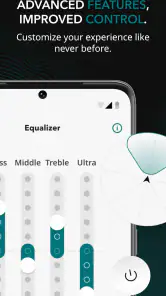

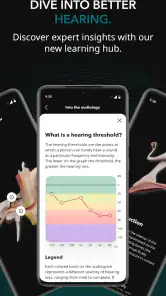
Analysis by Reviewed
I came away from Miracle-Ear with the impression that it is most useful when treated as a practical hearing-care companion rather than a complete replacement for professional advice. That distinction matters. The app sits in the medical category, is developed by Miracle-Ear, and is free to use, but its real value depends on how closely your daily needs match the hearing support it is designed to provide.
My overall view is positive, with an important qualification: this is a better fit for people already connected with Miracle-Ear or actively exploring hearing support than for someone looking for a general-purpose sound amplifier. The app has a strong identity, an approachable purpose, and enough public interest to make it worth considering. It holds an average rating of 4.6 from around 5.6 thousand ratings, which suggests that many users find it helpful, although a rating alone cannot tell you whether it will suit your particular hearing situation.
What using the app feels like in everyday life
The most convincing way to understand this app is to imagine a normal day rather than a clinical appointment. A person may want a more convenient way to stay engaged with hearing care, keep useful information close, or make hearing-related routines less awkward. In that setting, an app with the simple role of a personalized companion can be more approachable than relying on scattered notes, occasional conversations, or a separate tool for every small task.
I especially see the appeal for someone who is beginning to take hearing concerns seriously. Hearing difficulties are often easy to postpone because they develop gradually. A dedicated app can make the subject feel more manageable, giving the user a place to return to instead of treating hearing care as something that only happens during a visit. The strongest benefit is continuity: it keeps hearing support connected to ordinary routines.
That does not mean I would open it expecting it to diagnose a condition or solve every listening problem. Medical apps need to be judged by their boundaries as much as by their convenience. If you have sudden hearing loss, pain, dizziness, discharge, or another worrying symptom, an app should not delay medical attention. Miracle-Ear makes more sense as part of a broader care process than as the only resource you use.
The app is marked for Everyone, which makes its intended audience broad and accessible. In practical terms, that is useful for adults managing their own hearing needs as well as family members helping a parent or partner. A relative can also benefit from having a clearer understanding of the user’s hearing-related routine, although the person with the hearing concern should remain in control of medical decisions and personal information.
A useful companion for people already thinking about hearing care
The app’s greatest strength is its focus. Many general health applications try to cover exercise, medication, appointments, sleep, and symptoms all at once. That breadth can be convenient, but it often makes hearing concerns feel like a small item in a crowded dashboard. Miracle-Ear takes the opposite approach by centering the hearing experience.
That narrow focus may help users pay attention to things they would otherwise ignore. For example, I would be more likely to notice whether conversations are difficult in restaurants, whether television volume causes tension at home, or whether I am avoiding group situations. These observations are more useful when they are made consistently instead of remembered vaguely at the end of an appointment.
One practical tip is to use the app after a real listening situation, not only when you are sitting quietly at home. A busy café, a family meal, a walk beside traffic, and a one-to-one conversation can expose different difficulties. Thinking about those situations while they are still fresh can help you describe your experience more accurately when speaking with a hearing professional.
A second useful habit is to separate “I could not hear” from “I could not understand.” Those are not always the same problem. Background noise, distance, accents, speech speed, and room acoustics can all affect understanding. Keeping that distinction in mind makes any hearing-related tool more valuable because it encourages better observations instead of a single vague judgment.
Where the app fits better than ordinary alternatives
The usual alternatives are not necessarily other medical apps. Many people rely on a phone’s built-in accessibility settings, generic sound-amplification tools, paper notes, or occasional visits to a clinic. Each option has a place, but none automatically offers the same focused identity as a hearing companion from the hearing-care brand itself.
Built-in phone settings can be excellent for users who only need a basic adjustment and already understand how to configure their device. They are often less helpful for someone who wants a more guided relationship with hearing care. Generic amplification apps may seem attractive because they promise a quick fix, but I would be cautious about treating them as substitutes for assessment or professionally appropriate support.
Paper notes remain surprisingly useful, especially for recording examples before an appointment, but they are easy to lose and do not feel connected to a digital routine. A general health tracker may store reminders, yet it is unlikely to keep hearing-related observations at the center. Miracle-Ear’s advantage is therefore not simply that it is an app; it is that the app is built around one specific area of health.
There is also a trust consideration. A hearing-focused app from Miracle-Ear may feel more relevant to a person who is already familiar with the developer’s services or products. That does not automatically make every part of the experience better, but it can reduce the feeling that you are piecing together advice from unrelated tools.
Small habits that make the experience more useful
I would not judge the app after opening it once. Hearing support is personal, and its usefulness often appears through repeated use. Try making it part of a routine connected to a stable event, such as after dinner or before leaving for work. The goal is not to spend a long time inside the app; it is to make hearing care easier to remember.
Another good approach is to involve the person who regularly notices the same communication problems. A partner might observe that you miss comments from another room, while you may be more aware of difficulty in noisy places. Those perspectives should not be treated as identical, but comparing them can reveal patterns that are easy to overlook alone.
I also recommend avoiding the temptation to use a hearing app as proof that everything is fine. A comfortable day does not rule out a continuing problem, just as a difficult conversation does not explain its cause by itself. The app can help organize awareness, but interpretation still belongs with an appropriate professional when symptoms persist or interfere with life.
For people who use hearing support while working, the most useful test is not whether the app feels impressive during a quiet setup. It is whether it helps them handle the situations that actually cause strain: meetings, phone calls, open offices, shared meals, or conversations when someone is speaking from another room. I would give those situations priority when deciding whether the app deserves a permanent place on the phone.
The limitations I would consider before installing
The first limitation is that a focused companion cannot replace a full hearing evaluation. That may sound obvious, but it is easy for any health app to create a false sense of completion. If you are searching for a diagnosis, a medical explanation, or a guaranteed correction for a complex hearing problem, this is not the right tool to rely on by itself.
The second limitation is that its usefulness may be uneven for people outside the Miracle-Ear ecosystem. Someone who has no relationship with the developer may still find value in a hearing-centered app, but the experience is likely to feel most relevant to users who understand why they are using a Miracle-Ear companion. If you want a completely brand-neutral hearing log or a broad accessibility toolkit, another option may suit you better.
There is also a psychological limitation. Hearing care can make users feel self-conscious, particularly when family members have been encouraging them to seek help. An app can make the process less intimidating, but it cannot remove the emotional work involved in accepting that communication has become harder. I would use it as a private aid for becoming more informed, not as a way to avoid an honest conversation.
People who want a highly technical audio-control tool may also be disappointed if their main goal is detailed sound experimentation. The app’s identity is medical and supportive, not that of a studio utility or an advanced audio laboratory. If your priority is manual control over every aspect of phone audio, accessibility settings or a specialist audio application may be a better match.
Finally, the public numbers should be read with some perspective. The app has more than fifty thousand installs and around five hundred written reviews, which shows meaningful adoption but does not guarantee the same experience for every user. Hearing needs vary widely, and reviews can reflect different devices, expectations, and stages of care. I would treat the rating as an encouraging signal, then judge the app against your own use case.
Who should give it a try
I would recommend Miracle-Ear first to someone who wants a dedicated hearing-care companion and prefers a focused experience over a collection of unrelated phone settings. It is particularly suitable for a person who is already exploring hearing support, wants to pay closer attention to everyday listening difficulties, or would benefit from keeping hearing care visible between professional interactions.
It may also help a family member who is trying to support someone without turning every conversation into an argument about hearing. Instead of repeatedly saying “you need to get this checked,” a relative can encourage a more organized and self-directed approach. The user should still decide what information to share and what next step to take.
I would be more cautious about recommending it to someone seeking emergency guidance, a definitive diagnosis, or a universal fix for poor hearing. It is also not my first choice for a user who only needs a simple phone accessibility adjustment, or for an audio enthusiast searching for deep manual sound controls. In those cases, a clinician, built-in accessibility feature, or specialized audio tool may be more appropriate.
The app is free, which lowers the barrier to trying it. That matters in medical technology, where people may hesitate to add another expense before they know whether a tool fits their routine. Still, free access should not be confused with complete care. I would use the low cost as a reason to explore it, not as a reason to skip professional guidance when that is needed.
Version details and long-term confidence
The current version is 5.2.10(4), and the app was released on July 7, 2025. Those details place it in a relatively recent stage of its current availability, so I would keep expectations realistic about how much long-term history is available to judge. A newer app can feel fresh and focused, but it also deserves a little patience as users discover which routines work best.
What matters more to me than the version label is whether the app continues to make hearing care easier without becoming another source of work. If opening it feels like administration, people will stop using it. If it helps users notice patterns, prepare better conversations, and stay engaged with their hearing needs, then it has earned its place even without trying to do everything.
Before relying on it regularly, I would make sure the phone is running a compatible operating system, since the minimum requirement is iOS or Android equivalent version 9. I would also set aside a few minutes to understand its purpose rather than judging it as soon as it opens. Medical tools reward careful setup and realistic expectations more than quick experimentation.
My final recommendation
Miracle-Ear succeeds because it gives hearing care a clear place in everyday life. I like that its purpose is narrower than a general wellness app, and I think that focus can be reassuring for people who are ready to pay attention to hearing rather than continue postponing it. Its free price and Everyone age rating make it approachable, while the strong average rating indicates that it has connected with many users.
My recommendation is therefore specific: try it if you want a hearing-focused companion, especially when Miracle-Ear already plays a role in your care journey. Use it during real listening situations, notice patterns instead of chasing one-off results, and bring meaningful observations into professional conversations. That is where I believe the app offers the most practical value.
I would skip it as a sole solution if you need urgent medical help, a formal diagnosis, or advanced audio engineering controls. For those needs, a clinician or a different kind of tool is the better choice. For everyone else, the app is most worthwhile when it turns hearing care from an occasional concern into a manageable daily habit.
Pros
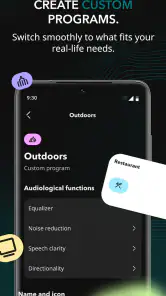
- Personalized hearing profiles can improve clarity in different environments.
- Remote support may reduce the need for frequent visits to a hearing center.
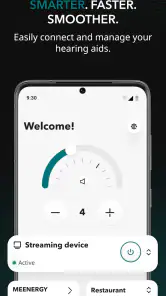
- Compatible accessories can stream audio from selected phones and devices.
- Appointment tools make it easier to arrange consultations and follow-up care.
- The app can help users monitor settings without handling the hearing aids.
Cons
- Some features require compatible Miracle-Ear hearing aids and newer mobile devices.
- Bluetooth pairing may be unreliable after phone updates or device restarts.
- Battery and connection status may not refresh instantly in the app.
- Advanced adjustments can feel confusing for users unfamiliar with hearing technology.
- Availability of remote services and accessories may vary by country or provider.

- Category
- Medical
- Version
- 5.2.10(4)