MindEar | Tinnitus Relief
- 34.00
- 3.6
- Installs
- 10.00K
- Price
- Free

Screenshots



Analysis by Reviewed
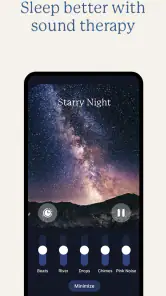
Tinnitus is one of those problems that can become most noticeable when everything else goes quiet. I tried MindEar with that in mind: not as a magic cure, but as a medical app aimed at helping people manage ringing or other unwanted ear sounds, especially around sleep. My first impression was that its appeal comes from making the problem feel more approachable. Instead of treating tinnitus as something I should simply ignore, the app frames it as something I can work with through guided virtual therapy.
That distinction matters. A sound player can distract me for a while, while a therapy-oriented app asks me to build a different relationship with the noise. MindEar, developed by MindEar, sits between those two ideas. It is free to install, rated for Everyone, and available for devices running Android 8.0 or later. There are also optional in-app purchases, ranging from $5.99 to $289.99 per item, so the free entry point is useful, but I would still examine the purchase screen carefully before committing to anything.
After spending time with it, I see a product with a strong first-week idea and a more complicated long-term question. The central value is not novelty alone. It depends on whether the exercises fit naturally into my routine, whether the guidance feels relevant to my particular tinnitus, and whether I can keep returning without feeling that I am repeating the same promise. That makes this a potentially helpful companion for some people, but not a universal replacement for professional assessment or every other tinnitus tool.
What the first week feels like
The opening experience is built around reassurance and participation rather than a simple library of background sounds. That is important because tinnitus can create anxiety, and anxiety can make the sound feel even more intrusive. A calm, structured introduction gives me something specific to do when I would otherwise be lying awake and monitoring my ears.
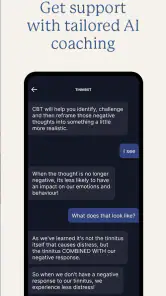
I found the virtual-therapy approach more engaging than pressing play on a generic sleep track. It encourages me to pay attention to my reactions, settle my focus, and approach the ringing with less alarm. The benefit is subtle rather than dramatic. I would not expect a single session to erase tinnitus, and anyone promising that should be treated cautiously. The more realistic goal is to reduce the amount of attention and emotional energy the sound consumes.
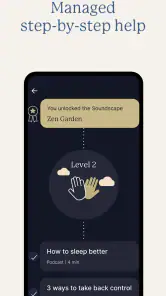
A useful first-week routine would be to use the app at the same point each evening, before the moment when frustration normally peaks. For example, if I usually become aware of the ringing after turning off the lights, I would start a session while getting ready for bed rather than waiting until I am already irritated. This turns the app into a transition activity instead of an emergency button.
That timing also reveals one of the app’s practical strengths. Sleep-related tinnitus is not only a sound problem; it is a concentration problem. When the room is quiet, I can end up checking whether the ringing is still there, wondering if it has changed, and becoming more alert in the process. A guided session can interrupt that loop. It gives my attention a path to follow, which is often more useful than telling myself not to think about the noise.
More From Our News Desk

Clash of Clans Is Won Between the Battles

Android Auto Makes the Case for Quieter Car Software

MobiOffice: Transforming Mobile Productivity with Seamless Integration

EA SPORTS FC™ Mobile Soccer: Redefining Mobile Sports Gaming

How Microsoft OneDrive Became a Mobile Productivity Giant

How Google Translate Breaks Language Barriers Effortlessly
MindEar is also approachable for someone who has never tried tinnitus-focused therapy. The language and purpose are easier to understand than a collection of clinical terms or a complicated audio-mixing setup. I can begin with the idea of managing my response rather than needing to know exactly which tinnitus category I have.
Still, the first-week appeal has limits. If I want an instant masking sound, a dedicated white-noise or nature-sound app may feel faster. Those alternatives usually ask very little of me: choose a sound, set a timer, and go to bed. MindEar asks for more attention and willingness to practise. That is a strength when I want to learn a coping method, but a weakness when I am exhausted and only want immediate background audio.
I would also separate two situations that are easy to confuse. If the ringing is familiar, medically assessed, and mainly troublesome at bedtime, an app like this may be a reasonable self-management aid. If the sound is sudden, one-sided, pulsating, accompanied by hearing loss, dizziness, pain, or other worrying symptoms, using an app as the first response would be the wrong choice. Those situations deserve medical attention rather than a self-guided digital routine.
Turning sessions into a repeatable habit
The most useful way to judge the app during the first week is not to ask whether the tinnitus disappears. I would instead notice three smaller changes: how quickly I become frustrated, how long I stay focused on the sound, and whether returning to sleep becomes easier. Those are practical outcomes that can show progress even when the ringing itself remains.
I would keep a very simple note after each session, using a few words rather than a detailed diary. “Settled quickly,” “too distracted,” or “helped before sleep” is enough. This helps me identify when the app works best without turning tinnitus management into another demanding task. It also prevents me from judging every session by the loudness of the sound alone, which can fluctuate for reasons outside the app.
Another non-obvious trade-off is that guided therapy can make me more aware of my internal reactions at first. That awareness may be useful, but it can also feel uncomfortable if I am already monitoring the ringing constantly. I would use shorter, calmer sessions when attention seems to amplify worry, and avoid forcing myself to continue simply because I started. The point is to reduce distress, not to win a test of endurance.
Whether it earns a place after the novelty fades
The month-to-month value depends on repetition. Tinnitus management is rarely a one-time task, so the app has to remain useful after the initial curiosity disappears. In my view, MindEar has a better chance of lasting than a novelty relaxation app because its purpose is connected to a recurring problem. Every difficult night can create a reason to return, and the therapy framing gives the sessions a clearer role than simply filling silence.
However, recurring value is not automatic. If I use it only when I am desperate, I may associate it with bad nights and judge it harshly. A more sustainable approach is to practise when symptoms are manageable, so the routine is familiar before a difficult evening arrives. This is similar to learning any coping skill: the method is easier to use under pressure when I have already tried it in calmer conditions.
For someone with work-related concentration problems, the app could also be useful outside bedtime, provided the chosen session does not interfere with the task. A short practice during a quiet break might help me reset after a period of tinnitus awareness. I would not use it as a substitute for addressing an unsuitable workplace, excessive noise exposure, or poor sleep habits, but it can become one part of a broader routine.
The app’s category matters here. As a medical app for tinnitus management, it is more focused than a general meditation product. A meditation app may be excellent for stress, breathing, or broad sleep support, but it may not speak directly to the specific frustration of ear ringing. MindEar’s advantage is that it starts with that problem instead of asking me to translate a general mindfulness exercise into a tinnitus strategy.
On the other hand, a general sleep app may offer more variety if my main difficulty is falling asleep for many different reasons. If I need stories, music, adjustable ambience, or a broad catalogue of relaxation content, MindEar may feel narrow. Its focus is a benefit for tinnitus-related use, but that same focus limits its usefulness as an all-purpose sleep application.
The public response suggests a product that has attracted a modest but real user base rather than becoming a mainstream essential. It has over ten thousand installs, with an average rating of 3.6 from around two hundred ratings and several dozen written reviews. I would read that as a reason to keep expectations measured: enough interest to show that the idea resonates with people, but not a signal that it works equally well for every type of tinnitus or every personality.
The current version is 1.1.34, and that is worth checking when considering long-term use because app-based therapy can change over time. I would pay attention to whether the experience remains easy to navigate and whether the available sessions continue to feel relevant. A version number alone does not tell me how much has changed, but it does remind me that the product is an evolving digital service rather than a fixed audio file I can rely on forever.
The real maintenance burden
MindEar is free to download, which lowers the risk of trying it. The more important question is what happens after the initial free experience. Optional purchases can cost from $5.99 to $289.99 per item, a wide range that makes it especially important to understand what I am selecting before paying. I would not assume that installing the app means every therapy element is permanently available without cost.
That purchase structure can affect trust. When I am dealing with a health concern, I want to know exactly what I am getting and whether the benefit justifies the commitment. A low-cost trial may be reasonable for someone who already feels helped by the approach. A much larger purchase deserves more caution, particularly if I have not yet established a consistent routine or if my tinnitus has not been medically evaluated.
The maintenance burden is not only financial. I also have to maintain the habit, choose suitable moments, and avoid turning the app into another source of pressure. If I skip several days, I should be able to return without feeling that I have failed. A good personal rule would be to treat the app as a tool I can pick up again, not as a programme whose value disappears after an imperfect week.
For sleep, phone use itself can become a complication. I would prepare the session before getting comfortable, lower the screen brightness, and avoid browsing other apps afterward. The therapy may be calming, but opening a phone at bedtime can easily lead to notifications, messages, or unrelated scrolling. In that sense, the app works best when I create a small boundary around it rather than using it in the middle of general phone activity.
Another practical question is whether I can use it when I have little energy. If the session requires active concentration every time, I may abandon it on the nights I need help most. I would therefore test it during both a normal evening and a particularly tired one. The right app for me is not merely effective in ideal conditions; it must be manageable when tinnitus, fatigue, and impatience arrive together.
Where fatigue and frustration can appear
The first source of fatigue is repetition. Therapy exercises can be valuable, but repeated guidance may begin to feel predictable. That is not necessarily a flaw—practice often requires repetition—but the app has to give me a reason to continue beyond the feeling that I have already heard the basic idea. If I prefer constant novelty, a large sound library may keep me engaged more successfully.
The second source is expectation. Because the app is presented around tinnitus relief, I might hope for a direct reduction in the sound itself. If that does not happen quickly, I could conclude that it is ineffective even if it helps me react with less distress. I think the fairest test is to judge sleep, attention, and emotional response separately from perceived loudness.
The third is suitability. Tinnitus is not identical from person to person. Some people notice a steady high tone, others describe fluctuating sounds, pressure, pulsing, or several noises at once. A single digital approach cannot accommodate every cause or symptom pattern. MindEar may be a helpful behavioural support, but it should not be treated as a diagnostic instrument or as proof that a medical assessment is unnecessary.
There is also a personal comfort issue. Some users may prefer a therapist, audiologist, support group, or face-to-face conversation because discussing tinnitus reduces isolation. Others may value privacy and the ability to practise alone. MindEar is better suited to the second group, although even private app use can work alongside professional care rather than replacing it.
I would skip it if my main goal is to cover tinnitus with continuous ambient sound and nothing more. A sound generator is probably the more direct option in that case. I would also skip relying on it alone if tinnitus is seriously affecting hearing, mood, work, or sleep for a prolonged period. The app can be part of a plan, but severe or changing symptoms call for a wider plan.
One useful way to avoid fatigue is to assign the app a specific job. I would not open it automatically every time I notice ringing. Instead, I might use it for a pre-sleep routine, after a stressful day, or when I catch myself repeatedly checking the sound. That selective use preserves its meaning and makes it easier to tell whether it is helping in the situations that matter most.
My long-term verdict
After the novelty fades, MindEar earns lasting space only if I value guided tinnitus management more than instant distraction. Its strongest idea is the shift from fighting the sound to changing my response to it. That can be a meaningful difference during quiet evenings, particularly for someone whose sleep is disrupted by worry and attention rather than by sound alone.
I like that the app has a clear medical focus without requiring me to begin with specialist knowledge. The approach is approachable, and the free download makes experimentation relatively easy. I also appreciate that it can fit into a small daily routine rather than demanding a major lifestyle change. Used consistently and with realistic expectations, it may become a useful companion for managing difficult moments.
My reservations are equally clear. It is not a cure, it may feel too narrow for people seeking a complete sleep platform, and the optional purchase range means I would proceed carefully before spending money. The therapy style will not suit everyone, especially users who want passive audio or who find guided attention uncomfortable. Its value is personal and behavioural, not something I would measure only by whether the ringing vanishes.
For a realistic everyday scenario, imagine waking at night and immediately noticing the tone. I would avoid checking the clock repeatedly, open the app with the screen kept dim, and use a familiar session before returning to bed. If the exercise helps me stop evaluating the sound, it has done something worthwhile even if the tinnitus remains audible. If it makes me more alert or frustrated, I would stop, use a simpler sleep aid, and consider what other support I need.
That example captures my final view: this is a tool for practice, not an emergency promise. It is best for people willing to build a calm response over time, and less suitable for anyone expecting a quick switch that turns tinnitus off. I would recommend trying the free experience, observing how it affects sleep and attention over several ordinary uses, and only then deciding whether any purchase makes sense.
MindEar is worth keeping when its guided therapy becomes part of a comfortable routine rather than another obligation. As a free medical app for Everyone, it offers a sensible starting point for tinnitus self-management, but lasting benefit depends on consistency, symptom context, and honest expectations. I would recommend it to a friend who wants a tinnitus-specific approach and is open to practising, while also reminding them that new, severe, or unusual symptoms deserve professional medical advice.
MindEar | Tinnitus Relief Frequently Asked Questions
Is MindEar free to download, and what costs should I expect?
MindEar is free to download, but some options are offered through in-app purchases. The available purchase prices range from $5.99 to $289.99 per item, so the total cost depends on what you choose and what is available in your region. Review the purchase details in your app store before confirming, especially if you are considering a paid program or ongoing access.
What devices can run MindEar?
MindEar is available for Android devices running Android 8.0 or later. Before downloading, check your device’s operating system version and make sure you have enough space for the app and any content you plan to use. MindEar is a medical app from developer MindEar, and its store content rating is Everyone, though the exercises are aimed at people seeking support with tinnitus.
What is MindEar, and how does it help with tinnitus?
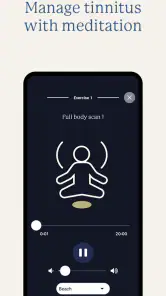
MindEar is a tinnitus-support app designed to help users manage the way they react to ringing, buzzing, or other phantom sounds. It typically combines educational information, relaxation exercises, mindfulness techniques, sound-based activities, and guided support. The goal is not to remove the underlying cause instantly, but to reduce stress, improve coping skills, and make tinnitus feel less intrusive during everyday life.
Can MindEar cure tinnitus or replace medical treatment?
No. MindEar should be viewed as a self-management and wellbeing tool rather than a cure for tinnitus. Tinnitus can have many possible causes, including hearing changes, earwax, medication effects, or other medical conditions. The app may help users cope with symptoms, but it cannot diagnose or treat the underlying cause. Anyone with persistent, worsening, or concerning tinnitus should consult a qualified healthcare professional.
Is MindEar suitable for everyone experiencing tinnitus?
The app may be useful for adults who want practical exercises and educational guidance for managing tinnitus-related stress and attention. However, it may not be appropriate as the only source of support for children, people with significant hearing problems, or users experiencing severe anxiety, depression, sleep disruption, or sudden hearing changes. If tinnitus begins suddenly, affects one ear, follows an injury, or occurs with dizziness or neurological symptoms, seek medical advice promptly.
Pros
- Guided exercises are simple enough for beginners to follow.
- The app offers a structured routine for regular tinnitus management.
- Audio sessions can fit easily into short daily breaks.
- Useful educational content helps explain how tinnitus may affect attention.
- A calm interface makes navigation feel less overwhelming.
Cons
- Results may vary widely depending on the cause and severity of tinnitus.
- Some exercises can feel repetitive after extended use.
- Several features may require a subscription or in-app purchase.
- It does not replace assessment by an audiologist or medical professional.
- Audio-based sessions may be unsuitable for users sensitive to certain sounds.
- Category
- Medical
- Version
- 1.1.34