Marathon Health
- 88.00
- 3.5
- Installs
- 50.00K
- Price
- Free

Screenshots
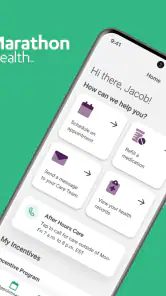
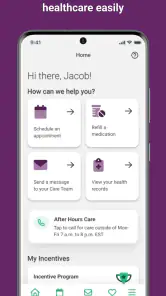
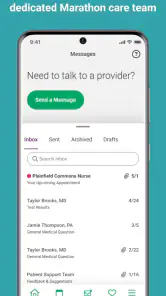
Analysis by Reviewed
I approached Marathon Health as a practical medical app rather than a general wellness companion. Its promise is simple: stay close to your health needs through a phone, with Marathon Health acting as the developer behind the experience. That sounds modest, but it changes how I judged it. I was less interested in flashy extras and more interested in whether the app feels easy to open, understandable when I am busy, and dependable enough to fit into an ordinary health routine.
The app is free and intended for everyone, which makes it approachable for people who want to explore it without committing money first. It belongs in the medical category, and its public reach is already meaningful, with more than fifty thousand installs. Its average score sits at three and a half stars from roughly two hundred ratings, alongside close to a hundred written reviews. That combination tells me to keep expectations balanced: there is enough user activity to make the app worth considering, but not enough consensus to treat it as a universally smooth experience.
How Marathon Health feels in everyday use
My first impression is that this is the kind of app I would use in short sessions, not leave open for long stretches. Medical tools usually earn their place by reducing friction around a specific need. I want to check something, complete a health-related task, review information, or prepare for a conversation with a professional, then get back to my day. Marathon Health makes the most sense when approached with that mindset.
The store summary describes it as being by your side for better health, while the short description simply identifies Marathon Health. I would not read those lines as a promise of a complete replacement for a doctor, clinic, or emergency service. Instead, I see the app as a digital front door to a health-related relationship. That distinction matters because it helps prevent a common mistake: expecting a medical app to solve urgent or complex problems on its own.
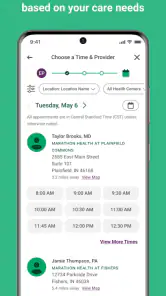
For a quick weekday scenario, imagine noticing a health question during a lunch break. I would open the app, look for the relevant route, and try to complete the next useful step before returning to work. The value is not necessarily in spending a long time inside it. The value is in having a dedicated place for health tasks rather than relying on scattered notes, browser tabs, phone calls, and memory.
Speed expectations for short sessions
Because this is a medical app, perceived speed is closely tied to clarity. A screen that loads promptly but leaves me unsure what to do is not truly efficient. Conversely, a brief pause is easier to tolerate when the next action is obvious. My practical advice is to judge Marathon Health by the complete journey: opening it, finding the relevant area, understanding the wording, and finishing the task without unnecessary backtracking.
I would use it when I have a few quiet minutes and a reasonably stable connection. That is a better setup than opening any health service while rushing between appointments or dealing with a stressful situation. Even when an app is technically responsive, interruptions can make medical forms or account steps feel more demanding than they really are.
A useful habit is to explore the app before you urgently need it. Open it on a calm day, learn where the important sections are, and make sure you can recognize the correct path. This is one of the more valuable ways to improve perceived speed without changing the device or network: familiarity removes hesitation.
What happens during heavier use
Heavy use for Marathon Health is unlikely to mean gaming-style continuous activity. It is more likely to involve several health tasks in one sitting, repeated navigation, or returning to the app over a busy day. That can expose small weaknesses that are invisible during a single glance. For example, a workflow may feel perfectly manageable once, but less comfortable when I need to review several pieces of information or move between screens while keeping details in mind.
I would avoid treating the app as a place to casually browse for long periods. Medical information deserves focused attention, and a shorter session makes it easier to notice whether I have completed the intended action. If I were handling multiple matters, I would finish one task, pause, and confirm the result before starting another. That approach reduces the risk of assuming that a screen view means something has actually been submitted or recorded.
This is also where the app’s free access is helpful. I can test whether its workflow suits my routine without adding a subscription decision to the process. The trade-off is that free availability alone does not guarantee that it will match every employer, clinic, or personal health arrangement. I would first ask whether Marathon Health fits the service I already use; if it does not, a dedicated app from my provider may be more useful.
Reliability matters more than visual polish
For a health app, reliability means more than avoiding crashes. I want consistent navigation, clear confirmation after an action, and confidence that I can return later without losing track of what I was doing. I also want wording that does not force me to guess whether a message is informational, actionable, or urgent. Those details are especially important when I am tired or worried.
The public rating suggests a mixed experience rather than a clear failure or standout success. I would interpret that as a reason to test the app personally instead of relying on the score alone. A three-and-a-half-star average can reflect different expectations: one person may want a fast gateway to a health service, while another may expect a complete personal health record or highly polished communication tool.
My reliability check would be simple. I would open the app on more than one occasion, try the main route I expect to use, and see whether the experience remains understandable after I leave and return. I would also pay attention to whether the app makes the status of a task clear. If I cannot tell what has been completed, pending, or merely viewed, I would keep a separate note until I am confident in the workflow.
That last precaution is not a criticism unique to Marathon Health; it is sensible with any medical service. Phones can lose connectivity, sessions can expire, and users can tap the wrong control. The app should be convenient, but I would not use convenience as a reason to abandon ordinary care with important health information.
Device limits and practical demands
The listed minimum operating system is Android nine, so people using older Android phones may need to consider compatibility before planning around the app. For users on supported devices, the more relevant question is not whether the phone is powerful enough for entertainment, but whether it remains responsive during ordinary app use. A medical tool should not need a premium handset to feel usable, yet older hardware can still make loading, switching, or keyboard-heavy tasks less comfortable.
I would keep some free storage available and install system updates when practical, not because Marathon Health is presented as a demanding app, but because medical workflows benefit from a stable device environment. If the phone is already struggling with many background apps, low storage, or an unreliable connection, the app may feel slower than it would on a cleaner setup. Closing unrelated apps before an important session is a small but sensible preparation step.
Battery impact is best judged by your pattern of use. Someone opening the app briefly should experience a very different burden from someone repeatedly checking it throughout the day. I would not keep it running unnecessarily in the background. Open it when needed, complete the task, and close it if the phone is already under pressure. This is especially practical for older devices where every additional active service can affect the overall experience.
Screen size can matter too. On a compact phone, medical text and form controls may require more scrolling and closer attention. On a larger display, reviewing information may be easier, but that does not automatically make the workflow clearer. I would prioritize readable text, careful taps, and a quiet setting over using the biggest available device.
Who will get the most from it?
Marathon Health is most appealing to someone who wants a single health-focused place connected to Marathon Health and prefers handling straightforward steps from a phone. It may suit users who dislike making every inquiry by telephone, people who want to prepare before contacting a health professional, and anyone who benefits from having health-related actions separated from ordinary messaging and browsing.
It can also help a family member who assists another adult with routine digital tasks, provided the account and privacy arrangements are handled properly. In that situation, I would make sure the person receiving care remains involved and understands what is being opened or submitted. A convenient interface should support control, not quietly move it away from the patient.
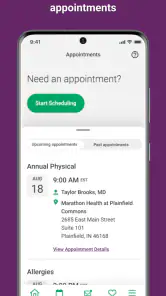
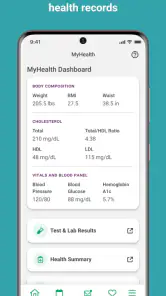
I would be more cautious about recommending it to someone seeking an all-purpose fitness tracker, a detailed nutrition diary, or an emergency response tool. Those are different jobs. A specialized fitness app may offer deeper activity analysis, while a provider-specific patient portal may be better for records and appointments if that is where your care already lives. For urgent symptoms, I would use the appropriate emergency or clinical channel rather than wait for an app workflow.
Where it differs from the usual alternatives
The closest alternative is often not another medical app but the familiar mix of phone calls, web portals, email, paper instructions, and personal notes. Marathon Health’s advantage is concentration: health-related activity can begin from one dedicated place instead of being spread across several tools. That can reduce the mental effort of remembering which website, inbox, or number belongs to which task.
The downside of a dedicated app is dependence on its particular ecosystem. A general note-taking app is flexible, but it cannot provide the same health-service context. A browser portal may work across more devices and avoid another installation, but it can feel less convenient on a phone. A broad health hub may collect more categories of information, yet it may also be less focused on the Marathon Health relationship.
My choice would depend on the job. If I need Marathon Health’s own pathway, this app is the natural starting point. If I only want to record personal measurements, a simple notes tool or health tracker may be faster. If I need formal medical advice, I would favor direct contact with a qualified professional. The app is valuable when it occupies the middle ground between doing nothing and starting a full clinical conversation.
Three habits that make the experience better
First, I would create a small personal routine around the app rather than opening it randomly. For example, I might check it when I have enough time to read carefully, then write down any follow-up question immediately. This prevents the common problem of seeing useful information and forgetting what I wanted to ask next.
Second, I would verify the outcome of every meaningful action before leaving. Look for a clear change of status, confirmation, or next instruction. If the result is ambiguous, I would not repeat the action several times. I would wait, reopen the relevant area, or use the appropriate support route. Repeated tapping is a poor strategy in any service where duplicate requests could create confusion.
Third, I would treat the app as part of a wider health system. Keep essential contact details available elsewhere, do not rely on a phone during an emergency, and bring important questions to a professional. This is not needless caution; it is the right trade-off for a tool designed to support health management rather than replace clinical judgment.
Version, longevity, and day-to-day confidence
The current version is 2026.6.5, which shows that the app is being maintained as a living product rather than left untouched after release. It first appeared on June 17, 2021, giving it a history beyond a newly launched experiment. For me, that makes it more reasonable to test as part of a routine, while still keeping an eye on how updates affect navigation and compatibility.
Updates can improve stability, but they can also change where familiar actions appear. After an update, I would take a moment to revisit the main workflow instead of assuming every button is exactly where I left it. That is particularly important if I only use the app occasionally. A brief orientation can prevent mistakes caused by muscle memory.
The app’s audience rating of Everyone makes it broadly approachable, but age suitability should not be confused with clinical suitability. A child, teenager, or older adult may be able to install it, yet the right way to use a medical service still depends on the person’s care situation and supervision needs. I would focus on whether the workflow is appropriate for the individual, not just whether the store age label permits access.
My performance verdict
After weighing speed expectations, heavier-use moments, reliability, and device constraints, I see Marathon Health as a focused convenience tool rather than a complete health command center. Its strongest quality is the possibility of making Marathon Health interactions easier to start from a phone. Its weakest point is that convenience cannot guarantee a perfect fit for every user, device, or care arrangement.
I would recommend trying it if Marathon Health is already relevant to your healthcare and you want a free mobile route for routine tasks. I would not install it merely because it is in the medical category, and I would not expect it to replace a provider portal, a personal tracking app, or urgent medical help. The right question is whether it removes a real step from your own routine.
In my view, the three-and-a-half-star public average is a fair signal to approach it with practical expectations. It is worth a careful trial, especially because there is no purchase price, but I would judge it by one complete task rather than by the installation alone. If that task feels clear, repeatable, and dependable on your phone, the app may earn a regular place in your health routine. If it leaves you uncertain about what happened or where to go next, the usual web or direct-contact alternative may serve you better.
My bottom line: Marathon Health is most useful when you need a straightforward mobile doorway into Marathon Health services and value convenience over a large collection of extra tools. It is not the right choice for emergencies or for people looking for deep personal health tracking, but for supported users who want a dedicated medical app, it is a sensible option to test with a calm, focused workflow.
Pros
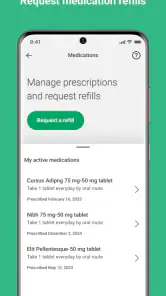
- Convenient access to health resources from a mobile device.
- Can help users keep track of personal wellness information.
- Useful for staying connected with participating Marathon Health services.
- May simplify communication with care teams and health providers.
- Supports a more organized approach to managing everyday healthcare needs.
Cons
- Many features may require eligibility through a participating employer or provider.
- The app’s usefulness can vary depending on available local services.
- Some users may find health information entry time-consuming.
- Requires an internet connection for many functions and updates.
- Not intended to replace emergency care or professional medical advice.

- Category
- Medical
- Version
- 2026.6.5