LineLeap
- 61.00
- 3.5
- Installs
- 50.00K
- Price
- Free

Screenshots


Analysis by Reviewed
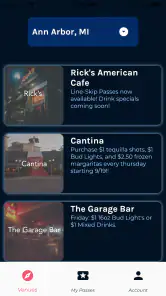
When I look at LineLeap, I see a very focused events app rather than a general nightlife guide. Its main job is to let me purchase access-related items for participating bars and clubs, including line-skip passes, drinks, cover, and similar extras. That single capability can make a noticeable difference on a busy night, but only when the venue and the offer match what I actually need.
I tested it with that practical question in mind: does paying through a phone make going out easier, or does it simply add another step? My answer is mixed but useful. LineLeap can be a convenient shortcut when a popular venue is crowded and I already know where I want to go. It is less compelling when I am choosing between unfamiliar places, looking for a quiet evening, or trying to avoid spending money before I have even entered.
Why the line-skip purchase matters
The app’s defining idea is simple: instead of treating the queue as unavoidable, I can look for a digital pass connected to a bar or club and buy it before arriving. The value is not really the pass itself. The value is the time and uncertainty it may remove from the night.
That distinction matters. A line-skip purchase does not automatically make every venue better, and it does not replace the atmosphere, service, or music inside. It is a convenience decision. I am paying to improve one part of the outing: getting through the entrance process with less waiting.
LineLeap also brings drinks and cover into the same purchasing flow. I find that useful when I have already decided to attend a particular place, because I can handle more of the night’s basic arrangements before reaching the door. The strongest use is therefore not casual browsing. It is preparing for a specific busy-night visit.
The app is free to install, which lowers the barrier to trying it. The purchases inside the experience are a separate matter, of course, so I would not confuse a free app with a free night out. The sensible approach is to open the available offer, check exactly what it covers, and decide whether the saved time is worth the cost before confirming anything.
A focused tool rather than a full nightlife planner
LineLeap is listed in the Events category and comes from Line Services. That positioning fits what I experienced: it is built around event entry and venue-related purchases, not around being a complete social calendar, review community, or trip planner.
This focus is one of its strengths. There are fewer distractions than I would expect from an app trying to cover every part of nightlife. If my question is “Can I make tonight’s entry easier?” the app has a clear reason to be open. If my question is “Where should I go, what is nearby, and what kind of music is playing?” I would probably start elsewhere and use LineLeap only after narrowing down my choice.
The store summary describes purchases for line skipping, drinks, cover, and more at bars and clubs. I would treat that wording as an invitation to inspect each individual listing, not as a guarantee that every venue offers every option. Availability naturally depends on the participating location and the event shown in the app, so I would check the selected venue carefully rather than assuming that a pass seen elsewhere applies to my destination.
What the basic workflow feels like
In practical use, I would begin by deciding on the venue before relying on the app. Once I find the relevant event or location, I review the available purchase choices and select the one that solves my immediate problem. For a crowded Saturday, that might be a line-skip option. For a planned group outing, it might be a cover or drink purchase that helps settle part of the evening in advance.
The important habit is to read the wording before paying. I would look for the venue name, the type of purchase, and any instructions attached to the offer. A rushed tap at home can create confusion later if I have selected the wrong location or misunderstood what the purchase is intended to do.
I would also keep the confirmation easy to access while traveling. That is a small but non-obvious improvement to the experience: I would not bury the app in a crowded folder, close the confirmation immediately, or rely on remembering what I bought. At the entrance, the useful part of LineLeap is the proof of the purchase, not the browsing screen I used earlier.
For groups, I would make one person responsible for checking the details and communicating the plan. Several friends independently buying different options can create unnecessary confusion, especially when one person expects a line pass while another has only arranged a drink or cover. The app can simplify a group night, but only if the group agrees on what is being purchased.
A realistic night out
Imagine I am meeting friends at a busy club after work. We already know the venue and expect the entrance to be slow. Instead of arriving first and discovering that the queue will consume much of the evening, I open LineLeap and look for the venue’s current options. If a suitable line-skip purchase is available, I compare its cost with the time I expect to lose waiting.
That comparison is more useful than automatically buying the cheapest-looking item. If I am meeting friends for a short visit, avoiding a long queue may be the difference between seeing them and leaving early. If I plan to stay for hours, the same purchase may feel less valuable because waiting is a smaller part of the overall night. The right choice depends on my schedule, not just on the existence of a pass.
At the venue, I would follow the instructions attached to the purchase and keep the relevant confirmation ready. I would not assume that showing the app to any staff member solves every problem; I would use the designated entrance or process described for that particular offer. This is where a few seconds of preparation can prevent the main benefit from becoming a source of delay.
After entry, the practical advantage is easy to judge. If I reached my friends sooner and avoided a frustrating queue, the purchase did its job. If the entrance was already quiet, the same purchase would have delivered little noticeable value. That is why I see LineLeap as a situational tool, not something I would use automatically for every outing.
Where it compares well with usual alternatives
The usual alternative is to arrive without arranging anything and accept the line, cover process, and drink purchase at the venue. That option is often simpler when the place is quiet, when I am unsure whether I will stay, or when I want to make decisions face to face. It also avoids paying for convenience that may turn out not to matter.
Another alternative is checking a venue’s own channels or asking friends for current details. That can be better when I need broader context, such as the atmosphere, dress expectations, or whether the event suits my group. LineLeap is more narrowly useful: it can help with the transaction connected to the night, but it should not be my only source of judgment about whether the night itself is worth attending.
Compared with waiting at the door, the app’s advantage is preparation. Compared with a venue’s direct process, its advantage may be having several event-related purchases in one place. The trade-off is that I become more dependent on choosing the correct listing and following its instructions. For someone who values spontaneity above all else, the traditional approach may actually feel easier.
The trade-offs I noticed
The first limitation is obvious but important: the app cannot improve a venue’s crowd, service, or entertainment. A faster entrance only gets me inside sooner. If the club is not my style, the line-skip purchase does not rescue the evening.
The second is the risk of buying too early in my decision-making. I would not purchase a pass simply because it is available and then build the night around it. I would first confirm that my friends are going, that the location is correct, and that I genuinely want to attend. Convenience becomes poor value when it locks me into a plan I was not sure about.
The third is the need to distinguish between different purchase types. A drink purchase, cover payment, and line-skip pass solve different problems. They may appear in the same app, but I would not treat them as interchangeable. Before confirming, I would ask myself: am I paying to enter, to reduce waiting, or to arrange something to consume once inside?
There is also a social trade-off. Paying for faster access can be worthwhile for one friend but unnecessary for another. If a group splits between different entry choices, it may arrive at different times or use different procedures. I would discuss the plan before purchasing, especially when the night depends on everyone entering together.
The app is aimed at mature nightlife settings and carries a Mature 17+ content rating. That makes sense for its bar and club focus, but it also means it is not an appropriate recommendation for younger users. I would view the age rating as part of deciding whether the service fits the intended outing, not as a minor label to ignore.
Small habits that make it more useful
My first tip is to use LineLeap close enough to the outing that the plan is still current, but early enough to review the details without standing outside the venue. That gives me time to spot a mismatch in location or purchase type and contact my friends before the night becomes rushed.
My second tip is to compare the pass with the likely length of the queue rather than with the price alone. A person attending for a long evening may value a quicker entrance differently from someone making a short stop. The same offer can be sensible for one plan and wasteful for another.
My third tip is to keep the confirmation available before reaching the entrance. I would also make sure the phone has enough battery for the journey and arrival, because a digital purchase is most useful when I can present it without searching through messages or restarting the app.
My fourth tip is to use the app as a final step in venue selection, not the first. I would decide what kind of night I want, ask the group, and then use LineLeap to reduce friction around entry or related purchases. This prevents the app’s convenience from steering me toward an event that does not actually suit me.
Who will get the most from it
LineLeap makes the most sense for people who regularly attend busy bars, clubs, or organized nightlife events and dislike losing a large part of the evening in a queue. It is particularly useful for someone meeting friends at a known venue, arriving later than the group, or trying to fit a night out into a limited schedule.
It can also help a planner who wants to settle basic arrangements before the group reaches the door. Buying the appropriate cover or drink-related option in advance may make the arrival feel more organized, provided everyone understands what has been purchased.
I would be more cautious recommending it to someone who rarely goes out, changes plans frequently, or prefers to decide at the entrance. That person may gain more from paying only when the situation is clear. I would also skip it as a primary tool if my goal is discovering new places, comparing atmospheres, or finding daytime events; its strongest value is tied to a specific venue transaction.
The app has an average rating of 3.5 from around 97 ratings, with around 61 written reviews. I read that as a sign to keep expectations practical rather than assuming the experience will be perfect for every venue or night. Its reach is meaningful, with over 50 thousand installs, but popularity does not remove the need to check the exact offer I am buying.
Device support and current-state details
LineLeap supports Android devices starting with version 7.0, which makes it accessible on many older phones as well as newer ones. The current version is 9.20.1. I would still keep the app updated when possible, especially before a planned night out, because the whole point is to avoid avoidable friction at the entrance.
Since the service is free to download, I can install it ahead of time and inspect whether it is relevant to my local plans without committing to a purchase. That is the best way to approach it: treat installation as preparation, then make a separate decision about each venue-related transaction.
My recommendation
I recommend LineLeap when the problem is specific: I want to attend a particular bar or club, expect the entrance to be busy, and value saving time enough to consider paying for that convenience. In that situation, its focused design can be genuinely helpful, especially when I check the purchase details and prepare the confirmation before arriving.
I would not recommend using it blindly for every night out. It is not a replacement for choosing a good venue, coordinating with friends, or judging whether an event is worth the overall expense. If the queue is short or my plans are uncertain, paying at the venue may be the more sensible option.
Overall, I see LineLeap as a practical shortcut with a narrow but real benefit. Its best feature is not making nightlife cheaper; it is making a planned entrance more predictable. For the right crowded-night scenario, that can be enough to justify keeping it installed. For everyone else, the app is worth considering only when its specific purchase options solve a problem I actually have.
Pros
- Find and book nightlife events
- parties
- and venue experiences in one place.
- Digital tickets make entry faster and reduce the need for printed confirmations.
- Useful for discovering local events you might otherwise miss.
- Event details
- dates
- and venue information are easy to review before booking.
- Convenient mobile access to purchased tickets and reservations.
Cons
- Event availability depends heavily on your city and participating venues.
- Some bookings may include service fees added at checkout.
- Refund and cancellation rules can vary between events and venues.
- Popular events can sell out quickly
- limiting last-minute plans.
- The app may request location access to provide relevant local listings.

- Category
- Events
- Version
- 9.20.1