LangLearn: Language learning
- 126.00
- 4.5
- Installs
- 100.00K
- Price
- Free

Screenshots
Analysis by Reviewed
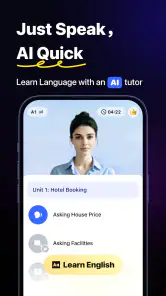
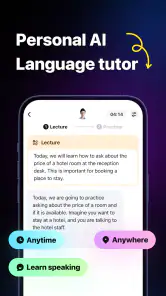
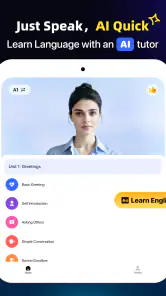
I approached LangLearn as a practical education app rather than a replacement for a full classroom course. Its appeal is easy to understand: it is built around AI-assisted language learning, so the idea is to get useful practice whenever a spare moment appears. That makes it especially interesting for people who want more frequent contact with a language but do not want to organize every session around a tutor, textbook, or fixed lesson.
My overall impression is positive, with an important qualification. LangLearn is most convincing when used as a flexible companion for short, repeated study sessions. It is less suitable for someone who needs a complete academic curriculum, formal assessment, or a guaranteed path through advanced grammar. The app is free to start, aimed at Everyone, and comes from mqcoder. Its store presence shows a 4.5 average from around 2.7 thousand ratings, with over 100 thousand installs, so it has already attracted a meaningful audience without feeling like an obscure experiment.
How LangLearn feels during everyday use
The first thing I noticed about an AI language app is not whether it contains a huge amount of material, but how quickly it lets me move from opening it to actually practicing. LangLearn’s central promise is convenience: language help that can fit around a commute, a lunch break, or a few quiet minutes before bed. That changes the way I judge it. I am not expecting every session to feel like a carefully sequenced classroom lesson. I am looking for low friction, useful interaction, and enough variety to keep practice from becoming a chore.
In that role, the app makes sense for learners who already know why they want to study but struggle with consistency. A traditional course often asks me to reserve a block of time, gather materials, and follow a fixed order. LangLearn is better suited to the opposite habit: open it when I have a small window, work on one language task, and return later. That approach can be surprisingly effective because the biggest obstacle for many learners is not a lack of resources; it is failing to use them regularly.
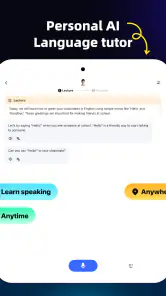
The AI angle also changes the experience compared with a static phrasebook. A phrasebook is excellent when I need a quick translation or a dependable travel expression, but it rarely helps me explore a sentence from several angles. An AI-based tool can be more useful when I want to reword an idea, examine a mistake, or practice a situation that is specific to my day. I would still treat generated explanations as study assistance rather than unquestionable authority, especially with subtle grammar, regional usage, or formal writing.
What happens when I use it in short sessions
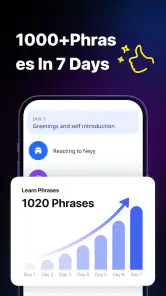
Short sessions are where LangLearn has the clearest practical advantage. Imagine that I am preparing for a trip and have ten minutes before leaving home. Instead of opening a long lesson, I can focus on a narrow goal: introducing myself, asking for directions, ordering food, or reviewing a group of words connected with transport. That kind of focused use is more realistic than promising myself an hour of study and then postponing it.
A useful workflow is to begin with a real situation rather than an abstract topic. I might think of a conversation I expect to have, practice the key sentences, and then return later to test whether I can produce them without looking. This makes the app part of a learning loop instead of a place where I simply read answers. The important step is retrieval: close the help, try to say or write the idea myself, and only then check the result.
More From Our News Desk

Clash of Clans Is Won Between the Battles

Android Auto Makes the Case for Quieter Car Software

MobiOffice: Transforming Mobile Productivity with Seamless Integration

EA SPORTS FC™ Mobile Soccer: Redefining Mobile Sports Gaming

How Microsoft OneDrive Became a Mobile Productivity Giant

How Google Translate Breaks Language Barriers Effortlessly
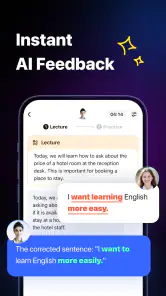
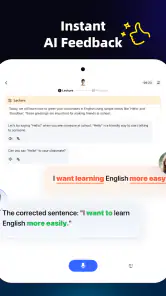
I also recommend keeping a small personal boundary around AI assistance. If I ask for a translation immediately every time I get stuck, the app becomes a shortcut rather than a learning tool. A better pattern is to attempt the sentence first, ask for a correction or alternative, and compare the differences. That gives LangLearn a more active role in the process and helps reveal whether my problem is vocabulary, word order, or confidence.
Speed expectations and the feel of a busy session
Perceived speed matters more in a language app than many people expect. If I am practicing a quick exchange, a long pause can interrupt my concentration. If I am reading an explanation, a brief wait is easier to tolerate because I have time to think. My advice is to judge LangLearn by the rhythm of the task rather than expecting every AI response to feel instantaneous. The app is designed around generated assistance, so the experience naturally depends on the work being requested and the device’s connection to the service.
For light use, I would keep expectations sensible. A short prompt or a simple correction should feel like a small interaction, while a more demanding request can take more thought and processing. This is not a reason to dismiss the app; it is a reason to use it deliberately. I would avoid sending several complicated requests at once when I am in a hurry. Breaking a large question into smaller steps usually produces an easier study flow and makes the answer simpler to evaluate.
Heavy use can also mean more than long text requests. A learner may move rapidly between vocabulary, translation, corrections, and conversational practice in one sitting. That is useful, but it can make the session feel scattered. I get better results when I choose one objective before opening the app. For example, I might spend one session on past-tense sentences and another on travel dialogue. This reduces mental switching and makes it easier to notice progress.
Stability, recovery, and keeping progress useful
Reliability is not only about whether an app opens. For me, it also includes what happens when a response is imperfect, a session is interrupted, or I realize that an explanation does not quite fit the context. With AI language tools, recovery means knowing how to ask a narrower follow-up question and how to challenge an answer politely. If a sentence sounds unnatural, I would ask for a more conversational version, a formal version, and an explanation of the difference rather than accepting the first result.
That habit is particularly important with language learning because several answers can be grammatically possible while only one sounds natural in a specific situation. LangLearn can help me explore those choices, but my own judgment still matters. I would compare important phrases with a trusted dictionary, a course reference, or a native speaker when accuracy has consequences. This is especially true for work emails, official forms, medical communication, or anything where an embarrassing mistake would matter.
Interrupted study is another realistic concern. A useful recovery routine is to end each session with a tiny note to myself: what I practiced, which point confused me, and what I want to test next. That note turns an interrupted session into a continuation rather than a restart. It also prevents the common problem of asking the AI the same broad question repeatedly without building a personal study path.
I would not rely on an AI conversation alone as proof that I have mastered something. Recognition can feel like fluency, particularly when the app supplies the sentence. To make the tool more reliable for my own learning, I would regularly produce answers without assistance and then use LangLearn to check them. The app is strongest as a responsive practice partner; it should not be the only judge of my ability.
Device limits and resource-conscious habits
LangLearn is an Android education app with a minimum operating-system requirement of Android 9. That makes the compatibility question fairly straightforward for many users, but anyone using an older phone should check the system version before planning around it. The app is currently at version 1.3.1, which is useful context for expectations: I would approach it as a developing product rather than assuming it has the maturity of a long-established language platform.
Because the experience centers on AI assistance, connection quality is more relevant than it would be for a fully offline flashcard app. I would be cautious about choosing it as my only study option for flights, rural travel, or places where access is unreliable. A small offline vocabulary resource can complement it well in those situations. LangLearn is better when I can give it a stable environment and enough attention to read, reflect, and respond.
Resource demands also depend on how intensely I use it. Short study periods are naturally easier on a phone than long, continuous sessions filled with repeated requests. If I am studying on an older or modest device, I would close unnecessary apps, avoid keeping many tasks active, and take breaks during extended practice. I would not describe that as a special requirement of LangLearn so much as a sensible way to keep any AI-focused mobile session comfortable.
Storage and spending deserve attention as well. The app itself is free, but in-app purchases range from $6.99 to $59.99 per item. That makes it important to understand what I am paying for before committing to anything. I would begin with the free experience, decide whether the interaction style genuinely fits my learning habits, and only then consider an optional purchase. A premium language tool is poor value if I open it once and abandon it, even when its individual features are useful.
Where it beats familiar alternatives
Compared with a standard flashcard app, LangLearn should feel more adaptable. Flashcards are excellent for deliberate repetition and measurable recall, but they can become detached from real communication. LangLearn’s AI approach is more helpful when I want to turn a word into a sentence, adjust the tone of a message, or rehearse a situation that is not already included in a preset deck.
Compared with a traditional textbook, the app is more responsive but less dependable as a complete syllabus. A textbook gives me a planned sequence, explanations that have been edited in advance, and a clear sense of what comes next. LangLearn gives me freedom, which is valuable when my needs are unusual or immediate, but that freedom can also lead to gaps. I may practice the topics I enjoy while avoiding the grammar that actually needs work.
Compared with a human tutor, it is more convenient and usually easier to fit into an unpredictable schedule. It cannot replace the human advantages of cultural judgment, personal encouragement, and noticing patterns in my speech that I do not recognize. For a learner preparing for an exam, building professional fluency, or needing feedback on pronunciation and social nuance, a tutor or structured course remains the better main solution.
The most effective combination is therefore not “LangLearn instead of everything.” I see it as the flexible layer between formal study sessions. A learner can use a course for structure, flashcards for memory, and LangLearn for applying knowledge to realistic, changing situations. That division of labor avoids asking one app to solve every part of language learning.
Who will get the most from it
I would recommend LangLearn to beginners who want a less intimidating way to start, travelers who need situation-based preparation, and intermediate learners who want more chances to form their own sentences. It can also suit busy adults who repeatedly postpone language study because fixed lessons feel too demanding. The free entry point makes experimentation easier, while the Everyone content rating keeps it approachable for a broad audience.
It is particularly promising for people who learn by asking questions. If I often wonder why one phrase sounds more natural than another, or how to express the same idea politely and casually, an AI assistant can make those questions easier to explore. The key is to ask specific questions and inspect the answer instead of treating every response as a final lesson.
I would skip it as my primary tool if I need a strict course map, offline-first study, formal progress reporting, or guaranteed expert correction. I would also be cautious if I am unwilling to verify important translations or if I prefer learning through carefully edited lessons with no open-ended experimentation. In those cases, a conventional course may feel more predictable and less mentally demanding.
My performance verdict
After considering speed, heavier sessions, recovery, and device constraints, I see LangLearn as a useful, flexible education app whose value depends strongly on how I use it. It is not compelling because AI automatically makes language learning easy. It is compelling because it can reduce the distance between a question and a practice opportunity. That is a real advantage when consistency is the problem.
The strongest approach is to keep requests focused, attempt answers before asking for help, and use the app alongside a more structured resource when long-term progress matters. I would also test the free version carefully before spending, particularly because the optional purchases extend from a relatively modest amount to a considerably larger one. The right purchase is the one that supports a habit I already have, not the one I hope will create motivation by itself.
With its current version, LangLearn feels best viewed as a convenient AI practice companion from mqcoder rather than a complete language school. For quick explanations, realistic sentence work, and flexible study during ordinary days, I can see myself recommending it to a friend. For serious academic goals or situations requiring authoritative accuracy, I would pair it with stronger references and human feedback. Its real strength is making useful practice easier to start, while its main limitation is that the learner still has to provide the structure and judgment.
LangLearn: Language learning Frequently Asked Questions
Is LangLearn suitable for children and families?
LangLearn is an education app with an Everyone content rating, so it is presented as suitable for a broad audience. Families can still preview the lessons and activities to decide whether they fit a child’s age, reading ability, and learning goals. If a child uses paid features, review purchase settings on the device so any in-app spending is managed appropriately.
What devices can run LangLearn?
LangLearn is available for mobile devices, and its minimum operating system requirement is version 9. Check your device’s software version before downloading, since an older system may prevent installation or limit access to current features. Keeping the operating system and app updated can also help with compatibility and a smoother learning experience.
What is LangLearn: Language learning, and who is it designed for?
LangLearn: Language learning is a mobile app designed to help users study and practice a foreign language through structured lessons and interactive exercises. It can be useful for beginners building basic vocabulary as well as more experienced learners reviewing everyday phrases and grammar. Before downloading, check whether your preferred language and learning level are supported, since available courses and features may vary.
Which languages can I learn with LangLearn?
The languages available in LangLearn may depend on the app version, device platform, and course catalog offered by the developer. The app is generally intended to support learning through vocabulary, phrases, and language practice, but users should review the current store listing before installing it. This is especially important if you need a less commonly taught language or a specific regional variation.
Does LangLearn work offline, or does it require an internet connection?
Some learning activities may be available without a constant internet connection, but downloading lessons, synchronizing progress, receiving updates, or using audio and other online features may require access to the internet. Availability can differ between courses and app versions. If you plan to study while traveling or without mobile data, open the app’s settings and confirm which lessons can be saved for offline use.
Pros
- Short lessons make it easy to study during spare moments.
- Useful vocabulary practice for everyday conversations.
- Progress tracking helps maintain a consistent learning routine.
- Suitable for beginners who want a simple starting point.
- Audio exercises can improve pronunciation and listening confidence.
Cons
- Some lessons may feel repetitive after extended use.
- Advanced learners may find the available material too limited.
- Certain features or content may require a paid subscription.
- Reliable internet access may be needed for some activities.
- Speech practice may not always recognize different accents accurately.
- Category
- Education
- Version
- 1.3.1