Journal Club: Medicine
- 47.00
- 4.4
- Installs
- 10.00K
- Price
- $6.99

Screenshots

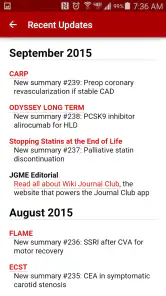
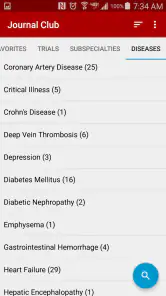
Analysis by Reviewed
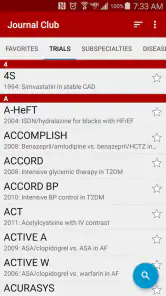
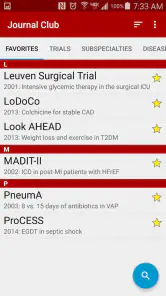
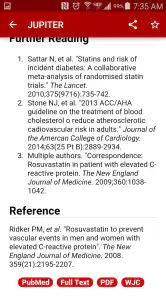
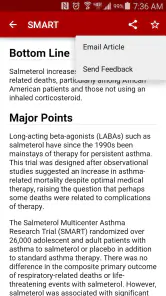
If you are a medical student, resident, physician, or simply someone who enjoys keeping up with internal medicine, Journal Club: Medicine takes a focused approach to reading medical literature on a mobile device. I found its appeal easy to understand: instead of treating medical reading as a broad web search, it is designed around the idea of a personal journal club that keeps internal medicine material close at hand.
The app is developed by Peripheral Brain, LLC, and sits in the medical category. It is aimed at readers who already have a reason to follow clinical literature rather than people looking for general health advice. That distinction matters. This is not the kind of app I would open to check symptoms, identify a medication, or replace a conversation with a clinician. Its value is in supporting professional learning and making literature review feel more accessible during small gaps in the day.
At $6.99, it is a paid app rather than an entirely free reading tool. That makes the decision more deliberate, especially for students or occasional readers. Still, its 4.4 average from around 291 ratings suggests that many users find the focused format worthwhile. The age rating is Everyone, although the subject matter is clearly more relevant to adults engaged in medical education or practice.
What to expect when you open Journal Club: Medicine
My first impression is that the app’s purpose is narrower than the huge collection of general medical resources available on the web. That narrowness is its main strength. A normal search engine can return guidelines, opinion pieces, advertisements, patient pages, and unrelated results before I reach a useful paper. A dedicated journal-club style app starts from a more professional reading mindset.
That does not mean it automatically turns every article into a complete clinical answer. I would approach it as a reading companion, not as a diagnostic authority. Literature needs context: study design, patient population, limitations, publication date, and how the findings fit with current guidance. The app can help me get to the material, but it does not remove the responsibility to judge what I am reading.
The store summary describes internal medicine literature at your fingertips, and that is a useful way to frame the experience without expecting a full hospital reference system. Someone looking for dosing calculators, emergency protocols, laboratory interpretation, or a searchable drug database may be better served by a different medical app. Journal Club: Medicine makes more sense when the goal is to read, reflect, and discuss evidence.
I also think expectations should be set around the word “journal.” A journal club is usually not passive scrolling. The useful part comes from asking what a study actually tested, whether its methods support its conclusions, and whether the result would change practice. I recommend opening the app with one of those questions in mind. That small change makes the experience more productive than simply browsing titles.
More From Our News Desk

Clash of Clans Is Won Between the Battles

Android Auto Makes the Case for Quieter Car Software

MobiOffice: Transforming Mobile Productivity with Seamless Integration

EA SPORTS FC™ Mobile Soccer: Redefining Mobile Sports Gaming

How Microsoft OneDrive Became a Mobile Productivity Giant

How Google Translate Breaks Language Barriers Effortlessly
Who will get the most from it
For a resident preparing for a teaching discussion, the app can provide a convenient starting point for choosing a paper or topic to examine more closely. A medical student may appreciate having a focused place to build a reading habit without starting every session from an empty browser tab. A practicing clinician who wants a short, regular literature routine may also find the format more approachable than trying to monitor every major source independently.
The best fit is someone who already understands basic medical terminology and wants to engage with internal medicine research. I would not recommend buying it for a family member seeking everyday health explanations, because the app’s professional orientation could make the material unnecessarily difficult. I would also hesitate if your main need is a rapidly searchable point-of-care reference where speed matters more than reading depth.
Starting without overcomplicating the setup
After installing it, I would begin with a simple goal rather than trying to absorb everything at once. Decide whether you want to use it for a daily reading session, preparation for a case conference, or background reading in a particular area of internal medicine. The app becomes easier to judge when it has a specific job.
Because the product is called Journal Club, I would also prepare a lightweight note-taking method outside the app, even if that means only a few lines in a notebook. For each paper, record the clinical question, the population studied, the main outcome, and one limitation. This workflow prevents reading from becoming a sequence of forgotten abstracts and gives you something useful to bring into a group discussion.
A practical first session could be limited to one item. Read enough to identify the question and the type of evidence, then pause. New users often make the mistake of treating a medical reading app like a social feed, moving rapidly from one item to another. That may feel efficient, but it is a poor way to understand research. A single carefully considered paper can be more valuable than a long list of half-read entries.
The app’s price also affects how I would approach the first few minutes. Since it costs $6.99, I would not install it casually and then leave it untouched. I would test it during a real reading situation: before a teaching session, during a commute when safe to read, or in a quiet study block. If that setting makes the focused format useful, the purchase has a clearer purpose.
Your first meaningful success
The first successful action should not be “I opened the app.” It should be completing a small literature-review loop. Choose one internal medicine topic that is already relevant to you, find a suitable piece of literature, and write down what clinical question it addresses. Then identify what evidence would be needed before applying the result to a real patient.
That approach gives the app a concrete role. For example, imagine that you are preparing for a case discussion about a patient with a common internal medicine problem. Rather than searching the entire internet, you can use the app as the first stop for literature connected to the subject. After reading, compare the paper’s population with the patient in front of you. Are the ages similar? Are the severity and comorbidities comparable? Does the intervention match what is available in your setting?
This comparison is one of the most useful habits the app can encourage. A paper may be interesting without being directly applicable. I would treat the app as a way to improve the questions I ask, not as a button that produces a final treatment decision. That is especially important when evidence seems persuasive at first glance but depends on a narrow study group.
For a journal club meeting, a useful workflow is to read once for the broad message and a second time for the details that could weaken or strengthen it. On the second pass, focus on the outcome definition, comparison group, and practical relevance. Even if you do not understand every statistical method, these checkpoints help separate a meaningful clinical result from an attractive headline.
Confusion that can make the experience less useful
The biggest possible misunderstanding is assuming that literature access equals clinical guidance. It does not. Research articles answer specific questions under specific conditions, while patient care requires a broader assessment. Journal Club: Medicine can support learning, but it should sit alongside professional judgment, current guidelines, local protocols, and direct clinical information.
Another point of confusion is the difference between finding a paper and evaluating it. A publication may be recent, widely discussed, or relevant to a familiar condition and still have important weaknesses. I would be cautious about turning a single article into a practice change. Look for whether the study design fits the question, whether the comparison is fair, and whether the outcomes matter to patients rather than only appearing statistically impressive.
New users may also wonder whether the app is suitable for casual medical curiosity. In my view, only sometimes. If you enjoy learning how clinical evidence is produced, you may find the focused material rewarding. If you want simple explanations with minimal technical language, the experience could feel demanding. The app’s Everyone age rating describes accessibility from an age-classification perspective, not the reading level of internal medicine research.
The app’s relatively modest scale is another consideration. It has passed 10K installs, which indicates a real user base but not the reach of the largest medical platforms. I would not interpret that figure as a measure of quality by itself. It simply suggests that this is a specialized tool rather than a universal reference used by everyone in healthcare. That can be reassuring if you prefer a focused product, but limiting if you need a massive ecosystem of tools and integrations.
There is also a difference between a dedicated journal-club experience and free alternatives. A browser, library search service, or professional publication feed may offer broader discovery. Those options can be better when you need to search a very specific question across many sources. On the other hand, they may require more effort to filter and organize. The trade-off is straightforward: broader tools give you more reach, while a focused app can make the starting point less overwhelming.
How I would build a repeatable reading habit
I would use the app in short, purposeful sessions rather than waiting for a large block of free time. Before opening it, write one sentence describing what you want to learn. After reading, write one sentence describing what changed in your understanding. This before-and-after method makes it easier to see whether a session was genuinely useful.
A second helpful technique is to separate evidence gathering from decision-making. During the first session, collect the paper’s main claim and relevant limitations. Only afterward ask whether it affects your practice, assignment, or discussion. This prevents the excitement of a new result from turning into an immediate conclusion.
For group use, I would assign different readers different questions. One person can summarize the study population, another can examine the outcome measures, and another can consider whether the findings apply to local patients. Journal Club: Medicine can serve as the shared starting point, while the discussion supplies the critical thinking that no reading interface can replace.
Students can adapt the same workflow for exam preparation, but I would avoid using it as a substitute for their core curriculum. Literature is excellent for understanding how knowledge evolves and for seeing clinical questions in context. It is less efficient when the immediate task is memorizing foundational facts. A textbook or structured course may be the better first tool, with this app used afterward to deepen a topic.
Where another option may be better
I would choose a broader medical reference if I needed an answer during a busy consultation. In that moment, a resource built for rapid lookup may be more practical than a journal-club format. I would also choose a library database or general literature search tool when conducting a formal review that requires a carefully documented search strategy.
Likewise, people who prefer visual summaries, short videos, or simplified patient education may not enjoy the app’s literature-centered purpose. The right question is not whether Journal Club: Medicine can replace every other medical resource. It cannot. The better question is whether it fills the specific gap between “I should read more internal medicine literature” and “I have no convenient way to begin.” For that gap, it is much more convincing.
Its paid model may also be a deciding factor. Some readers will gladly pay for a focused tool if it becomes part of their professional routine. Others may prefer free sources and accept the extra time spent searching, filtering, and organizing. I would make that choice based on frequency of use, not on the price alone. An inexpensive app that stays unopened is still poor value, while a focused tool used consistently can justify the cost.
My recommendation after using it as a reading companion
Journal Club: Medicine is best understood as a focused medical reading app for internal medicine literature, not as an all-purpose clinical assistant. I like the way its purpose encourages a more deliberate relationship with research. Instead of promising instant answers, it points users toward the habit of reading and discussing evidence.
The app is especially suitable for learners and clinicians who want a manageable entry point into journal-club style study. My strongest recommendation is to pair it with a simple workflow: choose one clinical question, read one relevant item, note the study’s main limitation, and decide whether the result is applicable to your own context. That sequence turns a passive browsing session into a useful professional exercise.
I would skip it if you need patient-friendly health information, a comprehensive drug reference, or a fast emergency lookup tool. I would also skip it if you are unlikely to read medical literature regularly enough to justify a paid download. Those are not flaws in the app so much as signs that its specialized purpose does not match every user.
For the right reader, though, the focused design is the point. Developed by Peripheral Brain, LLC, it has been available since March 9, 2013, and its continued presence alongside a 4.4 average rating shows that the concept has found an audience. My final view is that it works best when I treat it as the first step in a thoughtful evidence-review routine: useful, limited, and far more valuable when combined with critical reading rather than used as a shortcut around it.
My practical advice: before deciding whether it belongs on your device, plan one real reading session around a current internal medicine question. If the app helps you move from that question to a clearer, better-informed discussion, its focused approach is doing exactly what it should.
Journal Club: Medicine Frequently Asked Questions
What devices can I use Journal Club: Medicine on?
Journal Club: Medicine is an app in the medical category, intended for people who want to engage with internal medicine literature. Before downloading, check that the app is available for your device through its official app store and review the store page for compatibility information. The app’s usefulness will depend on whether it fits your reading habits and the device you prefer to use.
How much does Journal Club: Medicine cost, and what is its age rating?
Journal Club: Medicine costs $6.99 and has an Everyone age rating. Since the app is focused on medical literature, that rating does not make its content a substitute for medical training or advice. Consider whether its research and discussion focus suits your needs before purchasing, and check the relevant app store for the current purchase details on your device.
What is Journal Club: Medicine used for?
Journal Club: Medicine is designed for healthcare professionals, medical students, and anyone interested in evidence-based medicine. It helps users discover and review medical research, discuss clinical topics, and keep up with important developments in healthcare. The app is particularly useful for journal club meetings, study sessions, and structured conversations about the quality and relevance of published evidence.
Who can benefit most from Journal Club: Medicine?
The app is mainly aimed at medical students, residents, physicians, researchers, and other healthcare professionals who regularly read or discuss scientific literature. Students can use it to improve their critical appraisal skills, while practicing clinicians may find it helpful for staying informed. However, it should be treated as an educational resource rather than a replacement for professional training, clinical guidelines, or expert medical advice.
Does Journal Club: Medicine provide reliable medical information?
Journal Club: Medicine can be a convenient way to access and discuss medical literature, but users should still evaluate every article carefully. Research quality, study limitations, publication date, and clinical context all matter. The app should not be considered an authority by itself, and information found there should be checked against the original publication, current guidelines, and trusted medical sources before being used in patient care or important decisions.
Pros
- Focused on medical literature and evidence-based learning.
- Helps users discover relevant journal articles in one place.
- Useful for students
- residents
- and practicing healthcare professionals.
- Encourages regular reading and discussion of medical research.
- Can support preparation for journal clubs and clinical presentations.
Cons
- Content may be too specialized for users without medical training.
- Article availability can depend on journal access and subscriptions.
- Some summaries may require checking the original research for context.
- The usefulness depends on how frequently new medical content is added.
- Reading and evaluating papers can be time-consuming for busy clinicians.
- Category
- Medical
- Version
- Varies with device