Jobble
- 909.00
- 3.3
- Installs
- 100.00K
- Price
- Free

Screenshots
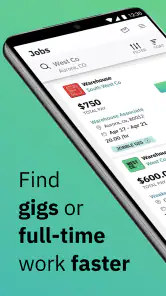
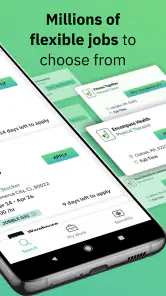
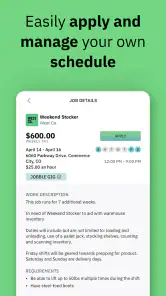
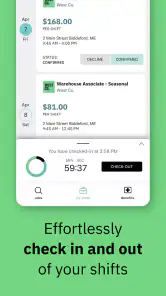
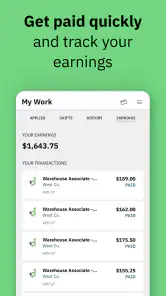

Analysis by Reviewed
Finding flexible work is rarely as simple as opening one app and choosing the first listing that appears. Location, timing, experience, pay, travel, and the amount of information an employer provides all affect whether a gig is actually worthwhile. I approached Jobble with that practical reality in mind. It is a free business app from Jobble, Inc. built around finding gigs and jobs, and its main appeal is speed: it gives people a place to look when they want work without committing to a traditional, full-time search.
My overall impression is useful but cautious. The app can be a convenient starting point for short-term opportunities, especially when I already know what kind of work I can accept and how far I am willing to travel. At the same time, a job marketplace deserves more scrutiny than a normal productivity app. I want clear information before applying, sensible account controls, and enough user choice to avoid treating every listing as equally suitable. Jobble is best understood as a discovery tool, not as a complete replacement for checking an employer, confirming details, or comparing several ways to find work.
How Jobble fits into a real job search
Jobble belongs to the business category, but it feels more immediate than a conventional career platform. I would use it when I am looking for gigs, temporary work, or a faster route into available opportunities rather than preparing a long-term professional profile. That distinction matters. Someone searching for a senior career position may prefer a specialist network, a company’s own careers page, or a recruiter. Someone trying to fill open days in a schedule may find a gig-focused marketplace more relevant.
The app has been available since March 31, 2015, and its current version is 6.6.3. It supports Android 7.0 and later, which makes it accessible on many older phones as well as newer devices. Jobble is free to install, so trying it does not require an upfront purchase. Its audience rating is Teen, a sensible reminder that the service concerns employment decisions and should be used with ordinary care rather than treated like a casual social app.
Its public reach is meaningful: the app has passed 100K installs, with an average rating of 3.3 from around 1.7K ratings and 909 written reviews. I read that combination as a mixed but not dismissive signal. There is enough activity to suggest that Jobble is not an empty marketplace, yet the rating also tells me not to expect a flawless experience for every location, work type, or applicant. A job app can be valuable to one person and frustrating to another simply because the local supply of suitable listings differs.
What I would use it for first
My first use would be a targeted search rather than endless browsing. I would decide whether I want one-off work, recurring shifts, or a temporary bridge between jobs, then check listings with those goals in mind. This prevents a common mistake: applying to anything that looks available and only later discovering that the schedule, travel, or requirements do not fit.
A realistic example would be someone with a free weekend who wants extra income. Instead of searching broadly, I would open Jobble, review the available opportunities, note the location and timing, and compare the practical value of each one. A nearby shift with clear expectations may be better than a more attractive-looking opportunity that requires an expensive commute. The app can speed up discovery, but it cannot make that personal calculation for me.
More From Our News Desk

Clash of Clans Is Won Between the Battles

Android Auto Makes the Case for Quieter Car Software

MobiOffice: Transforming Mobile Productivity with Seamless Integration

EA SPORTS FC™ Mobile Soccer: Redefining Mobile Sports Gaming

How Microsoft OneDrive Became a Mobile Productivity Giant

How Google Translate Breaks Language Barriers Effortlessly
Another useful case is a worker between longer assignments. Jobble may help create a shortlist of possibilities while the person continues applying through direct employer sites and broader job boards. I would not rely on one source alone, because marketplace coverage can vary by region and by the kind of work someone wants. The strongest workflow is to use Jobble for quick leads, then verify the important details before accepting anything.
The practical advantage over traditional job boards
Traditional job boards often assume that the user is searching for a formal position and is willing to complete a longer application process. Jobble’s value is different: it is more suitable for people who want to see gig-oriented opportunities without beginning with a large résumé-driven search. That can reduce friction when the immediate goal is simply to find work that matches a current schedule.
However, speed has a trade-off. A shorter path to a listing does not automatically mean a better understanding of the role. A conventional company careers page may provide more background about the employer, workplace, benefits, and hiring process. A specialist board may offer deeper tools for a particular profession. I would choose Jobble when immediacy matters most, and I would switch to those alternatives when long-term fit, employer research, or professional progression matters more.
Trust, controls, and the moments that deserve attention
Trust is the part I would examine most carefully in a job marketplace. I do not judge Jobble only by how quickly it displays opportunities. I also want to know what I am being asked to provide, what choices are visible during account use, and whether I can make decisions without feeling pushed into an application. Those are practical questions for any service connecting workers with employers.
Before creating an account, I would read each permission request and privacy explanation shown in the app and in the operating system. I would grant only what is necessary for the action I am taking, and I would revisit those choices later through the phone’s settings. I would also avoid entering sensitive information into a profile until I understand why it is needed and who will receive it. This is not a criticism unique to Jobble; it is a sensible boundary whenever employment information is involved.
The most data-sensitive moment is usually not browsing. It is applying. A listing may lead to requests for contact details, work history, availability, identification, or other information. I would pause before submitting anything that is not clearly connected to the role. A useful habit is to separate information needed to express interest from information needed later for formal hiring. If a request feels unrelated, unusually urgent, or unclear, I would verify the employer through an independent channel before continuing.
I also pay attention to whether the app lets me control my participation. Can I edit my profile? Can I withdraw interest? Can I remove information I no longer want displayed? Can I stop notifications that are not useful? The exact options should be checked inside the current app version and the phone’s account settings rather than assumed. What I can say from a responsible user perspective is that these controls should be treated as part of the decision to use Jobble, not as an afterthought.
How I would protect my time and personal information
I would create a simple screening routine before responding to a listing. First, I would check whether the work description is specific enough to understand the duties. Next, I would compare the schedule and location with my actual availability. Then I would look for a clear explanation of the next step. If those basics are missing, I would not let the app’s convenience pressure me into applying immediately.
I would also keep communication inside the most transparent path available until the opportunity feels legitimate. Requests to move quickly to an unfamiliar channel, pay a fee, purchase equipment, or share highly sensitive documents before basic job details are established would be warning signs for me. Jobble can help surface opportunities, but the responsibility to distinguish a suitable listing from a risky one remains with the applicant.
Notifications deserve a similar review. Alerts can be useful when timing matters, but too many can encourage reactive applications. I would enable only the notifications that help me act on relevant work and disable the rest if they become distracting. This is one of the less obvious ways to improve the experience: the app becomes more useful when I turn it into a filtered reminder system rather than a constant stream of possibilities.
Where the experience may become frustrating
The average rating of 3.3 suggests that expectations should be realistic. A gig marketplace depends heavily on the user’s location, the number of active employers nearby, and the match between available work and personal skills. If the local selection is thin, the app may feel disappointing even when its basic purpose is working correctly. I would not interpret a lack of suitable results as proof that there are no opportunities anywhere; I would compare the results with local employers, community listings, and other job services.
Another possible source of friction is the gap between seeing a listing and securing work. A fast discovery process does not guarantee acceptance, a confirmed shift, or a satisfying assignment. I would treat every listing as an opportunity to investigate, not as promised income. Keeping a small record of applications, dates, contacts, and confirmed commitments would help prevent confusion when using more than one job source.
People who need detailed career planning may also find the app too narrow for their needs. If my priority were building a professional network, presenting a portfolio, comparing benefits, or following an employer through several interview stages, I would probably choose a more specialized service. Jobble makes more sense when flexibility and short-term discovery are central to the search.
Small workflow changes that make it more useful
One of my strongest recommendations is to search with a decision already in mind. Before opening the app, I would write down the maximum travel distance, the days I can work, the earliest start time I can manage, and the types of duties I will not accept. This turns browsing into a quick screening exercise and reduces wasted applications.
I would also review a promising listing twice: once for the headline details and again for the practical consequences. On the second pass, I would look for start and end times, location precision, required experience, clothing or equipment expectations, and how the employer plans to communicate. These details often determine whether a gig is worthwhile more than the job title does.
A third useful habit is to keep Jobble alongside, rather than instead of, direct applications. If I find an employer or type of work that appeals to me, I would check whether the organization has its own official hiring page. That comparison can reveal whether the marketplace listing is the best route or merely the fastest introduction. It also gives me a clearer sense of the employer’s identity before I share more information.
Finally, I would update my account deliberately. A profile that says I am available for everything may produce more noise than value. Keeping availability and preferences accurate should make the results more relevant and reduce the temptation to accept a poor match. The benefit is not just convenience; it is better control over the kinds of opportunities that reach me.
Who should try it, and who should look elsewhere
I would recommend giving Jobble a chance if you want a free way to explore gigs, have flexible availability, and are comfortable evaluating listings yourself. It may be particularly useful for someone who wants a quick starting point, is open to temporary work, or needs to compare several possible shifts without beginning a lengthy career application.
I would be more hesitant if you need guaranteed hours, highly detailed employer information, formal career development, or a specialized professional network. I would also skip relying on it alone if a job decision involves urgent financial pressure. In that situation, I would use several sources and confirm every important condition before making plans around expected income.
My cautious verdict is that Jobble is worth testing as a discovery layer, not treating as a complete employment solution. It is free, accessible on older Android versions, and focused on the kind of quick search that can help when flexibility matters. Its mixed rating and the natural uncertainty of gig marketplaces mean I would keep my expectations measured. The best way to use Jobble is actively, selectively, and with control over what I share.
In the end, I would keep it installed if it produced relevant local leads and allowed me to manage my account and notifications comfortably. I would remove it or reduce my use if the opportunities did not match my area, if the application process felt unclear, or if the alerts created more noise than value. Jobble can shorten the distance between a worker and a possible gig, but good judgment still has to complete the journey.
Jobble Frequently Asked Questions
What does Jobble cost, and is it free to download?
Jobble is free to download, and job seekers can typically use it to search and apply for opportunities without paying an app fee. Your mobile provider may charge for data, and getting ready for a particular role could involve personal expenses such as transportation, work clothing, or required credentials. Review each listing carefully, and be wary of anyone asking for an unusual payment to secure a job.
Who is Jobble intended for?
Jobble is a business-focused app for people looking for flexible work and for businesses seeking workers. It may suit job seekers interested in short-term, shift-based, part-time, or other flexible opportunities. The app is free and rated Teen, but whether it is useful to you depends on the openings available in your area and whether your experience and availability fit what employers need.
What is Jobble, and how does it work?
Jobble is a job marketplace app designed to connect workers with businesses offering flexible, often short-term or shift-based opportunities. After creating a profile, you can browse available jobs, review details such as location, schedule, pay, and requirements, and apply to suitable listings. Availability and the exact application process may vary depending on your location and the employers using the platform.
What types of jobs can I find on Jobble?
Jobble generally focuses on flexible work, including event staffing, hospitality, retail, promotions, warehouse assignments, customer service, and other temporary or part-time roles. The selection is not identical for every user because listings depend on local demand, employer activity, and your profile qualifications. Before applying, carefully check the job description, expected duties, schedule, payment information, and any required experience or certifications.
Is Jobble free to download and use?
The Jobble app is typically free for job seekers to download and use when searching and applying for opportunities. However, normal mobile data charges may apply, and some jobs could involve costs outside the app, such as transportation, work clothing, licenses, or certifications. Always review the listing and employer information carefully, and be cautious if anyone asks you to pay an unusual fee to obtain a job.
Pros
- Simple interface makes browsing local job opportunities quick and convenient.
- Useful filters help narrow listings by location
- category
- and availability.
- Suitable for flexible
- temporary
- and gig-based work searches.
- Can help users discover nearby shifts that match their schedule.
- Direct access to employer and position details saves research time.
Cons
- Job availability may vary considerably depending on your location.
- Some listings may offer limited hours or short-term employment only.
- Competition can be high for popular shifts and better-paying roles.
- Users may need to complete extra screening before accepting work.
- Notifications can become frequent when many matching jobs are posted.
- Category
- Business
- Version
- 6.6.3