Indeed Flex
- 746.00
- 4.3
- Installs
- 1.00M
- Price
- Free

Screenshots
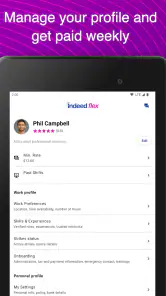
Analysis by Reviewed
Finding work at short notice is usually harder than it should be. Traditional job boards are useful when I want to search widely, compare employers, and apply for a permanent role, but they can feel slow when I am looking for a shift I can actually take soon. Indeed Flex approaches that problem from a different angle: it is a free business app from Indeed Flex built around flexible work and shift booking. After using it, I see it less as a replacement for a full career-search service and more as a practical tool for people who want to fit work around an existing schedule.
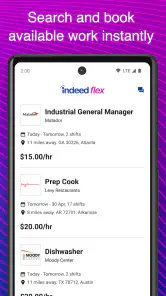
The important distinction is that this is not simply a list of vacancies to browse and forget. Its appeal comes from the possibility of finding nearby work and booking suitable shifts through the app. That makes the experience more immediate than sending applications and waiting for replies. It also creates a different set of responsibilities: I have to pay attention to shift details, availability, timing, and whether a particular role genuinely fits my routine before committing.
How Indeed Flex fits into a job search
Indeed Flex sits in the business category, although its everyday use feels closer to a scheduling and temporary-work marketplace than to a conventional office productivity tool. The developer is Indeed Flex, and the app has been available since June 23, 2017. Its current release is version 76.31.0 (869), and it works on Android 8.0 or later. The broad age rating is Everyone, which reflects that the app is intended for general adult employment use rather than entertainment or social networking.
What I like about the concept is its focus. A normal job board asks me to search through roles, open descriptions, prepare applications, and often wait. Indeed Flex is more useful when my question is narrower: What work can I take around the time and place I am available? That can be valuable for people managing changing schedules, students with open days, workers seeking additional shifts, or anyone testing a new type of job without immediately committing to a long-term position.
That focus also means I would not treat it as the only employment app on my phone. If I were looking for a permanent professional role, building a career path, or comparing a large range of employers, I would still use a traditional job board and company career pages. The strength here is not breadth in every direction; it is the more direct relationship between available work and the shifts I can realistically accept.
What “free” means in practical terms
Indeed Flex is free to download and use as an app. That matters because I can explore whether its approach suits me without paying an upfront purchase price. The free access is the confirmed value proposition from a cost perspective: I am not buying a premium tool before I know whether the available work is relevant to me.
Still, free access should not be confused with guaranteed earnings. The app can help me discover and book flexible work, but the financial value depends on the shifts available to me, their suitability, and my ability to complete them. I would therefore judge the app by whether it helps me find realistic opportunities, not by assuming that installing it automatically creates income.
More From Our News Desk

Clash of Clans Is Won Between the Battles

Android Auto Makes the Case for Quieter Car Software

MobiOffice: Transforming Mobile Productivity with Seamless Integration

EA SPORTS FC™ Mobile Soccer: Redefining Mobile Sports Gaming

How Microsoft OneDrive Became a Mobile Productivity Giant

How Google Translate Breaks Language Barriers Effortlessly
This distinction is especially important for anyone comparing it with paid career services. Indeed Flex has an obvious advantage over a subscription-based job-search product because there is no stated purchase cost for access. On the other hand, a paid service might offer a different kind of value, such as specialist coaching or professional networking, depending on the product. Those are not the same job-search problem, so I would not compare them as though they were interchangeable.
What the app delivers beyond a vacancy list
The central benefit is immediacy. When a suitable shift appears near me, the app gives the search a more actionable shape than a general advertisement. Instead of only saving a listing for later, I can think in terms of a specific work opportunity that must fit a particular day and time. That is a meaningful change in workflow, especially when my availability changes from week to week.
In everyday use, I would begin by checking opportunities before planning the rest of my day, rather than accepting a shift first and trying to rearrange everything afterward. I would compare the location with my travel options, check the start and finish times carefully, and leave enough margin for delays. Flexible work sounds convenient until a distant shift turns into an expensive or stressful journey, so the app is most useful when I treat location as seriously as the role itself.
A second useful insight is that flexibility works best when I use it to create boundaries, not when I accept everything. A person with several free days may be tempted to book multiple shifts simply because they are visible. My experience with this kind of workflow is that a smaller number of well-matched commitments is easier to manage than an overloaded calendar. I would keep a personal record of booked times even if the app displays them, because work planning should not rely on memory or a last-minute glance.
There is also value in using the app as a low-risk way to explore work patterns. Someone unsure whether they prefer hospitality, warehouse work, or another shift-based environment may learn more from a few carefully chosen experiences than from reading generic job descriptions. That does not make every shift a perfect trial, but it can help clarify which schedules, locations, and types of work fit real life.
A realistic way to use it during a busy week
Imagine I have classes or another part-time commitment on most weekdays, but I am free on Saturday and one evening. With a conventional application process, I might spend time applying for roles that expect regular availability. With Indeed Flex, I can focus on opportunities that match the openings I actually have. I would first identify the hours I can guarantee, then look for a shift that does not create a rushed journey or clash with the next obligation.
After booking, I would treat the commitment like a real appointment rather than a tentative plan. I would check the address, prepare suitable clothing or equipment if the role requires it, and plan the route before the day. The app may make finding the shift easier, but reliability still comes from my own preparation. That is one of the most important trade-offs: convenience at the search stage does not remove the responsibility of showing up prepared.
Small workflow choices that make a difference
- Check the whole time window, not just the start time. A shift that begins comfortably may finish too late for transport or another responsibility.
- Group opportunities by practical fit. Nearby work with slightly less attractive timing may be better value than a distant shift that consumes extra travel time and energy.
- Use flexible work to test consistency. If a role suits me, I can look for a repeatable pattern rather than treating every available shift as an isolated decision.
- Keep a separate calendar note. This reduces the chance of double-booking when I am also managing classes, appointments, or another employer.
These habits are not flashy features, but they are where the app becomes genuinely useful. The shift-booking model rewards quick decisions, while good work planning requires deliberate decisions. Combining both is better than browsing reactively.
Where the experience can be frustrating
The biggest limitation is that flexibility is not the same as control. I may have free time, but that does not mean the right shift will be available in the right place at the right moment. If I need a guaranteed number of hours every week, I would be cautious about relying on an app centered on flexible opportunities. A fixed part-time contract or direct employer arrangement may provide more predictable income and routine.
There is also a practical risk in making a decision too quickly. The convenience of booking can encourage me to focus on availability before thinking through travel, workload, or personal commitments. I would never regard a nearby listing as automatically suitable. The real value comes from the match between the shift and my circumstances, not simply from the fact that a booking can be made quickly.
Another trade-off is depth. A traditional job application often gives me more space to study a company, understand progression, and present my experience for a specific long-term position. A flexible-shift app is naturally better at helping me act on short-term opportunities than at helping me build a detailed professional narrative. For someone developing a career in a specialized field, that difference matters.
I would also skip this app if I strongly dislike variable schedules or need extensive support before accepting work. The model suits people who are comfortable assessing an opportunity and organizing themselves. If I need a recruiter to guide every step, negotiate a career move, or provide a stable schedule, another employment route may be more appropriate.
Who is most likely to get real value
Students are an obvious audience because their availability can change around classes and exams. However, I think the app is equally relevant to people who already work part time and want occasional additional shifts, provided the timing does not conflict with their main job. It can also suit someone returning to work who wants to rebuild a routine gradually rather than immediately accept a fixed weekly commitment.
The app is particularly attractive to people who live close to areas with regular shift-based demand. Location is central to the experience, so the benefit is stronger when I can reach likely workplaces without turning every opportunity into a long commute. Someone in an area with few suitable listings may find the app less useful, even if the interface itself is easy to use.
Its audience is not limited to people seeking a first job. An experienced worker may value the ability to choose occasional work around family responsibilities or an existing schedule. In that situation, the app is not about replacing a career; it is about adding a layer of control to available time.
By contrast, I would choose a conventional job board first if I wanted a permanent salaried role, a promotion, a highly specialized position, or a carefully researched employer relationship. I would also be cautious if my budget depends on a fixed monthly amount and I cannot tolerate changes in available work. The free app can reduce the cost of searching, but it cannot remove the uncertainty that comes with flexible work.
How it compares with usual alternatives
Compared with a broad job board, Indeed Flex feels more focused on action than discovery. A broad platform is better for reading company information, comparing career paths, and applying across many employment types. Indeed Flex is more appealing when I already know that I want shift-based flexibility and need opportunities that fit a specific window.
Compared with contacting employers directly, the app can make the initial search more convenient because I do not have to visit multiple career pages or ask each workplace whether a short-term opening exists. Direct contact can still be better when I want to build a relationship with one employer, discuss a tailored arrangement, or ask detailed questions before applying.
Compared with staffing agencies, the app offers a more self-directed feel. I can search around my own availability rather than waiting for a call, but that also means I take more responsibility for deciding what works. An agency may be preferable for someone who wants a person to recommend roles or manage more of the process.
The free price makes Indeed Flex easy to try alongside these alternatives. I do not have to abandon other job-search methods; I can use this app for flexible shifts while keeping a traditional profile active for longer-term opportunities. In my view, that combination is more sensible than expecting one service to handle every kind of employment goal.
What to check before committing
Before I book anything, I would ask myself four practical questions: Can I reach the location reliably? Can I complete the entire shift without another commitment getting in the way? Do I understand what kind of work the role involves? And would taking it still make sense after considering travel time and personal energy? These questions protect the main advantage of flexibility instead of turning it into a source of avoidable stress.
I would also think beyond the first available opportunity. If a shift works well, I would note what made it suitable: the distance, the hours, the work environment, or the way it fitted around my routine. That information helps me make better choices later. If a shift is a poor match, I would identify the exact reason rather than deciding that all flexible work is unsuitable.
The app can be a useful bridge between unemployment and a fixed role, but I would not let that temporary purpose become an unplanned permanent arrangement if I actually need stability. Flexible shifts are valuable when they solve a flexibility problem. They are less valuable when I am using them to avoid making a necessary long-term employment decision.
My verdict on the free value
Indeed Flex is worth trying if your main need is nearby, flexible shift work rather than a traditional career-search experience. The fact that it is free removes the biggest barrier to testing the model, and its 4.3 average from around 7.8 thousand ratings, together with over 1 million installs, suggests that many people have found the approach useful enough to keep using. Those figures do not guarantee that it will work in my area or match my skills, but they do make it a credible option rather than an obscure experiment.
I would recommend it to someone who can judge opportunities independently, has changing availability, and is prepared to organize travel and commitments carefully. I would not recommend relying on it alone when predictable income, a permanent position, or detailed career development is the priority. In those cases, I would pair it with established job boards, direct applications, or a staffing service that offers more structure.
My final view is positive but measured. The app’s value is not that it magically creates work; it is that it can shorten the distance between an open shift and a person who is genuinely able to take it. If that is the problem I am trying to solve, free access makes the experiment sensible. If my goal is a stable long-term career move, I would use it as a secondary tool rather than my main plan.
Indeed Flex Frequently Asked Questions
Is Indeed Flex available in my area, and what kinds of jobs can I find?
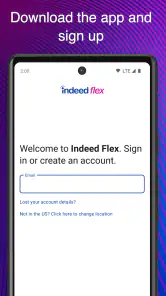
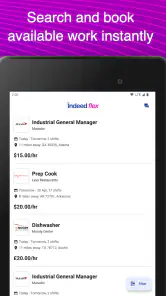
Indeed Flex is designed to show flexible work opportunities near you, but the shifts you can browse depend on your location and local employers. The app focuses on temporary, part-time, and shift-based work, with roles and requirements varying between listings. After setting up your profile, check the available opportunities in your area to see whether they fit your schedule and experience.
What is Indeed Flex, and how does it work?
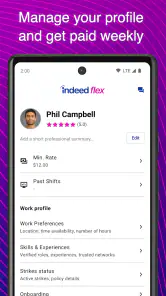
Indeed Flex is a flexible staffing and job-search app that connects workers with temporary, part-time, and shift-based employment opportunities. After creating a profile, you can browse available shifts, review pay and requirements, apply for suitable roles, and manage bookings from your phone. Availability and features may vary depending on your location, qualifications, and the local employers using the platform.
Do I need experience or specific qualifications to use Indeed Flex?
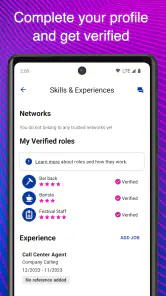
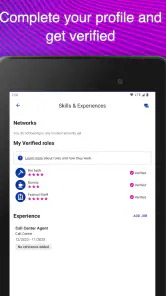
Not every position on Indeed Flex requires previous experience, but each shift can have its own requirements. Some hospitality, warehouse, retail, healthcare, or administrative roles may require training, certifications, uniforms, background checks, or proof of eligibility to work. Before applying, carefully read the listing details and complete any verification steps requested in the app to avoid being rejected or unable to attend.
How do payments work on Indeed Flex?
Payment arrangements can differ according to the job, employer, and region. The app normally provides information about the hourly rate, shift details, and payment process before you accept an assignment. You may need to submit accurate personal, tax, and banking information, and payment may depend on confirmed attendance and approved timesheets. Always check the listing and local terms for exact timing.
Can I cancel a shift or change my availability after accepting work?
Indeed Flex generally allows workers to manage their availability and review upcoming bookings, but accepting a shift creates an obligation to attend. Cancellation rules, notice periods, and penalties can vary by location and assignment. Repeated late cancellations or no-shows may affect your reliability rating or access to future opportunities, so contact support promptly if an emergency prevents you from attending.
Pros
- Quick access to flexible shifts across multiple industries.
- Clear shift details
- pay rates
- and workplace information.
- In-app messaging helps keep communication with employers organized.
- Useful filters make it easier to find suitable local opportunities.
- Digital timesheets simplify tracking completed work and earnings.
Cons
- Availability of shifts can vary significantly by location.
- Some roles may require background checks or additional verification.
- Popular shifts can be claimed quickly by other workers.
- Earnings may fluctuate because work is not always guaranteed.
- The app may request location and other personal information.

- Category
- Business
- Version
- 76.31.0 (869)