House of Dank Michigan
- 387.00
- 4.5
- Installs
- 10.00K
- Price
- Free

Screenshots

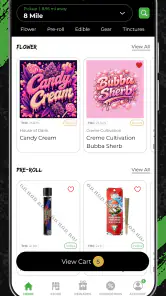
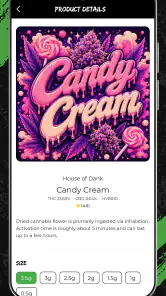
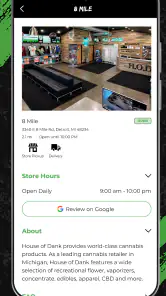
Analysis by Reviewed
I approached House of Dank Michigan as a practical medical-category app rather than as a general lifestyle tool. It is a free app from House of Dank, aimed at people looking for a weed dispensary experience connected with Michigan. That focus makes its usefulness fairly easy to understand: it is most relevant when I am already considering a dispensary visit and want a mobile starting point instead of searching through unrelated websites or social pages.
The app has a mature audience rating of 17+, which fits its subject matter. It was released on October 26, 2022, and the current version is 6.0.0, while Android support begins with version 6.0 of the operating system. It has built a 4.5 average from around 584 ratings and has passed 10,000 installs. Those figures suggest that it has found a real audience, although they do not turn it into a substitute for medical guidance or a guarantee that every visit will be equally smooth.
How the free access translates into practical value
The clearest cost advantage is simple: downloading and using the app is free. That matters because I can explore the dispensary-oriented experience before deciding whether it deserves a permanent place on my phone. There is no purchase price for access to the app itself, so the value question is not whether the software is worth a subscription. It is whether the time saved while planning a Michigan dispensary visit is useful enough to justify opening it instead of using a browser or another familiar route.
That distinction is important. Free access to the app does not mean that products, orders, delivery, taxes, or any other transaction-related costs are free. I would treat the app as a way to interact with the House of Dank Michigan offering, not as a promise that the final cost of anything selected inside the experience will be zero. Keeping those two ideas separate prevents a common misunderstanding with dispensary apps.
I also would not judge the app by the price of cannabis products, because the confirmed value here is the no-cost app access rather than a specific product price. If my goal is to compare the cost of items across several Michigan dispensaries, I would still check other sources before making a purchase. If my goal is to reach House of Dank’s own dispensary experience quickly, the free entry point is more compelling.
In everyday use, the best scenario is fairly straightforward. Imagine that I am planning a stop after work and do not want to spend the drive searching through multiple pages. I can open the app before leaving, review what is available through the House of Dank Michigan channel, and make my plan with less distraction. The benefit is not dramatic technology; it is reducing the number of steps between deciding to visit and knowing where to start.
That workflow is especially useful when I already know the dispensary I want. A broad search engine is better at showing many businesses, but it also brings unrelated results, old pages, advertisements, and information from places I never intended to visit. A dedicated app narrows the context. For a returning customer, that narrower path can feel more efficient than beginning from scratch each time.
A focused alternative to browser searching
Compared with using a normal mobile browser, the app’s main advantage is focus. A browser is more flexible: I can compare several dispensaries, check independent sources, and search for general information. The House of Dank app is more specialized. I would choose it when I want the House of Dank Michigan experience, not when I am conducting a neutral survey of every dispensary in the state.
That trade-off also explains why I would not install it automatically if I rarely use dispensaries or live outside Michigan. A dedicated app earns its space through repeated relevance. Someone who only needs occasional information may find a browser bookmark sufficient. Someone who returns to the same dispensary, however, may appreciate having a direct route that avoids repeating the same search.
The developer, House of Dank, gives the app a clear identity rather than presenting it as a general medical reference. That is helpful because I know what kind of task it is intended to support. At the same time, I would not confuse a dispensary app with a clinician, pharmacist, or educational medical resource. The category label may place it among medical apps, but its practical role is retail-oriented and location-specific.
What I would check before relying on it for a visit
My first habit would be to open the app before I am already standing outside a dispensary. That gives me time to inspect the current experience, confirm that it is behaving normally, and note any information I need for the visit. Relying on any single mobile channel at the last minute is risky, especially when a plan depends on current availability or a time-sensitive trip.
I would also keep the app updated. The current version is 6.0.0, and using the current release is sensible when an app is tied to changing retail information. An update can affect navigation or the way information is presented, so I would spend a moment looking through the interface after an update rather than assuming every control is exactly where it was before.
Another practical tip is to use the app as a planning aid, not as the only source for decisions that matter. If I need specific details about eligibility, identification, product suitability, or local rules, I would verify those through appropriate official or professional sources. The app can help me organize a dispensary-related task, but it should not be treated as personal medical advice.
Where the experience may create friction
The focused design that helps returning House of Dank customers can feel limiting to people who want broad comparison tools. If I am deciding between several dispensaries, I would probably start with a browser or a multi-store service, because those options are built around comparison. This app makes more sense after I have narrowed my choice to House of Dank Michigan.
There is also a natural limitation in depending on information that can change. Dispensary details, availability, hours, and transaction conditions are the kinds of things I would verify close to the time of a visit. Even when an app is convenient, I would not assume that opening it once guarantees that every detail remains current later in the day.
The mature 17+ rating is another boundary worth taking seriously. It tells me that this is not an app intended for children, and I would keep that in mind if the phone is shared with family members. The rating does not make the app unsuitable for every adult, but it does reinforce that the subject is cannabis retail and should be approached with the appropriate age and legal awareness.
Because the app is free, the main risk is not losing money on the download. The more realistic cost is time: installing it, learning its flow, and discovering that a browser would have been enough for my particular need. I see that as a manageable trade-off for a regular customer, but a less attractive one for someone who only wants a one-time piece of information.
Who is most likely to get real value
I think the strongest audience is an adult Michigan customer who already knows House of Dank or is specifically interested in its dispensary offering. For that person, the app can serve as a repeat-use shortcut. The free price removes the need to make a financial commitment, while the dedicated focus keeps the experience more relevant than a completely open web search.
It may also suit someone who prefers keeping dispensary-related browsing separate from ordinary searches. Instead of mixing product questions with unrelated results, I can use a purpose-built channel when I am handling that particular errand. That separation is a small convenience, but small conveniences are often what make an app worth revisiting.
I would be more cautious about recommending it to a first-time cannabis shopper who needs education above all else. A person in that situation may benefit more from speaking with a qualified professional and reading reliable health information before thinking about a retail app. House of Dank Michigan can be part of the purchasing journey, but it should not be the whole preparation process.
I would also skip it if I want a statewide marketplace, independent product reviews, or an impartial comparison of dispensary prices. The app’s identity is tied to House of Dank, so its strength is direct relevance rather than neutrality. Choosing a different tool in that situation is not a criticism; it is simply matching the tool to the job.
My verdict on installing it
For me, the decision comes down to frequency and intent. If I expect to use the House of Dank Michigan dispensary experience more than once, the free download is easy to justify. I can try it without paying for access, use it when planning a visit, and remove it later if it does not improve my routine. That is a low-risk way to test whether a dedicated dispensary app is more convenient than my usual browser habits.
If I am only passing through Michigan, comparing many dispensaries, or looking for medical education, I would skip it in favor of a broader or more authoritative resource. The app is not trying to solve every cannabis-related question, and I would rather see that focus clearly than expect it to perform a job it was not designed for.
My overall view is positive but deliberately specific: the free access is the app’s clearest value, while its usefulness depends on already having a reason to use House of Dank Michigan. The 4.5 average and more than 10,000 installs show that it is not an obscure experiment, and the 6.0.0 release indicates an established product rather than a first draft. Still, those numbers do not replace my own test of whether the app makes a dispensary visit easier.
I would recommend giving it a try if you are an eligible adult in its intended Michigan audience and want a direct mobile route to House of Dank. I would keep a browser or official source nearby for comparison, current visit details, and health or legal questions. Used with those expectations, it offers a sensible, no-cost convenience; used as a universal cannabis guide, it is the wrong tool.
Pros
- Useful for browsing Michigan cannabis products in one place.
- Product menus can make dispensary shopping faster.
- Convenient access to store details and ordering options.
- Helps compare available strains
- brands
- and product types.
- A practical option for checking deals before visiting a store.
Cons
- Availability and delivery options depend on your Michigan location.
- Cannabis purchases require users to meet legal age requirements.
- Menus and stock may change before an order is completed.
- Some products may be unavailable despite appearing in listings.
- The app’s usefulness is limited outside House of Dank locations.

- Category
- Medical
- Version
- 6.0.0