Happy Bob
- 88.00
- 3.2
- Installs
- 10.00K
- Price
- Free

Screenshots
Analysis by Reviewed
Living with diabetes often means making sense of information that arrives all day long, and that can make routine care feel like a second job. Happy Bob takes a more encouraging approach: it is a medical app built around rewarding diabetes management, with a focus on making progress feel visible rather than treating every reading as another warning. I found that idea appealing because motivation matters just as much as information when a routine has to be repeated day after day.
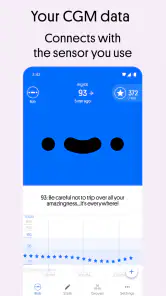
The app is developed by Harald AI Oy and is presented as an authorized Dexcom Connected Partner. That connection is important for people who already use a compatible Dexcom setup, although it also means the app is most relevant to a particular group rather than to every person managing diabetes. Happy Bob is free to install, carries an Everyone age rating, and has passed the early novelty stage: it was released on September 15, 2020, and has reached over 10 thousand installs.
How Happy Bob fits into everyday diabetes management
My first impression is that Happy Bob is not trying to replace a complete diabetes-management system. It is better understood as a motivational layer around glucose information. Instead of asking the user to stare at charts and interpret every change alone, it aims to make the process friendlier and more rewarding. That distinction helps set realistic expectations: this is not a substitute for medical advice, insulin instructions, emergency care, or a conversation with a clinician.
The app belongs in the medical category, but its tone is less clinical than many traditional glucose tools. That can be useful when the main obstacle is not access to information but fatigue with looking at it. A person may already know that regular monitoring matters and still struggle to stay engaged. A more positive presentation can make it easier to return to the routine without feeling that every imperfect day is a personal failure.
There is also a practical reason to consider it alongside a Dexcom-connected workflow. If glucose information is already being collected through a compatible Dexcom device, an app that turns that ongoing stream into encouragement may feel more natural than manually entering every value into a separate tracker. The benefit is not simply having another screen; it is reducing the distance between the data a person already generates and the motivation they need to act on their plan.
A realistic morning-to-evening scenario
Imagine a user getting ready for work after a night of interrupted sleep. They may not want to open a dense report or calculate what every trend means before breakfast. A quick look at a more approachable progress view can provide a small prompt to stay attentive through the morning. Later, after a rushed lunch or an unusually active afternoon, the same person can use the app as a reminder that diabetes management is a continuing pattern, not a single pass-or-fail test.
That kind of use is where I see the strongest case for Happy Bob. It does not need to transform the entire treatment routine to be useful. If it makes someone more willing to check in, notice patterns, or keep following the plan agreed with their healthcare team, the emotional design has a practical purpose.
More From Our News Desk

Clash of Clans Is Won Between the Battles

Android Auto Makes the Case for Quieter Car Software

MobiOffice: Transforming Mobile Productivity with Seamless Integration

EA SPORTS FC™ Mobile Soccer: Redefining Mobile Sports Gaming

How Microsoft OneDrive Became a Mobile Productivity Giant

How Google Translate Breaks Language Barriers Effortlessly
What the free access means in practice
Happy Bob is free, so the initial decision is relatively easy: a user can try the experience without paying an upfront purchase price. That makes it more accessible than a medical app that requires a subscription before someone can judge whether its style suits them. The free entry point is especially helpful for people who are curious about a motivational companion but are not ready to commit money to another health service.
There are in-app purchases ranging from $5.99 to $69.99 per item. Because those are purchase options rather than a single stated cost for the whole experience, I would not treat the free download as proof that every part of the app is free. The sensible approach is to explore the no-cost experience first, then inspect each purchase screen carefully before confirming anything. Free access lowers the trial barrier, but it does not automatically establish the value of every paid item.
This pricing structure also changes how I would recommend the app. Someone who only wants a basic motivational companion may be satisfied without spending anything. Another user may find a paid addition worthwhile if it becomes part of a daily routine, but that judgment depends on how much the added content improves their personal workflow. I would avoid buying immediately, particularly if the app is being considered for a child or if a family shares payment access.
What the app can add beyond a conventional logbook
A conventional diabetes logbook is often strongest at recording events: glucose values, meals, medication, exercise, and notes. That record can be valuable when preparing for a clinical appointment, but it may not provide much encouragement between appointments. Happy Bob’s more distinctive contribution is the attempt to make ongoing management emotionally easier to revisit.
That is a subtle but meaningful difference. A logbook answers, “What happened?” A motivational companion tries to help answer, “How can I keep going?” Neither replaces the other. If you need detailed manual records for a clinician, a dedicated logging tool may be the better primary app. If you already have reliable data collection and mainly need a more positive reason to engage with it, Happy Bob has a clearer role.
I would also use it as a reflection aid rather than as an authority. If a reward or encouraging message makes a user feel good, that is useful, but it should not override symptoms, treatment instructions, or professional guidance. A cheerful interface can support care; it cannot decide what a particular glucose reading means for an individual patient.
Small workflow choices that make it more useful
One useful habit is to open the app at a consistent transition point, such as before leaving home or after returning from work, instead of checking it compulsively. That turns it into a brief routine rather than another source of notifications or anxiety. The goal is to use the motivational element to support awareness, not to let the app dominate the day.
A second practical tip is to compare the app’s encouragement with your broader care plan over time. If it helps you notice that busy days, travel, or disrupted sleep make management harder, write those observations down for your next healthcare conversation. The app may help you spot a personal pattern, but the treatment decision still belongs with you and your medical team.
A third trade-off concerns emotional feedback. Rewards can make progress feel approachable, but some people may find gamified encouragement distracting or uncomfortable. If you prefer neutral charts, precise entries, and a strictly clinical presentation, the same design choice that attracts another user may make Happy Bob feel less suitable.
Connection, compatibility, and setup expectations
The Dexcom partnership is one of the app’s most important practical details. A person using a compatible Dexcom-connected arrangement has a clearer reason to investigate it than someone who relies on another glucose-monitoring system. Before building a routine around the app, I would confirm that the intended Dexcom setup works with the current version on the phone being used.
Happy Bob currently lists version 1.15.2 and requires Android 8.0 or later. That makes the operating-system requirement fairly approachable for many Android users, but an older phone still needs to meet it before installation. The app is also available in the iOS and Android ecosystem context implied by its connected-partner positioning, yet the exact experience can vary by device and operating system. Checking the relevant store page on your own phone is a sensible step before changing any existing monitoring routine.
Compatibility matters more here than it would for a simple notes app. If the connection does not behave as expected, the app loses much of its appeal because the user may end up duplicating work. I would not manually recreate a full glucose history just to make a motivational tool useful. The best experience should fit around the data flow you already trust, not create a second administrative task.
Where the app feels less convincing
The average rating is 3.2 from around 262 ratings, alongside roughly 88 written reviews. I read that as a sign to approach the app with measured expectations rather than assuming the concept works equally well for everyone. The rating does not tell me that the app is unusable, but it does suggest that personal fit, connection reliability, and expectations may strongly affect satisfaction.
The biggest limitation is scope. Happy Bob is not the obvious choice for someone searching for a comprehensive diabetes diary, detailed nutritional analysis, medication management, or an all-purpose health dashboard. Its value comes from motivation and engagement, so a user who wants extensive clinical detail may feel that it is too light beside a more traditional diabetes-management platform.
There is also a risk that rewards can oversimplify a condition that is not always under a person’s control. Diabetes management is affected by illness, stress, hormones, sleep, food, activity, and treatment factors. A user should not interpret a disappointing result as a moral failure, and the app should not become a source of guilt. I would keep that boundary clear, especially when recommending it to someone who already feels anxious about glucose numbers.
The paid items create another point of friction. The free installation makes testing convenient, but the presence of purchases means the long-term cost needs attention. At the lower end, a single purchase of $5.99 may feel modest; at the upper end, an item priced at $69.99 deserves a much more careful value judgment. I would only spend that amount if the specific feature had already demonstrated clear, repeated usefulness in daily life.
Who is most likely to benefit
I think Happy Bob is best suited to a person who already has a compatible Dexcom-centered routine and wants more encouragement around it. It may also suit someone who avoids conventional medical dashboards because they feel cold, demanding, or overwhelming. The positive framing can be particularly helpful for a user who understands the basics of their care plan but struggles with consistency and emotional burnout.
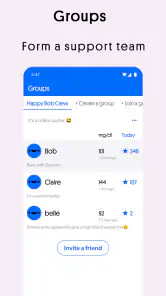
It could be a useful companion for a busy adult who wants a quick check-in rather than another lengthy data-entry session. It may also appeal to families looking for a gentler way to talk about daily management, provided adults remain responsible for interpreting the information and supervising any purchases or care decisions. The Everyone rating makes the app broadly approachable from an age-classification standpoint, but that should not be confused with suitability for unsupervised medical decisions.
I would skip it if your priority is a detailed, customizable clinical record. I would also skip it if you do not use a compatible Dexcom-connected setup and do not want to verify whether the app can fit your current tools. In that situation, a platform designed around your existing glucose meter or sensor may offer better value because it avoids a disconnected or duplicated workflow.
People who dislike gamification should also be honest about their preferences. If rewards feel childish, pressuring, or irrelevant, the app may become one more thing to ignore. A neutral tracker, a clinician-recommended system, or the official monitoring software associated with your device may be a better choice. Happy Bob works best when its tone feels motivating rather than intrusive.
How it compares with the usual alternatives
Compared with a standard glucose log, Happy Bob appears more focused on the user’s relationship with the routine than on building the most exhaustive record. That makes it a companion rather than a full replacement. A logbook may win for detailed notes and appointment preparation, while Happy Bob may win for making regular engagement feel less burdensome.
Compared with official device software, its appeal depends on what you want from the information. Official tools are often the natural reference point for core readings and device-related details. Happy Bob’s reason to exist is the layer of encouragement around diabetes management. I would keep the official source or clinician-approved workflow as the foundation and use this app only if its motivational approach genuinely helps me stay involved.
Compared with broad wellness apps, Happy Bob is more specifically tied to diabetes management and Dexcom connectivity. A general wellness app may be better for exercise, sleep, nutrition, or habits across several areas, but it is unlikely to offer the same focused emotional framing. The trade-off is breadth: Happy Bob is more specialized, while a general platform may cover more of your life in one place.
My final recommendation
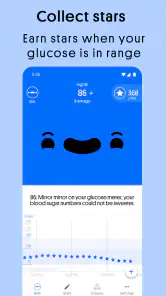
After weighing the cost and the practical fit, I see Happy Bob as a worthwhile free trial for the right user, not an automatic recommendation for every person with diabetes. Its strongest idea is simple: data is easier to live with when the experience encourages continued effort instead of presenting management as a constant test. That can be genuinely valuable when motivation is the missing piece.
I would start without purchasing anything, make sure the Dexcom-connected workflow behaves properly, and use the app for a normal stretch of daily life rather than judging it after a single glance. Pay attention to whether it reduces friction, helps you return to your routine, and leaves you feeling supported rather than judged. If it does, a paid item may be worth considering only on its own demonstrated merits, with the available purchase range in mind.
My buy-or-skip verdict is therefore conditional but positive: try it for free if you use a compatible Dexcom setup and want a more encouraging companion. Skip it if you need a complete medical record, dislike reward-based design, or would have to duplicate data manually. For me, the real value is not replacing established diabetes tools, but making the daily act of staying engaged feel more manageable.
Harald AI Oy has created an app with a clear purpose and a distinctive tone, even though the modest average rating shows that the experience is not universally persuasive. I would recommend approaching it as a motivational addition, keeping clinical decisions with your healthcare team and treating optional purchases carefully. Used within those limits, Happy Bob can earn a place in a diabetes routine without pretending to be the whole routine.
Happy Bob Frequently Asked Questions
What is Happy Bob, and how does the app work?
Happy Bob is a mobile rewards application centered on completing simple activities, such as answering surveys or participating in promotional tasks, in exchange for points or other rewards. After installing it, users generally create an account, review available opportunities, complete eligible tasks, and track their balance inside the app. Available activities, reward values, and eligibility can vary depending on location and user profile.
Is Happy Bob free to download and use?
Happy Bob is generally free to download, and creating an account does not normally require an upfront payment. However, the app may use internet data, and some activities can involve promotional content or third-party offers. Before accepting a task, it is worth checking its conditions carefully, including time requirements, eligibility rules, data permissions, and any restrictions that could affect whether you receive the advertised points or reward.
How can I earn rewards with Happy Bob?
The main way to earn rewards in Happy Bob is by completing the opportunities shown in your account, which may include surveys, questions, research activities, or other promotional tasks. Each opportunity should display its expected reward and requirements. Not every task will be available to every user, and rewards may depend on completing the activity accurately, meeting screening criteria, and following all instructions until the task is successfully recorded.
How are Happy Bob rewards redeemed, and how long does payment take?
Reward redemption options and processing times depend on the offers available in your country and the account requirements shown in the app. Users should open the rewards or withdrawal section to confirm the minimum balance, supported payment methods, verification steps, and expiration rules. Some rewards may be issued quickly, while others can require review. Keep confirmation emails and transaction details if a redemption needs customer support.
Is Happy Bob safe to use, and what personal information does it collect?
Before using Happy Bob, review its privacy policy and the permissions requested during registration and while completing activities. Rewards apps may collect profile information, survey responses, device details, and usage data to match users with opportunities or measure campaigns. Use a strong, unique password, avoid sharing unnecessary sensitive information, and download the app only from an official store. If the privacy practices or permissions seem unsuitable, do not proceed.
Pros
- Simple interface that is easy to understand from the first use.
- Colorful visuals and cheerful presentation make it appealing to children.
- Short activities are convenient for quick play sessions.
- Runs smoothly on most modern Android and iOS devices.
- Progress feedback can encourage users to keep returning.
Cons
- Some content may feel repetitive after extended use.
- The child-focused design may seem too basic for older users.
- Certain features or content may require in-app purchases.
- Limited offline functionality can reduce usability without internet access.
- Privacy settings and parental controls may need closer review.
- Category
- Medical
- Version
- 1.15.2