Hamburg Fairgrounds
- 11.00
- 4.1
- Installs
- 10.00K
- Price
- Free

Screenshots
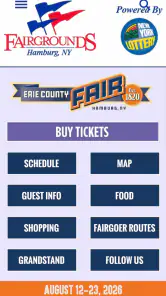
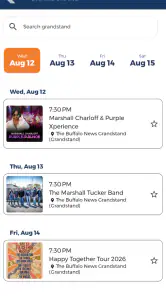
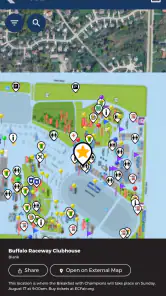
Analysis by Reviewed
When I opened Hamburg Fairgrounds, I expected a straightforward event companion rather than an app I would use every day. That turned out to be the right way to approach it. This is a free Events app from the Erie County Agricultural Society, built around the Hamburg Fairgrounds and connected with the Erie County Fair, Buffalo Gaming, and Hamburg Gaming. Its real value is practical: it gives people one focused place to begin planning a visit instead of making them piece together information from unrelated searches, social posts, and saved browser tabs.
My overall view is positive, with an important qualification. I would recommend it to someone attending an event at the fairgrounds, especially if that person wants an official starting point before leaving home. I would not treat it as a complete replacement for every other planning tool, because an event app is only as useful as the information available for the particular visit. Still, the focused scope is also its advantage. It does not try to be a general city guide or a broad entertainment platform.
What the app gets right for fairground visits
The first strength is clarity of purpose. The app is not presented as a general-purpose calendar for every activity in the region. Its store summary points directly to the Erie County Fair, Buffalo Gaming, and Hamburg Gaming, while the short description identifies Hamburg Fairgrounds. That gives me a reasonably clear expectation before installing it: this is a local event companion, not an app I would download for discovering concerts or festivals in another city.
That narrow focus matters when planning a busy outing. A fairground visit can involve more decisions than the headline attraction suggests. I may need to check what is happening, decide which parts of the day deserve priority, and keep the venue context in mind while coordinating with other people. A dedicated app can reduce that mental clutter because the information is organized around the place and its events rather than around a broad search engine.
I also appreciate that the app comes from the Erie County Agricultural Society. For a venue-centered tool, the organization behind it is relevant. It makes the app feel more purposeful than a random third-party listing that happens to mention the fairgrounds. That does not automatically guarantee that every screen will be perfect, but it gives the product a sensible home and a clear reason to exist.
For a first-time visitor, the best workflow is to use the app before making detailed plans. I would open it while deciding whether an event fits my schedule, then use the information there as the first checkpoint for the day. After that, I would save any essential details in a simple note or calendar entry. That small two-step habit is useful because the app can serve as the event reference while the calendar handles personal commitments, travel time, and reminders.
There is another practical benefit for groups. When several people are attending together, disagreements often come from everyone looking at a different source. One person checks a search result, another relies on an old social post, and someone else remembers a previous visit. Starting with the same venue-specific app gives the group a common reference point. I would still confirm the details that matter most before leaving, but the app can make the conversation more concrete.
A useful companion before leaving home
I found the app most valuable during the preparation stage rather than as something to stare at continuously throughout the visit. That distinction is important. Event apps are often judged by how much they do while a person is already on site, but their quieter role is helping users form a realistic plan beforehand. If I am choosing between a short visit and a full day, the app helps frame that decision around the fairgrounds’ own event context.
A realistic scenario would be a family deciding on a weekend outing. One parent wants to know whether the event is worth arranging around, while the children are interested in the fair atmosphere and gaming-related activities. Instead of passing around screenshots from different websites, the family can begin with Hamburg Fairgrounds, identify the relevant event information, and then make a short list of priorities. The app does not need to replace every planning tool to be useful in that situation; it only needs to make the first stage less scattered.
For visitors who attend alone, the advantage is slightly different. I can browse at my own pace and decide how much preparation feels necessary. Someone who likes spontaneous trips may use the app for a quick check, while a more organized visitor can use it as the basis for a fuller itinerary. That flexibility is more appealing than an app that forces every user through a complicated planning system.
Another non-obvious tip is to use the app as a question generator. Rather than assuming it will answer every logistical concern, I would look through the event information and note what still needs separate attention. For example, I might identify the event I want to attend first, then check my route, meeting point, payment needs, and accessibility arrangements through the appropriate channels. This prevents a common mistake: confusing an event companion with a complete personal travel plan.
Simple access and a broad audience
The app is free, which removes the most obvious barrier to trying it. It is also marked for Everyone, so its intended audience is broad rather than limited to a specialist group. That suits the fairground setting, where families, local residents, occasional visitors, and people attending gaming-related activities may all need the same basic event reference.
Its Android requirements are also approachable. The listed minimum is Android 6.0, so people using older but still functional devices are not automatically excluded by a demanding operating-system requirement. I would not read that as a promise of identical performance on every phone, but it does suggest that the app is designed for ordinary mobile access rather than only recent hardware.
The current version is 3.0.0, and the app has reached over ten thousand installs. That is enough to show that it has found a real audience, while still leaving it feeling like a focused local utility rather than a huge social platform. Its average rating is 4.1 from roughly thirty ratings, with around ten written reviews. I see that as encouraging but not definitive: the score suggests that many users find it helpful, though the relatively small review pool means I would rely more on my own needs than on the rating alone.
One thing I like about a small, focused app is that it can be easier to understand. There is less temptation to waste time browsing unrelated recommendations. If my goal is the Erie County Fair or another activity tied to Hamburg Fairgrounds, the app’s identity is immediately relevant. If my goal is researching restaurants, hotels, museums, or transportation across the wider Buffalo area, I would switch to a map or travel app instead.
Where the experience needs realistic expectations
The main limitation is not necessarily a broken feature; it is the narrow boundary of the product. A venue app can help me understand the event it covers, but it cannot replace broader tools for navigation, group messaging, weather checks, budgeting, or personal scheduling. I would not want to depend on it alone for a complicated day involving several locations.
This matters because fairground visits often create practical questions that sit outside event information. I may need precise directions from my starting point, a backup meeting location, a way to share plans with relatives, or a separate reminder for departure time. Hamburg Fairgrounds can be the event-focused part of that system, but I would pair it with the tools already built into my phone. That is not a criticism unique to this app; it is the trade-off of choosing a specialized companion over a broad planning suite.
I also think users should avoid assuming that an app installed on the phone means every important detail is permanently available without preparation. My sensible approach would be to open the relevant information before traveling, take note of anything essential, and keep a backup plan for details that could affect the day. This is especially useful when traveling with children or coordinating a group, where a small uncertainty can become a major interruption.
Another point of friction is audience fit. Someone who attends only once and already has all the necessary details may not gain much from installing another app. If a friend sends me a complete schedule and I only need a quick map search, the extra app may feel unnecessary. In that case, the usual browser and navigation tools could be faster. The strongest case for Hamburg Fairgrounds is not “everyone needs this,” but “people connected to these fairground events benefit from having a dedicated reference.”
I would also be cautious about using the rating as a guarantee of a flawless experience. The 4.1 average is respectable, but a small collection of ratings can reflect a limited range of phones, events, and expectations. My recommendation is to judge it by the specific event I plan to attend. If the app’s content matches that purpose, its focused design is likely more important than whether it has a large online reputation.
How it compares with the usual alternatives
The most obvious alternative is a web search. Searching the event name can be quicker when I need one isolated fact, especially if I already know exactly what I am looking for. The weakness is that search results can mix current information with older pages, unrelated discussions, and third-party summaries. Hamburg Fairgrounds has the advantage of keeping the experience centered on the fairgrounds and its associated activities.
A social media page is another common alternative. Social channels can feel more active and may be useful for announcements or conversation, but they are not always the easiest place to build a calm plan. Posts can disappear into a feed, and important details may be surrounded by unrelated updates. I prefer the app as a structured reference, then use social media only when I specifically want the wider conversation around an event.
General calendar apps are better for managing my personal commitments. I can see work, school, appointments, and travel time in one place, which Hamburg Fairgrounds is not designed to replace. The trade-off is that a personal calendar usually lacks the venue-specific context that makes an event companion useful. My preferred combination is simple: use this app to understand the fairground event, then put the final plan into my calendar.
Maps are stronger for getting there and estimating travel time. They are also better when the day involves several stops around Buffalo or Hamburg. However, a map does not necessarily give me the same event-centered view. That is why I see the two tools as complementary rather than competing. If I had to choose only one for a trip involving unfamiliar roads and multiple destinations, I would choose the map; if the main problem is understanding the fairground event itself, I would choose this app.
Who should install it, and who can skip it
I would recommend Hamburg Fairgrounds to local families, regular fair visitors, people attending Erie County Fair activities, and anyone interested in the Buffalo Gaming or Hamburg Gaming side of the venue. It is especially suitable for users who prefer an official, focused source instead of collecting information from several unrelated places.
It is also a good fit for the person in a group who usually ends up organizing the day. That user can use the app as the starting point, identify the event everyone is discussing, and then move the practical commitments into a shared calendar or message thread. The app does not need to handle every part of coordination to save time; it only needs to reduce uncertainty at the event-information stage.
I would skip it if I am not planning to visit the Hamburg Fairgrounds or engage with the events associated with it. I would also skip it if I want a broad entertainment discovery service, a complete travel planner, or a social network for event discussion. Those needs are better served by general-purpose alternatives. Installing a specialized app without a relevant visit in mind would add clutter rather than value.
For older Android users, the six-point-oh minimum requirement is reassuring, but I would still keep expectations sensible. A compatible operating system does not make every older phone equally comfortable for browsing. If the device has a small display or limited storage, I would use the app for the essential check and avoid treating it as the only place where I keep critical plans.
My final recommendation
After using it as an event-planning companion, I see Hamburg Fairgrounds as a useful specialist rather than an all-in-one solution. Its strongest quality is that it keeps attention on the Erie County Fair, Buffalo Gaming, Hamburg Gaming, and the Hamburg Fairgrounds context. That focus makes it more purposeful than a random search result and less distracting than a broad event platform.
The meaningful trade-off is that I still need other tools for directions, personal scheduling, communication, and wider trip planning. I would not install it expecting a complete day-management system. I would install it when a fairground visit is actually on my calendar, open it before leaving, use it to establish the event plan, and then support that plan with my phone’s normal calendar and navigation tools.
My verdict is favorable for the right audience: Hamburg Fairgrounds is worth trying if you are attending one of the connected events and want a free, venue-focused reference on Android. Its broad age rating, accessible system requirement, and established user base make it easy to consider, while its limitations are clear enough to plan around. For a relevant visit, I would recommend it; for general event discovery, I would choose a broader alternative.
Pros
- Large
- well-organized venue with several halls and event spaces.
- Convenient location with good public transport connections.
- Hosts diverse trade fairs
- exhibitions
- and public events.
- Modern facilities suitable for professional and international visitors.
- Clear event information helps visitors plan their attendance.
Cons
- The grounds can feel overwhelming during major events.
- Admission and parking costs may be high for some visitors.
- Crowds can make entrances and walkways particularly busy.
- Food and drinks inside the venue may be relatively expensive.
- Some events offer limited access without advance registration.

- Category
- Events
- Version
- 3.0.0