Grace Moments
- 101.00
- 4.6
- Installs
- 10.00K
- Price
- Free

Screenshots
Analysis by Reviewed
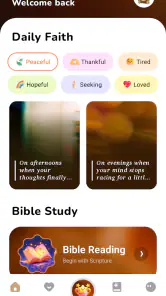
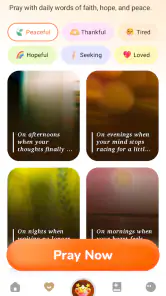
I approached Grace Moments as someone looking for a simple way to bring reading and prayer into an ordinary day, rather than as a replacement for a full digital library or a detailed study tool. Its purpose is easy to understand: it is a free Books & Reference app built around reading, prayer, and walking with God. That narrow focus is its main appeal. You are not asked to sort through a huge collection of unrelated material before getting started.
The app comes from SAILIBERTY TECH and is available for everyone. It has reached over ten thousand installs, with a 4.6 average from more than three hundred ratings and over one hundred written reviews. Those figures suggest that the basic idea is connecting with people, although I would still judge it by whether it fits your personal routine rather than treating its popularity as proof that it will suit every reader.
My first impression is that Grace Moments is best understood as a quiet companion for brief spiritual pauses. If you want a focused place to read and pray without turning the experience into a complicated research project, it makes sense. If you need extensive cross-references, scholarly commentary, several translations, or advanced note management, a larger Bible or reference platform may be a better match.
What to expect when you open Grace Moments
The store summary, “Read, Pray, Walk with God,” gives a useful sense of the intended rhythm. This is not an app I would choose because I want a broad entertainment feed or a general-purpose e-book shelf. I would choose it when I want the act of opening an app to lead naturally toward a short reading and a moment of prayer.
That distinction matters for first-time users. Many reading apps make you begin by searching, filtering, choosing a format, or building a library. Grace Moments is more appealing when you already know why you are opening it: a morning pause, a quiet evening, or a few minutes between responsibilities. The less you treat it like a database and the more you treat it like a repeatable habit, the clearer its value becomes.
I also like the fact that it is free. There is no price barrier for someone who wants to try a spiritual reading routine before committing to a paid service. The age classification is Everyone, so it is positioned as an accessible choice for households and readers who want something straightforward rather than an app designed around mature themes or complicated settings.
At the same time, a free app should not automatically be mistaken for a complete replacement for every alternative. Grace Moments has a focused purpose, and focus always involves trade-offs. A dedicated study app will usually be more useful when you are comparing passages, researching background, or preparing a lesson. A paper Bible may still be better when you want to read without a screen. The strength here is convenience and a guided sense of purpose, not exhaustive reference depth.
Who will get the most from it
I would recommend starting with Grace Moments if you are trying to make prayer more regular but keep abandoning routines that feel too demanding. It is also a sensible option for someone who wants a gentle digital entry point into devotional reading, especially when a large collection of tools would feel distracting.
It can work well for a person who has a specific daily trigger in mind. For example, you might open it after making coffee, during a lunch break, or before putting your phone away at night. The important part is not forcing a long session. A short, repeatable visit is more realistic than promising yourself an ambitious study schedule that quickly becomes another obligation.
I would be more cautious about recommending it to a reader whose main goal is academic study. If your normal workflow involves tracing themes across many passages, checking original-language details, saving extensive annotations, or comparing several editions, you will probably want a more specialized reference product alongside it. Grace Moments is more likely to help with consistency than with deep research.
Starting without overthinking the setup
The current version is 1.0.3, and it supports Android 8.0 or later. That makes the compatibility question fairly simple for Android users: check the operating system on your phone before installing, then expect a relatively focused experience rather than a mature platform with years of accumulated complexity. I would not approach the first launch expecting to configure every part of a long-term system immediately.
My advice is to begin with one intention. Decide whether your first session is for reading, prayer, or both. That small decision prevents a common mistake: opening the app while mentally carrying a long list of expectations. You do not need to turn the first visit into a complete spiritual plan. The first useful result is simply finishing one meaningful moment without getting lost in setup.
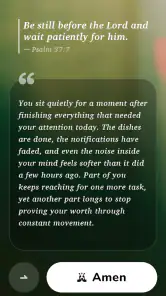
After installation, take a few seconds to notice how the reading and prayer parts relate to each other. Instead of rushing through the text as if it were a checklist, read at a pace that leaves room for one response. A practical approach is to identify a sentence or idea that stays with you, then use it as the starting point for your prayer. This creates a bridge between the two activities and makes the app feel more purposeful than a collection of disconnected screens.
One useful habit is to keep your first session deliberately short. This is not because longer reading is unhelpful, but because a manageable beginning gives you a better chance of returning. If you start by demanding a perfect routine, you may judge the app by the pressure you created rather than by what it actually offers.
Your first meaningful success
For me, the clearest first success with an app like this is not completing a large amount of content. It is reaching the end of a session with one thought I can carry into the next part of the day. To get there, I would open Grace Moments when I have a few uninterrupted minutes, read carefully, pause before moving on, and turn the central idea into a personal prayer.
That workflow is simple, but it solves a real problem. Reading can remain passive if I immediately close the screen and return to whatever I was doing. Prayer can feel vague if it has no point of connection. Linking the two gives the session a beginning, a middle, and an ending: encounter the reading, reflect on it, and respond in prayer.
A realistic example would be a busy weekday morning. I might not have time for a long study session, but I can use the app before leaving home. Rather than opening social media first and hoping I later find a calmer moment, I would make Grace Moments the first intentional stop. I would read, choose one idea to remember, and finish with a brief prayer related to the day ahead. The benefit is not dramatic productivity; it is creating a small pause before the day becomes crowded.
Another useful scenario is an evening when concentration is limited. A large reference app can tempt me to keep searching, comparing, and collecting material. A focused devotional app may be better because it reduces the number of decisions. I can approach the session as a closing ritual instead of beginning another research task.
Small techniques that make the routine stronger
The first technique I would use is a “one passage, one response” rule. I would not try to gather several ideas at once. I would read one portion with attention, then answer it with a prayer or a concrete intention. This is especially helpful for beginners because it turns a broad spiritual goal into an action that can be completed in one sitting.
The second is to attach the app to an existing transition rather than relying on motivation. Opening it after breakfast or before bed is more dependable than waiting until I feel especially inspired. The app becomes part of a sequence I already perform, which lowers the mental effort required to begin.
The third is to use a “return point” when a session feels distracted. Instead of abandoning the app because my mind wandered, I would go back to the sentence or idea that seemed most relevant and spend another minute with it. This is a practical way to avoid treating imperfect concentration as failure.
A fourth insight is that the app may be more valuable as a consistency tool than as a content-discovery tool. If I already own books, printed materials, or another Bible app, Grace Moments does not have to replace them. I can use it for the daily pause, then turn to a larger resource only when I need detailed study. That division of roles prevents disappointment and makes the focused design an advantage.
Where first-time users may hesitate
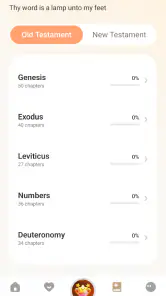
The most likely confusion is expecting a full reference library because the app belongs to the Books & Reference category. That category can cover very different experiences, from dictionaries and e-readers to study platforms. Grace Moments has a devotional direction, so I would not evaluate it by asking whether it contains every research feature found in a specialist tool.
Another possible misunderstanding is assuming that a short session is somehow an incomplete use of the app. I see the opposite. The app’s concept works best when a brief reading and prayer are treated as a complete moment in themselves. You do not need to wait for a free hour before opening it, and you do not need to measure the value of the session by how much text you covered.
Some users may also wonder whether they should use it alone or alongside another resource. My answer is that it depends on the job. Use Grace Moments when you need a focused devotional pause. Use a conventional Bible or study app when you need broad search, comparison, or detailed investigation. Keeping those purposes separate is more practical than expecting one app to handle every kind of reading.
There is also a personal-fit question. Someone who prefers complete control over reading order, extensive customization, or a large set of tools may find a focused experience limiting. That is not necessarily a defect, but it is an important trade-off. A calm, narrow workflow can help one person concentrate while making another feel constrained.
Moving from the first session to a lasting habit
Once the first session feels comfortable, I would avoid immediately adding too many rules. Choose one regular moment and protect it. If that works, add a second occasion only when the first feels natural. This gradual approach is more sustainable than creating a demanding schedule on the day of installation.
I would also keep the goal specific. “Become more consistent” is difficult to act on, while “open the app before breakfast and finish one reading-and-prayer pause” is clear. The app’s value becomes easier to judge when the routine has a defined purpose. After a week or two, ask whether it is helping you begin and finish that moment with less friction.
If you share a household, the Everyone rating makes it approachable for a broad range of users, but personal practice still matters. Different readers may want different lengths, themes, or levels of explanation. I would introduce it as an invitation rather than a requirement, especially when encouraging someone who is uncertain about devotional apps.
For Android users with a compatible device, the free entry point makes experimentation easy. You can try the first routine without paying, then decide whether the focused format deserves a permanent place on your phone. That is a better test than judging it after a quick launch or comparing it only by feature count.
My final view after considering the trade-offs
Grace Moments succeeds when I ask it to do one thing well: help create a small, intentional space for reading and prayer. Its appeal is not that it replaces every Bible, devotional book, or reference tool. Its appeal is that the path from opening the app to having a meaningful pause can remain uncomplicated.
I would recommend it to first-time users who want a gentle starting point, to busy readers who need a repeatable daily cue, and to anyone who prefers a focused spiritual routine over a crowded dashboard. I would skip it as a primary tool if my priority were advanced research, extensive cross-referencing, or a highly configurable study system.
The strongest way to try it is to install it, choose one ordinary moment in your day, and aim for a complete but modest session: read attentively, pause on one idea, and respond in prayer. If that rhythm feels natural, the app is doing something useful. If you keep wishing for deeper references or more control, that is a clear sign that a larger alternative should take the lead.
Overall, I see Grace Moments as a practical companion rather than an all-purpose library. Its free access, approachable age rating, and focused purpose make it easy to test, while its narrow scope tells you exactly where its limits are. For the right reader, the real benefit is turning intention into a repeatable moment—one that fits into an ordinary day instead of waiting for a perfect one.
Pros
- Simple interface makes daily use easy for beginners.
- Short reflections fit well into busy schedules.
- Encourages consistent moments of gratitude and mindfulness.
- Suitable for personal use or sharing with close friends.
- Gentle content can support a calmer daily routine.
Cons
- Some features may require an internet connection.
- Limited customization could disappoint advanced users.
- Reminders may feel repetitive over time.
- Content may not appeal to users seeking deeper guidance.
- Availability of updates and support may vary by platform.

- Category
- Books & Reference
- Version
- 1.0.3