GOES: Outdoor Health & Safety
- 17.00
- 3.2
- Installs
- 10.00K
- Price
- Free

Screenshots
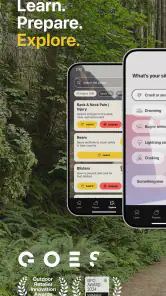
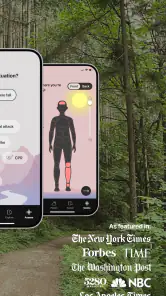
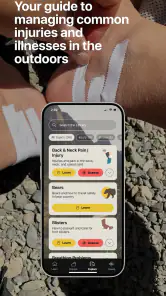
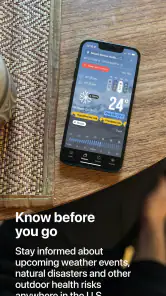
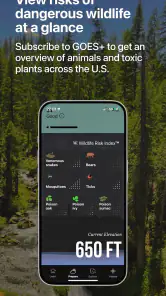
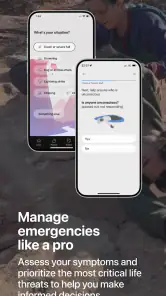
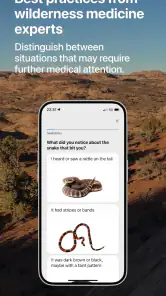
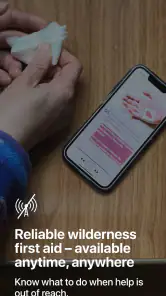
Analysis by Reviewed
I approached GOES: Outdoor Health & Safety as the kind of medical app that should earn trust quickly, because outdoor guidance is useful only when it is easy to reach at the moment you need it. Its basic promise is appealing: a practical companion for people who spend time outside and want health and safety information close at hand. After using it, my impression is mixed but fairly clear. It can be a handy reference for outdoor-minded users, yet it does not automatically become a daily habit simply because it sits on a phone.
The app comes from GOES Developer and is available free of charge, with optional in-app purchases ranging from $1.99 to $99.99 per item. That pricing detail matters more here than it would in a casual app, because people tend to expect essential safety guidance to be immediately understandable before deciding whether extra content is worth paying for. The free entry point makes trying it straightforward, while the possible purchase range means I would inspect what is included before treating it as a complete replacement for established medical or emergency resources.
What using GOES feels like beyond the first download
The first-week appeal is practical, not entertaining
The strongest early appeal is the idea of having one focused place to consult before or during outdoor activities. Instead of searching the web with cold fingers, a weak signal, or a head full of worry, I can see the value in opening an app designed around outdoor health and safety. That focused purpose is more useful than a general search engine when I already know I want guidance related to being outside.
I would recommend starting with a short orientation session rather than waiting for an emergency. Browse the available material at home, notice how quickly the relevant sections can be reached, and decide whether the wording makes sense to you. This is an important distinction: an app can contain useful information and still be a poor emergency tool if the user has to learn its organization while stressed.
During the first week, GOES is most convincing as a preparation companion. Before a walk, hike, camping trip, or other outdoor plan, I can use it to think through health and safety concerns that are easy to overlook when I am focused on the route. A useful routine would be to open it while packing, identify the guidance most relevant to the activity, and then keep the phone accessible rather than buried in a bag.
That workflow reveals a non-obvious trade-off. A safety app has two audiences: the person who wants to prepare carefully and the person who downloads it only after something has already gone wrong. It serves the first audience better. Preparation gives me time to read, compare advice with my circumstances, and decide what physical supplies or backup plans I need. In a crisis, I would still prioritize local emergency services and professional medical help over any phone reference.
The app is also approachable for households that want to discuss outdoor safety with younger users. Its content rating is Everyone, which makes it easier to consider as a general family reference, although an age label is not a substitute for adult supervision or medical judgement. I would explain the guidance rather than hand the phone to a child and assume the app can make decisions for them.
More From Our News Desk

Clash of Clans Is Won Between the Battles

Android Auto Makes the Case for Quieter Car Software

MobiOffice: Transforming Mobile Productivity with Seamless Integration

EA SPORTS FC™ Mobile Soccer: Redefining Mobile Sports Gaming

How Microsoft OneDrive Became a Mobile Productivity Giant

How Google Translate Breaks Language Barriers Effortlessly
Where it fits beside familiar alternatives
Compared with a normal web search, GOES has the advantage of a narrower purpose. Search results can be broad, contradictory, or difficult to scan when I am outdoors. A dedicated app can reduce that first layer of friction by keeping the subject matter in one place. The disadvantage is that a search engine can reach a much wider range of current local information, official notices, specialist medical guidance, and emergency contacts.
Compared with a first-aid handbook, the app is more portable and easier to update in principle, but a printed guide has an important strength: it does not depend on a charged phone. I would not choose one over the other. For a serious outdoor kit, a compact physical reference and basic first-aid supplies remain sensible backups, while GOES can serve as the more convenient learning and preparation tool.
It also differs from fitness trackers and outdoor navigation apps. Those products usually focus on distance, pace, location, weather, or performance. GOES is not appealing because it measures a workout; its value comes from health and safety awareness. That makes it a poor substitute for navigation and a poor substitute for a dedicated emergency communication device. Its role is narrower, and that is both its advantage and its limitation.
What creates value after the novelty fades
The first download is easy to justify. The harder question is whether I would still open the app several weeks later. For me, the answer depends on whether I connect it to real outdoor routines. If I only install it, browse once, and forget it, the app becomes digital clutter. If I review relevant guidance before recurring activities, it has a better chance of earning permanent space.
A practical monthly habit would be to revisit the app at the start of a new season or whenever my outdoor plans change. A summer day trip, a colder-weather walk, and a multi-day camping outing do not create the same concerns. Reviewing the material when the context changes is more useful than opening the app at random just to prove that it is still installed.
This is where GOES has recurring value for cautious beginners. Someone new to outdoor activities may gradually build a personal checklist around the information they find useful: what to carry, what warning signs to recognize, when to stop, and when to seek help. The app cannot replace experience, but it can support the habit of thinking ahead. I found that more valuable than treating it as a one-time emergency encyclopedia.
There is also a useful distinction between learning and consulting. I would use the app repeatedly for learning during calm moments, then rely on memory, equipment, companions, and official help when conditions become urgent. That approach reduces the risk of staring at a screen while a situation is developing. The app earns its place when it improves preparation before the activity, not when it encourages dependence during a crisis.
Users should also understand the difference between a free installation and a completely free experience. The app costs nothing to start, but optional purchases are available, with individual items priced from $1.99 to $99.99. I would avoid buying anything impulsively after seeing a locked section. First I would decide whether the additional material solves a real problem in my routine, and whether the free content already covers the situations I am likely to face.
The maintenance burden is small, but not zero
Any health and safety app creates a maintenance responsibility for the user. I would keep the phone charged before an outing, make sure the app opens normally, and check whether the information I intend to use is available in the conditions where I expect to need it. I would not assume that installing an app automatically makes it an offline resource or an emergency communication channel.
That last point is especially important. Outdoor conditions can involve poor reception, rain, cold, glare, and limited battery life. Before relying on GOES away from home, I would test the reading experience in advance and take screenshots or notes only where that is practical and appropriate. I would still carry conventional supplies and tell someone where I am going. A phone app should support a safety plan, not become the entire plan.
The current version is 5.5.2, and the app runs on Android 7.0 or later. For many users, that makes it accessible on older devices rather than forcing an immediate phone upgrade. However, older hardware can bring its own friction: slower opening, limited storage, a tired battery, or a screen that is difficult to read outdoors. Those are not reasons to reject the app, but they are reasons to test it before a trip rather than discovering a problem on the trail.
Maintenance also includes personal judgement. Medical advice that is appropriate for one person may not fit another person’s age, condition, medication, allergies, or level of training. I would treat the app as general guidance and compare important decisions with a qualified professional. If symptoms are severe or worsening, I would contact emergency services instead of trying to resolve the situation through a mobile reference.
For families, the maintenance task becomes a shared one. I would show other members of the group where the app is installed, explain what it is for, and make sure they know the phone’s ordinary emergency options. The hidden benefit of this approach is redundancy: if one person’s phone fails, another person may still know the plan. The hidden weakness is that an app no one has practiced using is not much of a group resource.
Why some users may grow tired of it
The biggest source of fatigue is likely to be the gap between a promising concept and repeated need. Most people do not face an outdoor health problem every day. That means the app must remain useful during preparation, not only during unusual incidents. If its material does not become part of a packing or planning routine, many users will stop opening it after the initial curiosity fades.
Another possible friction point is decision overload. Safety information is valuable, but too much reading at the wrong time can make a user hesitate. I prefer to study guidance before leaving, identify the few points that apply to my activity, and avoid scrolling through unrelated material once I am outside. This is a specific way to get more from the app without turning it into a constant source of worry.
The store rating sits at 3.2 from around forty-six ratings, with seventeen written reviews. I read that as a reason to keep expectations measured rather than as an automatic rejection. The app has enough public use to show that it is not an entirely untested idea, but the rating also suggests that the experience may not satisfy everyone. I would personally try the free version first and judge its clarity, speed, and relevance before paying for anything.
There is a further fatigue risk for experienced outdoor users. If you already have a well-practiced first-aid routine, trusted reference materials, suitable equipment, and reliable navigation tools, GOES may add less value than it does for a beginner. In that situation, a specialized medical source or a local emergency resource may be a better use of attention. The app is most helpful when it fills a knowledge or preparation gap, not when it duplicates a system you already use confidently.
It may also be the wrong choice for someone looking for live rescue coordination, detailed route planning, or personal medical monitoring. Its identity is as an outdoor health and safety guide, not a universal outdoor command center. I appreciate that narrower role because it makes the decision easier: install it for guidance and preparation, not because you expect it to perform every function associated with outdoor safety.
Who should keep it installed
I think GOES is a reasonable fit for occasional hikers, campers, families planning outdoor days, and newcomers who want a dedicated place to learn basic safety considerations. It is also useful for people who repeatedly say they will prepare better but need a simple prompt before leaving home. The app’s free starting point lowers the risk of testing that routine.
I would be more cautious about recommending it as the only resource for remote trips, serious medical conditions, or activities where communication and navigation are critical. In those cases, I would combine it with professional advice, appropriate training, physical equipment, route planning, and a clear emergency procedure. The app can sit inside that system, but it should not be mistaken for the system itself.
One of my preferred workflows is to use GOES the evening before an outing, write down the few reminders that matter, charge the phone, and then put the device away unless I genuinely need to consult it. This reduces screen dependence and turns the app into a preparation aid. It also exposes whether the app has earned a lasting role: if I repeatedly return to it before different activities, it is useful; if I never do, uninstalling it is sensible.
My long-term verdict
After the novelty fades, GOES: Outdoor Health & Safety makes the most sense as a supporting reference rather than a complete safety solution. I like its focused medical and outdoor purpose, its accessible free entry point, and the way it can encourage better preparation. I also think its limitations are important enough to state plainly: it should not replace emergency services, professional medical judgement, navigation tools, physical supplies, or a charged and reliable phone.
The app earns lasting space only when I attach it to a recurring behavior. Open it before an activity, use it to identify relevant concerns, and keep a backup plan that does not depend on the screen. That approach gives it a realistic job and avoids expecting too much. Users who want live tracking or a comprehensive outdoor toolkit should look elsewhere, while beginners and occasional outdoor participants may find this focused guide worthwhile.
With over ten thousand installs, it has reached a modest audience, and its Everyone rating makes it approachable for general household use. Still, the average of 3.2 tells me to evaluate the actual experience rather than assume universal polish. My recommendation is therefore conditional but positive: try the free version, test it before your next outing, learn where its guidance fits into your routine, and only consider an in-app purchase if it provides clear recurring value. For me, that is the difference between a useful safety companion and another app that disappears after the first week.
GOES: Outdoor Health & Safety Frequently Asked Questions
Is GOES: Outdoor Health & Safety suitable for beginners planning their first outdoor trip?
Yes. GOES is designed for people who spend time outdoors, from newcomers to experienced adventurers, and its health and safety guidance can help beginners think through common risks before a trip. Use it as one part of your preparation: learn about your route and conditions, bring appropriate equipment, and consider taking practical first-aid training. The app is a companion, not a substitute for sound judgment or professional guidance.
What is GOES: Outdoor Health & Safety, and who is it designed for?
GOES: Outdoor Health & Safety is an outdoor safety and health companion designed for people who spend time hiking, camping, climbing, skiing, traveling, or exploring remote areas. It brings practical safety information and health guidance into one mobile app, helping users prepare for common outdoor risks. It can be useful for beginners and experienced adventurers, although it should complement—not replace—professional training, local knowledge, or emergency services.
What features does GOES provide for outdoor activities?
The app focuses on information and tools intended to support safer outdoor experiences. Depending on the version and available services, users may find guidance related to injury prevention, first aid, environmental hazards, health concerns, and emergency preparation. Its value is especially noticeable when information needs to be accessed quickly away from home. Before relying on any feature in a remote location, users should check what works offline and confirm that their device has sufficient battery and connectivity.
Can GOES replace a doctor, first-aid course, or emergency rescue service?
No. GOES should be treated as an educational and preparedness resource rather than a medical professional, certified instructor, or rescue organization. Information in the app may help users recognize risks and decide what steps to consider, but it cannot diagnose every condition or guarantee a correct response. In a serious or rapidly worsening emergency, contact local emergency services whenever possible and follow advice from qualified medical or rescue professionals.
Does GOES work without an internet connection?
Offline availability is an important consideration for any outdoor safety app because trails and remote areas may have weak or no signal. Some content or tools may remain accessible after installation or preparation, while other functions can depend on internet access, location services, or external communication networks. Before leaving, open the app, review the relevant guidance, download or save anything available for offline use, and create a backup plan that does not depend entirely on your phone.
Pros
- Provides weather and safety alerts for outdoor activities.
- Useful location-based information for hikers and travelers.
- Can support trip planning with relevant environmental updates.
- Focused on practical health and emergency awareness outdoors.
- Clean
- purpose-built concept for people spending time outside.
Cons
- Some features may depend on accurate GPS and location permissions.
- Alerts can vary in usefulness depending on regional coverage.
- Continuous location use may increase battery consumption.
- Outdoor guidance should not replace official emergency services.
- Requires a stable internet connection for timely updates.
- Category
- Medical
- Version
- 5.5.2