Garner Health
- 58.00
- 4.7
- Installs
- 50.00K
- Price
- Free

Screenshots
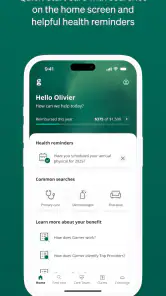
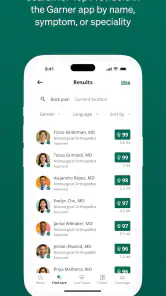
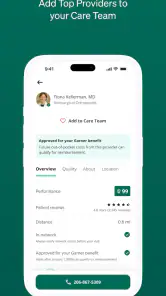
Analysis by Reviewed
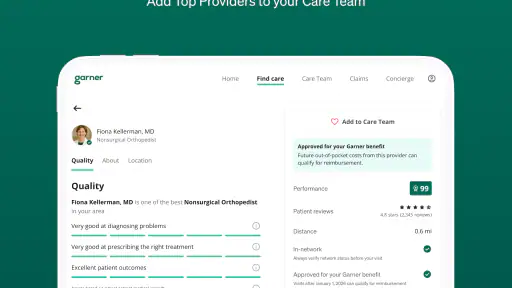
Choosing a doctor is difficult enough without also having to judge quality, compare options, and understand what your health plan may reimburse. Garner Health takes a focused approach to that problem: it is a free medical app from Garner Health that helps eligible users find higher-quality doctors and seek reimbursement for seeing them. I found it most useful as a planning tool before an appointment, rather than as a replacement for a health insurer, a medical record, or a doctor’s office.
The app belongs in the medical category, but its role is narrower than a general health tracker. It does not try to count steps, manage prescriptions, or turn a phone into a diagnostic device. Instead, it sits between doctor discovery and healthcare spending. That makes it especially interesting for people who already have coverage but feel lost when choosing a specialist or primary-care doctor.
My main takeaway is simple: Garner Health can make an expensive healthcare decision more deliberate, but it works best when you treat its recommendations as a starting point and verify the practical details before booking.
How the everyday workflow feels
Start before you need an appointment
The strongest way to use the app is not in a rush from a waiting room or while trying to book a same-day visit. I would open it when I know I may need care soon, then use it to organize the search around a real need: a primary-care visit, a specialist consultation, or a second opinion. That small change in timing matters because reimbursement and doctor choice are easier to evaluate before an appointment has already been scheduled.
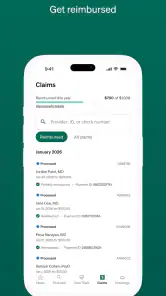
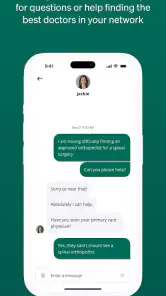
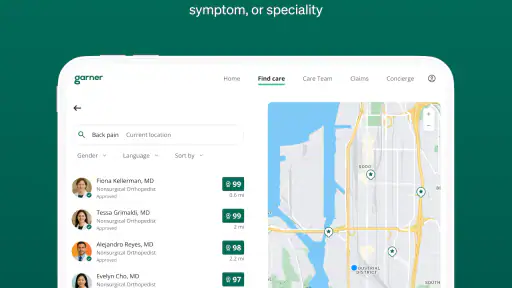
The basic workflow is straightforward in concept. I would look for a suitable doctor, review the available information, and then consider whether that person fits my location, specialty, and insurance situation. After receiving care, the reimbursement side becomes the important follow-through step. This means the app is not merely a directory; it is part of a sequence that connects doctor selection with a possible financial benefit.
That sequence also reveals the first practical limitation. Finding a doctor and confirming that the visit will work for a particular plan are not always the same task. I would still contact the office and check coverage, appointment availability, referral requirements, and the exact service being scheduled. A recommendation can improve the search, but it should not be treated as a final insurance authorization.
A realistic appointment scenario
Imagine that I have moved to a new area and need a primary-care doctor. The usual approach might be to search a general web directory, read a handful of short reviews, call several offices, and hope that the first available appointment is a good one. With Garner Health, I would begin by looking for a doctor who appears to match my needs, then use the result to narrow the phone calls rather than contacting every nearby practice.
Before confirming the appointment, I would ask the office whether the doctor is accepting new patients, whether my plan is accepted, and what paperwork is needed. Once the visit is complete, I would keep the appointment documentation organized so that any reimbursement process is easier to complete. The app can make the selection stage more intentional, but the user still has to handle the ordinary administrative details of healthcare.
This is one of the app’s less obvious strengths: it encourages a better decision before the visit, when changing doctors is still relatively easy. Many people only think about quality after a disappointing appointment. Using Garner Health earlier can help turn doctor selection into a repeatable habit instead of a last-minute search.
What kind of user benefits most
I see the greatest value for people with employer-sponsored benefits or other coverage arrangements where a reimbursement opportunity may make a higher-quality doctor more affordable. It can also help anyone who has recently relocated, is looking for a specialist, or feels overwhelmed by directories that present many names without much guidance.
Families may find the planning angle useful as well. A parent arranging several appointments can use the app to create a more considered shortlist before spending time on calls. Someone managing an ongoing condition may also appreciate a way to think beyond the nearest available appointment, especially when continuity and confidence in a doctor matter.
On the other hand, I would be cautious about relying on it for urgent symptoms. If I needed immediate medical attention, I would use emergency services, an urgent-care option, or direct clinical advice rather than spending time comparing doctors. Garner Health is better suited to planned care and informed selection than to emergencies.
Settings, habits, and the limits of speed
Settings worth checking first
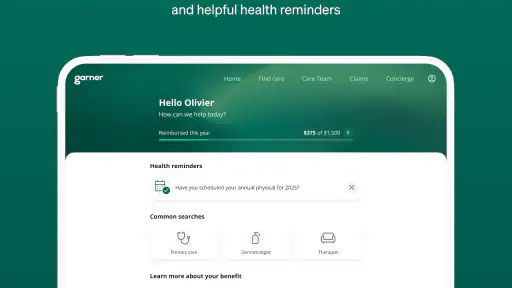
With a medical app, the first “setting” is really the context I bring to the search. I would make sure my account and coverage details are accurate, because an incorrect plan or outdated personal detail can make an otherwise useful recommendation less useful. I would also review notification preferences so that reminders or updates support my workflow instead of becoming background noise.
I would pay particular attention to location and specialty choices. A broad search can produce an attractive list that is impractical once travel time, office hours, or the need for a particular type of care enters the picture. A narrower search is usually more helpful, but narrowing too aggressively can hide reasonable alternatives. My preferred approach is to begin with the care I actually need, then widen the search only if the first group of options does not fit.
Another worthwhile check is the app’s current behavior after installation or an update. Garner Health is currently at version 11.7.0 and supports devices running Android 7.0 or later. I would keep the app updated when possible, particularly before starting a reimbursement-related task, because a current version is less likely to create avoidable friction during sign-in or document handling.
Use a repeatable shortlist instead of endless browsing
A common mistake with doctor-finding tools is browsing without making a decision framework. I would limit myself to a small shortlist and compare each option using the same questions: Does the specialty match my actual need? Is the location manageable? Can the office see me within a useful timeframe? Does the doctor appear suitable for ongoing care rather than just one isolated visit?
This approach prevents the app from becoming another source of choice overload. The goal is not to find a perfect profile; it is to identify a practical candidate worth verifying. I would save the details I need for the next step, then move to the office call or booking process instead of repeatedly refreshing the search.
For reimbursement, I would create a simple personal habit: keep the appointment date, provider information, and relevant paperwork together immediately after the visit. That is more reliable than trying to reconstruct the details weeks later. Garner Health may support the reimbursement journey, but good organization on the user’s side remains important.
Where it differs from ordinary alternatives
A standard search engine is faster for finding nearby offices, but it usually leaves the quality question to the user. An insurer directory can be useful for network information, yet it may feel like a long list rather than a recommendation. Review websites offer patient opinions, but those opinions can focus on waiting rooms, staff interactions, or isolated experiences rather than the broader question of choosing a high-quality doctor.
Garner Health occupies a different position. Its central idea is not simply “find a doctor near me”; it is “find a higher-quality doctor and connect that choice with reimbursement.” That combination is the reason to use it. If I only needed an address or phone number, a regular directory might be quicker. If I needed formal coverage confirmation, I would still prioritize my insurer and the provider’s billing office.
The trade-off is that Garner Health is less universal than a general search tool. Its usefulness depends on whether the reimbursement arrangement applies to me and whether the doctors I am considering fit the app’s supported workflow. That makes it potentially valuable for the right user, but not an automatic replacement for every healthcare search method.
Three practical patterns experienced users can adopt
First, I would use the app before opening a broad web search. That keeps the initial shortlist connected to the app’s quality-and-reimbursement purpose. Once I have a few candidates, I can use ordinary search tools only to confirm practical information such as office location or contact details, rather than letting the web search determine the entire decision.
Second, I would separate “quality candidate” from “bookable candidate.” A doctor can look promising and still be unavailable, too far away, outside the relevant network, or unsuitable for the appointment type. Treating those as two separate checks avoids disappointment and makes the final choice more realistic.
Third, I would use the app as part of a care-planning file. For recurring specialist visits, I would keep notes about what I checked, which office I contacted, and what documents I retained. This habit is especially helpful when reimbursement requires follow-up. It also makes switching providers less chaotic if the first appointment does not work out.
Advanced limits to keep in mind
The app’s strongest promise can also create an expectation problem. “Higher quality” is meaningful only within the information and criteria used to produce the recommendation. I would not read a favorable result as a guarantee of bedside manner, a perfect diagnosis, a short wait, or a successful treatment outcome. Healthcare is personal, and a doctor who is a strong fit for one patient may not suit another.
I would also avoid assuming that reimbursement makes every recommended option financially equivalent. The amount a person ultimately pays can depend on plan rules, deductibles, coinsurance, billing codes, and the service received. The app may help connect the choice with reimbursement, but I would still ask precise questions before the appointment: Is this doctor eligible for my situation? What must I submit? Is the reimbursement tied to a particular type of visit or provider?
Privacy is another reason to use a measured workflow. Medical decisions and reimbursement paperwork can involve sensitive information. I would provide only what is necessary, read the relevant account prompts carefully, and avoid treating the app as a place to store every health detail simply because it is convenient. The more focused the information shared, the easier it is to keep the process understandable.
There is also a human limitation that no recommendation app can remove. A doctor may be highly regarded but communicate in a way that does not work for me. After the first visit, I would judge whether the doctor listens, explains options clearly, respects questions, and fits my ongoing needs. If not, I would use Garner Health again as a starting point rather than forcing a poor match because the initial recommendation looked strong.
Who should skip it
I would skip Garner Health if I am looking for emergency guidance, a symptom checker, medication reminders, or a complete personal health record. That is not what this app is designed to be. I would also be less interested if I already have a trusted doctor and no reason to compare alternatives or investigate reimbursement.
It may not be the best first choice for someone whose only priority is confirming network participation. In that situation, the insurer’s own directory and a direct call to the office are more authoritative for the immediate question. Likewise, people who prefer to choose doctors solely through personal referrals may find the app unnecessary unless reimbursement is a major part of the decision.
For everyone else, the key question is whether the app’s central exchange makes sense: spend a little more time choosing a doctor with quality in mind, then see whether the financial side makes that choice more practical. If that is relevant to your healthcare situation, the app deserves a closer look.
My final view after using the workflow
Garner Health is a focused medical app rather than an all-purpose health companion. I like that it addresses a real gap between doctor directories and healthcare costs. The free price removes an obvious barrier to trying it, and its Everyone content rating makes it approachable for general users. The developer, Garner Health, has kept the product centered on a clear purpose instead of filling it with unrelated wellness features.
Its public reception is encouraging, with a 4.7 average from around 345 ratings and over 50 thousand installs. Those figures suggest genuine interest, but they should not replace personal judgment. A rating cannot tell me whether the app supports my coverage situation, whether a recommended doctor is convenient, or whether the reimbursement process will fit my particular visit.
My recommendation is to use it deliberately: check the account context, search for the specific care you need, build a short list, verify the office and coverage details, and keep reimbursement paperwork organized from the beginning. That workflow gets more value from the app than casual browsing does.
In the end, I would recommend Garner Health to people who want help making a more informed doctor choice and who may benefit from reimbursement for higher-quality care. I would not present it as a substitute for an insurer, a clinician, or urgent medical services. Used within those boundaries, it offers a practical advantage: it gives the doctor-selection process a clearer purpose and helps turn a vague search into a manageable series of decisions.
Pros
- Personalized doctor recommendations based on quality and cost data.
- Helps compare healthcare providers before booking an appointment.
- Can make finding in-network doctors less time-consuming.
- Useful screenings may highlight potential health risks early.
- Clean interface makes provider information easy to review.
Cons
- Coverage and recommendations may vary by location and insurance plan.
- Some provider profiles may have limited or outdated information.
- Health scores can oversimplify complex medical quality factors.
- The app cannot replace advice from a qualified healthcare professional.
- Some features may require personal health or insurance details.

- Category
- Medical
- Version
- 11.7.0