Formed
- 2.76K
- 4.9
- Installs
- 100.00K
- Price
- Free

Screenshots
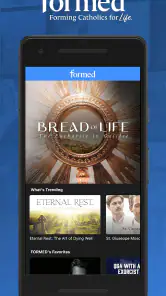
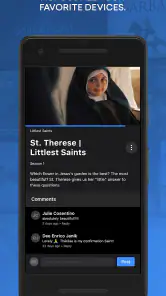
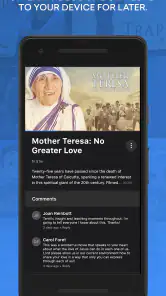



Analysis by Reviewed
I approached Formed as an education app for building a more consistent Catholic learning and formation routine, rather than as something to open once and forget. Developed by The Augustine Institute, it is free to install, rated for Everyone, and presents a broad religious-learning experience under the simple idea of forming Catholics for life. That makes it interesting for people who want faith-related material close at hand, especially when a regular class, parish group, or physical study schedule is difficult to maintain.
My first impression was that its value depends less on a single spectacular feature and more on whether I gave it a repeatable place in my day. It works best when I treated it as a companion to prayer, reading, or discussion—not as a complete replacement for parish life, personal guidance, or an in-person community. If you want a Catholic-focused app that can support ongoing formation in small pieces, it deserves attention. If you are looking only for a quick daily quote or a narrowly defined Bible-reading tool, its wider educational purpose may feel more than you need.
How I built a practical routine around Formed
A useful baseline workflow for busy days
The most reliable way I found to use the app was to decide in advance what role it would play. On one day, that might mean opening it during a quiet morning and working through a short piece of learning. On another, it could be part of an evening routine after the household has settled down. The important change was moving away from browsing without a purpose. I got more from it when I entered with a question, a theme, or a small amount of time already in mind.
That approach is particularly helpful for families. Instead of asking everyone to explore independently, a parent can choose one topic for the household and use it as a starting point for conversation. The app then becomes a prompt for discussion rather than a passive screen activity. A useful follow-up is to ask what stood out, what was unclear, and how the subject connects with ordinary decisions. Those questions turn consumption into formation.
I also found it sensible to separate personal use from group use. A private session can be reflective and unhurried, while a parish or study-group session needs a clear stopping point and a topic people can discuss together. Formed can support both patterns, but the user has to supply the structure. It does not remove the need for someone to guide the conversation or adapt the material to the group’s age and experience.
For a realistic everyday scenario, imagine someone commuting without wanting to spend the whole journey scrolling through unrelated entertainment. A short session can fit into that gap, followed later by a few notes or a conversation at home. The benefit is not simply filling spare minutes. It is creating a connection between learning and the rest of the day. I would avoid using it while driving, of course, but it can fit naturally into a waiting period, a lunch break, or a quiet part of an evening.
Choosing the right expectation before you begin
The app is aimed at Catholic formation, so it makes the most sense for Catholics, people exploring Catholic teaching, and families or groups looking for material within that tradition. Someone seeking a broad comparative religion course may find the focus too specific. Likewise, a user who wants an academic reference library with extensive citation tools should probably choose a dedicated study resource instead.
More From Our News Desk

Clash of Clans Is Won Between the Battles

Android Auto Makes the Case for Quieter Car Software

MobiOffice: Transforming Mobile Productivity with Seamless Integration

EA SPORTS FC™ Mobile Soccer: Redefining Mobile Sports Gaming

How Microsoft OneDrive Became a Mobile Productivity Giant

How Google Translate Breaks Language Barriers Effortlessly
Its strongest use case is continuity. A person who has started and abandoned several reading plans may appreciate having formation material gathered in one place, but only if the routine remains realistic. I would begin with a modest target instead of trying to cover everything immediately. A smaller habit that survives a busy week is more valuable than an ambitious plan that becomes another unfinished project.
The public response suggests that many users find the app worthwhile: it holds a 4.9 average from around 6,300 ratings, with roughly 2,800 written reviews and over 100,000 installs. Those figures do not guarantee that every user will enjoy the same experience, but they do indicate that the app has found a substantial audience. I would still judge it by fit: the right question is not whether it is popular, but whether its Catholic educational focus matches what you actually want to do.
Settings and account choices worth checking early
Before settling into a routine, I would review the app’s available preferences and make the experience fit the way you intend to use it. Check how content is organized, how progress is presented, and whether any optional prompts or notifications support your schedule rather than interrupting it. I prefer reminders that point me toward a planned habit; I dislike alerts that create the feeling that I am constantly behind.
It is also worth checking the device requirements before installing. The current version is 10.303.1 and requires Android 8.0 or later. That is a practical detail for anyone using an older phone or managing devices for several members of a family. On a compatible device, I would still keep the operating system and app current when possible, because educational apps can become frustrating when an old installation behaves differently from the current interface.
Since the app is free to install but includes optional in-app purchases ranging from $0.99 to $99.99 per item, I would make the purchase boundary clear before handing the device to a child or using it in a group setting. The Everyone age rating describes the intended general audience, but it does not mean every family will want completely unrestricted use. A quick conversation about which material is appropriate and whether paid content is allowed prevents confusion later.
This is one of the less obvious practical points: “free” should be treated as an invitation to evaluate the app, not as a promise that every part of the experience has the same cost. I would start with the free access, see whether the organization and teaching style suit me, and only then consider optional purchases. That order protects against paying for content before discovering that the app does not fit my preferred learning method.
Faster patterns that make regular use easier
Experienced use is mostly about reducing decisions. I would choose a recurring time, keep the first session intentionally manageable, and finish by identifying one thought to carry into the day. This is more effective than opening the app whenever I happen to remember it. The habit becomes easier when the phone, chair, notebook, or family conversation that follows is already part of the routine.
For personal study, I like a three-step pattern: preview the subject, engage with the material without multitasking, and then summarize it in my own words. The summary can be spoken aloud, written in a notebook, or shared with another person. This exposes a common weakness in app-based learning: it is easy to mistake recognition for understanding. If I cannot explain the main idea after closing the screen, I probably need to revisit it.
For families, I would avoid turning every session into a test. A better pattern is to select one accessible question and let different ages answer in their own way. Younger children may respond with a simple example, while adults can connect the subject with practice or tradition. The app supplies a starting point, but the family’s conversation supplies the depth.
For parish groups, the efficient workflow is to agree on the purpose before anyone opens the app. Is the group trying to introduce a subject, prepare for discussion, or continue a longer course? Without that decision, people can spend the meeting navigating instead of talking. One person can guide the session while others focus on reflection and questions. This is a trade-off: the app can make preparation easier, but it does not automatically create a well-run group.
Another useful habit is to keep a simple record of topics that prompted questions. I would not attempt to document every minute of use. Instead, I would note subjects that need a second look or a conversation with a priest, teacher, parent, or group leader. This helps preserve the boundary between digital formation and personal pastoral guidance. An app can introduce and reinforce ideas; it should not be treated as the final authority for every individual situation.
Where the app is strong—and where its limits become visible
The central strength is focus. Unlike a general video platform or a broad search engine, Formed is designed around Catholic formation. That focus reduces the effort required to find material that belongs to the tradition. It also makes the app more suitable for a household or parish that wants a shared starting point rather than a collection of unrelated links.
Compared with a physical book, the app is more convenient and easier to fit into fragmented time. A book may offer deeper concentration and a more stable reading experience, while the app offers portability and a lower barrier to beginning. Compared with a general podcast or video service, it should feel more purposeful for Catholic learning, though a general service may provide more variety in presentation and more tools for discovery. Compared with an in-person class, Formed is more flexible but less responsive: it cannot notice confusion, change pace, or answer a personal question in the moment.
That last comparison is important. I would not recommend relying on the app alone for someone who needs a teacher, a spiritual director, or a discussion community. The screen can support preparation before a class and reflection afterward, but it cannot reproduce the accountability and human judgment of a real relationship. Users who are dealing with sensitive personal or doctrinal questions should use the app as a starting point and seek qualified guidance where appropriate.
There is also a motivational limit. A large education library can create the illusion of progress simply because there is always another subject to open. I found it better to complete a meaningful sequence or revisit an important idea than to jump constantly between attractive topics. The app rewards intentional selection more than endless browsing, and that may frustrate users who prefer a tightly prescribed curriculum.
Another trade-off concerns attention. A phone is convenient, but it also carries messages, social media, and other distractions. If concentration matters, I would use a quiet setting, silence unrelated notifications, and decide beforehand how long the session should last. This is not a special feature of Formed; it is the cost of using a mobile device for serious learning. The app can provide suitable material, but the user still has to protect the learning environment.
Who should use it, and who should choose something else?
I would recommend Formed to Catholics who want a dependable digital aid for ongoing formation, parents looking for a shared educational starting point, and parish groups that need flexible material to support discussion. It is also a reasonable option for someone returning to Catholic learning after a long break and wanting a gentle way to rebuild a routine without immediately committing to a formal course.
I would be more cautious about recommending it to a person who wants only a minimalist prayer timer, a strict reading tracker, or a scholarly theological database. Those needs call for more specialized tools. I would also hesitate if the user knows that a broad content library encourages them to collect unfinished courses rather than complete anything. In that case, a single book, a guided class, or a small group may produce better results.
The free entry point makes experimentation easier, but optional purchases mean I would evaluate the experience before spending money. Because the app is intended for Everyone, it can suit a mixed household, yet adults should still choose material thoughtfully rather than assuming every subject will work equally well for every age. The best results come from matching the content and the follow-up conversation to the people using it.
My verdict after using it as a formation tool
Formed is most convincing when I treat it as part of a larger Catholic life. Its job is to make learning and reflection easier to begin, easier to revisit, and easier to share with a household or group. It is not a substitute for worship, friendship, teaching, or personal discernment, and expecting it to be one would lead to disappointment.
The developer, The Augustine Institute, has positioned this as an education app rather than a novelty, and the long-running presence since its release on December 8, 2017, supports that impression. It remains available at no upfront cost, with optional purchases, and the current Android version is suitable for devices running Android 8.0 or newer. Those details make it accessible to many users, although older phones and families managing spending should check compatibility and purchase settings first.
My final recommendation is straightforward: start small, choose a clear purpose, and connect each session with a real action—conversation, prayer, reading, or a question to explore with another person. The app is at its best when it turns spare screen time into a repeatable habit of Catholic learning. If that is what you are looking for, I think Formed is worth trying. If you need a tightly structured classroom or a specialized reference tool, I would choose that alternative instead and use this app only as a supplement.
Formed Frequently Asked Questions
Who develops Formed, and who is the app intended for?
Formed is an education app developed by The Augustine Institute, with the focus expressed in its tagline, “Forming Catholics for Life.” Its content is aimed at people looking to engage with Catholic formation through an app. The app is rated for Everyone, so its age rating is suitable for a general audience. Before downloading, consider whether its religious and educational focus matches what you or your family are looking for.
What is Formed and what can I use it for?
Formed is an app designed to help users organize, create, or manage information through a structured digital experience. Depending on the version and platform, its tools may support forms, records, planning, or other organized workflows. Before downloading, review the store description carefully because available features, templates, integrations, and supported use cases can differ between Android and iOS.
Is Formed free to download and use?
Formed is free to download, but it offers in-app purchases ranging from $0.99 to $99.99 per item. The price of an individual purchase depends on what you choose, so review the purchase details before confirming a transaction. If you are downloading for a child or sharing a device, check its purchase settings so you understand how in-app spending is managed.
Does Formed require an account or an internet connection?
The exact requirements depend on which features you want to use. Basic functions may be accessible after installation, while saving data, synchronizing information, using cloud services, or connecting with other tools may require an account and an active internet connection. Users should also check whether offline changes are supported and how they are synchronized once connectivity returns.
Is my information safe when using Formed?
Before entering personal, professional, financial, or sensitive information, read Formed’s privacy policy and the data-safety section on its store page. These details explain what information may be collected, why it is processed, and whether it is shared with service providers. Use a strong password, enable available security options, and avoid uploading confidential data unless you understand the app’s protections.
Pros
- Simple interface makes form creation quick for beginners.
- Supports digital signatures for completing documents without printing.
- Useful templates help speed up common form-building tasks.
- Cloud-based access makes documents available across supported devices.
- Can reduce paper use and simplify routine administrative workflows.
Cons
- Some advanced features may require a paid subscription.
- Offline functionality may be limited when internet access is unavailable.
- Large or complex forms can take time to configure correctly.
- Users may need to review privacy settings before uploading sensitive data.
- Export and sharing options may vary depending on the selected plan.
- Category
- Education
- Version
- 10.303.1