Forage EBT Balance & Rewards
- 244.00
- 4.5
- Installs
- 100.00K
- Price
- Free

Screenshots

Analysis by Reviewed
I tried Forage EBT Balance & Rewards with a simple question in mind: can it fit into the messy routine of a household that uses EBT or SNAP, especially when more than one person handles shopping? My impression is that it has a clear, useful idea. Instead of treating a grocery receipt as something to throw away, the app turns it into a possible rewards opportunity. That sounds small, but repeated grocery trips make small savings worth organizing.
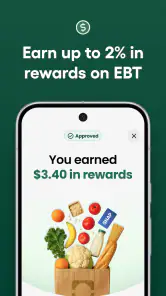
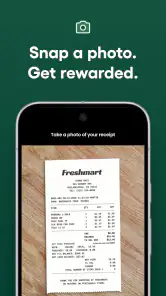
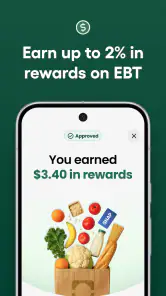
Forage is a free finance app from Forage Technology Corp. Its central workflow is easy to understand: add an eligible EBT or SNAP receipt, then wait for the reward process to complete. The store summary describes rewards of up to 2%, but I would treat that as a ceiling rather than money that should be assumed on every purchase. That distinction matters when deciding whether the effort of saving and submitting receipts is worthwhile.
The app is available for Android users on version 7.0 or later, and its current release is 1.1.10. It carries a Mature 17+ content rating, which is especially relevant when a household shares a phone or tablet. Forage has passed the early trial stage with over 100 thousand installs, an average rating of 4.5, and around 1.9 thousand ratings. Those figures suggest that the concept is attracting real interest, while still leaving room for each person to decide whether the receipt routine suits them.
How Forage Fits into a Shared Grocery Routine
A realistic household use case
Imagine a household where one person plans the grocery list, another person does the shopping, and a third person sometimes picks up a few items on the way home. The biggest practical challenge is not understanding the reward idea; it is keeping the receipt from disappearing into a pocket, a car cup holder, or the bottom of a shopping bag. Forage works best when the household agrees on one repeatable handoff: whoever pays keeps the receipt safe and gives it to the person responsible for submitting it.
I would not make every household member independently create their own routine unless there is a clear reason. Shared grocery spending can become confusing if several people submit receipts without knowing who handled which purchase. A better approach is to assign one person as the receipt organizer, even if someone else does the shopping. That person can photograph or add the receipt after the trip, while the shopper simply knows not to discard it.
This is one of the app’s less obvious strengths: it can encourage a household conversation about grocery records. The reward is only one part of the value. Keeping receipts together can also make it easier to check what was bought, resolve a question about a purchase, or understand how often the household shops. I would still use a separate budgeting method for detailed expense planning, but Forage can become the final step in the receipt routine rather than another full budgeting system.
Why timing and organization matter
The most useful habit is to deal with a receipt immediately after returning home. I found that postponing small administrative tasks creates the greatest risk of losing them. A receipt that is still readable and flat is much easier to capture than one that has been folded into a wallet for several days. If a household has several shopping trips in a week, placing each receipt in one agreed location can prevent duplicate effort and forgotten submissions.
I would also avoid combining receipts from different shoppers in one pile without a simple note. A quick label such as the shopper’s initials or the store visit date can help everyone know what has already been handled. This is not a flashy feature or a special tool inside Forage; it is a workflow choice that makes the app more dependable in a busy home.
The reward process is only as reliable as the household’s receipt discipline. If the receipt is missing, unreadable, or submitted by the wrong person, the app cannot replace the organization that should happen before opening it. That is the main trade-off I noticed: Forage can make a routine more rewarding, but it does not remove the routine itself.
Setting boundaries before sharing a device
Forage is a finance app, so I would be careful about treating a shared phone as a neutral space. A household may share a device for convenience, but that does not mean everyone should automatically have access to every account screen or receipt. Before using the app together, decide whose account is being used, who is allowed to submit receipts, and who can see the information displayed during the process.
This matters when an adult hands a phone to a teenager to photograph a receipt. The teenager may be helping with a chore, but the account still belongs to someone. I would prefer the account holder to open the app, supervise the submission, and take the phone back afterward. That arrangement avoids turning a simple grocery task into accidental account sharing.
Households should also agree on whether receipts belong to the household or to the person who paid. That question can be surprisingly important in shared living arrangements. Roommates, relatives, and partners may divide grocery costs in different ways. Forage does not replace that agreement. It simply gives the household a reason to make the rule clear before rewards or receipt records become a source of disagreement.
Coordination without creating extra work
I like the idea of using a small, predictable division of labor. One person can keep the receipt until it is submitted, another can check that the submission was completed, and nobody else needs to interact with the account. If the household prefers privacy, the shopper can hand over the paper receipt without handing over the device. If speed matters more, the account holder can complete the process at the store or immediately afterward.
That flexibility makes Forage more suitable for households than it may first appear, but only when the roles stay simple. I would not create a complicated spreadsheet just to track a reward app. The reward should not cost more time than it is worth. A shared note with the shopping date and a short “submitted” reminder may be enough for a household that shops occasionally. A more frequent shopper may benefit from a fixed place for receipts and a weekly check-in.
Another practical point is avoiding duplicate submissions. If two people see the same receipt and both assume the other person has not handled it, they may each try to add it. The safest household rule is “one receipt, one owner.” The owner can be the person who paid, the person who manages the account, or whoever has been assigned that trip. The important part is consistency.
What the app does well compared with ordinary alternatives
The usual alternative is simply doing nothing with the receipt after checking the total. That option is effortless, but it also guarantees that no reward comes from the app. Another alternative is a general budgeting app, which may help categorize spending or monitor a household plan but is not centered on turning EBT or SNAP receipts into rewards. Forage occupies a narrower space: it is less about building a complete financial picture and more about adding a possible return to a purchase record.
That narrow focus is both its appeal and its limitation. If you want a full budget, bill reminders, savings goals, or detailed account analysis, Forage should not be your only finance tool. If your main interest is submitting qualifying grocery receipts and checking whether the process produces a reward, its focused design is easier to understand than a large budgeting platform filled with unrelated features.
I would compare it with the habit of saving paper receipts for later review. Forage gives that habit a potential financial purpose, but it does not make the receipt itself a complete spending record. A receipt may show what was purchased while leaving out the wider household context, such as who contributed money or which items were shared. That is why I see it as a companion to household budgeting, not a substitute for it.
Who should use it, and who should skip it?
Forage makes the most sense for an adult who regularly handles EBT or SNAP grocery receipts and is willing to complete a short, repeatable submission routine. It can also suit a household where one person already manages receipts and wants to add a possible reward without changing the shopping process very much. People who shop frequently may find the habit easier to justify because the task becomes part of the normal grocery cycle.
I would be more cautious if you rarely keep receipts, regularly lose paper records, or dislike checking finance apps after purchases. The maximum reward alone is not a reason to use it. If submitting one receipt takes more attention than the possible return is worth for your situation, the app may become another unfinished task. The same applies to households that cannot agree on who owns the account or who is responsible for each receipt.
It may also be the wrong choice for someone looking for an all-in-one money manager. Forage’s purpose is specific, and that is not a criticism. A focused receipt-reward app should not be judged as though it were a complete banking dashboard. I would use a broader financial tool alongside it if I needed spending categories, recurring bill tracking, or a detailed household budget.
Age context, trust, and responsible access
The Mature 17+ rating deserves attention in a family setting. I would not treat the app as a casual children’s chore app simply because photographing a receipt sounds harmless. The receipt may relate to household finances, and the account may contain information that an adult should control. A teenager can help with the physical receipt, but the account holder should decide how access is handled.
Trust is also important between adults. In a shared home, the person submitting a receipt may see purchase details that another person considers private. Couples, roommates, and extended families should agree on what information is shared before making the app part of the household routine. This is less about suspicion and more about avoiding misunderstandings. A reward workflow should not quietly become a way to monitor another person’s shopping.
For a shared device, I would keep the app under one clearly identified account rather than switching between several people without a plan. If multiple adults want to participate, they should decide whether the arrangement is household-based or individual. That boundary makes it easier to know which receipts belong in the app and who should follow up if a submission needs attention.
Small habits that improve the experience
My first tip is to photograph or submit the receipt before putting groceries away. The receipt is usually easiest to find at that moment, and the details are less likely to fade, tear, or disappear. My second tip is to keep only the receipts that the responsible person has not yet handled in one visible place. A large pile creates uncertainty; a small “to process” spot creates a clear next action.
My third tip is to avoid assuming that every grocery purchase will produce the same result. The phrase “up to 2%” should encourage realistic expectations, not a fixed calculation in the household budget. I would treat any reward as a bonus until it has actually been processed. That keeps the app from affecting essential spending decisions or creating frustration when the result differs from the amount someone expected.
A fourth useful habit is to review the app at a set time rather than opening it every time someone mentions a receipt. A weekly check can work for a household with several trips, while occasional shoppers may simply handle the receipt after each purchase. The best schedule is the one that prevents forgotten paperwork without making the reward feel like a second job.
What I would check before making it a permanent routine
I would begin with a small trial using the household’s normal shopping pattern rather than changing how anyone buys groceries. The aim would be to see whether the submission steps feel manageable, whether everyone understands the account boundary, and whether the reward is meaningful enough to justify continuing. This approach avoids building a complicated system around an app before knowing whether it fits daily life.
I would also decide how to record the reward once it arrives. Some households may treat it as shared grocery value, while others may assign it to the account holder who manages the receipts. Neither approach is automatically correct. The important point is to agree in advance, especially when several adults contribute to food costs.
Finally, I would keep the app’s role narrow. Forage can encourage better receipt handling and potentially return something from eligible EBT or SNAP purchases, but it should not become the household’s only source of financial information. A separate method remains useful for planning, comparing grocery costs, and understanding the full budget.
My household verdict
After looking at the app through a shared-use lens, I think Forage is most convincing as a focused add-on for an organized adult shopper. Its free price removes the biggest barrier to trying it, and the idea is easy to explain: keep the receipt, add it, and see whether a reward follows. The developer, Forage Technology Corp., has built the experience around a specific grocery-finance task rather than asking users to learn a large financial system.
The app’s strongest quality is its clarity of purpose. It can fit naturally after a grocery trip, especially when one household member already keeps track of receipts. Its weakest point is the dependence on human follow-through. A shared household can either make that easier through clear roles or make it harder through duplicate submissions, lost paper, and unclear account ownership.
I would recommend trying Forage if you use EBT or SNAP, regularly receive grocery receipts, and are comfortable giving one trusted adult responsibility for the account. I would skip it if you want a comprehensive budgeting platform, dislike receipt management, or cannot establish a clear boundary around shared-device access. In my view, it is worth considering not because every receipt guarantees a large return, but because a simple routine can turn otherwise ignored paperwork into a possible benefit without replacing the rest of your financial tools.
For a household, the final decision comes down to coordination. Choose one account owner, decide who handles each receipt, keep expectations realistic about rewards, and protect the account from casual sharing. With those boundaries in place, Forage EBT Balance & Rewards can be a practical little addition to grocery day rather than another confusing finance app.
Pros
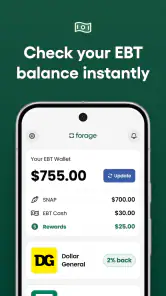
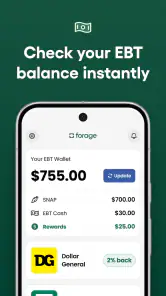
- Quickly checks EBT balance and recent transaction activity.
- Rewards can help users save on eligible grocery purchases.
- Simple interface makes essential account details easy to find.
- Useful spending insights may help with grocery budget planning.
- Convenient mobile access reduces the need to call customer service.
Cons
- Availability and features may vary by state or EBT program.
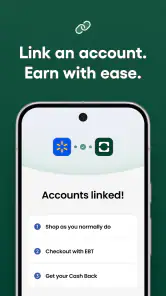
- Rewards often require participating stores or specific offers.
- Balance updates may be delayed after recent transactions.
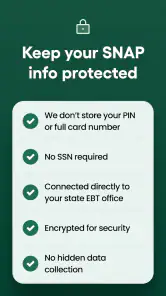
- Some features may require account permissions or personal information.
- The app cannot replace official EBT support for disputes or lost cards.

- Category
- Finance
- Version
- 1.1.10