Félix Pago
- 851.00
- 4.5
- Installs
- 100.00K
- Price
- Free

Screenshots

Analysis by Reviewed
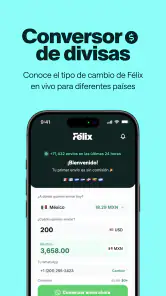
Sending money across borders is one of those tasks that should feel simple but often turns into a chain of small questions: which account can I use, what information does the recipient need, and what happens if a transfer pauses? I approached Félix Pago with those everyday concerns in mind. It is a free finance app from Félix Pago, designed around sending money from the United States, and its appeal is easy to understand: reduce the number of steps between deciding to send money and getting the transfer moving.
My overall impression is that this is most useful for people who make straightforward remittances and want a focused tool instead of a large banking app. It is not something I would choose blindly for every kind of payment, though. The right experience depends heavily on entering the recipient details carefully, understanding the transfer screen before confirming, and knowing whether a delay comes from the app or from the financial system around it.
Where the real friction appears
The first thing I noticed is that an app can be easy to navigate and still require careful attention. Money transfers are less forgiving than ordinary apps: a typo in a name, phone number, or destination detail can create a problem that is much harder to undo than a missed tap in a social network. Félix Pago’s focused purpose helps because there are fewer unrelated tools competing for attention, but that does not remove the need to review every field.
A common sticking point is the difference between starting a transfer and completing one. A user may feel that the job is done after entering an amount, while the app may still need recipient information or a final confirmation. I recommend treating the confirmation stage as a separate step rather than rushing through it. Check the amount, recipient, destination, and any displayed cost or delivery information before approving anything.
Another source of confusion is timing. A transfer can appear to be in progress without meaning that the app has failed. Financial processing may involve the sender’s payment method, verification, the destination institution, or a temporary service interruption. If the screen shows a pending state, repeatedly submitting the same transfer is usually a poor response. It can make it harder to tell which attempt is the real one.
The safest habit is to keep a clear record of the transfer status before trying to recover it. I would take note of the amount, recipient, and visible status, then check whether the transaction has changed before starting again. This is especially important when sending money for rent, food, school expenses, or a family emergency, where an accidental duplicate can cause more trouble than a short delay.
Who benefits most from the focused design
Félix Pago makes the most sense for a person who regularly sends money from the United States and wants a dedicated remittance experience. The app’s store summary positions it as a simple and fast way to send money, and the narrow focus is valuable for users who do not want to search through a traditional bank app for an international transfer option.
It can also suit someone who sends money to the same family member or small group of recipients. Repeated transfers are easier when you slow down during the first setup, confirm the recipient information, and then use the established details carefully on later occasions. I would still review the recipient every time rather than assuming that a familiar name guarantees the correct destination.
On the other hand, I would look elsewhere if you need a broad personal-finance dashboard, investment tools, bill management, or a full banking relationship. Félix Pago is a transfer-focused finance app, not a replacement for every service offered by a bank or a larger money platform. A person who wants to manage several financial products in one place may find a conventional banking application more convenient.
Setup checks that prevent avoidable problems
Before starting, I would make sure the phone is running a compatible system. The app supports Android 7.0 and newer, so older devices should be checked before spending time troubleshooting installation. It is also worth using a stable connection during setup and transfer confirmation. A weak connection can make a screen appear frozen even when the request is still being processed.
Install the current release available for your device when possible. The listed version is 1.1.14, and keeping an app current is a sensible first step when a screen behaves unexpectedly. Updates do not guarantee that every issue disappears, but they reduce the chance that you are working with an older build that handles a flow differently from the current service.
I would prepare the recipient’s information before opening the transfer form. That small change makes the process less error-prone because you are not switching between messages, notes, and the payment screen while trying to remember details. For a recurring transfer, I would also create a simple personal checklist: recipient identity, amount, destination, and final status.
Do not rely on a contact name alone. Two people can have similar names, and a saved contact can contain outdated information. The practical check is to compare the details shown in Félix Pago with the information supplied by the recipient through a trusted conversation. If anything looks different, pause instead of guessing.
Another useful preparation step is deciding whether the transfer is urgent enough to require a backup plan. If a recipient needs money immediately, do not wait until the final minute to discover that your payment method, device, or connection needs attention. A second legitimate method may be preferable for an emergency, although it could have different costs, limits, or delivery timing.
How I would approach the first transfer
For a first use, I would send a modest amount that matches the real purpose of the test rather than transferring a large sum immediately. This is not because the app is necessarily unreliable; it is because a small first transaction lets you become familiar with the confirmation flow, status language, and recipient experience without exposing yourself to an avoidable large mistake.
I would read every review screen instead of treating it as a formality. Look for the final amount, the recipient, and the information describing the transfer. If the displayed result does not match what you expected, stop there and investigate. A fast transfer is only helpful when the details are correct.
After confirming, keep the app open long enough to see the resulting status if the connection allows it. Then check again later rather than repeatedly tapping the confirmation control. This simple workflow separates “the request was submitted” from “the recipient has received the money,” which are not always the same event.
Recovering when a transfer seems stuck
When a transfer appears stalled, I would begin with the status already shown in the app. A pending message calls for patience and verification, not an immediate duplicate. Close and reopen the app only after noting what you saw, and avoid clearing information or reinstalling it as a first reaction. Aggressive troubleshooting can remove useful context from the original attempt.
If the app returns to an earlier screen, check whether the transfer appears in the available activity or confirmation area before trying again. The important question is whether the service recorded the request. If you cannot tell, compare the sender’s account activity and ask the recipient whether anything arrived, while avoiding the disclosure of unnecessary financial details in an insecure channel.
For a failed attempt, I would first distinguish between a rejected payment and a technical interruption. A rejection may require correcting the payment method or information. A technical interruption may resolve after restoring the connection or reopening the app. The correct fix depends on the message, so guessing at random is less useful than reading the exact wording.
One non-obvious but important trade-off is convenience versus traceability. A dedicated transfer app can make sending money feel quicker than navigating a bank’s international-payment section, but users still need their own record-keeping habit. Save the confirmation information in a secure place and note the date and amount in a private record. That helps when you need to compare a pending transfer with a later account entry.
If the recipient says the money has not arrived, ask what they mean by “not arrived.” They may be waiting for funds to become available, looking at the wrong account, or expecting a different delivery method. Confirm the destination and status first. Contacting support or the relevant financial provider becomes more useful when you can describe the exact transfer state instead of only saying that it is missing.
What not to do during recovery
I would not keep pressing send, change several details at once, or switch devices repeatedly without recording what happened. Those actions can make the timeline confusing. I would also avoid sharing passwords, full authentication information, or sensitive account details with anyone claiming to help through an unofficial message.
If a transfer involves a suspicious request, stop and verify the recipient independently. A clean interface cannot protect someone from social engineering. The app may simplify the mechanical act of sending money, but the decision about who should receive it remains the user’s responsibility.
Reinstalling can be appropriate only after simpler checks have failed and after you have preserved any useful transaction information. It is not a universal cure for a transfer that is pending on the service side. If the problem is external, reinstalling the app may change nothing while making the user feel as though progress has been lost.
When Félix Pago is not the cause
It is tempting to blame the visible app whenever money does not move, but several other points in the chain can be responsible. The sender’s payment method may decline the transaction. The recipient’s institution may process incoming funds on its own schedule. A network interruption may prevent a status update even though the request was accepted. These possibilities are why I prefer checking the status and account activity before assuming the app itself is broken.
The same distinction matters when the app feels slow. A loading screen may reflect a connection issue, a service response, or a verification step rather than poor interface design. Try a reliable connection and give the current request time to resolve. If the problem repeats, record the device system, app version, visible message, and approximate time before seeking help. That description is far more useful than a general complaint that the app does not work.
Félix Pago is also not automatically the cheapest or best option for every transfer. The app is free to install and has an Everyone content rating, but the cost and practical value of a money transfer depend on the details displayed during the transaction and on the alternatives available to you. A bank transfer, cash pickup service, or another remittance provider may be preferable in a particular situation because of destination coverage, delivery expectations, recipient access, or the way each service handles support.
For a very large transfer, I would compare the available choices carefully rather than selecting an app solely because it feels fast. For a routine family remittance, simplicity may matter more than having a long list of financial tools. For a business payment requiring invoices, accounting records, or specialized controls, a service built for business transfers may be a better fit.
What the user community suggests, with the right perspective
The app has an average rating of 4.5 from around 1.6 thousand ratings, with more than 800 written reviews and over 100 thousand installs. Those figures suggest that Félix Pago has attracted meaningful use and generally positive reactions, but they should not replace your own judgment about the exact transfer you need to make.
Ratings are especially limited for finance apps because a smooth experience may depend on the sender’s country, recipient destination, payment method, and timing. A person who sends the same kind of remittance regularly may have a very different experience from someone attempting an unusual transfer under time pressure. I read the rating as encouraging, not as a promise that every transaction will be instant or frictionless.
The app is developed by Félix Pago, and its current release remains relatively focused rather than trying to become an all-purpose financial hub. That is a strength when you want a direct path to sending money, but it also means you should not expect the broader account-management features associated with a bank application.
My practical verdict after weighing the trade-offs
I would recommend Félix Pago to a user whose main need is sending money from the United States through a straightforward, dedicated finance app. The free download, accessible age rating, focused purpose, and positive user response make it worth considering, especially for recurring personal remittances. I like the idea of a smaller workflow that keeps the transfer task in view instead of burying it among unrelated banking features.
My recommendation comes with a condition: use it deliberately. Prepare the recipient details, read the confirmation screen, record the status, and do not submit a second transfer simply because the first one has not updated yet. Those habits are more valuable than chasing the fastest possible tap sequence.
I would skip it if you need a complete bank replacement, advanced financial management, or a transfer arrangement that requires specialized business documentation. I would also compare alternatives when the recipient needs a particular delivery method or when the displayed terms do not suit the amount and urgency involved. A focused app is not automatically the right tool for a complicated financial job.
For the everyday scenario I keep returning to—a person in the United States sending regular support to a family member—the app has a clear place. Set it up calmly, verify the first recipient carefully, make a small initial transfer when practical, and build a habit of checking the final status. Used that way, Félix Pago feels like a sensible option for a specific task rather than a universal answer to every money problem.
In short, I see it as a useful remittance companion with a low barrier to trying it, not as a substitute for careful financial judgment. Its strongest quality is focus; its main weakness is that the surrounding transfer process can still involve delays and uncertainty. If your needs match its purpose and you are willing to verify each transaction, I would put it on the shortlist.
Pros
- Fast
- convenient way to send money internationally
- Supports transfers through familiar messaging apps
- Clear transfer status updates help track payments
- Useful for recipients without traditional banking access
- Simple onboarding and user-friendly mobile experience
Cons
- Availability depends on supported countries and corridors
- Exchange rates and fees may vary by transfer destination
- Identity verification can be required before sending money
- Transfers may be delayed by compliance or banking checks
- Customer support response times may vary during busy periods

- Category
- Finance
- Version
- 1.1.14