Feenko: Subscription Manager
- 257.00
- 4.4
- Installs
- 100.00K
- Price
- Free

Screenshots


Analysis by Reviewed
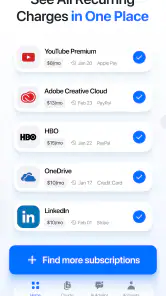
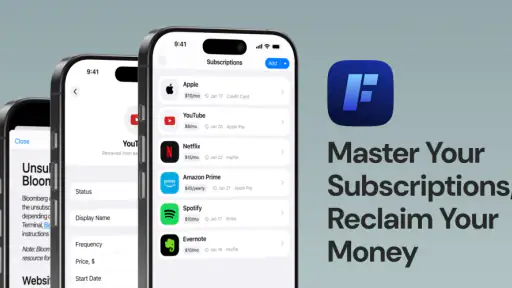
Managing subscriptions sounds simple until several small charges begin arriving on different days, through different services, and sometimes through payment methods you barely remember using. Feenko: Subscription Manager is built for that particular kind of financial clutter. I found its appeal less in flashy budgeting language and more in the promise of putting recurring commitments in one place so they are easier to notice, question, and control.
My overall view is positive, with an important qualification: this is most useful for people who already feel that subscriptions are slipping through the cracks. If you only pay for one or two services and check your bank statement regularly, a dedicated manager may feel unnecessary. If you have streaming, cloud storage, software, memberships, trials, and app renewals spread across your life, Feenko has a much clearer reason to exist.
What Feenko is really good at
Feenko sits in the finance app category and focuses on subscription management rather than trying to become a complete banking replacement. That distinction matters. I would not approach it expecting a full household budget, investment dashboard, or everyday banking account. Its value is narrower: helping me think about recurring spending as a group instead of as isolated transactions.
That change in perspective is surprisingly useful. A single monthly charge can look harmless, but a collection of renewals can quietly become one of the least visible parts of a household budget. Seeing those commitments together makes it easier to ask practical questions: Which services do I still use? Which ones overlap? Which renewal dates deserve a reminder? Which subscription was started for a temporary need but never cancelled?
The developer behind the app is GotYourBack Technologies LTD. Feenko is free to install, while in-app purchases range from less than a dollar to around forty dollars per item. I would treat that pricing structure as a reason to inspect the available paid options carefully before committing, especially if my only goal is basic awareness rather than an extensive financial toolkit.
The app has reached over one hundred thousand installs and holds an average rating of 4.4 from roughly two thousand ratings. Those figures suggest that the idea is connecting with a real audience, but they do not replace personal testing. Subscription habits vary widely, and an app that feels essential to someone with many renewals may be excessive for a person with a very simple financial routine.
A useful first step: build a complete subscription picture
The hardest part of subscription management is often not cancelling a service. It is remembering every service that exists. I recommend beginning with a deliberate sweep rather than adding only the subscriptions that come to mind immediately. I would check recent bank or card activity, email receipts, app-store memberships, and any services billed through a family account. Then I would add each recurring commitment to Feenko while the information is still in front of me.
More From Our News Desk

Clash of Clans Is Won Between the Battles

Android Auto Makes the Case for Quieter Car Software

MobiOffice: Transforming Mobile Productivity with Seamless Integration

EA SPORTS FC™ Mobile Soccer: Redefining Mobile Sports Gaming

How Microsoft OneDrive Became a Mobile Productivity Giant

How Google Translate Breaks Language Barriers Effortlessly
This workflow exposes a common weakness in casual tracking: people remember the large entertainment services but forget smaller tools, storage plans, learning platforms, delivery memberships, or annual renewals. The smaller charges are precisely the ones that can remain unnoticed. Feenko becomes more valuable as the list becomes more complete, so the quality of the first setup matters more than how quickly it is done.
A second useful habit is to record the reason for keeping each subscription, not just its name. For example, a video service might be kept for a particular household member, while a productivity tool may be needed only during a work project. That context makes a later review much more intelligent. Without it, a list can show what is being paid for but not whether the payment still makes sense.
I also found that renewal timing deserves more attention than people usually give it. Monthly charges are easy to recognize, but annual renewals can be much more disruptive because they disappear from view for long periods. When reviewing a subscription, I would note whether the next charge is routine or likely to arrive as a larger one-off bill. This is one of the most practical ways to use a manager: not merely counting services, but preparing for the charges that are easiest to forget.
Where the app can improve financial awareness
Feenko is most convincing when it turns passive spending into an active review. Instead of waiting for a statement to reveal another renewal, I can use the app as a prompt to examine the services I have accumulated. That makes it a good companion for a monthly money check-in, particularly if I set aside a few minutes to review unused or overlapping subscriptions.
There is also a psychological benefit to separating recurring commitments from ordinary spending. A coffee purchase is visible because I remember making it. A subscription renewal can feel invisible because the decision happened weeks or months earlier. A dedicated subscription list brings those delayed decisions back into view. That is a stronger benefit than simply displaying totals, because it encourages a change in behavior.
One non-obvious advantage is that the app can help with household conversations. When several people share expenses, disagreements often come from different memories of what is active and why. A single list gives everyone a starting point for deciding which services are shared essentials, personal luxuries, temporary tools, or duplicates. It does not make the decision for me, but it reduces the effort needed to have the conversation.
Another practical use is preparing for a move, job change, or change in routine. A person working remotely may accumulate software services that become unnecessary after changing roles. A student may collect educational tools that are useful only during a term. A household may subscribe to travel-related services before a trip and forget them afterward. Reviewing the list at those transition points is more effective than waiting for a vague feeling that spending has become too high.
The important limitation: organization is not the same as cancellation
The main weakness is also the boundary of the product. A subscription manager can make recurring payments easier to see, but visibility alone does not automatically stop a charge. In practice, I still need to understand where a subscription was purchased and follow the relevant cancellation process. That extra step can be frustrating when a service was started through an app store, a website, a mobile provider, or another intermediary.
This distinction is important for anyone expecting a single button to end every recurring payment. I would use Feenko as a control panel for awareness and decision-making, not assume that it replaces the original billing platform. If I am trying to cancel something close to renewal, I would act directly through the service as soon as possible rather than relying only on a record inside a manager.
There is also a maintenance cost. A subscription list is only trustworthy if I keep it current. Prices change, billing periods change, free trials become paid plans, and services can be cancelled outside the app. If I enter everything once and never revisit it, the list can gradually become a historical record rather than a reliable picture of current spending.
That is why I would schedule a short review after major financial changes and before periods when annual charges are likely to arrive. The app is not a magic layer that eliminates financial housekeeping. It makes the housekeeping more focused, but I still have to supply accurate information and act on what I find.
People who want detailed category budgets may also find Feenko too specialized. A traditional budgeting app can be better for tracking groceries, transport, debt payments, savings, and irregular expenses in one system. A bank’s own tools may be more convenient for reviewing actual transactions. Feenko makes the stronger case when the specific problem is recurring services, not money management as a whole.
How I would use it in an everyday situation
Imagine a household that has several entertainment services, a storage plan, a fitness membership, and two work-related tools. None of the individual charges feels alarming, so the family keeps postponing a review. One evening, I would open Feenko and create a complete list using recent statements and confirmation emails. I would then mark which services are actively used, which are shared, and which were added for a temporary reason.
The next step would not be to cancel everything. I would first identify overlap. Two services may offer similar content, or a family may be paying for separate plans when one shared option would be enough. Then I would look at renewal timing. A service that is rarely used but renews soon deserves immediate attention, while one that is useful for another few months can be reviewed later.
After making decisions, I would cancel or change plans through the original providers and keep Feenko updated. This workflow shows both the app’s strength and its limit. It helps me decide what deserves action, but the final action still belongs to me. Used this way, it is more useful than a passive list and more realistic than expecting automation to solve every billing problem.
Who should use Feenko, and who should skip it?
I think Feenko is a strong fit for people with several recurring services, anyone who has forgotten a renewal before, and households that share subscriptions across more than one person. It is also useful for people who prefer a focused tool rather than a large budgeting application filled with features they will not use. The free entry point makes it reasonable to test the workflow before deciding whether paid options are worthwhile.
It may be especially helpful for users whose subscriptions are divided between personal, family, and work expenses. Separating those purposes during a review can reveal spending that would otherwise blend together. Freelancers and people changing jobs may also benefit because software and service commitments can outlast the situation that originally justified them.
I would be more cautious if I have only one or two subscriptions, already review every transaction carefully, or need automatic bank-level expense categorization. In those cases, my bank’s tools or a broader budgeting app may be more efficient. I would also skip it if I expect it to cancel services automatically without any involvement from me. The app’s usefulness depends on accepting its role as an organizer and decision aid.
Privacy and trust should be considered in the normal way for any finance-related application. I would read the app’s current permissions and privacy information before connecting anything sensitive, and I would avoid entering details that are not necessary for the workflow I actually intend to use. A financial organizer should reduce confusion, not encourage careless sharing of account information.
Device support, cost, and day-to-day practicality
Feenko is available for Android users running version 7.0 or later, which covers a broad range of devices. Its content rating is Everyone, so the presentation is intended for a general audience rather than a mature-only financial product. The current version is 1.7.48, and the app was released on September 23, 2025.
I would not choose an app solely because of its version number, but an actively maintained product is more reassuring than one that feels abandoned. What matters in daily use is whether the app remains easy to update when subscriptions change and whether its workflow continues to match the way I pay for services. Subscription habits evolve quickly, so clarity and upkeep are more important here than visual novelty.
The free price is a meaningful advantage for cautious users. I can explore whether a dedicated subscription list improves my routine without paying an upfront fee. At the same time, the presence of optional purchases means I would check exactly what is included before buying. The right question is not whether a premium tier exists, but whether it saves enough time or prevents enough waste to justify its cost for my particular number of subscriptions.
My practical advice is to use the app during a real review, not as a five-minute experiment. Gather statements, receipts, and renewal notices first. Enter the information carefully, then return after a week to see whether the list changes any decision. If it helps identify even one unwanted renewal, it may already have proved its value. If it simply duplicates a system I already maintain consistently, there is little reason to add another layer.
My final verdict
Feenko succeeds because it focuses on a spending problem that is easy to underestimate. Recurring payments are not always large, but they are persistent, scattered, and often disconnected from the moment when I decided to buy them. By giving those commitments a dedicated place, the app encourages more deliberate choices.
Its central limitation is equally clear: it improves visibility rather than replacing the billing services themselves. I still need to keep information accurate, check renewal details, and complete cancellations through the appropriate provider. That is not a deal-breaker, but users should understand the workflow before expecting effortless control.
My recommendation is straightforward: try Feenko if recurring charges are the part of your finances you notice too late. It is a sensible, focused finance app for subscription-heavy households, busy professionals, and anyone who wants a regular prompt to question unused services. If your financial life is already simple and well organized, a bank statement or broader budgeting tool may be enough. For everyone else, this is a practical way to turn forgotten renewals into decisions I can actually make.
Feenko: Subscription Manager Frequently Asked Questions
Who develops Feenko, and is it suitable for everyone?
Feenko is a finance app developed by GotYourBack Technologies LTD. Its content rating is Everyone, so it is presented as suitable for a broad audience. If you want a simple way to keep track of recurring expenses, it may be worth exploring. As with any app that stores financial details, enter only information you are comfortable keeping in the app.
What should I check before installing Feenko on my phone?
Check that your device meets the app’s operating system requirement and that you are comfortable with its purchase options before installing. Feenko is free to download, with in-app purchases available. Keeping your phone’s software current and downloading the app from an official store are sensible steps when choosing a finance tool.
What is Feenko: Subscription Manager used for?
Feenko: Subscription Manager is designed to help you organize and monitor recurring subscriptions in one place. You can record services such as streaming platforms, cloud storage, software, memberships, and other regular payments. The app can make it easier to see upcoming renewal dates, understand your monthly or yearly spending, and avoid forgetting subscriptions that you no longer use.
Can I add subscriptions manually and customize their billing details?
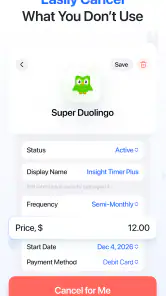
Yes, Feenko is intended to let users create subscription entries manually and provide important details such as the service name, price, billing cycle, renewal date, and category. Depending on the version and platform, you may also be able to select a currency, add notes, and choose an icon. Reviewing these details carefully is important because reminders and spending summaries depend on accurate information.
Does Feenko automatically cancel subscriptions or stop payments?
No, a subscription manager generally does not cancel services or block charges directly. Feenko helps you track what you have subscribed to and reminds you about upcoming renewals, but cancellation normally has to be completed through the provider, App Store, Google Play, bank, or another payment service used for the subscription. Always check the provider’s cancellation terms before the renewal date.
Pros
- Tracks recurring subscriptions in one organized dashboard.
- Helps identify unused services and potential savings.
- Supports reminders before upcoming subscription charges.
- Simple interface makes recurring expenses easy to review.
- Useful for monitoring several subscriptions across different providers.
Cons
- Some features may require a paid plan or in-app purchase.
- Subscription data may need to be entered manually.
- Bank or provider integrations may vary by country and service.
- Reminder accuracy depends on keeping billing details up to date.
- Limited value for users who only have a few recurring subscriptions.
- Category
- Finance
- Version
- 1.7.48