Faye Travel Insurance
- 182.00
- 4.7
- Installs
- 50.00K
- Price
- Free

Screenshots
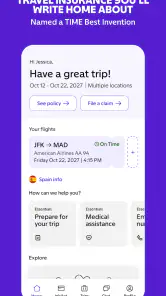
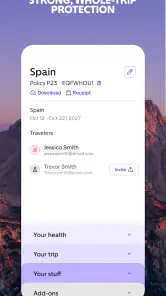
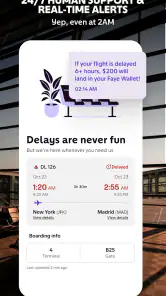
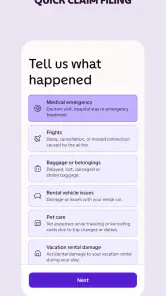
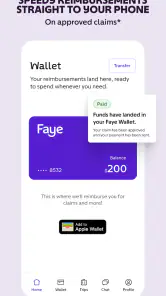

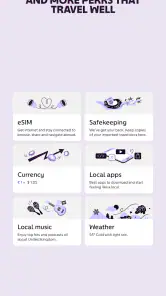
Analysis by Reviewed
Travel insurance is easy to ignore until a flight is cancelled, a bag goes missing, or a medical problem appears far from home. I reviewed Faye Travel Insurance as a mobile tool for handling those stressful moments, and my main impression is that it makes insurance feel more accessible during a trip. Instead of treating a policy as a document I only read before departure, the app puts assistance, claim handling, and reimbursement tasks closer to the point where I actually need them.
That focus matters in a household or group trip. One person may book the holiday, another may carry the policy details, and someone else may be the first to notice a delay or lost item. The app can be useful in that kind of situation, but it is important to understand its boundary: it is an insurance companion, not a shared family planner or a general travel organizer. Its value depends on how clearly the people travelling together agree on who will use it and who is responsible for the policy.
How Faye Travel Insurance fits into a shared trip
The app comes from Zenner, Inc. and sits in the Travel & Local category. It is free to install, with an Everyone content rating, and its purpose is practical rather than entertaining. The central idea is to give travellers a way to seek assistance, manage claim-related steps, and handle reimbursements from a phone instead of relying entirely on paper documents or a long search through email.
I can see a realistic use case on a family holiday. Imagine that one traveller discovers at the airport that checked luggage has not arrived. The person who purchased the cover may be at a different counter, helping a child or speaking with airline staff. Having the insurance app available on the relevant phone gives the group a clearer starting point for checking what to do next. It does not remove the need to collect airline paperwork or explain the incident accurately, but it can reduce the scramble to find the right contact details.
The same arrangement works for friends travelling together, although the responsibility can become less obvious. If one person installs the app and everyone assumes that person will manage every problem, the group may be unprepared if the phone is unavailable, out of battery, or left in a hotel room. My advice is to decide before departure who is the main account holder and who should know where the policy information and supporting documents are kept.
The most useful household habit is to treat the app as a coordination point, not as the only record of the trip. I would still keep confirmation emails, receipts, medical paperwork where appropriate, and official transport reports in an accessible place. A mobile insurance workflow is convenient, but a claim can depend on evidence that comes from an airline, hotel, medical provider, or local authority rather than from the app itself.
What the app is good at during an incident
Faye Travel Insurance is designed around moments when speed and clarity matter. Its store summary highlights round-the-clock assistance, quick claim processing, and reimbursements through the app. In practical terms, that makes it more relevant after something goes wrong than before anything happens. I would not open it every day like a weather app; I would prepare it before leaving and expect to use it only when a travel problem needs attention.
More From Our News Desk

Clash of Clans Is Won Between the Battles

Android Auto Makes the Case for Quieter Car Software

MobiOffice: Transforming Mobile Productivity with Seamless Integration

EA SPORTS FC™ Mobile Soccer: Redefining Mobile Sports Gaming

How Microsoft OneDrive Became a Mobile Productivity Giant

How Google Translate Breaks Language Barriers Effortlessly
The assistance angle is especially helpful when a traveller is tired, unfamiliar with local procedures, or unsure whether an event belongs in a claim. A dedicated insurance app is easier to reach than a pile of saved messages, especially when the trip involves several bookings and multiple people. The important limitation is that quick processing should not be confused with automatic approval. I would expect to provide accurate details and preserve documentation, even when the first contact is simple.
A less obvious advantage is the reduction of handoffs. In a household, travel information often moves from the person who purchased the policy to the person who is physically dealing with the disruption. If that process happens through scattered conversations, details can be lost. Using one insurance-focused channel can make it easier to keep the event, the request for help, and the reimbursement process connected in the same place.
There is also a useful trade-off here. A specialist insurance app can be more focused than a bank app, airline app, or broad travel wallet, but it will not replace those other apps. The airline remains the place for flight-specific operations, while the insurer handles insurance-related assistance and claims. I would use Faye alongside airline and accommodation tools, not expect it to coordinate every part of a journey.
Setting it up without blurring account boundaries
Before a shared trip, I would install the app on the phone of the person who is most likely to manage the policy. That sounds obvious, but household travel often involves several adults with different roles. The person who paid for the trip is not always the person who will speak to a provider, and the person carrying the family documents may not be the policyholder. Agreeing on that distinction early prevents confusion later.
I would also avoid casually passing one person’s login details around. Insurance information can include personal travel and reimbursement details, so account sharing should be handled carefully. If another adult needs to help, the safer approach is to involve them in the relevant information and workflow without assuming that everyone should use the same credentials. The app is not a substitute for deciding who has authority to submit or manage a claim.
This is where the app’s Everyone rating needs a little context. It indicates that the app is suitable for a general audience from a content perspective, but a child using a phone is not automatically the right person to manage insurance matters. A younger traveller may need to know that the app exists and where to find emergency information, while an adult handles personal details, documentation, and decisions. The age label should not be read as a promise of child-specific account tools or family supervision features.
For a couple or a group of adults, I would make a short pre-trip checklist. Confirm which phone has the app, make sure the account holder can access it, identify who will retain receipts, and tell everyone what to do if the main phone is lost. This is a small amount of preparation, but it addresses a weakness common to mobile-only workflows: the process is convenient until the device or account holder is unavailable.
Another practical tip is to open the app before the trip rather than waiting for an airport problem. I would use that moment to become familiar with where assistance and claim-related actions are located. The point is not to rehearse an emergency in detail; it is to remove the hesitation that comes from opening an unfamiliar app under pressure. That preparation is one of the strongest ways to get value from a tool like this.
Coordinating claims across a household
Claims are often less about one dramatic action and more about keeping small details consistent. If luggage is delayed, for example, I would record when and where the problem was reported, keep the airline’s reference information, save receipts for necessary purchases, and make sure the description submitted through the insurance process matches the supporting documents. Faye Travel Insurance can provide the digital route for the claim, but the quality of the outcome still depends on the traveller’s record keeping.
In a shared-device household, I would avoid having several people edit or submit information independently unless everyone understands who is leading the case. Duplicate explanations can create confusion, while missing receipts can slow the process. A simple division of labour works better: one adult manages the claim in the app, another gathers documents, and the affected traveller supplies the timeline and facts.
This workflow is useful beyond families. Friends sharing accommodation may split expenses, and a reimbursement request can become awkward if nobody remembers who paid for what. I would keep receipts associated with the person who made each purchase and note the reason for the expense while it is fresh. That approach is more reliable than trying to reconstruct the event after returning home.
The app’s emphasis on reimbursements is appealing because it keeps the process connected to the incident rather than forcing the traveller to begin again through a separate channel. Still, I would not assume that every expense is reimbursable simply because it appears related to a disruption. The policy terms remain important, and I would read the relevant coverage before travelling, especially for medical events, cancellations, baggage problems, or expenses incurred by several people together.
One of the more useful trade-offs is between speed and completeness. A quick first report can be valuable when the situation is unfolding, but rushing through a form with guesses or incomplete information may create more work later. My preferred approach would be to contact assistance promptly when needed, then gather precise documents before finalizing the reimbursement details. That balances the app’s convenience with the care insurance claims require.
Age, trust, and who should be responsible
Because the app is rated Everyone, it is suitable for households where several people may encounter it on a shared trip. However, suitability is not the same as equal responsibility. A teenager may be perfectly capable of opening the app and locating help, while an adult should normally decide what personal information to submit and check that a claim is truthful and complete.
That distinction is particularly important when a family travels with relatives or friends outside the immediate household. I would explain the basic plan to everyone without giving every traveller unrestricted access to private account information. The goal is shared awareness: people should know that insurance assistance is available, who is managing it, and where to find the necessary phone or documents if the primary traveller cannot respond.
Trust also matters when one person handles reimbursements for a group. I would be comfortable letting a responsible adult coordinate the paperwork, but I would keep the group informed about what was submitted and which expenses were included. Transparency prevents misunderstandings, especially when a reimbursement relates to purchases made by more than one traveller.
For solo travellers, the account boundary is simpler, and that may be where the app feels most straightforward. There is no need to explain roles or share access with a group. Even then, I would tell a trusted contact where the policy information is stored and how to reach me if something goes wrong. The app can support the traveller, but it does not remove the importance of an offline backup plan.
How it compares with ordinary travel alternatives
The usual alternative is a combination of insurer emails, downloaded policy documents, browser bookmarks, and phone contacts. That method can work, especially for someone who prefers complete control over files and does not want another app. Its weakness is fragmentation. Assistance may be in one message, claim instructions in another, and receipts in a camera folder. Faye Travel Insurance offers a more focused place for the insurance side of the journey.
Compared with an airline app, its role is different. An airline tool may be better for flight changes, boarding information, and baggage updates tied to that carrier. Faye Travel Insurance is more relevant when the traveller needs insurance assistance or wants to move toward a claim and reimbursement. I would use both when appropriate rather than choosing one as a universal travel solution.
A bank or card benefits portal may also include travel protection, and that can be attractive for people who already manage all financial services in one place. The advantage of a dedicated insurance app is focus; the advantage of a bank portal may be having existing payment records and account context nearby. Which is better depends on the coverage itself, not merely on the interface. I would compare the policy terms first and the convenience second.
Paper documents remain a reasonable backup for travellers who dislike mobile workflows or expect unreliable connectivity. They are also useful when a phone is lost or a battery cannot be charged. The app is strongest when the traveller wants a digital first step and is willing to maintain a basic backup. It is not the right choice for someone who expects one application to replace every travel document, booking tool, and emergency contact.
Performance expectations and everyday friction
The app has reached a 4.7 average from over three hundred ratings, with more than fifty thousand installs, which suggests that it has found a real audience without being a mass-market travel platform. I see those figures as a sign of useful reception rather than proof that every traveller will have the same experience. Insurance apps are judged most intensely during unusual, high-pressure events, so personal preparation still matters.
Its current version is 2.56.0, and it supports devices running Android 7.0 or later. That makes it accessible to many older Android phones, which is helpful in a household where not everyone upgrades devices at the same time. Still, I would check the phone before departure and avoid relying on an old device with poor battery health as the only route to assistance.
The free price removes an obvious barrier to trying the app, but it does not mean the insurance coverage itself should be evaluated casually. The application and the policy are related but not identical decisions. I would read the coverage, exclusions, documentation requirements, and reimbursement conditions before relying on it for an expensive trip.
One friction point is mental rather than technical: travellers may open an insurance app only after they have already spent money or lost important evidence. I would install it early, understand the basic route to assistance, and save receipts as events happen. That small change in timing is more valuable than repeatedly checking the app when nothing is wrong.
Who should use it, and who should skip it
I would recommend Faye Travel Insurance to travellers who want a dedicated mobile place for assistance and claims, especially people who dislike sorting through email while abroad. It is a sensible fit for couples, families, and groups when one adult clearly takes responsibility for the insurance workflow and everyone knows the backup plan.
It is also a good match for travellers who value digital reimbursements and want to begin claim-related tasks from a phone. The convenience is strongest when the user is organized enough to preserve receipts and official reports. In that situation, the app can turn a scattered problem into a more manageable sequence of actions.
I would be more cautious recommending it to someone who wants a completely offline process, refuses to use mobile accounts, or expects a single app to manage flights, hotels, documents, and insurance together. That traveller may prefer printed policy material and direct contact methods, supported by the airline’s own app for transport issues. A dedicated insurance application is useful precisely because it has a narrower job.
Families should also skip the idea of giving the app to a child as the main emergency manager. The Everyone rating makes the content broadly suitable, but an adult should remain responsible for account access, sensitive information, and claim decisions. Shared awareness is helpful; uncontrolled account sharing is not.
My household verdict
After looking at the app through the lens of a shared trip, I think its strongest quality is focus. Faye Travel Insurance brings assistance, claims, and reimbursement tasks into a travel-specific mobile workflow, which is easier to coordinate than a loose collection of messages and documents. The free app, broad age rating, and support for older Android versions make it practical for mixed-device households.
My recommendation comes with a clear condition: prepare the roles before departure. Choose the main account holder, keep a backup of important records, decide who gathers receipts, and explain to younger travellers that an adult manages sensitive insurance actions. Those steps make the app more dependable because they address the human problems that software alone cannot solve.
I would choose it when I want an accessible digital companion for insurance-related trouble and when the group is comfortable keeping the process organized. I would choose a more traditional document-and-phone approach when offline access is the priority or when the policy is handled through another provider with stronger existing support. For most digitally comfortable travellers, though, this is a useful addition to the travel folder on a phone: not a replacement for careful preparation, but a sensible place to start when a holiday takes an unexpected turn.
Faye Travel Insurance Frequently Asked Questions
Can I use Faye Travel Insurance while I’m traveling?
The app is designed to keep travel insurance tools and assistance close at hand during a trip. Faye’s store summary highlights 24/7 assistance, quick claims processing, and reimbursements through the app. Before relying on a particular benefit, check that it applies to your plan and situation, and keep your policy details accessible so you can act quickly if a problem comes up.
Is the Faye Travel Insurance app free to download, and what devices support it?
Faye Travel Insurance is free to download and is listed for devices running Android 7.0 or later. The app is developed by Zenner, Inc. Its travel-focused tools may be useful before departure and while away, but downloading the app is separate from purchasing insurance coverage: review the available plan and policy terms to understand what protection applies to your trip.
What is Faye Travel Insurance, and how does it work?
Faye Travel Insurance is a travel protection service designed to help cover unexpected problems before and during a trip. Depending on the plan and destination, it may include benefits for trip cancellation or interruption, medical emergencies, baggage issues, travel delays, and other covered situations. Coverage, limits, exclusions, and eligibility requirements vary, so review the policy wording carefully before purchasing.
What does Faye Travel Insurance typically cover?
Coverage can differ by plan, but Faye commonly offers protection related to emergency medical treatment, trip cancellation, trip interruption, delayed or lost baggage, travel delays, and certain assistance services. Some plans may also include destination-specific or optional protections. The exact reimbursement amount depends on the policy limits, the reason for the claim, supporting documentation, and whether the event is listed as covered.
Does Faye cover pre-existing medical conditions?
Pre-existing medical conditions may be excluded or covered only when specific requirements are met. In many travel insurance policies, eligibility can depend on purchasing the plan within a defined period after making the initial trip deposit and being medically able to travel when coverage begins. Travelers should read the applicable definition and waiver conditions carefully, because ordinary symptoms, medication changes, or recent treatment may affect eligibility.
Pros
- Simple online process for comparing and buying travel insurance
- Offers coverage options for medical expenses and trip disruptions
- Policy details and documents are accessible digitally
- Useful assistance features for travelers facing emergencies abroad
- Flexible plans can suit different trip lengths and destinations
Cons
- Coverage limits and exclusions vary
- so policies require careful reading
- Pre-existing medical conditions may need disclosure or special approval
- Claims may require extensive receipts and supporting documentation
- Some benefits depend on purchasing cover soon after booking
- Availability and policy terms can differ by country of residence
- Category
- Travel & Local
- Version
- 2.56.0