EndeavorOTC®: Outplay ADHD
- 255.00
- 3.5
- Installs
- 50.00K
- Price
- Free

Screenshots

Analysis by Reviewed
When I look at a medical app, I do not judge it like a normal game or a simple habit tracker. I want to know what it is trying to help with, how easily it fits into an ordinary week, what it can realistically replace, and where professional care is still necessary. That is the right way to approach EndeavorOTC®: Outplay ADHD, an ADHD-focused digital therapeutic from Akili Interactive Labs, Inc. It is free to download, aimed at everyone from an age-rating perspective, and presented as an FDA-authorized option for ADHD without a prescription.
That description makes it sound unusually accessible, but accessibility is not the same as suitability. In my experience, the important question is not whether the app looks more approachable than a clinic visit or medication discussion. The better question is whether its particular style of treatment matches the kind of support you need. It may be useful for someone who wants a structured, screen-based activity to add to an ADHD management plan. It is less convincing as a complete answer for someone expecting a diagnosis, personal coaching, medication management, or a broad mental-health service.
How I would decide whether it belongs in an ADHD routine
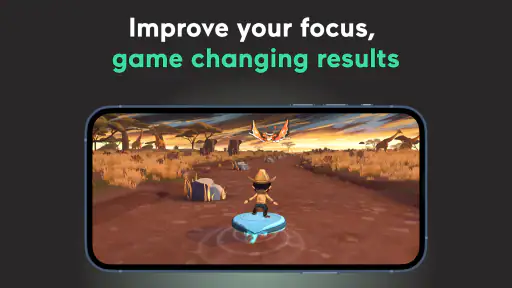
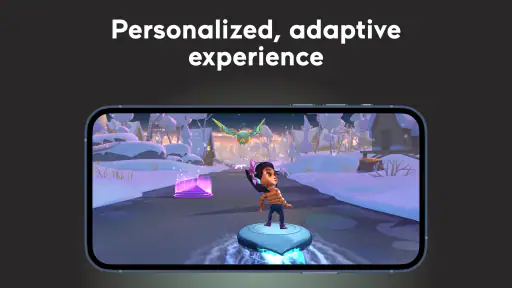
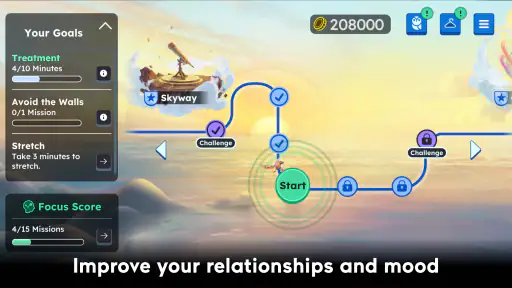
I would begin with the purpose rather than the download button. EndeavorOTC is a medical app, not merely a concentration game with an ADHD label attached. Its central appeal is that it turns part of the therapeutic process into an interactive digital activity. That can lower the emotional barrier for people who dislike paperwork, appointments, or conventional exercises. It can also make the routine feel more active than reading advice about focus.
At the same time, a digital therapeutic asks for a different kind of commitment. The app cannot organize your desk, negotiate a deadline with your manager, explain a missed assignment to a teacher, or decide whether another condition is affecting your attention. I would therefore judge it by whether it adds a useful layer to existing care, not by whether it promises to solve every practical problem associated with ADHD.
There is also a difference between wanting help with attention and wanting help with the wider experience of ADHD. Many people need support with time blindness, planning, emotional regulation, sleep, impulsive decisions, task initiation, or communication. A focused therapeutic app may contribute to one part of that picture while leaving the rest untouched. That is not necessarily a flaw, but it is a reason to set expectations before starting.
The first-use experience matters more than the medical wording
One strength of an over-the-counter format is the low starting friction. You can explore the app without first arranging a prescription appointment, and the free entry point makes it easier to decide whether the format feels comfortable. The current version is 4.0.1 and requires a device running at least iOS or Android 12, so I would check the operating system before planning a routine around it.
I would also avoid treating the first session as a verdict. A person may find the activity engaging but still struggle to use it consistently. Another person may dislike the game-like presentation at first yet appreciate the structure after several sessions. My practical test would be simple: can I use it at a predictable time, without turning the session into another task I repeatedly postpone?
A useful setup is to connect the app to an existing transition in the day. For example, I might use it after breakfast before opening work messages, or after a child finishes getting ready for school. That is more reliable than waiting for a free moment, because people with ADHD often discover that “later” never becomes a real appointment. I would keep the routine short and repeatable rather than trying to compensate for missed days with an ambitious schedule.
What I would watch during the first week
I would pay attention to three things: whether the activity holds my attention, whether I can return to it without excessive prompting, and whether I notice any practical difference outside the app. The third point is the most important. Enjoying an interactive exercise is not the same as becoming more effective during a long meeting, a reading assignment, or a pile of household tasks.
I would record one or two ordinary situations rather than relying on a vague feeling. Did I start a routine task with less delay? Was it easier to stay with a conversation? Did I still lose track of the same activity after opening several unrelated tabs? These observations will not prove that the app caused a change, but they can show whether it feels relevant to my real life.
One non-obvious trade-off is that the app’s convenience can make it easy to use in isolation. If I complete a session but never change how I handle reminders, interruptions, or unfinished work, the therapeutic activity may become another private habit with little transfer. I would pair it with one concrete environmental adjustment, such as placing the phone outside reach during focused work or breaking a school assignment into visible starting steps.
Where EndeavorOTC stands out from ordinary ADHD tools
The clearest distinction is its position between a traditional medical appointment and a general productivity tool. A calendar, timer, notes app, or task manager helps me organize behavior. EndeavorOTC is intended as a digital therapeutic, so its value is not simply that it can remind me to do something. That makes it a more relevant option for people who want an intervention designed around ADHD rather than a collection of generic productivity features.
It also removes one major access barrier: the store summary describes it as the only FDA-authorized digital therapeutic for ADHD without a prescription. For someone waiting to speak with a clinician, living far from specialist services, or feeling unsure about starting with medication, that may make the first step feel less intimidating. I would still regard it as an addition to informed care, not a reason to avoid a clinician when symptoms are severe or unclear.
The game-like approach may be another advantage. Conventional attention advice often depends on reading, planning, and self-monitoring, which are exactly the activities that can be difficult when attention is unreliable. An interactive format can provide a more immediate reason to begin. It may suit a teenager who rejects worksheets, an adult who has tried several planners without maintaining them, or a parent looking for a structured option to discuss with a child’s care team.
However, I would not confuse a playful interface with entertainment. The point is not to chase a high score or use the app as a casual distraction. I would approach each session as a treatment activity and protect it from the same multitasking that undermines other attention exercises. Turning it on while answering messages or watching another screen would make it harder to judge what it is actually doing for me.
A realistic everyday scenario
Imagine an adult working from home who spends the first hour of the morning switching between email, news, and unfinished tasks. The person downloads the app, uses it at the same point before work, then starts with one clearly defined task rather than an open-ended to-do list. The app does not complete the report or prevent every interruption. Its useful role is narrower: it provides a repeatable, intentional transition into the work period.
That distinction matters. If the person expects the app to create motivation on demand, the experience may disappoint. If the person uses it as one part of a morning system—with a visible first task, fewer phone notifications, and a realistic work block—it has a better chance of becoming meaningful. The value comes from the fit between the therapeutic session and the surrounding routine, not from downloading it and hoping attention changes automatically.
Small workflow choices that can improve the trial
I would make the first trial deliberately measurable without becoming obsessive. Choose one setting where attention is a recurring problem, use the app consistently enough to form a pattern, and compare ordinary behavior before and after the trial. For a student, that might be beginning homework. For a parent, it might be completing a short administrative task before household interruptions build up.
I would also choose a time when the user is alert. Using any attention-focused activity while exhausted, hungry, or surrounded by interruptions can create a misleadingly negative impression. That does not mean hiding the app’s weaknesses; it means testing it under conditions that resemble the situation where I want help.
Another useful insight is to separate adherence from outcome. If I keep skipping sessions, the problem may be the schedule, the device environment, or the format rather than the therapeutic idea itself. If I use it regularly but see no practical change, that is different information. In the first case I would redesign the routine. In the second, I would discuss the result with a qualified professional instead of simply assuming that more sessions must be better.
When a different category of support may fit better
EndeavorOTC is not the right first choice for every attention concern. If I need an assessment, I would choose a qualified healthcare professional rather than an app. A clinician can consider symptoms across settings, developmental history, sleep, mood, anxiety, substance use, medication effects, and other explanations that a digital therapeutic cannot evaluate on its own.
If my main problem is remembering appointments or breaking projects into steps, a standard calendar, task manager, or visual planning system may provide more immediate practical value. Those tools are not ADHD treatments, but they can be better at externalizing information. I would not replace a dependable reminder system just because a medical app feels more specialized.
Medication questions are another clear boundary. Someone already taking ADHD medication, considering a change, or experiencing difficult side effects needs medical guidance. An app cannot prescribe, adjust a dose, or determine whether a symptom is related to treatment. It may sit alongside that care, but it should not become a substitute for it.
Some users may prefer therapy or coaching because their biggest difficulties involve shame, conflict, emotional reactions, or long-standing habits. A therapist can respond to context in a way a structured digital activity cannot. A coach may help turn goals into practical systems. In those situations, EndeavorOTC could be a supplementary exercise, but it would not be my sole recommendation.
Children and families deserve particular care. Although the content rating is Everyone, that does not automatically answer whether the app is appropriate for a particular child, how it should fit around school, or how a parent should interpret changes. I would involve the child’s healthcare professional and pay attention to whether the activity creates pressure, frustration, or arguments about screen time. The age rating describes access, not a personalized treatment plan.
Limitations I would take seriously
The average store rating is 3.5 from around 413 ratings, with roughly 255 written reviews. I read that as a sign to keep expectations balanced rather than as a simple pass-or-fail verdict. People can disagree about medical apps because their needs, devices, routines, and definitions of success are very different. Still, the rating makes me less likely to recommend an uncritical “everyone should try this” approach.
Cost can become another source of friction. The app is free to download, but in-app purchases range from about $15 to $130 per item. I would check the purchase screen carefully before committing, especially if a family is considering the app for more than one person. “Free” is useful for initial access, but it does not mean the full experience will necessarily remain cost-free.
The device requirement also narrows access. Anyone using an older phone or tablet may need to upgrade before trying it, and that can change the financial calculation considerably. I would not buy a new device solely on the assumption that a digital therapeutic will work for me. First, I would confirm that the app fits my needs and that professional guidance supports trying it.
There is a psychological limitation too. A game-like treatment can feel less serious to users who expect conventional healthcare, while others may find the format too childish or distracting. Neither response is irrational. The best digital therapeutic is the one a person can use with trust and consistency. If the presentation makes me feel embarrassed, irritated, or pressured, a clinician-led alternative may be more effective even if the app is technically accessible.
Understanding the cost of switching from familiar alternatives
Trying EndeavorOTC does not require abandoning the systems that already work. I would keep my calendar, reminders, school accommodations, work strategies, or medication routine in place while testing it. That makes the trial safer and more informative. If I remove every other support at once, I will not know whether the app helped, whether the old system was carrying more weight than I realized, or whether a difficult week caused the change.
The real cost of switching is often attention. Learning a new routine takes effort, and people with ADHD may already be overloaded by unfinished systems. I would therefore avoid adding the app to a crowded morning if that makes the schedule collapse. A better approach is to attach it to one existing habit and remove one unnecessary step elsewhere. The goal is not to build an impressive wellness routine; it is to create something I can actually repeat.
There is also a cost in interpretation. If I treat every good day as proof and every bad day as failure, I will probably abandon the trial or overestimate it. ADHD symptoms vary with sleep, stress, workload, and environment. I would look for a useful pattern across ordinary days and discuss meaningful concerns with a professional. That is especially important if symptoms affect driving, safety, work performance, school access, or relationships.
For users already paying for coaching, therapy, or other support, the relevant question is not simply whether this app is cheaper. I would ask whether it adds something distinct. If the interactive therapeutic activity gives a clinician another routine to discuss, it may earn a place. If it duplicates exercises I already dislike and adds another subscription decision, switching may not be worthwhile.
My recommendation for different kinds of users
I would recommend trying EndeavorOTC to an adult or family seeking a structured, non-prescription digital therapeutic for ADHD, provided they understand its limited role and are willing to observe real-world results. The free download lowers the risk of an initial trial, and the FDA-authorized positioning gives it a different status from an ordinary focus game. I would approach it with a defined goal, a stable time of day, and an existing support system kept intact.
I would be more cautious for someone who wants diagnosis, medication advice, emotional support, or a complete organization system. In those cases, I would prioritize a clinician, therapist, coach, or practical planning tool according to the actual problem. The app may still be discussed as an extra option, but it should not delay care that addresses the wider situation.
Before paying for any in-app item, I would first test whether the routine is sustainable and whether the activity feels relevant outside the screen. I would also review the purchase amount carefully, since individual items can cost from around $15 to nearly $130. A paid feature is only worthwhile if it supports a plan I can use consistently; buying access without a clear routine is an easy way to spend money on another abandoned tool.
My final view is positive but measured. This is one of the more interesting choices for people who want ADHD support delivered through an interactive medical app rather than through reminders alone. Its strongest case is as a focused addition to care, especially for someone who needs an approachable way to begin working on attention. Its weakest case is for anyone expecting a diagnosis, a personal treatment plan, or instant improvements in every area of life.
Use it as one carefully tested part of an ADHD strategy, not as the strategy itself. If the format fits your routine and produces a practical difference you can recognize beyond the app, it may be a worthwhile addition. If it becomes another difficult obligation, or if your needs extend beyond attention training, a different category of support is likely the better choice.
Pros
- Designed specifically for adults managing ADHD-related challenges.
- Short
- game-like activities can make daily practice feel more engaging.
- May help users build routines around focus and task completion.
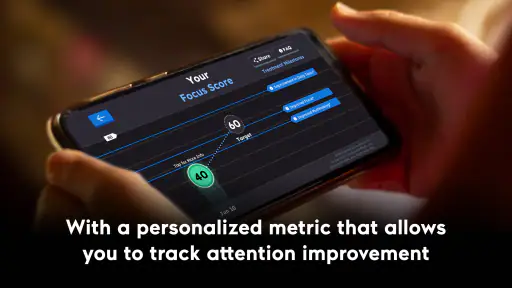
- Progress tracking can encourage consistency over time.
- Useful as a supplementary tool alongside professional ADHD support.
Cons
- It is not a replacement for diagnosis
- medication
- or therapy.
- Benefits may vary significantly between users.
- Some features or content may require a paid subscription.
- Regular sessions are needed to get the most from the program.
- Gamified exercises may not appeal to users seeking traditional treatment tools.

- Category
- Medical
- Version
- 4.0.1