DSM-5-TR® Diagnostic Criteria
- 4.00
- 4.5
- Installs
- 1.00K
- Price
- $75.00
Screenshots
Analysis by Reviewed
The DSM-5-TR® Diagnostic Criteria app is best understood as a paid, portable reference for people who already work or study in mental health—not as a tool for diagnosing yourself. I like the idea of having diagnostic criteria in a searchable digital format, but its value depends on how often you need to consult the manual and whether you want an authoritative reference rather than a general mental-health guide.
A reference, not a substitute for clinical judgment
This is a medical app from the American Psychiatric Association, centered on the DSM-5-TR. That focus is its main strength: it gives clinicians and students a way to check diagnostic criteria without relying on scattered web pages or carrying a large reference book. The app has a 4.5 average from 12 ratings and more than 1,000 installs, which offers some context, though that is a small audience compared with widely used free reference apps.
One useful habit is to treat a quick lookup as the start of careful reading, not the end of an assessment. Diagnostic criteria need to be considered in context, and a list on a phone cannot capture everything involved in evaluating a person. I would use the app to check wording while preparing for a case discussion or studying, then return to the wider clinical picture rather than letting a checklist make the decision.
Where it fits in a working day
Imagine a trainee reviewing notes before supervision and wanting to confirm the criteria relevant to a diagnostic question. A digital manual can make that check quicker than flipping through a printed volume, while keeping the reference close at hand. It can also help a student compare material from a lecture with the formal criteria during revision. Those are practical uses; it is less suitable as a casual introduction to mental health conditions or a source of personal reassurance.
Compared with free articles, general health apps, or broad search results, a dedicated DSM reference has a narrower purpose and a more formal basis. Those alternatives may explain conditions in friendlier language, but they are not interchangeable with consulting diagnostic criteria. In the other direction, a print manual may be more comfortable for extended reading and annotation. I would choose the app for targeted lookups and the book or course materials for longer study sessions.
Price and the commitment behind it
The listed price is $75.00, so this is not an impulse download for most people. I would consider it when the manual is part of regular clinical or academic work and quick access has real value; occasional users may be better served by a library copy or other resources already available to them. Its Everyone content rating does not mean the material is intended for every reader or that it can guide self-diagnosis. The app’s subject is technical, and its useful audience is much more specific than the age label suggests.
Before buying, I would ask myself whether I need to consult DSM-5-TR criteria often enough to justify paying for a mobile reference, and whether I prefer reading on a phone or a printed page. I would also check that my device can run it: the minimum operating system is 7.0, and the current version is 1.7. The app was released on May 3, 2023. Those details matter because a reference is only convenient if it works on the device I plan to use and fits the way I actually study or practice.
More From Our News Desk

 Gmail
Gmail in a Busy Inbox: Who Benefits Most?
From first account to crowded workday, Gmail earns its place through dependable search and flexible sorting—but its best fit depends on how much inbox maintenance you can tolerate.

 Prime Video
Switching to Prime Video: What Changes in Your Viewing Routine
Prime Video can make a compelling second home for streaming, but switching means learning a different catalog, rental layer, and route from browsing to playback.

 Universal TV Remote Control
 Works Best as a Reliable Backup
A phone remote earns its place through quick setup and reliable habits. Here is how to get more from Universal TV Remote Control—and where its limits show.

 Weather - By Xiaomi
Weather by Xiaomi Review: Clear at a Glance, Less Clear Up Close
Xiaomi’s weather app makes everyday forecasts quick to scan, but its calm surface can leave useful details and recovery paths harder to find than they should be.

 X
X Under Pressure: Can It Recover When Posting Goes Wrong?
A resilience-focused review of X, examining setup, mistaken posts, interruptions, weak connections, and the gaps that matter when recovery needs to be dependable.

 Clash of Clans
 Is Won Between the Battles
Its raids are quick; its community is a long-term project of coordination, teaching, rivalry, and shared responsibility—with all the friction that entails.
Latest News



A Comprehensive Guide to Mental Health
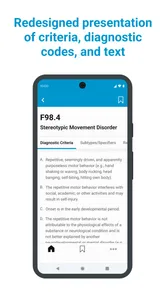
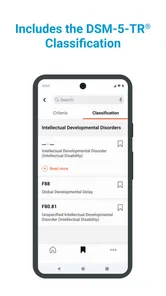
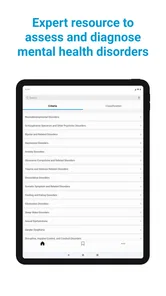
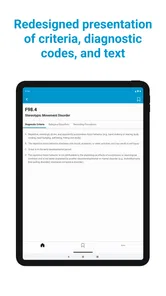
One of the first things you'll notice about the DSM-5-TR® Diagnostic Criteria app is its comprehensive coverage. This app is essentially a digital version of the Diagnostic and Statistical Manual of Mental Disorders, Fifth Edition, Text Revision. It provides detailed diagnostic criteria for a wide range of mental health disorders, making it an invaluable tool for anyone in the field.
User-Friendly Design
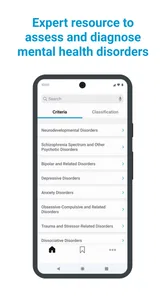
When it comes to usability, this app doesn’t disappoint. Navigating through the app is a breeze, thanks to its intuitive design. Whether you're looking up criteria for a specific disorder or just browsing through for educational purposes, the app is structured to make your search as straightforward as possible. I found myself easily accessing different sections without any hassle, which is a huge plus for those who need to find information quickly.
Features Galore
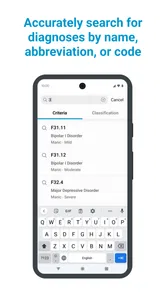
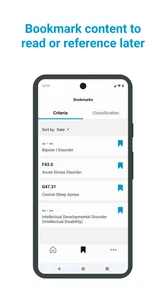
Beyond the basic diagnostic criteria, the app includes a variety of features that enhance its functionality. There are search filters that allow you to narrow down results based on specific parameters, and you can bookmark sections for quick reference later. Additionally, the app updates regularly to reflect any changes or additions to the manual, ensuring you have the most current information at all times.
What's more, the app offers a glossary of terms, which is super helpful for anyone new to the field or needing a quick refresher. This feature alone makes it a great educational tool, not just a reference guide.
Practical Application in the Field
For professionals, having the DSM-5-TR® Diagnostic Criteria app on hand can be a game-changer. Imagine being in a session and needing to quickly verify a diagnosis or check criteria; this app allows you to do just that with minimal disruption. It’s like having a mental health library in your pocket, ready to assist you whenever necessary.
Students will also find this app incredibly useful as it serves as a study aid that complements their coursework. The ability to access such a comprehensive resource outside of textbooks and lectures can significantly enhance their understanding and retention of the material.
Limitations worth considering
That convenience does not make the app a replacement for a full assessment, supervision, or the clinical skills needed to interpret criteria. I would not use it to label myself, a family member, or someone I am supporting. If you are looking for plain-language explanations, coping advice, or help finding care, a patient-focused resource or a qualified professional is a better starting point.
A phone screen also encourages short visits. That suits checking a specific point, but it may be less comfortable for reading closely across a long study session. A practical approach is to use search to find the relevant section, bookmark it for return visits, and keep course notes or supervision questions beside it. That makes the app a reference in a broader learning process rather than a stand-alone teacher.
Who is most likely to benefit
I would recommend it most to mental-health professionals and students who already know why they need the DSM-5-TR and expect to consult its criteria repeatedly. It may also suit someone who wants a formal reference readily available while preparing for teaching or supervision. For a person who only wants to understand a diagnosis in everyday language, or who expects a structured course, self-test, or treatment plan, this is probably the wrong purchase.
The choice between this app and a book comes down to the task. For a quick lookup away from a desk, digital access is appealing; for extended reading, highlighting, or comparing several pages at once, print may feel more natural. Free web material can be useful for orientation, but it should not be mistaken for a direct substitute for a formal diagnostic reference. I would choose the format that helps me check the source carefully, not simply the one that is easiest to open.
Using a lookup without losing the bigger picture
For a concrete workflow, I would begin with the question I need to resolve rather than browsing criteria without a purpose. A student might note a term from a lecture, search for the relevant section, then write down what remains unclear before class or supervision. That turns a quick phone check into a focused learning task and helps avoid treating a remembered fragment as the whole diagnostic picture.
For clinicians, the useful trade-off is speed versus attention. Pulling out a phone during a conversation can interrupt rapport, so I would reserve the app for preparation, a pause between appointments, or a later documentation check rather than making the screen the center of a sensitive discussion. In a team meeting, it can help settle a question about wording, while the group still considers history, functioning, context, and uncertainty separately.
What the digital format does—and does not—solve
Search and bookmarks are most valuable when used deliberately. I would bookmark a small set of sections that recur in my coursework or responsibilities, then use search when a new question comes up. That is more efficient than treating the app like a textbook to browse from the beginning. The glossary can help with terminology, but a definition alone will not teach how a term should be interpreted in an individual assessment.
The phone format also brings a practical boundary: it makes access portable, not the material simpler. If I were preparing for an exam or reading carefully across related sections, I would pair the app with a larger screen, printed notes, or the relevant course material. The app is strongest as a source to consult at a specific moment; it is less persuasive as the only place to learn a complex subject from scratch.
Questions I would settle before paying
Would it work for someone outside clinical practice? It can be useful to a student or a reader with a clear educational reason, but I would not recommend it as a first stop for someone trying to interpret their own experiences. The formal criteria are not a personal assessment, and technical access is not the same as guidance. For a concerned individual, a qualified professional and accessible, patient-oriented information are more appropriate.
Is it better than free online material? That depends on the task. Free sources are often easier for a general explanation, while this app is aimed at direct consultation of formal criteria. If I needed reliable wording for study or professional reference, I would prefer a dedicated manual over search snippets; if I needed a plain-language overview, I would choose a resource designed for that purpose instead.
Does buying it make sense for occasional use? Probably not at this price unless the convenience of having the reference immediately available is important to a specific course or role. A library or existing text may be enough for infrequent checks. Before purchasing, I would also confirm that the intended device meets the operating-system requirement and think about whether reading diagnostic material on a phone suits my habits.
Final Thoughts
In conclusion, the DSM-5-TR® Diagnostic Criteria app is a must-have for anyone involved in mental health care or education. Its user-friendly interface, comprehensive content, and practical features make it a standout tool in the realm of mental health resources. Whether you're a seasoned professional or a student just starting out, this app is worth exploring for its wealth of information and the convenience it offers. Trust me, once you start using it, you'll wonder how you ever managed without it!
My recommendation is more measured: it is a specialized reference, and the $75.00 cost makes the most sense when regular access is genuinely useful to your work or studies. The American Psychiatric Association’s app is a focused option for that need, not a general wellness download. If that describes you, its portability and lookup tools may earn their place on your device; if not, a library, course text, or accessible educational resource is likely a better fit.
DSM-5-TR® Diagnostic Criteria Frequently Asked Questions
Who publishes the DSM-5-TR® Diagnostic Criteria app, and what is it intended to provide?
The app is published by the American Psychiatric Association and is presented as the official DSM-5-TR® app. It provides digital access to diagnostic criteria associated with the DSM-5-TR®, making it a reference resource for people studying or working with mental health diagnoses. Its medical focus makes it different from general wellness or symptom-tracking apps.
What is the DSM-5-TR® Diagnostic Criteria app?
The DSM-5-TR® Diagnostic Criteria app is a mobile application designed for mental health professionals, providing quick and easy access to the latest diagnostic criteria for mental disorders as outlined in the DSM-5-TR. It serves as a digital reference guide, helping clinicians, researchers, and students navigate and understand various psychiatric conditions efficiently.
Is the DSM-5-TR® app suitable for students or only for professionals?
While the DSM-5-TR® Diagnostic Criteria app is primarily designed for mental health professionals, it is also a valuable resource for students in the field of psychology and psychiatry. The app provides comprehensive information that can aid in learning and understanding psychiatric diagnoses, making it a useful tool for educational purposes as well.
Does the app include updates from the DSM-5-TR revisions?
Yes, the DSM-5-TR® Diagnostic Criteria app includes all the latest updates and revisions from the DSM-5-TR. This ensures that users have access to the most current diagnostic criteria and guidelines, which is crucial for accurate diagnosis and treatment planning in clinical practice.
Is an internet connection required to use the DSM-5-TR® app?
No, an internet connection is not required to use the DSM-5-TR® Diagnostic Criteria app after the initial download. The app is designed to be fully functional offline, allowing users to access all the diagnostic criteria and related information anytime, anywhere, without the need for internet access.
Pros
- Comprehensive mental health guide
- Regularly updated with new criteria
- User-friendly interface design
- Available offline for easy access
- Includes extensive reference material
Cons
- Limited to DSM-5-TR® criteria only
- Requires purchase for full access
- Heavy on storage space
- No interactive features
- No personalization options