Discotech Nightlife
- 731.00
- 4.9
- Installs
- 100.00K
- Price
- Free

Screenshots


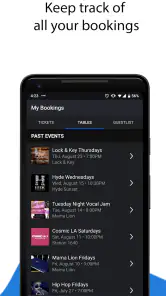
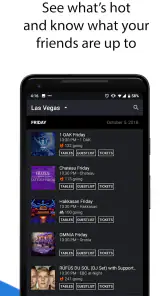
Analysis by Reviewed
When I want to make a night out less improvised, I usually begin with the practical details: which clubs are active, whether tickets are available, and how much effort it will take to organize a group. Discotech Nightlife is built around that exact planning problem. It is an events app from Discotech, Inc. that brings club nights, festivals, discounted tickets, guest lists, and VIP table options into one place. I found it most useful as a decision-making tool rather than as a replacement for every part of a night out.
The app is free to download, which makes trying it fairly low-risk. Its store rating sits at 4.9 from around 2.1 thousand ratings, and it has passed 100 thousand installs. Those figures suggest that it has found a dependable audience, but they do not mean every event or city will feel equally useful. Nightlife changes quickly, and the quality of the experience depends heavily on the local listings available when you open the app.
How Discotech Nightlife works when planning a real evening
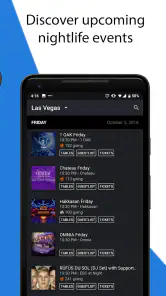
The basic experience is straightforward: I use the app to browse nightlife options, compare the kinds of access available, and decide whether I want a normal ticket, a guest-list opportunity, or a more organized VIP table experience. That combination is more useful than a simple club directory because it connects discovery with the practical question of how I might actually get into an event.
A realistic example would be a Friday evening with friends visiting a city for the weekend. Instead of sending messages back and forth about several venues, I would open Discotech Nightlife, look through the available club and festival choices, and narrow the list according to the type of night we want. If one person wants a cheaper entry option while another prefers a table, the app gives the group a common place to compare those routes before anyone commits to a plan.
That workflow is one of the app’s strongest points. Nightlife decisions often become confusing because event discovery, ticket buying, guest-list arrangements, and table inquiries happen through separate channels. Discotech Nightlife brings those categories together, so I spend less time jumping between social posts, venue pages, and messages. The real value is the reduction of planning friction, especially when several people have different expectations.
I also like that the app is focused on events rather than trying to become a general social network. It keeps the purpose clear: find a place, understand the available entry route, and make a choice. For someone who already knows the exact venue and only needs a direct ticket, a venue’s own service may be simpler. For someone deciding between several possibilities, this broader view is more helpful.
What the free access means in practice
The app itself is free, so I can install it and explore its nightlife listings without paying simply to browse. That matters because many people are not ready to choose a venue immediately. I can check what kind of night is available, compare options with friends, and decide whether the app fits my plans before spending money on an event.
Free access should not be confused with a free night out. Tickets, guest-list conditions, and VIP tables are event-related choices, and the app’s role is to help me find and arrange them. The useful distinction is simple: using the app costs nothing, while the specific access option I choose may involve a separate purchase or commitment. I would always review the details attached to the event before assuming that a guest list or discounted option means guaranteed entry under every circumstance.
This makes the app more valuable for research than for impulse spending. I can use it to build a shortlist first, then decide how much I am comfortable committing. That is a better habit than treating the first attractive event as the obvious choice, particularly when a group is sharing costs or when the difference between standard entry and a table changes the whole evening.
Comparing tickets, guest lists, and tables
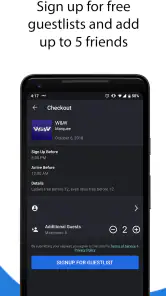
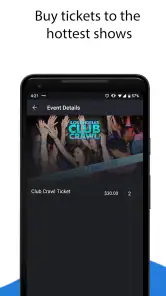
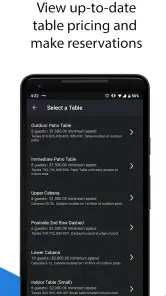
The different access paths are not interchangeable. A discounted ticket may be the clearest option when I want a defined entry arrangement. A guest list can be appealing when I am trying to keep the cost down, but it may require more attention to the event’s conditions and timing. A VIP table is a different kind of purchase altogether, since it makes sense mainly for a group that values reserved space and a more structured experience.
One useful planning trick is to decide the group’s priority before opening the event details. If the priority is simply getting into a club, I focus on ticket availability and practical entry information. If the group cares about spending less, I investigate the guest-list route carefully. If the night is a celebration and people are willing to share a larger expense, I compare the table option with ordinary admission rather than assuming that VIP automatically means better value.
That comparison prevents a common mistake: judging every option by the same standard. A table is not necessarily good value for two people who plan to spend most of the night dancing elsewhere. A guest list is not necessarily the best choice for a group that wants certainty and minimal waiting. Discotech Nightlife is useful because it exposes these choices, but I still have to match them to the occasion.
Where the app saves time and where it still needs attention
In my experience, the main time-saving benefit comes before the event. I can use one nightlife-focused app to discover possibilities instead of relying entirely on word of mouth. That is particularly handy when I am in an unfamiliar area or when friends want different types of venues. The app gives the planning conversation a concrete starting point.
However, I would not treat a listing as the end of my preparation. Nightlife details can be sensitive to the day, the venue, and the chosen access type. I would check the event information closely, save the relevant confirmation, and make sure everyone in the group understands the plan. This is especially important when one person assumes that a guest list works like a regular ticket or when the group is dividing the cost of a table.
Another practical insight is to avoid waiting until the group is already outside. Using the app earlier gives me time to compare choices and resolve disagreements. If I open it only after arriving in the area, I may end up selecting whatever is easiest rather than what actually suits the group. The app works best as a planning companion, not as a last-second rescue tool.
Who will notice the most value
I think Discotech Nightlife is a strong fit for people who go out regularly, visitors exploring a new city, and groups that want more than a basic list of clubs. It is also useful for anyone who dislikes coordinating through scattered messages. Having tickets, guest-list possibilities, and VIP table choices in the same nightlife context makes the decision easier to explain to friends.
It can be especially helpful for a group organizer. The person arranging the evening can share a small selection of realistic choices instead of asking everyone to search independently. That reduces duplicated research and makes it easier to discuss the tradeoff between a lower-cost entry route and a more elaborate plan.
The app is less compelling for someone who rarely visits clubs and already has a favorite venue. If I always buy directly from one location and never compare events, Discotech Nightlife may add an extra step rather than remove one. It is also not the right tool for someone looking mainly for concerts, museums, daytime activities, or broad local entertainment. Its identity is clearly nightlife-centered, and that focus is both its advantage and its boundary.
How it compares with the usual alternatives
The most common alternative is searching through individual venue pages or social media accounts. That approach can work when I know exactly where I want to go, but it becomes messy when I am comparing several clubs or trying to understand different entry arrangements. Discotech Nightlife has an advantage in that comparison stage because the choices are gathered around nightlife planning rather than spread across unrelated accounts.
Another alternative is asking friends for recommendations. Personal suggestions can be valuable, especially when someone knows the local scene, but they may not answer the immediate questions about available tickets, guest lists, or table arrangements. I see Discotech Nightlife as a useful complement to those recommendations: a friend can suggest a venue, and the app can help me investigate the practical way to attend.
Direct venue purchasing may still be preferable when certainty and simplicity matter most. If I have already chosen a club and want the venue’s own checkout or communication channel, going straight there can reduce duplication. Discotech Nightlife earns its place earlier in the process, when I am selecting among possibilities and weighing different ways to enter.
Limitations I would keep in mind
The app’s usefulness depends on the relevance of the events available to me. A polished browsing experience cannot compensate if the local selection does not match my taste, location, or date. Someone in a city with limited coverage may open the app and find fewer meaningful choices than a person in a busy nightlife area.
There is also a natural risk of over-planning. Having several entry options can make a simple night feel like a series of decisions. I sometimes find that the best use of the app is to narrow the field quickly, not to compare every possible detail indefinitely. Once the group has found a suitable event, continuing to browse can create hesitation rather than improve the plan.
Cost comparisons require common sense too. A discounted ticket may look attractive, but the cheapest route is not automatically the best experience if it creates uncertainty for the group. Likewise, a VIP table can be worthwhile for a celebration but excessive for a casual night. The app helps surface the choices; it does not decide whether the social value justifies the expense for my particular group.
Finally, I would keep the app updated and pay attention to its current behavior before a major night out. The current version is 8.3.4, and it supports devices running operating system version 7.0 or later. That broad minimum makes it accessible to many older devices, but compatibility alone does not guarantee that an older phone will feel equally smooth in every situation. I would avoid relying on a nearly empty battery or weak connection when the app contains information I need at the door.
Small workflows that make it more useful
My preferred workflow starts with the occasion, not the venue. I first decide whether the group wants a relaxed club night, a festival atmosphere, a budget-conscious evening, or a celebration with a table. Then I use the app to filter my thinking around that goal. This prevents the attractive presentation of a venue from deciding the budget before the group has discussed it.
I also recommend separating discovery from commitment. On the first pass, I collect a few plausible events. On the second, I check the access type that actually fits the group. Only then do I move toward purchasing or arranging anything. This two-stage approach is a non-obvious advantage of having several nightlife options together: I can use the app as a shortlist builder rather than treating every listing as an immediate sale.
For groups, I would appoint one person to track the final choice and make sure the others know which option was selected. That sounds basic, but it avoids the familiar problem where one friend assumes the group is on a guest list while another has purchased a ticket for a different arrangement. Discotech Nightlife can centralize the discovery, but a clear group decision still matters.
For visitors, I would use the app alongside local knowledge rather than instead of it. A venue that looks ideal on paper may not suit the group’s preferred music, dress expectations, or pace. The app is strongest at organizing the available choices; personal recommendations and common sense remain important for judging atmosphere.
My verdict on whether it is worth installing
Discotech Nightlife delivers clear value at the access level because I can download and explore it for free. The paid value belongs to the individual event choices, not to the app itself, so I judge those separately. If I am actively planning club nights, festivals, guest-list visits, or a group celebration, the free app gives me a convenient place to compare possibilities before deciding where my money should go.
I would recommend it to readers who want a nightlife planning layer between casual recommendations and direct venue purchasing. Its best use is finding the right access route for the right occasion, especially when a group is comparing ordinary tickets, discounted entry, guest lists, and VIP tables. The app’s strong rating and reach reinforce that it is a well-established choice, while its Everyone content rating makes it broadly accessible as an app; the events themselves may still be intended for adults depending on the venue and arrangement.
I would skip it if I already have a fixed venue routine, need a general events guide, or prefer to handle every purchase directly with the venue. In those situations, its comparison features may not justify another app. For everyone else, my buy-or-skip verdict is simple: install it for free if you regularly plan nights out, but judge each paid event on its own terms. That is where Discotech Nightlife is genuinely helpful—making the options clearer without pretending that one entry type is automatically right for every night.
Pros
- Shows real-time event details
- lineups
- and venue information.
- Useful for discovering nightlife options in unfamiliar cities.
- Lets users save events and keep track of upcoming plans.
- Ticket and guest-list options can simplify entry at select venues.
- Filters help narrow choices by date
- location
- or event type.
Cons
- Coverage varies widely by city and venue availability.
- Some listings may have incomplete or outdated event details.
- Ticket prices and fees are not always clear at first glance.
- Many features depend on participating clubs and promoters.
- Popular events can sell out before availability updates in the app.

- Category
- Events
- Version
- 8.3.4