DailyBible for Women - KJV
- 170.00
- 4.9
- Installs
- 10.00K
- Price
- Free

Screenshots
Analysis by Reviewed
I’m cautious with devotional apps that invite people to bring private worries, doubts, and prayers into a phone. A calm presentation is welcome, but it is not the same thing as a clear picture of privacy or control. DailyBible for Women - KJV is a free Bible and devotional app from LINKAMEN PTE. LTD., built around the King James Version and material intended to support prayer and encouragement. My main reason to consider it is its focused spiritual purpose; my main reason to pause is that I would want to understand its data practices and available controls before making it part of a deeply personal routine.
A devotional space worth approaching thoughtfully
What the app is trying to do
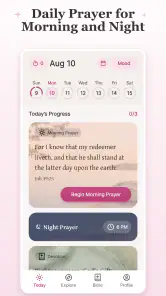
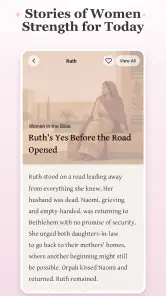
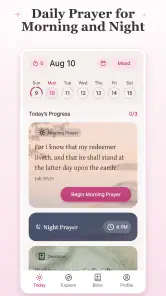
The app is aimed at women who want scripture, prayer, and devotional encouragement together rather than spread across a Bible reader, a journal, and a separate collection of reflections. That focus can make a daily practice feel less like a research project: open the app, read a passage, and take a moment to reflect. Its emphasis on the KJV also gives it a distinct character. The language is formal and familiar to many readers, though it can feel less immediate than a contemporary translation if you are new to the Bible.
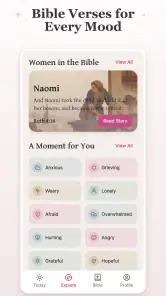
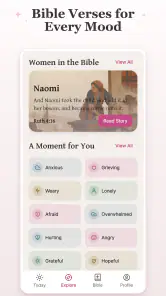
I would think of this as a guided devotional companion, not a replacement for every kind of Bible study. The description points to daily prayer, devotionals, and support for different feelings, which suggests a more personal entry point than a reference tool organized mainly around study notes or cross-references. That can be helpful on an ordinary, emotionally busy day. It does not automatically make the app the right place for detailed research, comparison between translations, or keeping confidential notes.
Trust begins with what you can actually see
In this category, trust is not an abstract concern. A person may open a devotional after an argument, during grief, or while wrestling with a private decision. The language of encouragement can feel intimate even when the app is simply presenting reading material. I try not to confuse a warm tone with a privacy guarantee: those are separate questions, and I would evaluate them separately before sharing anything sensitive.
The app has an average rating of 4.9 from around 1,400 ratings, with about 170 written reviews, and it has passed 10,000 installs. That level of interest can help a new user see that others have chosen to try it, but popularity is not proof of privacy, theological fit, or reliability for a particular person. I treat ratings as a starting point for judging general reception, not as evidence about how personal information is handled.
It is published by LINKAMEN PTE. LTD. and is listed as free, so trying the basic experience does not require an upfront purchase. That removes one practical barrier, but it should not be mistaken for a statement about data collection or account terms. If I were installing it for regular use, I would review the privacy information and the app’s own settings before entering personal details or making the app a repository for private reflections.
Check the controls before making it personal
A useful first session is a deliberately low-stakes one. I would read a devotional and browse the prayer or encouragement material without typing names, health details, relationship problems, or anything I would not want connected to an account. Then I would look for visible choices around notifications, account management, and saved content, if those options are presented. This is not a claim that the app has a particular setting; it is a practical way to inspect what control is available before relying on it.
More From Our News Desk

Clash of Clans Is Won Between the Battles

Android Auto Makes the Case for Quieter Car Software

MobiOffice: Transforming Mobile Productivity with Seamless Integration

EA SPORTS FC™ Mobile Soccer: Redefining Mobile Sports Gaming

How Microsoft OneDrive Became a Mobile Productivity Giant

How Google Translate Breaks Language Barriers Effortlessly
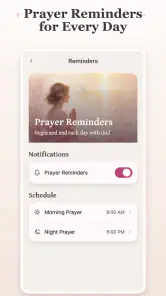
Notifications deserve special attention in a spiritual app. A daily reminder can support a habit, but a message appearing on a lock screen may reveal more than you intend to someone nearby. If a reminder is offered, I would decide whether its timing and preview are comfortable before enabling it. On a shared device, I would be even more careful about notification visibility and whether the device itself is protected with a passcode.
Likewise, I would distinguish reading from recording. If the app offers any way to save, write, or personalize material, I would first find out how that content is stored and whether it can be removed. If the available controls are unclear, my advice is simple: use the app for reading only until you are satisfied with the answers. A devotional can still be meaningful without becoming a diary.
Where sensitive moments change the decision
The app’s emotional framing may be especially appealing when someone wants a gentle prompt rather than a long study session. That is also when people can be tempted to disclose more than they normally would. If you are using a passage to think through a difficult family situation, for instance, you can reflect privately on paper or in your own mind without entering identifying details into an app. The spiritual value does not depend on sharing a confession digitally.
For a realistic routine, imagine opening it during a quiet part of the morning before work. I would read the day’s material, choose one idea to carry into the day, and close the app rather than trying to turn that moment into a full study plan. If a notification would interrupt a meeting or expose a private habit, I would keep reminders off and open the app on my own schedule. That small adjustment preserves the benefit of a prompt without giving the phone control over when the practice happens.
Another sensible use is to turn to the app when you want encouragement but do not want to browse social feeds. The bounded purpose may make it easier to stay focused. Still, if you are seeking help for a mental-health crisis, abuse, or an urgent safety issue, devotional reading should not be your only support. Scripture can be personally meaningful, but it is not a substitute for trusted people or qualified professional help when those are needed.
Choosing how much access to give
My rule with any reflective app is to grant only what is necessary for the way I actually plan to use it. If the operating system requests access that seems unrelated to reading, I would pause and consider whether declining it affects a feature I genuinely need. I would not assume a permission is required simply because an app asks for it, and I would not assume that declining one has no consequence; I would check the explanation shown on the device and make an informed choice.
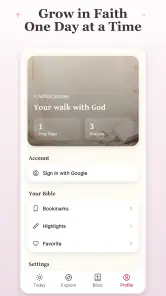
The same principle applies to account creation. If the app lets you read without an account, that may be preferable for a casual trial. If it requires an account for something you want, I would use a strong, unique password and avoid reusing credentials from email or other services. Those are general safeguards rather than claims about a specific account flow. The practical point is to make the choice deliberately, rather than supplying personal details before you know what the app offers in return.
For families, the age classification is Everyone, but that does not answer every household question. A parent may still want to preview the KJV language and devotional tone, consider whether a child has a private device, and manage notifications or purchases at the device level as appropriate. An all-ages classification is a broad content signal, not a promise that every family will agree on how a child should use a personal devotional app.
How it compares with familiar alternatives
Compared with a general Bible reader, this app’s appeal is its women-focused devotional framing and its combination of scripture with prayer and encouragement. A general reader may be a better choice if you mainly want navigation, study tools, or a broad range of translations. A paper Bible and a printed devotional offer a more private-feeling routine for someone who prefers not to bring a phone into reflective time, although they do not provide the convenience of opening everything on one device.
Compared with a notes app, a devotional app can give you a prepared starting point instead of a blank page. But a notes app may offer clearer personal control if you already understand its storage and deletion options. I would not move a private prayer journal into DailyBible for Women simply because the app is designed for encouragement. I would do so only after checking exactly what saving content involves and deciding that the available controls suit my comfort level.
The KJV is another meaningful trade-off. Its cadence can feel solemn and familiar, particularly for readers who grew up with it or prefer traditional wording. Readers who find older phrasing difficult may get more from a Bible app that lets them compare translations or choose a modern-language version. If understanding a passage is your priority, clarity matters more than a devotional aesthetic, and a translation you can readily follow may be the better everyday tool.
A measured recommendation for the right reader
The app is currently version 1.1.4 and requires Android 7.0 or later. It was released on August 11, 2026, and carries an Everyone content rating. I would check device compatibility before planning to use it on an older phone, and I would keep the app updated through the usual channel on my device. These details help set expectations for access, but they do not resolve the separate question of whether its controls match your privacy preferences.
My cautious verdict: I can see DailyBible for Women - KJV working well for someone who already values the King James Version and wants a compact, encouraging prompt for regular reflection. It is less suited to a reader who needs advanced Bible-study tools, several translation choices, or a private digital journal with clearly understood data controls. I would start with reading, inspect the settings and privacy information, and enable only the options I genuinely want. That lets the app serve as a devotional aid without asking it to become more personal than necessary.
Making it fit an actual routine
One practical way to test whether this devotional format suits you is to give it a small, repeatable place in the day rather than expecting it to transform your routine. I would try opening it at a predictable transition, such as after breakfast or before turning off the light, and keep the session focused on reading and reflection. If the material feels useful but the phone itself is distracting, I would read a passage and then put the device away before continuing to think about it. That keeps the app as a doorway to a quiet moment rather than the whole activity.
It may also work for someone who wants a gentle prompt during a demanding week but does not want a long reading plan. The important trade-off is that a short devotional can offer a starting point, not necessarily the depth or context needed to interpret a passage carefully. When a line raises a question, I would note the reference and follow up in a Bible or study resource I trust, rather than treating a brief reflection as the final word. That approach uses the app’s focused format without asking it to do the work of a study library.
Who may want a different tool
I would be more hesitant to recommend it to someone who needs accessible language above all else, wants to compare translations as they read, or relies on robust research features. The KJV’s formal phrasing is a genuine part of its appeal, but it can slow comprehension for readers unfamiliar with it. A translation-focused Bible reader is likely a better fit for close reading, while a printed devotional may suit someone who wants a screen-free practice. Neither alternative is automatically better; the choice depends on whether convenience, study depth, traditional language, or privacy matters most to you.
There is also a difference between wanting encouragement and wanting personalized guidance. A devotional can offer a theme to consider, but it cannot know the full circumstances behind a decision or replace advice from a trusted faith leader, counselor, or other qualified person. I would skip relying on the app as a source of answers for a high-stakes personal problem. Its best role is narrower: a reading companion that may help you pause, reflect, and decide what other support you need.
If you are deciding whether to make it part of your routine, start by asking yourself three practical questions: Is the KJV comfortable for me? Do I want prepared devotional material more than study tools? Am I comfortable using this phone and app for reflective reading after reviewing the available privacy information and controls? A clear yes to the first two makes a trial reasonable; uncertainty about the last is a good reason to keep the experience limited to reading and avoid entering sensitive details.
DailyBible for Women - KJV Frequently Asked Questions
What is DailyBible for Women - KJV?
DailyBible for Women - KJV is a Bible-reading app centered on the King James Version, with a presentation intended for women seeking regular Scripture study. It may offer features such as daily readings, devotional material, or tools for navigating and saving passages, depending on the current app version. Check the app’s listing and permissions before downloading to confirm which features are available on your device.
Does DailyBible for Women - KJV require an internet connection?
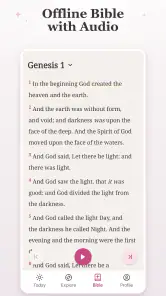
Basic access to Bible text may be available offline if the app downloads or stores its content on your device, but features that retrieve new readings, audio, or other online material may require internet access. Availability can vary by version and platform. If offline use matters to you, check the app description and test whether your preferred passages remain accessible after disconnecting from Wi-Fi or mobile data.
Is DailyBible for Women - KJV free to download and use?
The app may be free to install, but that does not necessarily mean every feature is free. Some versions of Bible apps include advertising, optional purchases, or subscriptions for additional content or an ad-free experience. Review the Google Play or App Store listing for current pricing, in-app purchase details, and subscription terms before installing, since availability and costs can change over time.
What Bible version does the app use, and is it suitable for study?
As its name indicates, DailyBible for Women - KJV focuses on the King James Version, whose traditional English wording may appeal to readers who prefer a classic translation. It can support personal reading and reflection, but study tools such as cross-references, commentaries, or original-language resources should not be assumed. Review the listed features to see whether they meet your particular study needs.
What should I check before downloading DailyBible for Women - KJV?
Before downloading, confirm that the app is compatible with your Android or iOS version and review its recent updates, ratings, privacy information, and requested permissions. Also check whether it contains ads, offers paid features, or needs an account or internet connection. These details can differ between platforms and releases, so the current store listing is the most reliable place to verify them.
Pros
- Daily readings offer a simple way to build a regular Bible-reading habit.
- KJV wording may appeal to readers who prefer a traditional translation.
- Women-focused content provides a more tailored devotional experience.
- Convenient for reading short passages during breaks or while traveling.
- A useful option for personal reflection without needing a printed Bible.
Cons
- The King James language can feel dated or difficult for some readers.
- Women-focused framing may not suit readers seeking general devotionals.
- Daily content may offer less depth than a full study Bible or commentary.
- Reading on a phone can be distracting compared with a dedicated book.
- Check the app’s permissions and privacy details before sharing personal information.

- Category
- Books & Reference
- Version
- 1.1.4