CoverMe - Instant Cash Advance
- 2.11K
- 4.6
- Installs
- 100.00K
- Price
- Free

Screenshots


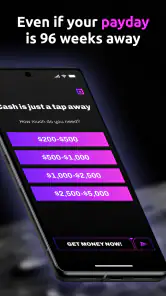
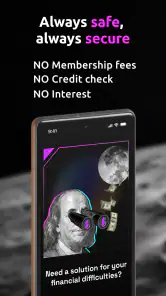
Analysis by Reviewed
I approached CoverMe - Instant Cash Advance as a practical finance app rather than a magic solution to money problems. Its central appeal is easy to understand: it is designed for people who need access to cash before their normal payday, including situations where payday is still a long way off. After spending time with it, my view is that it can be useful as a short-term budgeting tool, but it deserves the same caution I would apply to any cash-advance service. The convenience is real; so is the need to read every condition carefully before accepting anything.
What makes the app stand out is its narrow focus. It is not trying to be a full banking replacement, investment dashboard, or expense tracker. CoverMe is built around the urgent gap between an expense arriving and income becoming available. That focus makes the experience easier to understand than a crowded finance app, especially when I am already stressed and do not want to sort through unrelated tools.
How CoverMe fits into a real financial emergency
A realistic example would be a household facing an unexpected bill shortly before income arrives. Someone might open the app to explore whether an advance could help cover the gap instead of immediately turning to a credit card, overdraft, or another borrowing option. The important word is “explore.” I would not treat the first available offer as automatically affordable, and I would not borrow simply because the process feels quick.
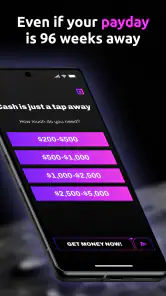
The app’s store summary presents it as a way to get cash even when payday is far away, with a longer window than the typical cash advance. That positioning is meaningful because many short-term options are designed around a very narrow pay cycle. A longer period may be more relevant to someone whose income schedule does not fit the usual pattern, although the practical value depends on the terms shown during the application process.
CoverMe is free to install, and it is listed for everyone, which lowers the barrier for someone who wants to inspect the service before deciding whether it is suitable. It was released on February 20, 2025, and the current version is 1.6.3. The app runs on Android 7.0 or later, so it remains accessible to people using older compatible phones rather than requiring a recent device.
The app comes from DIONIS K, and its reception suggests that many people are willing to try it for this specific purpose. It has an average rating of 4.6 from around 32 thousand ratings, along with roughly 2 thousand written reviews and more than 100 thousand installs. Those figures do not guarantee that an individual application will go smoothly, but they do indicate that CoverMe has attracted a meaningful user base rather than existing only as an obscure experiment.
The strongest part is the focused borrowing workflow
In my experience, the biggest strength of a focused finance app is that it reduces mental clutter. When I am checking whether I can manage an urgent expense, I want the important questions to stay visible: how much money may be available, when repayment is expected, and what the total obligation will be. CoverMe’s narrow purpose makes it easier to approach that decision without wandering through savings charts, rewards pages, or unrelated financial products.
That does not mean I would rush through the screens. A cash advance should be evaluated like a financial commitment, not like a normal free utility. Before proceeding, I would write down the amount needed and compare it with the amount that will actually need to be repaid. I would also check whether the repayment timing lines up with my income rather than assuming that a future paycheck will solve everything automatically.
One useful habit is to use the app as a comparison checkpoint. I would open CoverMe, review the available details, and then compare the result with alternatives already available to me. Those alternatives might include asking a provider for a payment extension, using an existing emergency fund, checking an employer-based advance, or contacting a bank about a lower-cost option. The app is more valuable when it helps me make a deliberate choice than when it becomes the first button I press in a panic.
Another practical strength is that the service is aimed at the timing problem itself. Traditional credit products may be too slow or too formal for a small, immediate gap, while overdrafts can create unpleasant surprises if several payments arrive together. CoverMe’s appeal is the chance to address the shortfall directly. That convenience can be especially relevant for a person with irregular income, provided the repayment plan does not create a second emergency.
What I would inspect before accepting an advance
The most important information is not the app’s attractive promise of speed. It is the complete cost and schedule presented for the individual request. I would look for the total amount to be repaid, any applicable fees, the expected repayment date, and the consequences of missing that date. If any of those points are difficult to find or understand, I would stop rather than continue on autopilot.
I would also distinguish between installing the app and committing to its financial service. Installation is free, but that does not mean every advance is free. Those are separate questions. A person can download the application to understand the process without deciding to request money, and I think that is the safest way to begin.
For a first-time user, I recommend taking a screenshot or writing down the final offer details before confirming anything, as long as doing so does not expose private information. This creates a simple record of the amount, timing, and repayment obligation. It also makes it easier to compare the offer with another option without relying on memory during a stressful moment.
I would avoid requesting more than the exact amount required. The extra money may feel reassuring, but every additional amount increases the repayment burden. If the need is a modest grocery purchase or a specific utility bill, borrowing for that precise purpose is easier to evaluate than taking the maximum available simply because it appears on screen.
Where the convenience has real limits
The main weakness is inherent to the product category: a cash advance moves a future financial obligation into the present. It can solve a timing problem, but it does not solve an income problem. If my regular income is already fully committed, receiving money earlier may only postpone the pressure until repayment arrives. In that situation, a lower-cost assistance option or a longer-term budgeting change would be more appropriate.
I also would not assume that the phrase “instant cash” means every user receives money instantly or receives the same offer. Financial applications commonly depend on individual circumstances and the details entered during the process. CoverMe may be worth checking, but I would not plan a rent payment, medical bill, or other critical deadline around an advance until the money is actually available.
The longer period suggested by the app’s positioning can be helpful, but it can also make borrowing feel less urgent than it really is. A repayment date that seems comfortably distant may still arrive alongside rent, subscriptions, transportation costs, and other regular bills. I would put the repayment date into my calendar immediately and check my expected balance for that week, not just the day the advance is received.
There is also a difference between a simple interface and a simple financial decision. Even if the screens are easy to follow, the consequences may not be. I would prefer a user to spend more time understanding the offer than celebrating a fast approval. The app’s convenience is a strength only when it does not encourage a rushed decision.
When another option is better
CoverMe is not my first choice for a recurring shortage. If I need an advance every pay cycle to cover ordinary expenses, I would look for a broader solution: renegotiating bills, changing the monthly budget, seeking stable income support, or discussing the problem with a qualified financial counselor. Repeated short-term borrowing can turn a temporary gap into a pattern that becomes increasingly difficult to escape.
I would also compare it with a credit union product, an employer-supported advance, or a bank option when those are available and clearly cheaper. A credit card may be preferable for some users if they already have a low-cost balance-management plan, while it may be a poor choice for someone carrying expensive revolving debt. The right comparison is not “which app is fastest?” but “which option creates the smallest manageable obligation for this specific need?”
For a person who has no reliable income arriving soon, I would skip a cash-advance app altogether. Borrowing against uncertain income is a particularly risky trade-off. Likewise, anyone who is uncomfortable reviewing financial terms on a phone should ask a trusted person to help read the details before accepting an offer, without sharing passwords or sensitive account access.
Who I think will get the most value
I see CoverMe as a better fit for someone facing a one-off timing mismatch: a necessary expense arrives, income is expected later, and the user has a realistic plan for repayment. It may also interest people whose payday schedule does not fit the standard short advance model. In both cases, the key condition is that the advance remains a bridge rather than becoming part of the monthly budget.
The app is less suitable for someone looking for a complete personal-finance system. It is not the tool I would choose to track spending categories, build a long-term savings plan, monitor investments, or organize household finances. Its usefulness comes from addressing a specific cash-flow question, so expectations should stay within that boundary.
Privacy-conscious users should take their normal care with any finance application. I would read each permission and information request, avoid using public Wi-Fi for sensitive financial activity, and make sure the phone is protected with a screen lock. Those steps are not a criticism aimed specifically at CoverMe; they are sensible precautions whenever an app is involved in personal financial decisions.
For families, I would make the repayment plan visible to everyone affected by the household budget. A quick advance can look harmless when considered alone, but it may compete with food, transport, childcare, or other commitments later. Discussing the date and amount before accepting the money is a small step that can prevent an unpleasant surprise.
The app’s Everyone content rating makes it broadly approachable from an age-classification standpoint, but that should not be confused with financial suitability for every person. A simple age label cannot tell me whether borrowing is affordable. That judgment still depends on income, existing obligations, and the exact offer displayed during use.
Small habits that make the app safer to use
My first habit would be to calculate the shortfall before opening the application. If I need a specific amount, I can judge whether the proposed advance solves that exact problem. Without that number, it is easy to accept more than necessary or to confuse temporary relief with affordability.
My second habit would be to check the repayment week rather than only the repayment day. Looking at the surrounding bills gives a more realistic picture of whether the money will be available. This is particularly important when the app’s longer advance window makes the repayment seem comfortably distant.
My third habit would be to treat the app’s offer as one candidate, not a final answer. I would compare it with a payment extension, a personal emergency fund, an employer option, or a lower-cost financial product. Even if CoverMe is convenient, convenience alone is not enough to justify a higher total cost.
Finally, I would close the process if the terms do not make sense to me. No urgent expense is improved by accepting an obligation I cannot explain in plain language. The best result is not simply receiving money; it is knowing exactly how that decision affects the next part of my budget.
My verdict after weighing the trade-offs
CoverMe makes a clear case for itself as a focused cash-advance app. Its free entry, accessible Android requirements, and strong user reception make it easy to investigate, while its emphasis on helping users bridge a longer gap before payday gives it a distinct practical angle. I appreciate that it addresses a real problem without pretending to be a full financial-management platform.
My recommendation is conditional but positive: I would suggest trying it to someone with a genuine, one-time cash-flow gap and a dependable repayment plan. I would not recommend using it to cover a repeating deficit, to borrow more than needed, or to replace a proper emergency fund. The app can be a useful bridge, but a bridge still has to lead somewhere financially stable.
In the end, the strongest reason to use CoverMe is not speed by itself. It is the possibility of finding a manageable short-term option when ordinary payday timing does not match an urgent expense. The strongest reason to be cautious is equally clear: fast access can make a future obligation feel invisible. If I kept the amount precise, compared the offer with cheaper alternatives, and marked the repayment date before proceeding, I would feel comfortable considering it. Without those safeguards, I would choose a different route.
Pros
- Fast application process with quick eligibility decisions
- Clear repayment schedule helps users plan upcoming payments
- Useful for handling small
- unexpected expenses between paychecks
- Fully mobile experience avoids lengthy in-person paperwork
- Loan details are available in one place for easy reference
Cons
- Advance fees can make short-term borrowing expensive
- Not available to residents in every state or region
- Approval and borrowing limits vary by applicant
- Late repayment may lead to additional charges or financial strain
- Requires access to personal and financial information

- Category
- Finance
- Version
- 1.6.3