Clara - AI Receptionist
- 322.00
- 4.5
- Installs
- 50.00K
- Price
- Free

Screenshots
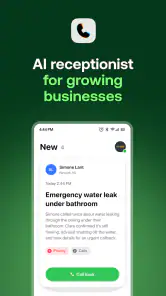
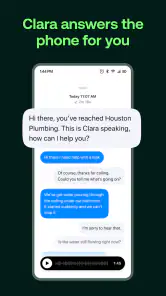
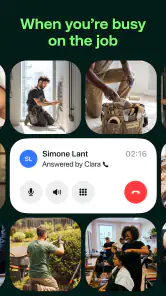
Analysis by Reviewed
When a business call arrives at the wrong moment, the problem is rarely the ringing itself. It is the interruption, the missed context, and the awkward follow-up that comes afterward. Clara - AI Receptionist is built around a simple idea: let an AI answer the phone so a small business can stay available without requiring someone to sit beside the handset all day. I approached it as a practical business app rather than a novelty, asking whether it could genuinely reduce the pressure of incoming calls.
My overall impression is that Clara makes the most sense for people who need a first line of phone coverage but do not want to rely entirely on voicemail. It is aimed at turning unanswered calls into a more organized conversation, which can be useful for independent professionals, small teams, and businesses where the owner is often serving customers, driving, working with tools, or away from a desk. The concept is appealing, but it also demands sensible expectations: an AI receptionist is not automatically a replacement for a trained human who understands every exception in a business.
How Clara fits into a real working day
The strongest use case is a business that receives routine calls while its staff are busy. Imagine a repair specialist working under a sink, a consultant in a meeting, or a salon owner helping a customer at the counter. A call can be important without being urgent enough to justify dropping everything. Clara offers a way to keep the business reachable during those moments, with the AI handling the initial interaction instead of leaving the caller to guess whether anyone will respond.
That distinction matters. Traditional voicemail is passive: it records a message and leaves the business to interpret it later. A receptionist, by contrast, can make the caller feel acknowledged immediately. Clara sits between those two options. It is more active than voicemail, while remaining easier to deploy than hiring staff or arranging a full call-answering service. For a small operation, that middle ground may be its main value.
I also see a useful after-hours role. A business does not necessarily need to promise a live human response at every hour, but it may still want callers to reach a consistent first point of contact. Clara can help create that continuity, provided the business defines clearly what the AI should handle and what should be passed on. The quality of the experience depends less on the novelty of the AI and more on whether the caller receives a useful next step.
The app comes from 44pixels and belongs in the business category. It is free to install, with in-app purchases ranging from $19.99 to $699.99 per item. That pricing structure makes it especially important to think about call volume and business value before committing to a paid option. A company receiving only occasional calls may find the service harder to justify than one that regularly loses potential work because nobody can answer.
What feels quick, and what may slow the experience
With an AI phone service, perceived speed is not just about how quickly an app opens. The important question is whether the caller gets a prompt, understandable response without long pauses or unnecessary repetition. Clara’s appeal depends on keeping that first exchange moving. When a caller is trying to book help, ask about availability, or explain a basic need, hesitation can quickly make the system feel less capable than voicemail or a human receptionist.
More From Our News Desk

Clash of Clans Is Won Between the Battles

Android Auto Makes the Case for Quieter Car Software

MobiOffice: Transforming Mobile Productivity with Seamless Integration

EA SPORTS FC™ Mobile Soccer: Redefining Mobile Sports Gaming

How Microsoft OneDrive Became a Mobile Productivity Giant

How Google Translate Breaks Language Barriers Effortlessly
From a user’s perspective, the app itself should mainly be treated as the control point for the service rather than the place where every conversation happens. That is a useful distinction because it changes how I judge performance. I would not expect a receptionist app to behave like a heavy visual workspace. Its success is felt through the phone interaction and through how easily the owner can keep the setup aligned with the business.
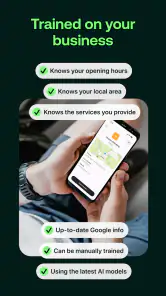
A practical tip is to prepare the business around the most common first questions instead of trying to make the AI cover every possible situation. If callers usually want opening information, service availability, appointment requests, or a way to leave details, those paths are easier to make clear than a broad instruction such as “answer anything.” Narrower responsibilities can make an AI conversation feel faster because the caller reaches a useful outcome with fewer turns.
This is also where Clara differs from a basic voicemail box. Voicemail is predictable and has almost no interpretation burden during the call, but it gives the caller little guidance. Clara can be more helpful when the request fits the business’s ordinary workflow. The trade-off is that the AI has more responsibility to understand intent, so an unusual request may require more patience from both sides.
Handling busy periods without creating new work
The most revealing test for a receptionist app is not one quiet call. It is the busy stretch when several things happen at once: customers are waiting, the owner is moving between tasks, and calls arrive with different levels of importance. Clara is attractive in that situation because it can act as a buffer. Instead of every ring demanding an immediate decision, the business can keep serving the person already in front of it.
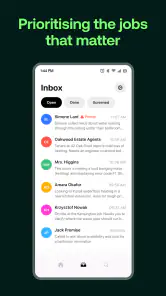
That buffer only helps if the resulting information is easy to act on. A message that says someone called is not enough. The useful outcome is a clear understanding of who called, why they called, and what should happen next. I would make a habit of reviewing the captured details in batches rather than checking after every interruption. That workflow preserves the time-saving benefit and prevents the app from becoming another source of constant notifications.
One less obvious trade-off is that automation can increase the number of leads worth reviewing. A business that previously lost calls may suddenly have more requests waiting for a response. Clara can reduce missed opportunities, but it cannot remove the responsibility to follow up. Owners should set a realistic routine for returning calls, otherwise the app may create a better front door while leaving a crowded hallway behind it.
For teams, I would also decide in advance which requests deserve immediate attention. A new customer asking for a quote, an existing customer reporting a time-sensitive problem, and a caller seeking general information should not necessarily be treated alike. Clara may help collect the initial conversation, but the business still needs a human process for prioritization. That is a strength of using it as a filter rather than pretending it is the entire customer-service department.
Reliability means recovering gracefully
Phone coverage is judged harshly because callers do not see the app’s interface. If something goes wrong, they experience only silence, confusion, or an answer that does not fit their question. For that reason, reliability is not simply whether Clara works during an ordinary interaction. It is also whether the overall workflow remains understandable when a caller gives an unclear answer, asks for something outside the normal routine, or needs a person.
I would be careful about assigning Clara tasks that carry serious consequences without a human checkpoint. Sensitive complaints, complicated cancellations, urgent service issues, and requests involving personal judgment are better treated as handoff situations. An AI receptionist can be a useful gatekeeper, but a gatekeeper should know when to open the gate. The more costly a misunderstanding would be, the more valuable a clear recovery path becomes.
A good operating habit is to test the experience from the caller’s side after making an important change. Do not judge the setup only by how logical it looks in the app. Call as a new customer would, use an ordinary question, then try an unusual one. Notice whether the conversation reaches a sensible next step and whether the business receives enough context to act. This kind of small, repeatable check is more useful than assuming that a configured AI will remain perfect forever.
Clara’s rating of 4.5 from around 3.9 thousand ratings suggests that many people find the product worthwhile, while the roughly 322 written reviews provide additional evidence that it has attracted active user feedback. I treat those figures as encouraging rather than conclusive. Reception quality depends heavily on the business’s call patterns and expectations. An app can be excellent for routine enquiries and still be a poor fit for a company whose calls are mostly complex or emotionally sensitive.
Device limits and the cost of convenience
Clara supports devices running Android 8.0 or later, which gives it a broad compatibility range for Android users. That is useful for businesses keeping an older phone in service, although compatibility alone does not guarantee an equally comfortable experience on every handset. Older devices may be less pleasant for managing settings or reviewing information, especially when the phone is already used for messaging, navigation, payments, and other daily work.
Because this is a business tool, I would avoid judging it only by storage size or visual polish. The more important resource question is whether it fits into the owner’s routine without demanding constant attention. A receptionist app becomes counterproductive if checking it feels like another inbox to maintain. Keeping notifications purposeful, reviewing calls at planned times, and separating urgent follow-up from general enquiries can make a noticeable difference to the perceived workload.
The current version is 1.23.10, and the app is rated for Everyone. Those details make it approachable for a wide range of users, including owners who are not especially technical. Even so, simplicity should not be confused with unlimited flexibility. Before relying on Clara for a public-facing number, I would spend time defining the boundaries of the service and explaining internally what staff should do with the information it produces.
There is also a financial device constraint in the broader sense: the free entry point is easy to try, but the available in-app purchase range reaches from $19.99 to $699.99 per item. That is a meaningful spread. A solo operator should compare the likely value of recovered calls with the cost of the selected option, while a larger business should consider whether its call volume justifies a more substantial plan. The right choice depends on the workload Clara removes, not simply on the lowest starting price.
Who should use it, and who should choose something else
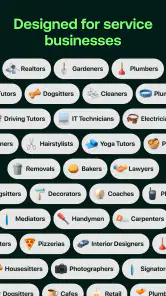
I would recommend Clara to a small business that regularly misses calls because the owner is busy, but whose initial enquiries are reasonably predictable. Tradespeople, appointment-based services, independent consultants, and small offices are natural candidates. It is also appealing for someone who wants a more active alternative to voicemail without immediately hiring a receptionist or outsourcing every call.
I would be more cautious if the business depends on warmth, negotiation, or deep product knowledge from the first sentence. A human receptionist is still the better choice when callers expect nuanced advice, immediate emotional reassurance, or flexible problem-solving. Likewise, a simple voicemail system may be preferable for a very low-volume business that receives few calls and has no difficulty returning them. Paying for automation only makes sense when the avoided interruptions or recovered opportunities matter.
Compared with a conventional answering service, Clara’s likely advantage is convenience and scalability for a smaller operation. A human service can handle nuance better, but it may involve more coordination and expense. Compared with voicemail, Clara offers a more guided first interaction, but it introduces the possibility that an AI will misunderstand an unusual request. Compared with a full customer relationship system, it is more focused on the phone doorway rather than the entire sales or support process. Those are different tools, not interchangeable versions of the same thing.
My performance verdict after looking at the whole workflow
Clara - AI Receptionist is most convincing when I view it as a pressure-release valve. It can help a business remain reachable while the owner is occupied, and it offers a more engaged first contact than simply asking everyone to leave a message. The benefit is practical rather than flashy: fewer interruptions, a more consistent answer for routine callers, and a better chance of capturing work that might otherwise disappear.
Its limitations are just as practical. It cannot make follow-up happen, remove the need for sensible business rules, or guarantee that every unusual conversation will be handled like a human would handle it. The purchase range also means that a business should calculate its expected value instead of assuming that free installation equals free operation. I would begin with the simplest realistic workflow, test it from the caller’s perspective, and expand only after the captured information proves useful.
With over 50 thousand installs, Clara has moved beyond being merely an interesting idea, and its current release shows that the product is being maintained as an active app. Still, adoption alone is not a reason to use it. My recommendation is strongest for owners who lose calls during hands-on work and are willing to review the results consistently. If your business needs a human touch at every stage, or if calls are too unpredictable to guide safely, another option will serve you better.
For the right small business, Clara is a sensible experiment: approachable, focused, and potentially valuable during the exact moments when answering the phone is least convenient. I would not hand over every customer conversation without oversight, but I would consider it a useful front desk for routine demand. The best results come from treating the AI as a dependable first filter, not as a complete replacement for human judgment.
Clara - AI Receptionist Frequently Asked Questions
How much does Clara - AI Receptionist cost, and are there in-app purchases?
Clara is free to download, with in-app purchases ranging from $19.99 to $699.99 per item. The right option depends on what your business needs, so review the available plans and included features before committing. Since Clara handles business communications, also consider how its cost fits your call volume and the value of having calls answered when you cannot respond yourself.
What do I need to use Clara on my phone?
Clara is a business app from 44pixels and requires Android 8.0 or later. It is intended for people who want an AI receptionist to answer business calls, so you will also need to set up the service around your business’s call handling needs. Before downloading, check that your device meets the operating-system requirement and consider whether you are ready to configure an additional tool for managing incoming calls.
What is Clara - AI Receptionist and what can it do?
Clara - AI Receptionist is an artificial intelligence-powered receptionist designed to help manage business communications, especially incoming phone calls and scheduling requests. Depending on the plan and configuration, it can answer callers, collect information, respond to common questions, route messages, and assist with booking appointments. It is most useful for businesses that want to stay responsive without having a staff member available for every call.
Is Clara - AI Receptionist suitable for small businesses and independent professionals?
Yes, Clara can be useful for small businesses, freelancers, consultants, clinics, home-service providers, and other professionals who regularly receive calls but cannot always answer immediately. The service can help reduce missed opportunities and provide a more consistent caller experience. Before subscribing, however, it is worth checking the available plans, supported regions, call volume limits, and whether its integrations match your existing calendar or business workflow.
Can Clara schedule appointments and connect with my calendar?
Clara is designed to support appointment handling, including collecting a caller’s preferred time and helping arrange bookings when the necessary calendar or scheduling integrations are available. The exact behavior depends on the account setup, connected services, business hours, and booking rules you provide. Users should review the integration list and test several scheduling scenarios before relying on the assistant for important or time-sensitive appointments.
Pros
- Answers routine calls 24/7
- even outside business hours.
- Can reduce interruptions for teams handling frequent inquiries.
- Captures caller details consistently for later follow-up.
- Useful for screening spam and non-urgent calls.
- May provide a more professional first impression for small businesses.
Cons
- AI may misunderstand accents
- names
- or unusual requests.
- Setup and customization can take time for complex call flows.
- Ongoing subscription costs may be significant for small businesses.
- Callers may prefer speaking with a human for sensitive matters.
- Service quality depends on a reliable internet and phone connection.
- Category
- Business
- Version
- 1.23.10