Chisme - Planes entre mujeres
- 16.00
- 4.8
- Installs
- 50.00K
- Price
- Free

Screenshots


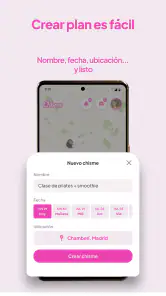

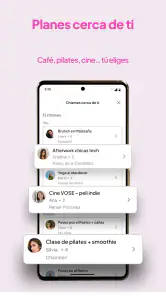
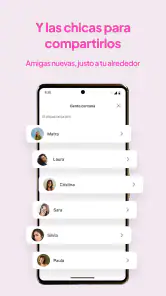
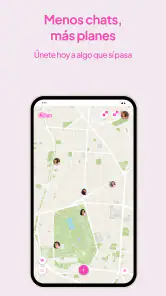

Analysis by Reviewed
I’d consider Chisme when a social plan is still just a loose idea: a few friends want to meet, but nobody has picked a time or taken charge of making it happen. This events app is aimed at making connections and sharing plans, which gives it a different starting point from a calendar that assumes the group has already agreed on the details. My main impression is that its value depends less on elaborate planning tools and more on whether the people I want to meet are willing to use the same place to get a plan moving.
That distinction matters in everyday life. A calendar is good at remembering a settled appointment; a group chat is good at quick conversation, but decisions can disappear in a long thread. Chisme sits closer to the moment before those tools become useful: when someone needs to turn “we should do something” into a plan others can respond to. I would approach it as a social coordination app, not as a replacement for every messaging or scheduling tool I already use.
A useful first test for your group
Before inviting everyone, I would think about the last plan that fizzled out and identify exactly where it stalled. Was there no clear suggestion, did people respond in different places, or did nobody take responsibility for settling the details? Chisme is most promising when the problem is that a group needs a shared place to move an idea forward. If the real obstacle is that friends rarely have the same free time, another planning space may make the discussion tidier without making attendance any more likely.
That distinction helps set a fair expectation from the start. I would use one uncomplicated outing as a trial, rather than moving every social plan into a new app at once. The test is not whether the group enjoys installing something; it is whether they can use the shared plan to reach a decision with less confusion than before.
From a loose idea to an actual plan
Start with the people and the intention
The most sensible way to use Chisme is to begin with a real social intention rather than opening it simply to browse. Think of a friend who has just moved nearby, a group hoping to catch up, or a weekend that is still open. The app’s focus on friends and plans makes those situations a natural fit. If I already know who I want to involve, I have a clear reason to bring the app into the conversation.
That is also where expectations need to stay grounded. The experience is only useful if the relevant people are willing to join in and check the plan. A social app cannot, by itself, solve the familiar problem of friends being busy, slow to reply, or unsure what they want to do. I would invite the people most likely to participate first, rather than treating an app download as a guarantee that a whole social circle will suddenly become organized.
Move from suggestion to coordination
Once the group is on board, the useful goal is to make the plan understandable enough for people to act on it. A proposal that says what the gathering is for and gives friends a clear point to respond to is easier to coordinate than a vague message sent to everyone. I would keep the first plan modest: a casual catch-up is easier to agree on than an outing that requires several decisions before anyone can commit.
More From Our News Desk

Clash of Clans Is Won Between the Battles

Android Auto Makes the Case for Quieter Car Software

MobiOffice: Transforming Mobile Productivity with Seamless Integration

EA SPORTS FC™ Mobile Soccer: Redefining Mobile Sports Gaming

How Microsoft OneDrive Became a Mobile Productivity Giant

How Google Translate Breaks Language Barriers Effortlessly
This small-group approach is one of the practical trade-offs I would recommend. Start with the people who need to make the decision, not every acquaintance who might be interested. If a plan is still tentative, widening the audience too early can create more opinions without producing a useful answer. Once the core group has settled on the idea, it is easier to bring others into a plan that has a shape.
For example, imagine that I want to meet friends after a busy week. Instead of letting the idea drift through a chat, I can use a dedicated social planning space to give the group something concrete to consider. The important handoff is from my initial suggestion to the other people’s responses: they need to see the plan, understand what is being proposed, and decide whether they are in. If everyone is still discussing the basic idea in separate conversations, the coordination benefit is lost.
Keep the handoff clear
Plans often fail not because nobody wants to meet, but because everyone assumes somebody else will handle the next step. I would treat Chisme as a shared place to keep the social intention visible, while being explicit with friends about what still needs deciding. If the group has not settled on a time or other practical details, I would say so plainly rather than assuming that creating a plan means every detail is final.
That distinction is especially useful when some friends prefer a quick chat and others are more comfortable responding to a structured plan. A dedicated app can reduce the chance that an invitation gets buried, but it also introduces a handoff: friends must notice the invitation in a new place and respond there. For a group that already uses one messaging app consistently, asking everyone to switch contexts may feel like extra work. I would use Chisme when the group wants a shared planning space, not force it into a circle that has no appetite for another app.
A practical habit is to keep the conversation around a plan focused. Decide what needs agreement first, then handle secondary details only if they affect whether people can attend. That avoids turning a simple meet-up into a long negotiation. It also makes it easier to tell whether a plan is genuinely taking shape or merely collecting polite interest.
Know what success looks like
For me, the outcome is not a perfectly managed event; it is a plan that friends can understand and act on. If everyone knows what they are responding to and the group reaches a decision, the app has served its purpose. If the idea changes, I would make that change clear to the people involved rather than assuming everyone has followed the same conversation or remembers an earlier version.
This is a useful way to judge the app without expecting it to do more than social coordination. It can give a plan a home, but the group still supplies the judgment, follow-through, and communication. In practice, I would regard a simple, agreed get-together as a better result than a crowded planning space full of undecided possibilities.
Make the plan easier to act on
A small but useful planning discipline is to separate the decision that unlocks the gathering from details that can wait. If the group first needs to choose whether it wants a relaxed catch-up or a more involved outing, I would settle that before asking everyone to weigh in on every practical choice. Otherwise, the plan can feel like a checklist instead of an invitation, and people may postpone responding because they think they need to resolve the whole event at once.
I would also treat a quiet response as information rather than assuming agreement. If only a few friends engage, I would check whether they are the people whose availability determines whether the plan works. A smaller gathering that has clear interest can be more useful than an ambitious invitation that attracts vague reactions but no commitment. This is a social judgment, not a feature of the app, but it affects whether the shared space leads to a real outcome.
Where coordination can break down
The clearest friction is adoption. A plan is only as visible as the people involved make it, and friends who do not want another account or app may keep replying elsewhere. That can split the conversation: some responses appear in the planning space while others arrive in a separate chat. If that happens, I would choose one place for the final decision and tell the group where to look, instead of expecting everyone to monitor multiple threads.
Another limitation is that social planning is not the same as comprehensive event management. If I need a tightly coordinated schedule, formal registrations, or a detailed record of logistics, I would compare dedicated event tools before relying on a friend-focused app. Likewise, for a one-to-one arrangement that can be settled in a couple of messages, a familiar messenger may be faster. Chisme makes most sense when a group needs a shared point of reference and the plan benefits from being kept together.
There is also a human limitation: an app cannot make an uncertain group decisive. If people are still choosing whether they want to meet, or nobody is willing to suggest a workable option, the technology will not remove that hesitation. I would use the app to support a decision, not as a substitute for asking a clear question or proposing a realistic plan.
Who is likely to find it useful
Chisme is a better match for people who regularly organize informal meet-ups and want friends to have a shared place for plans. It may be particularly appealing when a group’s ideas tend to get lost in casual conversation, or when someone is trying to build a new social routine. The focus on friendship gives it a more personal purpose than a conventional calendar, which is designed primarily to track commitments once they exist.
I would be less inclined to recommend it to someone who plans rarely, dislikes social apps, or already has a group chat that reliably turns suggestions into decisions. It is also not the option I would reach for first when the event requires formal logistics beyond the friend-group context. The key question is not whether another app can hold a plan; it is whether the people involved will actually use that shared space.
How it fits beside familiar tools
For a simple dinner with one friend, I would probably send a direct message and avoid adding a separate step. For a recurring group that already coordinates well in a chat, I would keep using that chat unless its plans regularly get buried. Chisme has a clearer case when an informal invitation needs to be visible to several people and the group wants to distinguish a plan from the surrounding conversation.
A calendar remains the stronger choice once a time is settled and the main need is remembering it. More formal event services make more sense when attendance, logistics, or a larger audience need careful management. The trade-off is therefore about choosing the right stage of the process: a chat for quick back-and-forth, a planning space for shaping a group idea, and a calendar or event tool when the details are firm. I would not expect one app to do all three jobs equally well.
Cost, audience, and the broader picture
The app is free to download, with in-app purchases ranging from $3.49 to $49.99 per item. I would start with the free experience and decide whether any paid option is relevant only after using the app for the kind of planning I actually do. The existence of purchases is worth knowing before committing, but it does not mean a casual user needs to buy anything just to evaluate whether the social workflow suits their group.
Chisme is developed by Chisme and belongs to the events category. It has a 4.8 average from around 1.1 thousand ratings, while its 50 thousand-plus installs suggest that it has attracted a growing audience without making it a default tool for every friend group. Those figures can offer context, but they do not tell me whether my own friends will adopt it; that is the more important test for a social app.
The app is rated Teen, so it is intended for a teen audience and older. It was released on December 21, 2025, and version 1.1.59 is the current version. It requires Android 7.0 or later. Those details are useful to check before installing, especially if someone is using an older device or deciding whether the app fits the age range of their household.
What I would check before settling into it
For a first run, I would keep the trial deliberately narrow: choose a plan that does not depend on complicated arrangements, invite only the people who need to decide, and agree on where final changes will be shared. This makes it easier to judge whether the app is helping rather than confusing the issue with several simultaneous conversations. If the group reaches a clear decision, I would then see whether the same workflow feels natural for another kind of gathering.
That approach also answers the practical question of whether it is worth keeping installed. A social planning app earns that space when it helps a particular circle coordinate often enough to justify another place to check. If it becomes an abandoned destination after one trial, there is no need to keep pushing it; the simpler tool your friends already use may be the better fit.
My recommendation after weighing the workflow
I would try Chisme for a group that often talks about getting together but struggles to turn those conversations into a shared plan. Its strongest case is the handoff from one person’s idea to a group decision: keep the proposal visible, make it easy for friends to respond, and give the gathering a better chance of moving beyond “sometime soon.” That is a practical role, even if it does not replace messaging, calendars, or event platforms for every situation.
My advice is to test it with one small, low-pressure plan and a few friends who are genuinely likely to participate. If everyone responds in the same place and the plan becomes easier to follow, it may earn a place in your routine. If the group keeps splitting decisions across apps or prefers the simplicity of an existing chat, there is little reason to insist on a new tool. It is most useful when the people, the plan, and the conversation meet in one shared space.
Chisme - Planes entre mujeres Frequently Asked Questions
What is Chisme - Planes entre mujeres?
Chisme - Planes entre mujeres is an app focused on helping women discover and arrange plans with other women. It is intended for people looking for company for social activities, outings, and shared interests. The exact features available may vary by version and location, so check the app’s current description and permissions before downloading to confirm that its offerings suit you.
How do I find or join plans in Chisme?
After opening the app, look for its plan-discovery or activity-creation features to see what is available in your area. Depending on the version, you may be able to browse proposed activities, express interest, or create a plan and invite others. Availability can depend on how many people use the app locally, so a quiet activity list does not necessarily mean there is a problem.
Is Chisme - Planes entre mujeres free to use?
The app’s pricing and any paid features can change over time. Check its Google Play or Apple App Store listing for current information about download costs, in-app purchases, or subscriptions before installing. If the app is free to download, some features may still require payment, so review purchase details carefully and confirm any recurring subscription terms before agreeing to them.
Is Chisme safe, and what should I consider before meeting someone?
As with any app that can lead to meeting people offline, use sensible precautions. Review available privacy and reporting controls, avoid sharing sensitive personal information publicly, and arrange first meetups in a public place. Tell someone you trust where you are going, keep your own transport option, and leave if you feel uncomfortable. The app cannot guarantee another user’s identity or behavior.
Is Chisme - Planes entre mujeres available for Android and iPhone?
Availability may depend on your country, device, and the app’s current publishing status. Search for the exact title, Chisme - Planes entre mujeres, in the Google Play Store on Android or the Apple App Store on iPhone, and check that the developer and listing match before downloading. If it does not appear, it may not be available for your region or device.
Pros
- A focused space for women to connect and discover social plans.
- Interest-based activities can make it easier to meet like-minded people.
- A useful alternative to coordinating outings through large group chats.
- Can help newcomers find local events and build a social circle.
- The concept encourages in-person connections beyond online conversation.
Cons
- The experience may be limited in areas with few active users.
- Finding a suitable plan depends on how regularly members post activities.
- Users may need to share personal details to arrange meetups.
- Plans and attendance can change
- so arrangements may require confirmation.
- The app may be less useful if your friends or local community are not on it.
- Category
- Events
- Version
- 1.1.59