Chipmunk
- 135.00
- 4.4
- Installs
- 50.00K
- Price
- Free

Screenshots
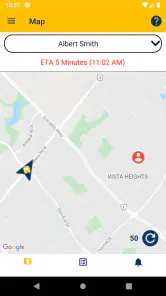
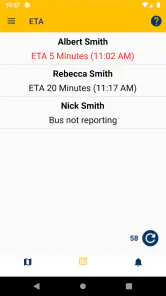
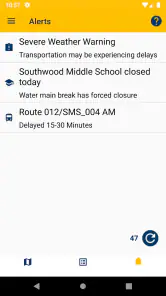
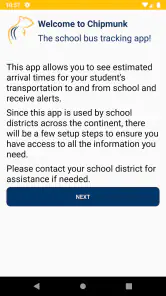

Analysis by Reviewed
Keeping track of a child’s transportation can be surprisingly tiring. School runs, changing pickup plans, after-school activities, and the simple question of whether a child has arrived safely can turn an ordinary day into a chain of messages and calls. Chipmunk is a travel and local app from BusPlanner Inc. built around that narrow but important need: helping families stay up to date on children’s transportation.
I approached it as a household tool rather than a general travel app. That distinction matters. Chipmunk is not the kind of application I would open to compare holiday flights, discover restaurants, or plan a weekend route. Its value is much more specific: it gives transportation information a place where the people responsible for a child can check what is happening instead of relying entirely on memory, paper notices, or a long conversation in a family chat.
The app is free, rated for Everyone, and available for Android devices running at least version 5.0 of the operating system. BusPlanner Inc. released it on August 31, 2020, and the current version is 2.12.1. Its average rating is 4.4 from roughly 449 ratings, while the app has passed 50 thousand installs. Those figures suggest a focused product with a real user base, but they also fit my impression of Chipmunk: it is designed for a particular transportation relationship, not for every traveler.
How Chipmunk fits into a shared household routine
The most convincing way to understand Chipmunk is to picture a weekday morning in a household where more than one adult may be responsible for the same child. One parent may leave for work early, another may handle the morning routine, and a grandparent or caregiver may take over later. Without a shared source of transportation information, each person can end up asking the others what they heard, when the vehicle is expected, or whether a change has taken place.
Chipmunk is useful in that situation because it keeps the attention on the transportation update itself. Instead of treating each handoff as a fresh explanation, the responsible adult can check the app when they need to know what is happening. The practical benefit is fewer coordination gaps, not more travel features. That makes it especially suitable for households where the same child’s schedule moves between several adults during the day.
I would not describe it as a replacement for every family communication channel. A transportation app cannot explain a last-minute change in a child’s after-school plans unless that information is reflected through the transportation service it connects to. It also cannot replace a direct call when a child is ill, a caregiver is delayed, or an adult needs to make a decision outside the normal transport arrangement. I see it as a focused layer between official transportation information and the household’s daily routine.
That focus is one of its strengths. Many general-purpose alternatives create noise. A family group chat may contain useful updates, but it also contains unrelated messages, old details, and assumptions that are easy to miss. A calendar can show a planned event, but it does not necessarily tell me whether the transportation situation has changed. A paper notice is easy to lose. Chipmunk makes more sense when the problem is not planning a journey but staying aware of a child’s transportation status.
More From Our News Desk

Clash of Clans Is Won Between the Battles

Android Auto Makes the Case for Quieter Car Software

MobiOffice: Transforming Mobile Productivity with Seamless Integration

EA SPORTS FC™ Mobile Soccer: Redefining Mobile Sports Gaming

How Microsoft OneDrive Became a Mobile Productivity Giant

How Google Translate Breaks Language Barriers Effortlessly
What I would check before making it the household’s main tool
The first question I would ask is whether the child’s transportation arrangement is supported by the service behind Chipmunk. The app’s purpose is closely tied to children’s transportation, so its usefulness depends on the information available through that arrangement. I would not install it and assume that it can independently track any school vehicle or create a transport plan from scratch.
This is an important boundary for expectations. If a family wants a broad location-sharing system, a universal school calendar, or a general-purpose messaging space, Chipmunk is probably too narrow. If the family wants a dedicated way to keep up with children’s transportation, its limited scope becomes an advantage. I prefer this kind of clear purpose to an app that tries to combine route planning, chat, calendars, and unrelated travel tools without doing any one task particularly well.
Another sensible check is who in the household really needs access. A parent who handles transportation every day may benefit from having the app readily available. A relative who only helps once a month might be better served by receiving the relevant information through the household’s established communication method, depending on how the family’s transportation arrangement works. Installing an app on every shared device is not automatically better; it can create confusion if several people assume someone else is monitoring the same update.
Setting boundaries on shared devices and accounts
Shared-device use deserves more thought than it usually gets. If a tablet stays in a kitchen or a phone is passed between adults, I would treat Chipmunk as a household utility rather than as a child’s personal app. The adult responsible for transportation should be the person who decides whether the device is appropriate, which account is used, and who can see the information shown by the app.
I would also avoid casually switching between household members if the app’s displayed information is tied to a particular account or transportation arrangement. Even without inventing extra controls, the general rule is straightforward: one clear account boundary is safer than a shared login that nobody manages carefully. A family can decide who checks updates, while other adults know where to ask if they need clarification.
That approach is especially helpful when a child uses the same device for games, schoolwork, and family services. The child may be allowed to use the device without being the person who manages transportation information. Keeping those roles separate reduces the chance of accidental changes, misunderstood notices, or a child being placed in charge of an adult responsibility.
I would make a small household routine around the app. For example, one adult checks it before the morning departure, another checks it before the afternoon handoff, and both know how to contact each other if the information does not match the day’s plan. This is not about constantly watching a screen. It is about assigning responsibility so the app supports the family instead of becoming another source of uncertainty.
Using it for coordination rather than constant checking
Chipmunk works best when it is part of a simple coordination pattern. Imagine a child who normally travels to school in the morning and returns to a different caregiver in the afternoon. The adult handling the morning can check the transportation update before leaving home. The afternoon caregiver can check again before the expected arrival period. If the plan changes, the adults can discuss the next step directly instead of each person independently guessing what happened.
The non-obvious advantage here is that the app can reduce duplicated checking. In a busy household, three adults may each look for the same information because nobody knows who is responsible. A shared routine turns the app into a reference point: one person checks at the relevant time, the others know whom to contact, and the family avoids treating every minor uncertainty as an emergency.
There is also a useful distinction between transportation information and supervision. I would not use Chipmunk as proof that a child is ready to travel independently, and I would not assume that checking an update removes the need for an adult handoff. The app can support coordination, but the household still has to decide who meets the child, what happens if plans change, and how the child reaches a trusted adult.
For families with alternating schedules, the app may be most helpful when paired with a visible weekly plan. The calendar or printed plan can show which adult is responsible on a particular day, while Chipmunk provides the transportation-related information. Keeping those jobs separate is more reliable than expecting one tool to explain every part of the family schedule.
I would also use a direct conversation for exceptions. If a child is going to a friend’s home, staying late for an activity, or being collected by someone different, the adult should communicate that change clearly. A transport update may remain accurate while the household’s intended destination has changed. That is a key trade-off: Chipmunk can make normal transportation coordination easier, but it does not remove the need for human confirmation when the routine breaks.
Age rating, trust, and the right level of independence
Chipmunk carries an Everyone content rating, which makes it suitable in terms of general content for a broad audience. I would still separate content suitability from responsibility. A child may be able to open an Everyone-rated app, but that does not mean the child should manage transportation decisions or interpret every update without an adult’s help.
For younger children, I would keep the app under adult supervision and explain only the part of the routine they need to understand: where they are going, who is meeting them, and what to do if the expected plan changes. For older children, the app may become one part of a gradual independence routine, but I would still confirm that they understand the difference between an expected transportation update and a guaranteed arrival.
Trust works both ways here. Adults need to trust that the information they see is relevant to the child and the correct transportation arrangement. Children need to trust that adults have a plan if something changes. I would not present the app as a substitute for that relationship. Its role is more modest and more realistic: it can help adults coordinate around transportation information, while the household remains responsible for judgement and communication.
This is also where account boundaries matter. If a child borrows a parent’s phone, the adult should decide whether opening the app is appropriate and whether the device contains other information that should remain private. If several children in a household have different transportation arrangements, I would be particularly careful about checking that the selected information belongs to the right child before acting on it.
Where Chipmunk is stronger than ordinary alternatives
The usual alternative is often a mixture of school notices, text messages, calendars, and memory. That mixture can work, but it spreads transportation information across several places. Chipmunk’s focused purpose gives it an advantage for a household that wants one dedicated place to check children’s transportation rather than searching through a conversation or an inbox.
A general calendar is better for showing the full family schedule. A messaging app is better for explaining unusual situations. A broad travel app is better for planning trips that have nothing to do with school transportation. Chipmunk sits in a smaller space between those tools. I would choose it when the recurring problem is staying current with children’s transportation, not when the family needs a complete planning system.
The free price also lowers the barrier to trying it, particularly for a household that does not want another paid subscription for a narrow task. Its age rating makes it less intimidating as a family-device installation, although I would still keep adult responsibility clear. The current version, 2.12.1, shows that the app has continued beyond its original release, but I would judge it by whether it fits the household’s actual transportation workflow rather than by version number alone.
Its focused design can also be a weakness. People who want live conversations, broad location sharing, detailed trip planning, or a single dashboard for every family activity may find it limited. I would choose a more general family coordination tool when the main challenge is managing appointments, chores, shopping, and messages together. Chipmunk makes more sense when transportation is the specific issue that keeps causing uncertainty.
Everyday friction I would plan around
Even a useful transportation app can be inconvenient if the household treats it as the only source of truth. A phone may be unavailable, a caregiver may forget to check, or a child’s real-world plan may change after the transportation information was issued. I would keep a basic backup habit: know the responsible adult, know the expected handoff, and know how to make direct contact when the situation no longer follows the normal pattern.
I would also avoid checking repeatedly without a reason. Constant monitoring can make a family more anxious rather than better organized, especially when several adults are watching the same situation. A scheduled check before the relevant journey and another check around the handoff is a more sensible starting point than opening the app every few minutes.
Another point is onboarding discipline. I would take a moment to confirm that the correct child and transportation arrangement are being viewed before relying on the app. This is a small step, but it is one of the most valuable practical habits for any household service involving more than one family member. A wrong assumption at setup can be more damaging than a missing feature later.
If a caregiver changes regularly, I would explain the household’s process rather than simply handing over the phone. Tell the caregiver where to look, what the normal plan is, who to contact when the plan changes, and which decisions still require the parent’s approval. That turns Chipmunk from a passive information source into a predictable part of the handoff.
My household verdict
After looking at Chipmunk as a real household tool, I see a clear audience for it. It is a good fit for parents, guardians, and caregivers who need a focused way to keep up with children’s transportation and who are willing to build it into an adult-led routine. The app is especially sensible when several adults share responsibility and ordinary messages or paper notices are no longer dependable enough.
I would skip it if I were looking for a complete family organizer, a general route planner, or a replacement for direct communication. I would also avoid making it the sole safety plan for a child. Transportation information can support a handoff, but it cannot make decisions for the household or account for every unexpected event.
For the right family, the best result is not dramatic. It is a quieter morning, fewer repeated questions, and a clearer understanding of who is checking what. Chipmunk’s value comes from that narrow usefulness. If children’s transportation is the recurring coordination problem in your home, I think it is worth trying as a dedicated reference point. If your needs extend far beyond that, a broader family-planning option will probably serve you better.
My recommendation is to start with one responsible adult, one clearly understood household routine, and one careful check that the transportation information matches the right child. Used that way, Chipmunk feels less like another app demanding attention and more like a practical tool for keeping a shared family responsibility organized.
Chipmunk Frequently Asked Questions
What is Chipmunk, and what can I use it for?
Chipmunk is an app designed to help users manage and organize everyday tasks and information in a simple mobile environment. Depending on the version and platform, its tools may include account management, personalized content, reminders, tracking features, or other utilities. Before downloading, check the official store description because available functions can vary between Android and iOS releases.
Is Chipmunk free to download and use?
Chipmunk may be available as a free download, but some features could require in-app purchases, a subscription, or an account. It is worth reviewing the pricing section in Google Play or the App Store before installing it. Also check whether the app includes advertising, trial periods, automatic renewal, or limits on free usage so there are no unexpected charges.
What permissions and personal information does Chipmunk require?
The permissions requested by Chipmunk depend on the features enabled on your device. An app of this type may request access to notifications, storage, camera, location, contacts, or account information, although not every permission is always necessary. Read the privacy policy and permission prompts carefully, and deny access that does not seem relevant to the way you plan to use the app.
Does Chipmunk work offline, and is an account required?
Some Chipmunk functions may work without an internet connection, while features involving synchronization, online content, backups, or communication generally require mobile data or Wi-Fi. An account may also be necessary to save settings across devices or unlock the complete experience. Check the sign-in screen and store information before downloading if offline access or registration-free use is important to you.
Is Chipmunk safe and compatible with my device?
Chipmunk should be downloaded only from the official Google Play Store or Apple App Store, where the publisher, ratings, update history, and supported device requirements can be checked. Make sure your phone runs a compatible Android or iOS version and has enough free storage. Keep the app updated, review recent user feedback, and avoid unofficial download files that may contain modified or unsafe software.
Pros
- Simple interface that is easy to understand from the first use.
- Lightweight app that requires little storage space.
- Quick access to its main tools and settings.
- Runs smoothly on most modern Android and iOS devices.
- Useful for users seeking a focused
- distraction-free experience.
Cons
- Some features may require an internet connection to work properly.
- Customization options are limited compared with similar apps.
- The free version may include advertisements or usage restrictions.
- Older devices may experience occasional slowdowns or compatibility issues.
- Help and support resources may be limited for troubleshooting.
- Category
- Travel & Local
- Version
- 2.12.1