Cherry: The Smarter Way to Pay
- 50.00
- 4.5
- Installs
- 100.00K
- Price
- Free

Screenshots
Analysis by Reviewed
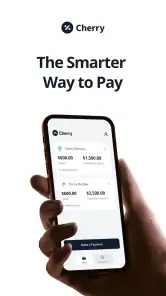
I approached Cherry: The Smarter Way to Pay as a finance app rather than as a general budgeting tool. Its central idea is simple: help users manage payment plans and pay according to a schedule that suits them. That focus makes it potentially useful for planned purchases, but it also means I would judge it differently from a banking app, a spending tracker, or a full personal-finance dashboard.
The app is free and is published by Cherry Technologies, Inc. It is available to an Everyone audience, runs on Android 7.0 and later, and the current release is version 1.3.0. The public response is encouraging, with a 4.5 average from around 129 ratings and more than 100K installs. Those figures suggest that people are trying it in meaningful numbers, although I still think a finance app deserves a slower, more careful evaluation than a casual utility.
What Cherry is trying to solve
In everyday life, the difficult part of a large purchase is not always deciding whether to buy it. Sometimes the problem is matching the payment timing to the money that will actually be available. Cherry is built around that gap. Instead of treating a purchase as one immediate event, it gives attention to the plan and the schedule behind it.
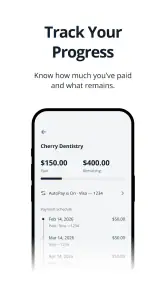
I find that approach more practical than a vague promise to “spend smarter.” A schedule gives me something concrete to inspect: what I am committing to, when payments are expected, and whether the arrangement fits the rest of my month. That makes the app most interesting for someone who already knows the purchase they are considering and wants a clearer way to organize repayment.
It is not the kind of product I would open simply to see a complete picture of my finances. A traditional banking app is usually better for checking balances and transactions, while a budgeting app is normally better for categories, goals, and recurring household spending. Cherry occupies a narrower space, concentrating on planned payments rather than trying to become an all-purpose financial command center.
That narrower purpose is a strength when I want less clutter. It can also be a weakness if I expect one app to show my income, savings, bills, debts, and payment plans together. Before installing it, I would decide whether my real problem is organizing a specific payment commitment or understanding my entire financial position. Cherry makes more sense for the first situation.
Trust begins with the decision to slow down
Finance apps ask for more attention than entertainment apps because a small misunderstanding can affect a real payment. My first test is therefore not whether the interface looks polished. I want to know whether the app helps me understand my choices before I commit, whether the schedule is easy to revisit, and whether I can recognize what action I am taking at each step.
Cherry’s emphasis on managing plans gives it a useful foundation for that kind of review. A plan is easier to reason about than a stream of vague reminders, especially when I am comparing a purchase with upcoming rent, utilities, or other fixed expenses. I would still read every screen carefully, but the basic structure encourages deliberate planning rather than an impulsive tap.
The app’s rating is a positive signal, not a substitute for personal checking. A finance product can work well for one person and still be unsuitable for another because their income pattern, payment obligations, or comfort with scheduled commitments is different. I would treat the public response as reassurance that the app is worth exploring, not as proof that every plan will suit every user.
Controls matter more than a clever slogan
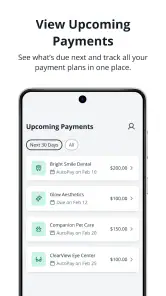
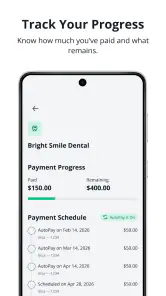
The most valuable control in a payment-plan app is the ability to see the commitment in plain language. Before using Cherry for a meaningful purchase, I would look for the total obligation, the timing of each payment, and any conditions attached to the arrangement. I would also take a moment to confirm that the schedule matches my own calendar rather than assuming the app’s plan automatically fits my cash flow.
This is where Cherry can be more useful than keeping a plan in a notes app. A note may record a date, but it does not necessarily encourage me to review the commitment as a structured plan. The app’s dedicated finance context makes the schedule the object I am managing, which is a small but important difference.
I would also use a simple personal rule: never approve a plan while looking only at the first payment. The first amount can feel manageable even when later payments arrive at inconvenient times. I would compare the complete schedule with my normal pay cycle and leave room for essentials. That habit is useful with Cherry because the app’s purpose can make a commitment feel organized without making it affordable.
Another practical step is to review a plan after setting it up, not just before. I would check the payment dates again when my monthly bills are due and keep my own record of the commitment. This is not a criticism of Cherry; it is sensible redundancy for any financial arrangement. A second reminder in a calendar or banking routine can prevent an important date from becoming invisible inside an app.
Where sensitive information deserves extra care
Any app connected to payment planning reaches a sensitive point when it asks for account details, personal information, or permission to perform an action. My approach is straightforward: I read each request at the moment it appears and ask whether it is necessary for the task I am trying to complete. I do not grant access automatically just because an app is in the finance category.
Visible user choice is especially important here. I want clear screens, understandable wording, and a chance to review what I am confirming. If a request feels unrelated to creating or managing a payment plan, I would pause rather than continue out of habit. That is a useful boundary for Cherry and for every other financial service.
I would also avoid using the app casually on a shared device. A payment schedule can reveal personal spending information even if no money is moved directly from the screen. A device passcode, a private user profile, and careful sign-out habits are simple protections. They do not depend on assuming anything about the app’s internal data practices; they simply reduce the chance that someone nearby sees a sensitive plan.
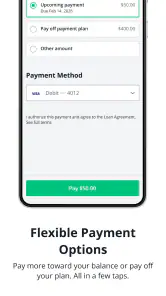
When reviewing account controls, I would look for the places where a user can change or stop an action. Can I correct a plan before confirming it? Can I find the relevant account or payment settings without searching through unrelated menus? Can I tell whether I am viewing information or authorizing something? These distinctions matter more to me than decorative design because they affect whether I remain in control.
I would not treat the free price as a reason to lower my standards. “Free” removes an upfront app charge, but it does not remove the need to understand a financial commitment. The right question is not only whether I pay to download Cherry. It is whether I understand the plan I am choosing and the consequences of following it.
Everyday situations where the app can help
Imagine I am arranging a planned purchase shortly before several ordinary bills are due. Instead of relying on memory, I could use Cherry to organize the payment schedule and compare its timing with the rest of my month. The useful part is not merely seeing a first installment. It is forcing myself to consider the full sequence before treating the purchase as affordable.
A second scenario is a household where one person handles the purchase but both people need to remember the payment dates. Cherry could serve as the place where the plan is reviewed, while the household keeps an additional shared reminder. I would be careful about sharing account access, though. A shared calendar entry may be safer and simpler than giving another person access to a finance account when they only need the dates.
The app may also help someone who dislikes spreadsheets. A spreadsheet can be flexible, but it requires manual formulas, date entry, and regular maintenance. Cherry’s specialized purpose should be easier for a person who wants a guided place to manage a plan without building a financial system from scratch.
There is a less obvious use as well: reviewing whether a planned purchase still makes sense after the initial excitement fades. If I see the schedule again a day later, I can ask whether I still want the item and whether the later payments remain comfortable. That pause turns the app into a decision checkpoint, not just a place to record an agreement.
Who should use it, and who should skip it
I would recommend Cherry to someone who wants focused help with payment plans, prefers a dedicated finance interface, and is willing to inspect the entire schedule before committing. It is particularly suitable for people who find informal reminders unreliable but do not need a complete budgeting suite.
I would be more cautious if my income changes from week to week or if I already have several repayments competing for attention. A clean schedule does not remove financial risk. In that situation, a full budget that includes income, essential expenses, savings, and existing debt may be a better first tool. Cherry could still be useful later, but it should not replace a broader view.
I would also skip it if I only want basic account balances or transaction history. My bank’s own app is likely to be the more direct choice for those tasks. Likewise, someone who wants detailed spending categories, long-term savings targets, or household reporting may find a dedicated budgeting service more appropriate.
The trade-off is clear: Cherry appears designed to keep payment plans understandable, while broader alternatives offer more financial context at the cost of extra complexity. I prefer the focused approach when the question is “How do I manage this plan?” I prefer a banking or budgeting alternative when the question is “Can I afford all of my commitments together?”
How I would use it responsibly
My first session would be deliberately unhurried. I would create or review only the plan I actually need, read every amount and date, and avoid treating a successful setup as proof that the purchase is affordable. I would then compare the schedule with my bank balance, expected income, and fixed bills outside the app.
I would keep notifications useful rather than allowing every possible alert. A reminder that helps me act is valuable; a crowded stream of notices can make important information easier to ignore. If Cherry offers choices about reminders or account actions, I would select only what supports my routine and revisit those choices when my schedule changes.
I would also make a habit of checking the plan after any change in my circumstances. A new bill, delayed income, or unexpected expense can turn a comfortable schedule into a difficult one. The responsible response is to notice that change early and investigate the available account controls, rather than waiting until a payment date is close.
Most importantly, I would not use the app to justify a purchase that my broader budget cannot support. A payment plan can improve timing, but timing is not the same as affordability. That distinction is the single most important lesson I would carry into using Cherry.
My cautious verdict
Cherry Technologies, Inc. has built a finance app with a clear and useful focus: organizing plans and payments around a schedule. The free entry point, Everyone age rating, Android 7.0 compatibility, and current version 1.3.0 make it approachable for a broad group of Android users. Its 4.5 average and 100K-plus installs also make it a credible app to investigate rather than an unknown experiment.
Still, I would recommend it with a boundary attached. Use Cherry as a focused planning tool, not as a replacement for a bank account, a complete budget, or careful financial judgment. Read every commitment, protect sensitive account access, check the full schedule, and keep an independent reminder for important dates.
My final view is positive but measured. Cherry is most convincing when it helps a user slow down, see a payment plan clearly, and make a deliberate choice. It is less convincing for anyone seeking a complete picture of personal finances or a solution to unaffordable spending. If your need is specific and schedule-based, I think it is worth trying. If your need is broader, I would start with a banking or budgeting app and use Cherry only if its focused approach genuinely fills a gap.
Pros
- Splits eligible purchases into manageable installment payments.
- Clear repayment schedules help users plan their monthly budget.
- Quick application process with minimal paperwork for many shoppers.
- Can make larger purchases more accessible without using a traditional credit card.
- Payment reminders help reduce the risk of missing scheduled installments.
Cons
- Approval
- limits
- and available plans may vary by user and purchase.
- Late or missed payments can result in fees or affect your credit profile.
- Not every retailer or product is eligible for Cherry financing.
- Installment plans may include interest or other costs depending on the offer.
- Using financing for frequent purchases can encourage unnecessary spending.

- Category
- Finance
- Version
- 1.3.0