CCN: TCG & Collectible Alerts
- 192.00
- 4.7
- Installs
- 50.00K
- Price
- Free

Screenshots
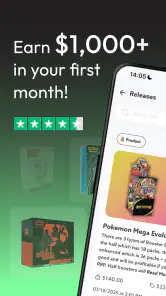
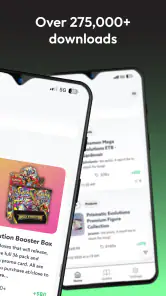
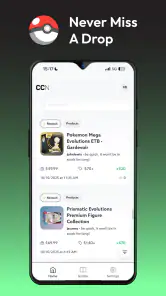
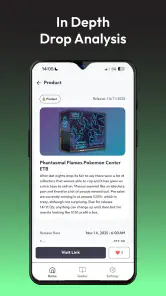
Analysis by Reviewed
CCN: TCG & Collectible Alerts is the kind of app that makes sense the moment a trading-card release or restock becomes difficult to follow. I approached it as a practical companion for people who want to buy trading card products through retail channels, rather than as a general reading app despite its Books & Reference classification. The central appeal is simple: keep an eye on collectible buying opportunities without relying entirely on chance encounters in a shop or repeated manual searches.
My first impression was that the app is aimed at a very specific habit. It is not trying to replace a card database, a deck-building tool, a marketplace, or a price guide. Its value comes from helping a collector stay alert. That distinction matters because the app feels useful when I treat it as an alert layer in my buying routine, but much less useful if I expect it to explain every product or manage my collection from start to finish.
What the first week feels like
The first week is where CCN: TCG & Collectible Alerts has the strongest novelty. A collector who normally checks several retailer pages, social feeds, and community messages may appreciate having a more focused place for retail buying opportunities. The app’s store summary describes its purpose as buying TCG and related products for retail, and that narrow focus gives it a clearer identity than broad shopping apps.
I would begin by deciding what I actually want to watch. That sounds obvious, but it is the difference between useful alerts and a noisy stream of things I will never buy. Someone interested in sealed products should think about preferred card games, product formats, and realistic spending limits before turning on every possible notification. The app is most helpful when it supports a planned purchase, not when it encourages constant impulse checking.
The free entry point makes experimenting easy. CCN is free to install, carries an Everyone age rating, and has reached over 50 thousand installs. Its average rating is 4.7 from more than 700 ratings, with over 190 written reviews, so there is meaningful evidence that the basic concept connects with its audience. Those figures do not guarantee that every collector will enjoy the workflow, but they do suggest that the app has found a real use case rather than being an empty alert concept.
One practical first-week test is to use it during a normal shopping cycle. For example, I might decide that I am looking for a particular type of sealed TCG product, keep my budget fixed, and see whether the notifications help me act sooner than my usual manual routine. I would also note how often an alert arrives when I am not prepared to buy. That second observation is important: an alert can be technically useful while still being personally unhelpful if it constantly interrupts the day.
Who gets the quickest benefit
The best early users are collectors who already know what they want and mainly struggle with timing. If you have missed retail opportunities because you checked too late, a focused notification app can save attention. It can also suit someone who buys for occasional gifts and wants a better chance of finding a product without spending an evening browsing unrelated listings.
More From Our News Desk

Clash of Clans Is Won Between the Battles

Android Auto Makes the Case for Quieter Car Software

MobiOffice: Transforming Mobile Productivity with Seamless Integration

EA SPORTS FC™ Mobile Soccer: Redefining Mobile Sports Gaming

How Microsoft OneDrive Became a Mobile Productivity Giant

How Google Translate Breaks Language Barriers Effortlessly
It is less compelling for a beginner who still needs to learn which sets, formats, or products are appropriate. CCN is not the place I would rely on for learning the fundamentals of a card game. A newcomer may need a card database, official product information, or a community guide first, then use an alert tool once buying goals are clearer.
It is also not the right first choice for a collector whose main concern is the secondary market. Retail alerts and resale-market monitoring are different tasks. If I care most about comparing completed sales, tracking individual card prices, or evaluating a seller’s history, I would use a marketplace or price-tracking service alongside this app rather than expecting CCN to cover those jobs.
A smarter setup than “notify me about everything”
A useful habit is to create a short watchlist in my own head before interacting with the app: one or two product types, a maximum amount I am comfortable spending, and a rule for how quickly I need to respond. This prevents the common mistake of treating every notification as an opportunity that must be taken. In collectibles, urgency can make an ordinary purchase feel essential.
I would also separate alerts into two mental categories: products I genuinely planned to buy and products that are merely interesting. The first category deserves immediate attention; the second can wait until a convenient time. Even if the app presents both through the same general alert experience, this personal distinction reduces fatigue and makes the service feel more like a tool than a source of pressure.
Does it still earn attention after the first month?
The month-to-month value depends less on constant discovery and more on whether the app becomes part of a repeatable routine. The first few alerts may feel exciting because they reveal possibilities. Later, the real test is whether I still find the notifications relevant after the obvious novelty has passed. For me, an alert app earns permanent space only when it reduces work often enough to justify the attention it demands.
CCN has a reasonable chance of doing that for active retail-focused collectors. Retail availability changes, and a person who checks only occasionally can easily miss a buying window. A dedicated alert workflow is more convenient than opening several retailer pages at random. The advantage is not necessarily that it transforms collecting; it is that it can make one repetitive part of collecting less manual.
That benefit is naturally uneven. If I buy only once or twice a year, the app may spend long periods offering little practical value. In that case, installing it temporarily around a planned release or shopping period makes more sense than treating it as a permanent daily app. Collectors who regularly monitor sealed products are more likely to justify keeping notifications active.
The current version is 4.0.31, and the developer is Crep Chief Notify. I see the version number as a reminder to judge the app as an evolving utility rather than a finished reference library. Alert services live or die by reliability, relevance, and upkeep. A polished first session matters, but long-term confidence comes from repeatedly receiving information that is timely enough to act on and specific enough to matter.
The maintenance routine I would actually use
I would not leave the app entirely unattended. Once a week, I would review whether the products I am watching still match my interests. Collectors often move from one set or game to another, and an old interest can quietly turn into unnecessary noise. Removing outdated targets is a small task, but it protects the usefulness of every later notification.
I would also review purchases after each alert cycle. Did I buy because the product was wanted, or because the alert created pressure? Did the opportunity justify the time spent watching it? These questions are not a criticism of CCN specifically; they are essential when using any scarcity-oriented buying tool. The app can improve awareness, but it cannot decide whether a purchase fits my collection or budget.
Another good practice is to keep a simple personal record of products already bought. Without that record, repeated alerts can tempt me to purchase duplicates or lose track of how much sealed inventory I already own. CCN may help me notice a retail opportunity, but my collection history should remain a separate responsibility.
Where the recurring value is strongest
The strongest long-term use case is a collector with a defined buying pattern: someone who follows particular TCG products, prefers retail purchasing, and is willing to act when a relevant opportunity appears. For that person, the app can function like a standing lookout. It is especially sensible when manual checking has become annoying enough that it is interfering with the hobby.
There is also value for people who do not want to spend much time in collector communities. Community channels can be useful, but they can also be fast-moving, repetitive, and filled with discussion that has nothing to do with my immediate buying goal. A focused app may provide a calmer alternative, provided its alerts remain relevant and I do not expect it to replace all product research.
The recurring value is weaker for collectors who enjoy the hunt itself. Some people like visiting stores, browsing shelves, and discovering products without advance notice. For them, an alert system may remove part of the pleasure rather than add convenience. I would not recommend CCN simply because someone likes trading cards; I would recommend it when the person specifically wants retail availability to be easier to monitor.
What can become tiring over time
The main source of fatigue is notification volume. An alert is helpful only when it arrives at the right level of relevance. Too few alerts and I question the app’s usefulness; too many and I start ignoring all of them. That tension is unavoidable for this type of product, so the quality of the experience depends heavily on how disciplined I am about what I choose to follow and how quickly I silence distractions.
There is a second kind of fatigue: the emotional pressure created by limited retail opportunities. Collectibles can encourage a “buy now or miss out” mindset, and an alert makes that feeling more immediate. I would use CCN with a firm spending rule, especially if I am prone to buying duplicates or products outside my original plan. The app can improve timing, but better timing is not the same as better purchasing.
A third limitation is that an alert does not remove the need for judgment. A product may be available but still unsuitable for my collection, too expensive for my budget, or less interesting than another upcoming purchase. I still need to check the product details and decide whether the opportunity is genuinely worthwhile. Anyone looking for automatic collecting decisions will find the experience incomplete.
There may also be moments when the app is simply unnecessary. If my local retailers reliably stock the products I want, a weekly store visit may be easier. If I already have a trusted manual system that takes only a few minutes, adding another notification source could create more administration than savings. The best tool is not always the most specialized one; it is the one that removes more friction than it introduces.
How it compares with familiar alternatives
Compared with a general shopping app, CCN has a more focused purpose for TCG and collectible retail monitoring. General shopping platforms are better when I want to browse many product categories, compare ordinary household purchases, or manage a broad shopping list. CCN makes more sense when the object of attention is collectible retail availability and I do not want that interest buried among unrelated recommendations.
Compared with a card database, it solves a different problem. A database helps me understand cards, sets, legality, values, or collection details, depending on the service. CCN is more useful before the purchase, when I am trying to notice a retail opportunity. I would pair the two if I needed both product awareness and detailed research.
Compared with community groups and social media, the trade-off is speed versus concentration. Communities can provide context, opinions, and firsthand discussion, while an app centered on alerts may be easier to scan. Social channels can also become noisy or inconsistent, whereas a dedicated tool is more comfortable for a collector who wants a narrower workflow. On the other hand, a community may tell me why a product matters, while an alert alone may not provide enough context for a confident decision.
Compared with marketplace apps, the difference is equally important. Marketplaces are better when I want a broad selection, immediate seller comparison, or access to products outside ordinary retail. CCN’s retail orientation is more attractive when I prefer buying through standard retail channels and want to discover availability without searching manually. Neither approach is automatically superior; it depends on whether my priority is retail timing or marketplace choice.
Cost, access, and practical expectations
The app is free to install, although in-app purchases range from $9.99 to $499.99 per item. That wide range makes it important to inspect any paid option carefully before committing. I would not assume that paying is necessary for every collector, and I would first establish whether the free experience fits my routine. A paid feature is worthwhile only if it saves enough time or improves enough relevance to justify its own cost.
The age rating is Everyone, which makes the app broadly accessible from a content-rating perspective. It requires Android 7.0 or later, so people using older Android devices should check compatibility before planning around it. These details are practical rather than exciting, but they matter when an alert tool is supposed to be available precisely when an opportunity appears.
One question a potential user may have is whether the app replaces product research. In my view, it does not. I would use it to notice a possible retail purchase, then verify what the product is and whether it fits my plans. Another likely question is whether it should stay installed all year. My answer is conditional: active collectors may benefit from continuous use, while occasional buyers may be better off using it around specific shopping periods.
A third question is whether it suits someone who collects casually. Yes, but only if that person values convenience more than the excitement of unplanned discovery. A fourth is whether it can control spending. No app can do that for me. The safest workflow is to decide my budget and collection goal before responding to an alert, not after the notification has created urgency.
My long-term verdict
After the first-week excitement fades, CCN: TCG & Collectible Alerts remains worthwhile for a particular kind of collector: someone who buys TCG and collectible products through retail, follows availability closely, and is tired of checking manually. Its lasting value comes from reducing repeated searching, not from offering a complete collecting ecosystem.
I would keep it installed if relevant alerts regularly save me time and if I can control the notification habit. I would remove it, or use it only seasonally, if the alerts become background noise, if my buying is too infrequent to justify monitoring, or if I mainly need card information and marketplace comparison. Those are not minor distinctions; they determine whether the app becomes a useful routine or another source of digital clutter.
My recommendation is to treat CCN as a focused retail lookout, not as the entire collecting toolkit. Start with a narrow buying goal, keep a firm budget, review what you follow, and judge its value by the time it saves after several weeks rather than by the excitement of the first alert. For the right collector, that measured approach gives the app a realistic chance of earning lasting space.
Overall, I see this free Books & Reference app as a specialized convenience with a clear audience. It will not replace a database, a marketplace, or personal collection records, and it can become tiring when alerts encourage constant urgency. But if retail timing is the problem I want solved, CCN offers a more direct answer than broad shopping tools. I would recommend trying it with modest expectations and keeping it only if its recurring usefulness survives the novelty.
CCN: TCG & Collectible Alerts Frequently Asked Questions
Who develops CCN: TCG & Collectible Alerts, and what is its age rating?
CCN: TCG & Collectible Alerts is developed by Crep Chief Notify. It is listed for Everyone, making it suitable for a broad audience from an age-rating perspective. That rating does not change the practical considerations of using a shopping and collectibles app: users should still review notification permissions, account requirements, and any purchase options before deciding how to use it.
What devices and operating systems can run CCN: TCG & Collectible Alerts?
CCN: TCG & Collectible Alerts is available as an app for Android and iOS. On Android, it requires version 7.0 or later, so check your device’s software version before downloading. Compatibility can also depend on the particular device and the app store you use. If you are considering the iOS version, confirm that it is available for your device through the official Apple App Store.
What is CCN: TCG & Collectible Alerts?
CCN: TCG & Collectible Alerts is designed for collectors who want to monitor trading card games and other collectible products in one place. The app can help users follow product announcements, restock information, market-related updates, and alerts for items they are interested in. It is especially useful for people who do not want to repeatedly check multiple stores, release pages, or community sources manually.
Which trading card games and collectibles does CCN cover?
Coverage may vary depending on the app’s current catalog, region, and available data sources. CCN is intended to support popular trading card games and collectible products, but users should review the in-app categories before relying on it for a specific set, retailer, or item. New products and supported sources can change over time, so availability should be checked after installation.
How do alerts and notifications work in CCN?
After selecting the games, products, or collectibles you want to follow, CCN can notify you when relevant information becomes available, such as a possible restock, release update, or listing change. Notification timing depends on the source and the app’s monitoring system, so alerts may not always arrive immediately. Make sure notifications are enabled in both CCN and your device settings.
Pros
- Tracks collectible card game releases
- prices
- and product availability.
- Useful alerts help users spot restocks and new trading card listings quickly.
- Supports collectors comparing market activity across popular TCG products.
- Can help identify potentially valuable cards and sealed products.
- Convenient reference for planning purchases and monitoring a collection.
Cons
- Alert timing may vary depending on retailer updates and data availability.
- Price information can change quickly and may not match final checkout costs.
- The app may feel overwhelming for beginners unfamiliar with TCG terminology.
- Some features or alerts may require notifications and background access.
- Coverage may be stronger for certain games and regions than others.
- Category
- Books & Reference
- Version
- 4.0.31