Brew Rewards
- 31.00
- 3.4
- Installs
- 100.00K
- Price
- Free
Screenshots
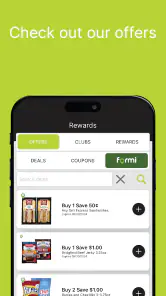
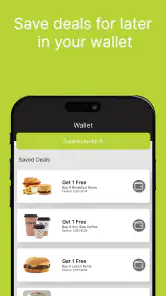
Analysis by Reviewed
I approached Brew Rewards as a practical loyalty app rather than as a general business tool. Its purpose is straightforward: it gives a participating brew-focused business a mobile way to keep loyalty activity close at hand. That sounds simple, but the usefulness depends heavily on whether the places you already visit actually support it and whether you enjoy keeping another rewards account on your phone.
The app is free to install, which makes trying it a low-risk decision. There is no purchase price to weigh up before opening an account or seeing whether it fits your routine. I would still separate that from the value of the rewards themselves: free access does not automatically mean every user will save money, because the benefit depends on how often you visit participating businesses and how easily you can use what you earn.
How Brew Rewards fits into everyday loyalty habits
Brew Rewards sits in the business and customer-loyalty space, and Brew Rewards is also the name of its developer. The app is designed around a familiar exchange: you use a participating service, keep your loyalty activity mobile, and return to the app when you want to check or use the benefit attached to that relationship.
In my experience, the strongest reason to use an app like this is convenience, not novelty. A paper card can disappear in a wallet, get damaged, or be left at home. A mobile loyalty app is easier to remember when your phone is already the thing you carry to pay, communicate, and find information. That makes Brew Rewards most appealing to regular customers who visit the same brew business often enough for loyalty tracking to matter.
The app has a mature audience rating of 17+, so it is not positioned as a children’s rewards product. That is useful context for families deciding whether to put it on a shared device or recommend it to a younger user. I would treat the age label as part of the installation decision rather than assuming that every loyalty feature is suitable for every member of a household.
It was released on September 24, 2024, and the current version is 22.1.05. Those details matter less than the day-to-day experience, but they do tell me that the app is a relatively recent mobile product rather than an old loyalty utility being described as new. It supports Android devices running version 5.0 or later, so compatibility should cover many older phones as well as newer ones.
The real cost: free access versus useful value
The clearest financial point is that Brew Rewards is free. I can recommend testing it without asking a reader to commit money upfront, and that is a meaningful advantage over loyalty programs that charge for membership or require a paid tier before they become useful. Free access also makes sense for occasional customers who want to see whether their normal purchases can produce a benefit.
More From Our News Desk

Clash of Clans Is Won Between the Battles

Android Auto Makes the Case for Quieter Car Software

MobiOffice: Transforming Mobile Productivity with Seamless Integration

EA SPORTS FC™ Mobile Soccer: Redefining Mobile Sports Gaming

How Microsoft OneDrive Became a Mobile Productivity Giant

How Google Translate Breaks Language Barriers Effortlessly
That does not make the app automatically valuable for everyone. A free app can still cost time, attention, storage space, and patience if checking in or keeping an account organized becomes a chore. The practical question is not “Is it free?” but “Will I use it often enough for the loyalty relationship to pay back that small amount of effort?”
I would also avoid treating the app as a reason to buy more than I normally would. The sensible way to use a loyalty tool is to let it follow existing habits. If I already stop at a participating brew business, recording those visits may add value. If I start making unnecessary purchases only to chase a reward, the economics become less attractive even though the app itself costs nothing.
Because the app’s price is free, the best test is behavioral: install it, see whether your usual business is part of the experience, and use it during normal visits. If the process fits naturally into one or two visits, it has earned a place on the phone. If it demands repeated attention without changing what you receive, removing it is easy and costs nothing.
Where the mobile format helps
The main benefit is having loyalty activity available at the moment it matters. A paper stamp card is passive until you remember to carry it. A mobile record is more likely to be nearby when you are ordering, collecting a drink, or deciding whether to return to the same place. That convenience can be small on one visit but meaningful over a long series of ordinary visits.
A useful routine is to check the app before leaving for a regular stop, rather than waiting until you are standing at the counter. That gives you a chance to confirm that you are using the right loyalty account and reduces the awkwardness of trying to remember details while other customers are waiting. I find this kind of preparation more valuable than repeatedly opening the app without a clear purpose.
Another practical use is treating the app as a reminder of where your loyalty is concentrated. Many people spread their visits across several cafés, taprooms, or brew businesses and then forget which program is worth maintaining. Brew Rewards makes more sense when it helps you identify one relationship you genuinely use, not when it becomes one of a dozen neglected rewards apps.
For someone who visits a participating business with friends, the app can also help keep personal loyalty activity separate from shared spending. I would not assume that every group purchase should be credited to one person. The fair approach is to follow the business’s own process and make sure the activity reflects the purchase or visit that actually belongs to you.
Small workflow choices that make a difference
My first tip is to make the app part of the checkout habit, not a later task. If loyalty activity is handled at the point of purchase, there is less chance of forgetting it or trying to reconstruct a visit afterward. This is especially important for occasional users, because a rewards account is only helpful when the activity is recorded consistently.
My second tip is to keep expectations modest until you have used it enough to understand your own pattern. Do not judge the app after a single visit, but do not keep it forever out of optimism either. A short trial across your normal routine will reveal whether it is genuinely convenient, whether the participating business recognizes it smoothly, and whether the reward is worth remembering.
My third tip is to avoid making the app the sole reason you choose a business. Loyalty programs can be a pleasant extra, but quality, location, service, and price still matter. If another nearby option is better for a particular occasion, I would not let a partly completed loyalty record dictate the decision. The best reward program supports a good habit; it should not control it.
Trade-offs I noticed before recommending it
The biggest limitation is that a loyalty app is only as useful as the network around it. If your preferred brew business does not use Brew Rewards, the app has little practical value for you. This is different from a general budgeting or payment app, where the utility can exist independently of one specific merchant relationship.
There is also a memory trade-off. Mobile loyalty is easier to carry than paper, but it still requires you to remember that the app exists and to use it at the right moment. People who dislike opening apps during purchases may find a simple physical card or an automatically linked payment program less irritating. Convenience is personal here: fewer objects in a wallet does not always mean fewer steps.
I would also be cautious about assuming that a mobile rewards record eliminates every possible point of friction. Any loyalty workflow can become awkward when a phone battery is low, the device is unavailable, or the customer and staff are unsure which step comes first. For that reason, I prefer using Brew Rewards as a helpful record rather than treating it as something that must work perfectly for every transaction.
The rating gives a useful signal about that mixed experience. Brew Rewards holds an average of 3.4 from around 76 ratings, with 31 written reviews. I read that as a reason to try it with realistic expectations rather than as a clear recommendation for everyone. The app has enough adoption to be more than an untested curiosity, but the rating does not suggest universal satisfaction.
Its reach is also notable: it has passed 100 thousand installs. That indicates meaningful interest in the product, but installs alone do not prove that every user finds it valuable or uses it regularly. I would give more weight to whether your own preferred business supports the workflow and whether you can complete it without disrupting your normal visit.
Who is most likely to get value?
Brew Rewards is a good fit for a regular customer who already returns to the same participating brew business. If you visit often, prefer keeping loyalty information on your phone, and are comfortable spending a few seconds on the process, the free entry point makes the experiment worthwhile. The app is particularly sensible for people who frequently lose paper cards or dislike carrying a crowded wallet.
It may also suit someone who wants a dedicated loyalty experience instead of relying on a broad payment or shopping platform. A general rewards service can be convenient when it covers many merchants, but a focused app may feel simpler when your loyalty is tied to one kind of local business. The trade-off is that the focused approach is less useful when your visits are spread across unrelated places.
I would recommend skipping it if you rarely visit brew businesses, change locations constantly, or already have a loyalty system that works automatically through your normal payment method. In those cases, another app may reduce the number of steps. A paper card can be better for a person who does not want another account on a phone, while a broader rewards platform may be better for someone who wants one place to manage many brands.
It is also not the right choice for anyone expecting a full business-management suite. Brew Rewards belongs on the customer-loyalty side of the business category, not in the same mental group as accounting, inventory, scheduling, or point-of-sale software. If your goal is to run a business rather than participate in a loyalty program, you should look elsewhere.
Questions worth answering before installing
Will it cost anything to try? No—the app itself is free. I would still decide based on whether it supports a business you already use, because free installation has little value if the loyalty relationship is irrelevant to your routine.
Is it suitable for every age group? The listed content rating is Mature 17+, so I would not present it as a child-focused app. Adults should review that rating alongside their own comfort with the product before installing it on a shared device.
Will it replace every other rewards program? I would not expect that. Its value is tied to the brew-loyalty experience it provides, whereas a general rewards platform may be more efficient for someone who shops across many unrelated businesses. The better choice depends on whether focused loyalty or wider coverage matters more to you.
Does a high install count guarantee a smooth personal experience? No. More than 100 thousand installs show that people have downloaded it, but your decision should rest on your own participating business, visit frequency, and tolerance for a mobile check-in routine.
Is the current Android support broad enough for an older phone? The minimum requirement is Android 5.0, which includes many older devices. Even so, I would keep the app updated where possible and test it before relying on it during a busy purchase, especially if your phone is several generations old.
My verdict for everyday use
I see Brew Rewards as a low-risk, narrowly useful loyalty app. The free price is its strongest starting point, and the mobile format can be genuinely convenient for people who repeatedly visit a participating brew business. I like the idea more for consistent local habits than for occasional browsing or collecting every rewards program available.
My recommendation is to try it if you already have a clear reason to use it. Install it before your next normal visit, build it into the purchase routine, and judge whether the effort feels invisible after a few uses. If it helps you keep loyalty activity organized without encouraging unnecessary spending, it has delivered worthwhile value at no monetary cost.
I would skip it when your visits are too infrequent, your preferred businesses are not part of the experience, or you already receive loyalty benefits automatically elsewhere. The average rating of 3.4 also supports a measured approach: this is not an app I would install purely because it has a large audience. I would install it because it matches a specific habit.
Overall, Brew Rewards earns a cautious recommendation for the right customer. Its value comes from fitting naturally into repeat visits, not from being a universal rewards solution. For a regular brew customer who wants a free mobile alternative to paper loyalty tracking, it is worth testing. For everyone else, a broader rewards service or no loyalty app at all may be the more practical choice.
Brew Rewards Frequently Asked Questions
Which phones can run Brew Rewards?
Brew Rewards is a business-focused app for managing a loyalty experience on a mobile device. It supports Android devices running Android 5.0 or later, so checking your phone’s operating-system version before downloading can help avoid compatibility issues. The app is free to download, and its mature 17+ age rating is worth considering when deciding whether it is appropriate for you or other people who use your device.
What is Brew Rewards, and how does the app work?
Brew Rewards is a loyalty app designed to help customers earn points or benefits when purchasing drinks and other eligible products from participating cafés, breweries, or beverage retailers. After creating an account, you generally identify yourself at checkout by scanning the app, using a linked account, or providing registered details. Rewards, offers, and available features may vary depending on the participating business and your location.
How do I earn and redeem rewards in Brew Rewards?
Rewards are usually earned by making qualifying purchases at participating locations and ensuring that the transaction is correctly linked to your Brew Rewards account. The app may display your points balance, progress toward a reward, and available promotions. Once you meet the required threshold, you can typically redeem the reward during a future purchase, although restrictions, expiration dates, minimum spending requirements, or participating-store limitations may apply.
Does Brew Rewards cost anything to download or use?
Brew Rewards is free to download, so you can try the app without paying a subscription fee just to install it. You still need to pay for products you purchase, and some promotional benefits may require specific conditions. Mobile data charges may also apply when using the app away from Wi-Fi, so connecting through Wi-Fi can help you avoid using cellular data while checking your account or offers.
Who develops Brew Rewards, and what do users think of it?
Brew Rewards is developed by Brew Rewards and is presented as a business app with the short description “Brew Rewards” and the summary “Making Loyalty Mobile.” Its average rating is 3.4 from around 76 ratings, with around 31 written reviews. Those figures offer a quick sense of user feedback, but experiences can differ depending on the participating business, account setup, and how rewards are handled at checkout.
Pros
- Earn points on eligible purchases and redeem them for free drinks.
- Easy sign-up and rewards tracking from your phone.
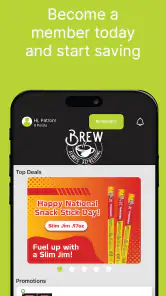
- Convenient access to member-only offers and promotions.
- Digital loyalty card means no need to carry a physical card.
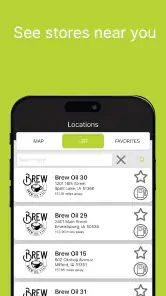
- Useful store-finder features help locate participating Brew venues.
Cons
- Rewards may vary by location and participating store.
- Points can expire or have redemption restrictions.
- Some offers require extra purchases or specific conditions.
- App benefits depend on the availability of participating Brew locations.
- Account or purchase data may be required to use the rewards program.
- Category
- Business
- Version
- 22.1.05