Block Puzzle Adventure
- 13.00
- 4.3
- Installs
- 10.00K
- Price
- Free
Screenshots
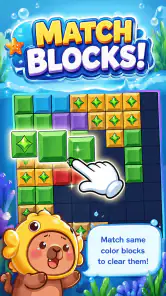
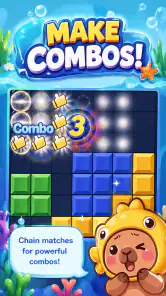

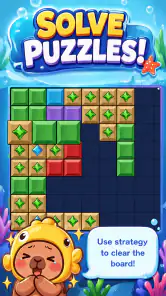
Analysis by Reviewed
I approached Block Puzzle Adventure as a small, straightforward puzzle app rather than a game promising a huge world or a complicated progression system. That distinction matters. Its appeal is easy to understand: place blocks, complete lines, and keep the board under control for as long as possible. In my experience, that kind of design works best when I want a short mental break, not when I am looking for a story-driven adventure or a deep competitive game.
This is a free personalization-category app from MimoDZ, although its actual use is clearly centered on casual block-puzzle play. It is suitable for Everyone and runs on Android devices using version 8.0 or later. The current release is version 1.1, and the app has passed the early discovery stage with over ten thousand installs. Its average score sits at 4.3 from roughly sixty ratings, with thirteen written reviews, which suggests a generally positive first impression while still representing a relatively small player sample.
What to consider before choosing it
The first question I would ask is not whether block puzzles are enjoyable. It is whether this particular lightweight format matches the way you want to play. If you enjoy arranging shapes carefully, watching lines disappear, and making decisions without a long tutorial, the basic idea is immediately accessible. If you need missions, character development, online competition, or a strong sense of progression, you may find the experience too narrow.
I also look at how much attention a game demands. A block-placement puzzle is useful during a commute, while waiting for an appointment, or when I have only a few minutes before doing something else. The rules are simple enough to remember without effort. That makes it less demanding than many action games and less time-consuming than a story-based title. The trade-off is that the simplicity can become repetitive if you expect every session to feel different.
Another decision point is device compatibility. Because the minimum requirement is Android 8.0, it remains approachable for people using older phones that are not limited to the newest operating systems. That does not guarantee identical performance on every device, but it does make the app easier to consider if you are not using a recent handset. I would still keep some free storage available and close unnecessary apps if your phone is older or already running slowly.
The free price is important for this type of app. I can try it without making a purchase decision first, which lowers the risk of discovering that the basic loop is not for me. At the same time, “free” should not be confused with unlimited depth. The value here depends on whether repeating the same central activity remains satisfying over time. For a quick diversion, that is a reasonable exchange. For a long-term hobby, I would compare it with more feature-rich puzzle options before settling in.
How the board rewards careful decisions
The most useful way to approach the game is to stop treating every open space as an invitation to place a block. I get better results when I protect room for awkward shapes and avoid building a tall, uneven structure too early. Clearing a line is helpful, but preserving flexibility for the next placement is often more important than making the quickest possible clear.
A practical routine is to scan the entire board before committing to the first available move. Look for the shape that has the fewest sensible locations, then place that one before dealing with the easier pieces. This simple habit reduces the chance of leaving an unusable gap in a corner or creating a narrow pocket that later blocks larger pieces. It is the kind of small strategic improvement that makes the app feel more thoughtful than its short description suggests.
I also recommend using the edges deliberately rather than automatically. Corners can be useful for shapes that fit neatly there, but filling too much of one side can make the remaining board awkward. A balanced layout gives more options and makes it easier to respond when the next set of blocks does not match the pattern I had in mind. The game’s best moments come from adapting rather than following a fixed opening strategy.
There is a second useful mindset shift: a nearly completed line is not always the priority. If completing it forces a bad shape into the center, the immediate clear may create a worse position afterward. I prefer to judge each move by two results: what disappears now and how many reasonable placements remain later. That approach is especially helpful when I am playing casually but still want to improve instead of placing pieces randomly.
Why the simple format works well in daily life
Imagine having twelve minutes before a train arrives. I can open the app, play without remembering a storyline, and stop when the train comes without feeling that I have abandoned a quest or interrupted a multiplayer match. That makes it a better fit for fragmented free time than games that require a long uninterrupted session.
It can also work as a low-pressure reset after work or study. The board gives me something concrete to focus on, while the rules remain light enough that I do not need to spend the first few minutes learning systems. For someone who wants a quiet puzzle rather than fast reactions, this is a genuine strength.
Parents and younger players may appreciate the Everyone age classification and the uncomplicated premise. I would still use normal judgment about screen time, but the basic activity is easier to explain than a game built around complex combat or social interaction. Older family members who enjoy traditional tile or block puzzles may also understand the appeal quickly, even if they do not usually play mobile games.
On the other hand, this is not the app I would choose when I want a social activity. It is also not my first choice for a child who needs structured educational content, or for a player who wants a clear sequence of goals. The accessible rules make it easy to start, but they do not automatically provide a reason to return every day.
Where this puzzle app stands out
Its strongest advantage is the low entry barrier. I do not need to memorize complicated controls or learn a large collection of systems before the puzzle becomes playable. The central action is understandable almost immediately, and the mental challenge comes from planning space rather than managing a busy interface.
The format also respects short sessions. Many mobile games are designed to pull me into a longer loop of upgrades, rewards, and tasks. Here, the core value is the board itself. That can feel refreshing when I want an activity that starts quickly and does not ask me to manage a virtual economy or follow a long chain of objectives.
Another strength is that improvement comes from observation. I can make progress simply by noticing my own habits: filling the center too quickly, ignoring difficult shapes, or chasing a line clear without considering the next move. That gives the game a modest but real learning curve. It is not deep in the same way as a strategy game, yet it rewards patience and spatial awareness.
The app’s relatively small footprint in the wider market can also be a positive for people who prefer trying less established casual titles. MimoDZ has kept the concept focused instead of attaching a large amount of unrelated content to it. I would not mistake that focus for a guarantee of endless variety, but it does make the purpose clear from the moment I begin.
Small frustrations that affect the experience
The same simplicity that makes the app approachable can limit its staying power. If I play repeatedly for long stretches, the basic placement-and-clearing loop may begin to feel familiar. Players who need new modes, narrative rewards, or changing objectives should be realistic about that limitation before making it their main mobile game.
I also find that this kind of puzzle can become mentally flat when I stop making deliberate choices. Once I start placing blocks wherever they fit, the experience loses much of its value. The app rewards attention, but it does not necessarily force me to pay attention. That means the quality of a session depends partly on how actively I engage with the board.
There is a difference between a clean, focused puzzle and a bare experience. Without inventing features that are not confirmed, I would describe this app as best suited to people who are happy to judge it by its central mechanic. Anyone expecting a large collection of systems should compare alternatives first rather than assuming the word “Adventure” means a story campaign or exploration mode.
The available audience signal is encouraging but modest. A 4.3 average from around sixty ratings indicates that early users have generally responded well, while the total number of ratings is still small enough that I would avoid treating it as conclusive proof for every type of player. I see it as a promising casual option, not as a universally established standard.
How it compares with familiar alternatives
Compared with classic falling-block games, this style of puzzle puts more emphasis on choosing where pieces go than on reacting to a continuously descending board. That makes it calmer and easier to pause mentally between decisions. If you enjoy speed, timing, and the pressure of a rising stack, a traditional falling-block alternative may be more exciting.
Compared with match-three games, the challenge here is spatial planning rather than searching for color combinations. I prefer this when I want a quiet logic exercise with fewer visual distractions. Match-three games may be a better choice if you enjoy chain reactions, bright effects, frequent rewards, or a more obviously varied level structure.
Compared with Sudoku and other number puzzles, block placement is more visual and less dependent on symbolic deduction. I can play it when I want to think but do not feel like working through rows, columns, or numerical possibilities. Sudoku is likely the stronger option for someone who wants a fixed logical framework and a more deliberate puzzle-solving routine.
Compared with large casual-game collections, this app has a clearer identity but less breadth. A collection app may offer more variety in one download, yet it can also feel cluttered and make it harder to settle into a single activity. I would choose Block Puzzle Adventure when I already know that block arrangement is the kind of short-form play I want.
Who should switch, and who should stay with another option
Switching to this app makes sense for someone tired of games that interrupt a simple session with complicated menus or long progression systems. It is also a sensible experiment for Android users on version 8.0 or newer who want a free, casual puzzle with an Everyone age classification. The cost of trying it is low, and the rules are easy to evaluate in a short sitting.
The cost of switching is mainly time and expectation. If you already enjoy a favorite block puzzle with a mature scoring system, extensive challenges, or a large community, this app may not give you enough new structure to justify replacing it. I would treat it as a companion rather than an automatic substitute. Keep the deeper game for focused sessions and use this one when you want a simpler board.
I would also steer competitive players toward an alternative built around rankings or direct matches, assuming those are the features they value. The verified details establish a casual block-puzzle identity, not a competitive ecosystem, so I would not choose it specifically for social comparison. Likewise, players who need offline guarantees, detailed accessibility controls, or a particular monetization model should check those points in the app itself before making it their primary choice.
For families, the biggest practical question is whether everyone enjoys the same kind of repetition. The Everyone rating makes the app broadly approachable, but age suitability does not mean every player will find it engaging. A child may enjoy the immediate placement mechanic, while an adult may prefer the planning challenge. It works best when expectations are set around casual puzzle play rather than a full adventure game.
My recommendation after using the core loop
I recommend Block Puzzle Adventure to readers who want a free, uncomplicated way to fill short gaps in the day. Its best qualities are clarity, low commitment, and the small strategic decisions that appear once I stop playing carelessly. The developer, MimoDZ, has presented a concept that is easy to understand and easy to test without a purchase.
I would not recommend it as the sole game for someone who needs constant novelty, narrative progression, multiplayer competition, or a broad set of modes. In those cases, a more established alternative in the relevant puzzle category will probably offer a better long-term fit. That is not a failure of this app; it is simply the consequence of choosing a focused format.
My practical advice is to give it a short trial with one rule: do not rush to fill every available space. Scan the board, protect flexibility, place the most restrictive shape first, and judge the quality of your position rather than only the immediate clear. If that style of thinking feels satisfying, the app has enough here to become a useful everyday time-filler.
Overall, Block Puzzle Adventure is a modest but appealing choice for relaxed block-puzzle sessions. I like it most when I need something immediate, free, and mentally engaging without the weight of a larger game. Go in expecting a focused puzzle rather than a literal adventure, and its strengths become much easier to appreciate.
Pros
- Simple controls make it easy for beginners to start playing.
- Offline gameplay lets you enjoy puzzles without a constant internet connection.
- Short rounds are convenient for quick breaks or casual sessions.
- Colorful visuals give the game a friendly and approachable style.
- Gradually increasing challenges help maintain interest over time.
Cons
- Frequent ads may interrupt play
- especially between puzzle rounds.
- Gameplay can feel repetitive after extended sessions.
- Some levels may depend heavily on luck rather than planning.
- Limited customization may disappoint players seeking more variety.
- Battery use can increase during longer gaming sessions.
- Category
- Personalization
- Version
- 1.1