Bible:Quiz & Prayer
- 47.00
- 4.8
- Installs
- 10.00K
- Price
- Free

Screenshots

Analysis by Reviewed
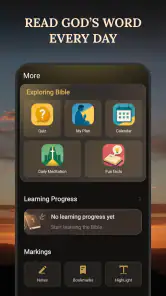
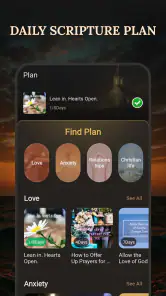
I see Bible:Quiz & Prayer as a compact way to bring a little structure to a daily faith routine, rather than as a replacement for a Bible, a study guide, or a church community. Its mix of quizzes, prayers, verses, and reflection gives it a clear purpose: offer a small prompt to engage with scripture and pause for thought. That combination is appealing when you want an approachable starting point, though it may feel too lightweight if you are looking for detailed study tools.
A small daily ritual, not a full study library
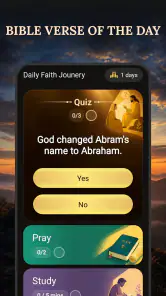
In the Books & Reference category, this free app from BIGBYTE APPLICATION HOSTING SERVICES is aimed at readers who want devotional material alongside a bit of active recall. The quiz element is a useful distinction: instead of only reading a verse and moving on, you can check what you remember. In my view, that makes the app’s central idea more engaging than a feed made up only of inspirational snippets.
The title, Bible:Quiz & Prayer, makes the combination easy to understand, and the app is rated for Everyone. Its current version is 1.0.3, and it runs on Android 8.0 or later. It is free to install, so trying it as a low-commitment addition to a reading habit is straightforward. The app has a 4.8 average from around 300 ratings, with 10,000-plus installs; that is encouraging, but I would treat those figures as context rather than proof that its approach will suit every reader.
What matters more is how the pieces can work together in an ordinary day. A verse can give you something to consider, a prayer can help turn that thought into a personal response, and a quiz can make you retrieve a detail rather than merely recognize familiar wording. The strongest idea here is the shift from passive reading to a brief, repeatable act of attention. It is a modest approach, but modest can be useful when the alternative is not opening a book at all.
Why the quiz format can help
Quizzes are not a substitute for careful reading, but they can reveal whether a name, event, or idea has actually stayed with you. I would use them as a gentle check-in, not as a scorecard for faith or biblical knowledge. If an answer surprises you, that is a good cue to return to the relevant passage in a Bible you trust and read the surrounding context. That workflow keeps the quiz useful without asking it to carry more authority than it should.
A practical routine might be to read the day’s material during a short break, answer the quiz without rushing, and jot down one question to revisit later. This gives the app a role in a larger habit instead of letting a quick quiz become the whole encounter with scripture. It is also a sensible way to avoid treating a short prompt as though it were a complete explanation of a complicated passage.
There is a trade-off in this format. A quiz can make learning feel approachable, especially for someone returning to Bible reading after a long pause, but multiple-choice or brief-answer questions naturally narrow attention to what can be tested. They cannot capture every historical, literary, or theological nuance. I would welcome the quiz as a doorway into further reading, while resisting the temptation to regard a correct answer as the end of the subject.
More From Our News Desk

Clash of Clans Is Won Between the Battles

Android Auto Makes the Case for Quieter Car Software

MobiOffice: Transforming Mobile Productivity with Seamless Integration

EA SPORTS FC™ Mobile Soccer: Redefining Mobile Sports Gaming

How Microsoft OneDrive Became a Mobile Productivity Giant

How Google Translate Breaks Language Barriers Effortlessly
Using prayers and verses with intention
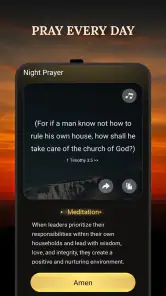
The prayer and verse elements make the app more than a trivia tool. They can fit moments when you want a short prompt but do not have the time or energy to plan a longer devotional session. One useful approach is to read the verse slowly, pause before opening the prayer, and put the passage into your own words first. That small delay helps keep the experience reflective rather than turning it into a sequence of items to clear.
Another good use is to bring one prompt into a conversation or a personal journal. A verse that raises a question can become a starting point for discussion, while a prayer can help someone find words when they are unsure how to begin. I would still check a passage in its broader chapter before using it to make a firm claim about doctrine or a difficult life decision. Context matters, and a short app-based presentation cannot do all the interpretive work for you.
For a busy weekday, I can imagine opening the app while waiting for a bus or settling in before work, completing one brief interaction, then carrying a thought with me instead of scrolling through unrelated content. The key is to keep the session small on purpose. If I had more time, I would use the app to spark a longer reading session rather than assume that a quick visit provides the same depth.
Where the experience may feel limited
The concept’s simplicity is both its appeal and its main limitation. Daily quizzes, prayers, verses, and reflection can encourage consistency, but they do not by themselves amount to a structured course through the Bible. Readers who want chapter-by-chapter study, historical background, cross-references, translation comparisons, or detailed notes should use a dedicated Bible study resource alongside it. I would not choose this app as my only reference when accuracy and context are central to the question at hand.
There is also a difference between a prompt that feels personal and one that is broadly written for many readers. A short prayer may be welcome on an ordinary day but less fitting during grief, conflict, or a specific spiritual struggle. In those moments, I would prefer a trusted person, a pastor, or a carefully chosen passage over relying on a general daily prompt. The app can accompany a practice; it cannot know the circumstances behind it.
Because the app is organized around short daily material, it is best approached with a little intention. If you open it only to tap through content as quickly as possible, the reflective side can disappear. I would choose one element at a time—perhaps a quiz on one day and a verse for quiet reading on another—rather than trying to make every part feel equally meaningful in every session. That keeps the routine from becoming another checklist.
Who is most likely to enjoy it
I think Bible:Quiz & Prayer is a good fit for someone who wants an accessible nudge to return to scripture, enjoys learning through recall, or likes having a prayer prompt close at hand. It may also work well for a family or small group looking for a simple question to discuss, provided someone checks the passage and supplies context where needed. The Everyone age rating makes its intended audience broad, though adults should still guide children’s interpretation of religious material as they would with any reading resource.
It is less suitable for readers who need a comprehensive digital Bible, prefer long-form commentary, or want to follow a specific theological curriculum. In those cases, a conventional Bible app or a study-focused reference tool is the better primary choice. Someone who already has a disciplined reading plan may also find the daily format redundant; the quiz can add variety, but only if that is a form of engagement they actually enjoy.
The developer is BIGBYTE APPLICATION HOSTING SERVICES, and the app’s early-stage version number is worth keeping in mind when deciding how much to build a routine around it. I would try it as an optional companion first, see whether its short prompts genuinely help me return to reading, and keep any established study resources in place. That is a more realistic test than expecting a fresh devotional app to transform a habit on its own.
A measured recommendation
My overall view is positive but specific: Bible:Quiz & Prayer offers a straightforward blend of recall, devotional prompts, and reflection for people who want a small daily point of contact with scripture. Its best quality is the way the quiz can make a short session more active, while its main weakness is the limited depth inherent in brief, general-purpose material. Used as a prompt rather than an authority, it has a sensible place in a personal routine.
I would recommend giving it a try if you want a free, low-pressure way to make Bible engagement more regular and you are comfortable supplementing short prompts with fuller reading. I would skip it as a primary resource if you need deep research, extensive study aids, or guidance tailored to a particular personal situation. For the right reader, Bible:Quiz & Prayer is a useful nudge to pause and think; for everyone else, a full Bible and a more detailed reference app will remain the stronger foundation.
A routine that leaves room for reflection
One useful way to judge whether the app is helping is to notice what happens after you close it. If a quiz answer sends you back to a passage, or a verse stays in your mind through part of the day, the brief session has done more than fill a spare minute. I would keep a simple note of a question or phrase that caught my attention, then return to it during a longer reading session. That approach makes the app a starting point without asking it to replace the reading that gives a prompt its context.
It can also suit a shared routine, but I would keep the discussion open-ended. A family member or friend can answer a quiz question, then explain what they found surprising or unclear, rather than treating the first correct response as the whole conversation. For children, the broad age rating is reassuring as a general indication of audience, but an adult can still help distinguish a short quiz answer from the fuller meaning of a passage.
How it fits beside other Bible resources
Compared with a standard Bible app, this one is more of a devotional companion than a place to conduct a full reading plan or look up a passage in depth. A conventional Bible app is the better choice when you want to search text, compare translations, or follow a long sequence of chapters. A commentary or reference tool is more useful when a historical detail or theological question needs careful explanation. The quiz-and-prayer format earns its place by lowering the effort needed to begin, not by matching those resources feature for feature.
That distinction matters if you already use several faith-related tools. I would avoid adding another daily prompt simply because it is available; instead, decide whether active recall or a short prayer genuinely fills a gap in your routine. If your existing reading plan feels too passive, a quiz may add a different kind of attention. If the plan already gives you reflection and discussion, the app may be unnecessary rather than a meaningful improvement.
Small choices that improve the experience
I would not try to make every visit cover every kind of material. On a rushed morning, choosing one verse and taking a moment to consider it may be more valuable than moving rapidly through several prompts. At another time, the quiz can be the useful part, especially if you treat a wrong answer as a reminder to revisit the source rather than as a reason to feel discouraged. This flexible approach avoids turning a devotional tool into a daily performance target.
When a prompt touches on a sensitive subject, I would also give myself permission to step outside the app. A general prayer can offer a starting phrase, but it may not match a particular situation or tradition. Reading a passage in full, speaking with someone you trust, or using a resource from your own faith community may be more appropriate. The app is strongest when it supports personal engagement while leaving space for those more grounded forms of guidance.
For someone deciding whether to install it, the practical question is not whether it can replace a Bible or a study resource—it cannot fill those roles equally—but whether a compact prompt would make opening scripture easier. Its free access makes that an uncomplicated experiment, and the app is suitable for a broad audience. I would give it a short trial as a companion, keep expectations focused on small moments of attention, and continue with fuller resources whenever the subject calls for depth.
Bible:Quiz & Prayer Frequently Asked Questions
What is Bible: Quiz & Prayer?
Bible: Quiz & Prayer is a faith-focused app that brings Bible knowledge quizzes and prayer-related content together in one place. It is intended for users who want an interactive way to explore biblical topics and include prayer in their routine. The exact quizzes, reading materials, and prayer tools can vary by version, so check the app’s current store listing before downloading.
Is Bible: Quiz & Prayer suitable for beginners?
The quiz format can make Bible topics approachable for people who are new to scripture, while more experienced readers may use questions to review what they already know. However, quiz answers are not a substitute for reading the Bible itself, and interpretations can differ among Christian traditions. If a question or explanation seems unclear, consult a trusted translation, study resource, or faith leader.
Does Bible: Quiz & Prayer require payment or a subscription?
Availability of free features, optional purchases, or subscriptions may depend on the app version and your region. Before installing, review the store listing for pricing details and check the in-app purchase section; after installation, look for any trial terms, renewal dates, or cancellation instructions before starting a subscription. Do not assume that every quiz or prayer feature is free simply because the app is free to download.
Does Bible: Quiz & Prayer work offline, and what permissions might it need?
Offline access depends on how the app stores its quizzes and other content, so some features may require an internet connection. The current store listing or the app’s settings can clarify what is available without connectivity. When installing, review the requested permissions and grant only those that make sense for the features you use. Internet access may also be needed for updates, account functions, or optional content.
Is Bible: Quiz & Prayer appropriate for children, and does it collect personal information?
The Bible-focused subject matter may be suitable for family use, but parents should check the app’s age rating, quiz content, advertising, and any social or account features before allowing a child to use it. Privacy practices can change, so read the developer’s privacy policy and the store’s data-safety information. Avoid entering sensitive personal or religious information unless you understand how it is collected, used, and shared.
Pros
- Quick Bible quizzes offer an easy way to test your knowledge.
- Prayer features can support a regular faith-based routine.
- Short activities fit conveniently into brief breaks.
- A quiz format makes Bible learning more interactive.
- Useful for personal reflection and informal study.
Cons
- Quiz questions may not provide enough context for deeper study.
- Answers can vary depending on Bible translation or interpretation.
- Daily use may feel repetitive if question variety is limited.
- Prayer prompts may not match every user's beliefs or needs.
- Requires a phone
- which may distract from quiet reflection.
- Category
- Books & Reference
- Version
- 1.0.3