Bible Verse:Daily Pray
- 157.00
- 4.8
- Installs
- 100.00K
- Price
- Free

Screenshots



Analysis by Reviewed
I opened Bible Verse:Daily Pray looking for a simple way to bring a short spiritual pause into an ordinary day, rather than another complicated productivity tool. From the first use, its purpose is clear: it is a free Tools app from X5 Network Area built around Bible verses and daily prayer. That narrow focus is its biggest strength. It does not try to be a full study library, a social network, or a replacement for personal worship. It aims to give you a small, repeatable moment of reflection.
That makes it easy to understand, but it also means your experience depends on what you expect from a prayer app. If you want a quiet prompt to begin the morning, reset your attention during a busy afternoon, or close the day with a verse, it is a sensible option to try. If you need extensive commentary, structured Bible study, denomination-specific guidance, or deep customization, you may quickly find the experience too limited.
From a rushed moment to a useful daily pause
Who this app fits best
I think the best starting point is a realistic one. Imagine waking up late, checking your phone, and moving straight into messages, work, or school. You may still want a few minutes of prayer, but opening a large Bible app can feel like another task. A focused verse app reduces that first barrier. You can open it with a clear intention: read something short, let it settle, and decide whether to continue praying.
The same workflow works at other points in the day. I can picture using it before commuting, during a quiet lunch break, or after putting the phone away for the evening. The value is not that it transforms a routine instantly. The value is that it gives a routine a dependable starting point. For someone trying to build consistency, that small handoff from “I should pray” to “I am reading and reflecting” matters.
The app is listed for a Teen audience, so it may suit older children and teenagers as well as adults who want straightforward devotional material. I would still encourage families to treat it as a prompt for conversation rather than a complete teaching resource. A short verse can open a meaningful discussion, but it cannot provide all the context a young reader may need.
What happens when I open it
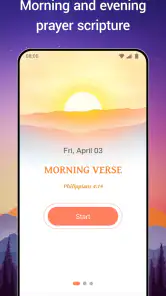
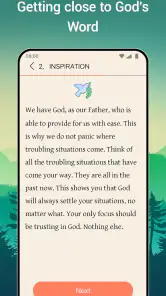
The store summary describes it as a daily prayer and spiritual assistant, while the short description centers on Bible verse content. In practice, that tells me to approach it as a focused daily companion. I would not install it expecting the breadth of a conventional Bible reader. The intended flow is more direct: open the app, encounter a verse, use it as the starting point for prayer, and leave with a thought to carry into the day.
That simplicity is helpful when attention is already low. There is less temptation to spend twenty minutes arranging a reading plan before actually reading anything. On the other hand, a user who enjoys comparing translations, tracing references, or moving through entire books may prefer a dedicated Bible application. The usual alternative offers more depth; this app’s likely advantage is a lighter entry point.
A practical first-session workflow
My recommended first session would be deliberately short. Open the app when you are not already distracted, read the displayed verse slowly, and avoid immediately swiping away or returning to another app. Read it once for meaning, then once for the words that stand out. After that, turn the verse into a simple prayer: gratitude, a request for help, or a question about how it applies to the day ahead.
This approach reveals whether the app fits your habits better than simply judging the interface. Some people need a structured plan and longer passages to stay engaged. Others need exactly one clear prompt. If the verse gives you enough direction to continue thinking without requiring a large amount of setup, the app is doing its job.
A useful tip is to connect the reading to an existing action rather than relying on motivation alone. For example, use it after brushing your teeth or before opening your work inbox. The app becomes the first step in a chain, not an isolated icon that you must remember to find. That is a small workflow improvement, but it is more realistic than promising that an app alone will create a lasting spiritual routine.
How the verse becomes prayer
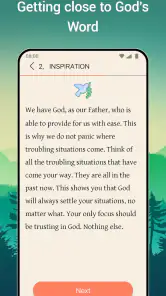
The handoff from reading to prayer is where this type of app either becomes meaningful or remains decorative. A verse on a screen has limited value if I only glance at it and continue scrolling. I get more from it when I ask three questions: what is this saying, what does it bring to mind, and what response do I want to make today?
For a verse about patience, the response might be a decision to pause before answering a difficult message. For a verse about gratitude, it might lead me to name one person or circumstance I usually overlook. This turns the app from a daily quotation display into a practical prompt. The application supplies the starting point; the personal reflection supplies the substance.
That also explains an important trade-off. A highly detailed devotional app may guide you through interpretation, prayer, and journaling in separate stages. Bible Verse:Daily Pray appears better suited to people who want room to make those connections themselves. I appreciate that kind of restraint, but users who need more guidance should know they may have to provide the structure independently.
Passing the moment into real life
The most useful handoff is from the phone to the rest of the day. After reading, I would close the app and choose one visible action connected to the verse. That could mean apologizing instead of defending myself, checking on someone, or simply taking a calmer approach to a stressful responsibility. The app cannot perform that action for me, but it can make the intention easier to remember.
For families or small groups, the verse can also become a conversation starter. One person might read it aloud, while another explains what it suggests in a current situation. I would avoid treating the app’s daily prompt as an unquestionable interpretation. It is more useful when people discuss the text thoughtfully and consult a fuller Bible resource when context or meaning is important.
There is a second handoff worth noticing: from private reflection to a repeatable routine. If I use the app only when I feel inspired, it may disappear from my habits. If I pair it with a fixed part of the day, the experience becomes more dependable. The application’s focused design supports that pattern because it does not demand a large time commitment each time I open it.
What the current release suggests
The current version is 1.2.0, and the app supports devices running Android 8.0 or later. That makes it relevant to people using older compatible phones who do not want to replace a device just to try a simple spiritual tool. I would still check the application’s behavior on your particular phone during the first few sessions, especially if you depend on a very old device or a heavily customized Android interface.
The app is free, which removes the most obvious barrier to testing it. I can install it, use the daily flow, and decide whether it genuinely helps before committing money or reorganizing my routine. Free access is especially useful here because the right question is not whether the concept sounds appealing; it is whether the short reading-and-prayer cycle fits your attention span and beliefs.
Its public response is encouraging: it holds a 4.8 average from around 971 ratings and has passed 100K installs. I see those figures as signs of strong interest and satisfaction, not proof that every user will find the same fit. A prayer app is personal. Someone who values a particular translation or tradition may judge it by standards that a general audience does not share.
Where it compares well with usual alternatives
Compared with a full Bible app, this tool is easier to approach when I want one focused moment rather than a large collection of books, search tools, study notes, and reading plans. The broader app is better for research and sustained study. Bible Verse:Daily Pray is better when the main problem is getting started.
Compared with a general meditation app, it offers a specifically Christian starting point through Bible verse content and prayer. A meditation app may be preferable for breathing exercises, secular mindfulness, or sleep-focused sessions. This one makes more sense when your intention is explicitly spiritual and you want the text itself to lead the reflection.
Compared with a printed devotional, the app is more convenient because it travels with the phone already in your pocket. The book may offer richer commentary, a more tactile experience, and fewer digital distractions. I would choose the printed option when I want a longer, slower session. I would choose this app when convenience is the difference between practicing and postponing.
There is also a difference from simply searching for a Bible verse online. Web searches can produce endless options, but that abundance can become its own distraction. A focused app gives the daily moment a defined boundary. The trade-off is that search gives you control over the topic, while a daily assistant gives you less control and more simplicity.
Small techniques that improve the outcome
One technique I would use is the “carry phrase” method. After reading the verse, select a short phrase that you can remember without reopening the app. Repeat it silently before a difficult task or write it in a personal note. This avoids turning the phone into the center of the practice and makes the reading useful away from the screen.
A second technique is to separate reading from evaluation. Do not decide immediately whether a verse feels powerful, familiar, or relevant. Give it a few quiet seconds first. Some passages become meaningful only when connected to a specific event later in the day. This is particularly helpful for users who are accustomed to fast-scrolling through daily content.
A third is to use the app as a beginning, not a timer. If the verse raises a question, continue with a trusted Bible resource or speak with someone you trust. If it does not connect with your situation, do not force an artificial response. The strength of a short prompt is flexibility, but flexibility also means the user must judge when more context is needed.
Where the flow breaks down
The same focused design that makes the app approachable can become a limitation. If you want a complete reading schedule, extensive notes, audio Bible content, or a detailed record of your spiritual progress, this is probably not the right primary tool. A broader application or a physical study Bible would offer a more substantial framework.
Another possible friction point is repetition in your own routine. Even a good daily verse can lose impact if I treat it as a box to check. The solution is not necessarily to abandon the app; it may be to vary the way I respond. On one day I might pray silently, on another I might discuss the verse with a friend, and on another I might connect it to a concrete decision. Without that active response, the workflow can become passive scrolling.
There is also a personal-fit issue. Different readers may prefer different translations, traditions, or interpretive approaches. A general verse-and-prayer experience cannot satisfy every preference equally. If theological precision, historical context, or a specific church tradition is central to your use, compare the app’s material with resources you already trust rather than relying on a short daily prompt alone.
Finally, the app should not be treated as a substitute for community, pastoral guidance, or professional support during serious emotional difficulty. A daily verse can encourage reflection, but it is not designed to handle complex personal, medical, or spiritual problems by itself. Knowing that boundary helps keep the app useful instead of asking it to do work it was never meant to do.
My recommendation after following the full workflow
I would recommend Bible Verse:Daily Pray to someone who wants a low-friction Christian routine: open the app, read a Bible verse, turn it into a personal prayer, and carry one idea into the day. Its free price and accessible Android requirement make experimenting easy, while the strong 4.8 average and more than 100K installs show that many users have found the concept worthwhile.
I would skip it as my main resource if I were looking for serious Bible study, extensive customization, or a guided devotional curriculum. In that situation, a fuller Bible app, printed devotional, or trusted community resource would be a better companion. For everyone else, the sensible test is simple: use it at the same point in your day for a week, and judge whether the verse changes what you do after closing the screen.
That is where this app earns its place. It does not need to dominate your phone or turn prayer into a complicated project. When the handoff from a short reading to a real-world action works, the app becomes a practical reminder rather than just another daily notification. I see it as a modest, focused tool—best when you want help beginning, and most effective when you are willing to carry the reflection beyond the app.
Pros
- Short daily verses make scripture reading easy to fit into busy routines.
- Simple navigation lets users reach prayers and verses without a steep learning curve.
- Helpful for creating a consistent personal reflection or devotional habit.
- Suitable for users seeking encouragement
- comfort
- or spiritual motivation.
- Lightweight design should work well on many older or less powerful devices.
Cons
- Content may feel repetitive for users who prefer broader Bible study tools.
- Limited context around verses can make deeper interpretation difficult.
- Daily reminders may become intrusive if notification settings are not adjusted.
- Personalization options may be insufficient for users with specific study goals.
- Some features or content may depend on internet access and app availability.

- Category
- Tools
- Version
- 1.2.0