Bellingham Herald News | NW WA
- 60.00
- 3.6
- Installs
- 10.00K
- Price
- Free

Screenshots
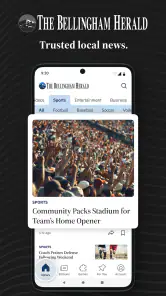
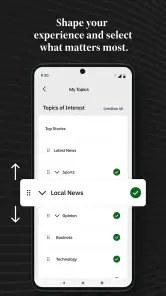
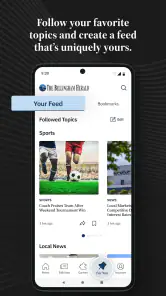
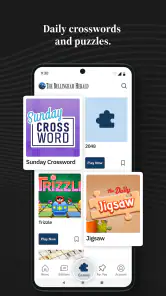


Analysis by Reviewed
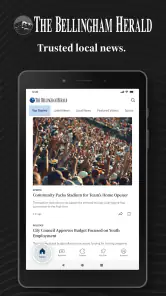
Keeping up with local news is different from following national headlines. I can find national stories almost anywhere, but information from a specific corner of Washington is more useful when I am trying to understand a road problem, a local political decision, a weather change, or what is happening in the community around Bellingham. That is where Bellingham Herald News | NW WA makes sense. It is a free news and magazine app from McClatchy built around local coverage for Northwest Washington, with sections touching breaking news, politics, crime, weather, business, and sports.
I approached it as a practical daily-news tool rather than an app I would open for entertainment. Its value depends heavily on whether I want local reporting in one place and whether I have a reliable connection when news breaks. The experience is most convincing during short, repeated visits: checking what changed in the morning, scanning a developing story during a commute, or looking for local context after seeing a headline elsewhere. It is less compelling if I only want broad national coverage or a completely frictionless reading experience without subscription prompts.
How the app feels when the news depends on a connection
The central strength here is focus. Instead of making me sort through a huge national feed, the app points my attention toward Northwest Washington. That narrower editorial scope is useful because local stories can disappear quickly inside general-purpose news apps. A national aggregator may show a major regional event, but it rarely gives the same sense of what matters to people in Bellingham and nearby communities.
At the same time, the app is naturally tied to network availability. Breaking news is not a fixed collection of articles sitting unchanged on my phone; it is information that needs to be fetched as events develop. When I have a strong connection, that relationship works in the app's favor. I can open it, refresh the latest coverage, and use the sections to move from a headline to related local subjects such as weather or public safety.
That connection also shapes my expectations. I would not treat this as a dependable replacement for emergency alerts or official instructions during a serious incident. A news app can help me understand an event and follow reporting, but it should not be my only source for urgent safety decisions. If the signal is weak, an update may take longer to appear, and if I am moving between networks, the reading experience can feel less predictable than it does at home.
One useful habit is to open the app before I actually need it. If I know I will be traveling through an area with inconsistent reception, I can check the latest local story while connected and make a note of the key details. I would still avoid assuming that an article will remain available in every situation without a connection. The app's practical role is strongest as a connected news window, not as a guaranteed offline archive.
Short visits work better than endless scrolling
I like this kind of local app most when I give it a clear purpose. A quick visit to check the weather section is different from opening it to follow a developing crime story, and both are different from browsing sports coverage. The local focus makes those visits feel intentional. I am not trying to train a large recommendation feed to understand me; I am checking what has changed in a place I care about.
More From Our News Desk

Clash of Clans Is Won Between the Battles

Android Auto Makes the Case for Quieter Car Software

MobiOffice: Transforming Mobile Productivity with Seamless Integration

EA SPORTS FC™ Mobile Soccer: Redefining Mobile Sports Gaming

How Microsoft OneDrive Became a Mobile Productivity Giant

How Google Translate Breaks Language Barriers Effortlessly
That approach also helps with mobile data. Rather than leaving the app open and repeatedly refreshing, I can choose one or two moments during the day to catch up. For a person with a limited data plan, that is a better routine than treating the app like a constantly updating television channel. I would also avoid refreshing repeatedly when a story is moving slowly, because doing so adds little value while depending more heavily on the network.
The app is a good fit for residents, former residents, commuters, and anyone with a practical interest in Northwest Washington. A family member living elsewhere could use it to stay aware of local developments, while a student or worker might check it for regional context before starting the day. The geographic concentration is the point, so the experience becomes more useful as my connection to the area becomes more personal.
What happens in real mobile situations
On a normal phone, I would use it in small gaps: over breakfast, while waiting for an appointment, or after hearing someone mention a local event. The category is familiar, but the regional emphasis changes how I read. I am less likely to spend time on stories that do not affect my surroundings, and more likely to notice practical developments that a broad news service might place far down its feed.
A realistic example would be a morning when weather conditions are changing and I need local context before leaving. I could check the weather coverage, scan the main local headlines, and then look at business or community reporting if something affects my route or plans. If the connection is stable, this takes only a few minutes. If I am underground, in a crowded building, or moving through a weak-signal area, I would wait until reception improves rather than repeatedly tapping refresh.
Another useful situation is following a local political decision. National news apps may explain the wider issue, but a regional publication can be more relevant when the outcome affects local services or community discussion. I would read the article for context, then compare important claims with official sources before making a decision or sharing the story. The app helps me discover and follow local reporting; it should not turn a quick headline into an excuse to skip verification.
The age rating of Everyone 10+ suggests that the app is aimed at a broad audience, but local news can still include difficult subjects, particularly in crime coverage or reports about emergencies. I would be comfortable recommending it for families who want regional news, while still suggesting that younger readers discuss upsetting stories with an adult. The rating does not remove the need for judgment about which articles are appropriate at a particular moment.
Recovery matters when reception or loading gets in the way
News apps are judged not only by what they show when everything works, but also by how calmly I can recover when something fails. With this app, a slow connection can interrupt the most important part of the experience: getting current information at the right time. If an article does not load, I would first check whether other apps are connecting, then retry once I have a steadier signal. That simple approach is more useful than repeatedly opening and closing the same page.
I also prefer to separate a loading problem from a content question. If the main feed appears but one article is slow, the issue may be limited to that page or its connection at that moment. If nothing updates, I treat the whole session as network-dependent and return later. This is a small distinction, but it prevents me from assuming that a story has disappeared simply because my phone has not completed the request.
When I am following a developing event, I would keep the app paired with another sensible source, such as an official local announcement or a direct alert service. That is not a criticism unique to this publication; it is a sensible safeguard for any news app. The Bellingham Herald can provide reporting and context, but a single app should not carry the entire burden during a rapidly changing emergency.
Recovery is also relevant when I move between Wi-Fi and mobile data. A page that began loading on one network may behave differently after the handoff, especially if reception changes at the same time. My practical routine would be to stop, reconnect, and reopen the relevant section rather than assuming every partially loaded screen reflects the latest version of the story. This keeps my reading habits realistic and reduces confusion about whether I am seeing current information.
Using it without wasting mobile data
The app is free to install, but that does not mean every part of the reading experience is free of commercial friction. In-app purchases range from $7.99 to $159.99 per item, so I would pay close attention to any subscription or purchase screen before confirming anything. For me, this is one of the most important practical points: a free download can still lead to paid access, and I would decide whether the local coverage justifies that cost before committing.
I would also make a clear distinction between discovering a story and reading everything in depth. On mobile data, I can use the main feed to decide which articles deserve my time, then read the most relevant pieces rather than opening every headline. That approach is especially sensible when traveling or when my monthly allowance is limited. It also makes the app less demanding as a daily habit.
Reading on a stable Wi-Fi connection is preferable when I expect to spend a long time with several articles. I would avoid repeated refreshes simply to see whether a headline has changed, and I would not assume that switching networks will make a page load faster. If the app offers a purchase prompt while I am browsing, I would pause and review the terms shown on screen instead of treating it as part of ordinary free reading.
The current version is 11.1.16 and the app requires Android 8.0 or newer. That makes device compatibility an early checkpoint for Android users with older phones. I would check the operating system before planning to rely on it, particularly for an older spare handset used during travel. The app was released on December 5, 2011, so it has a long presence in the mobile news space, but the age of the project does not by itself guarantee that every device or network scenario will feel equally smooth.
Where it stands beside broader news alternatives
Compared with a national news aggregator, this app offers a clearer regional identity. A general service is better when I want international headlines, multiple publishers, or a single feed covering many cities. The Bellingham Herald app is better when my question is specifically, “What is happening around Northwest Washington?” That trade-off is easy to understand: less breadth, more local relevance.
Compared with opening the publication's website in a mobile browser, an app can feel more direct because it gives me a dedicated place to return to. The benefit is strongest for repeat readers who check local coverage often. A browser may be preferable for someone who reads one article occasionally, wants to keep fewer apps installed, or prefers to manage all subscriptions and tabs in one place.
Compared with social media, the app is a better starting point for organized local coverage. Social feeds can surface eyewitness comments and rapid reactions, but they can also mix rumor, commentary, and unrelated posts. I would use social platforms to notice that something is happening, then turn to the publication for reporting and fuller context. Even then, I would keep official sources in the loop for urgent instructions.
The average rating is 3.6 from over a hundred ratings, which gives me a moderate rather than glowing signal about the overall experience. I would interpret that alongside my own needs. Someone who values local reporting may forgive occasional loading or access friction, while someone seeking a polished, broad news reader may find the narrower focus and purchase boundaries less attractive.
Who should install it, and who should look elsewhere
I would recommend trying it if local Northwest Washington coverage is part of your daily life. It is particularly suitable for readers who want one focused place for local politics, crime, weather, business, sports, and breaking developments. The free entry point makes it reasonable to test the reading flow before deciding whether any paid access is worthwhile.
I would be more cautious about recommending it to someone who wants a fully comprehensive news service. If your main interests are national politics, international events, technology, entertainment, or a wide mix of publishers, a broader app will probably serve you better. I would also suggest another option if you need guaranteed access in areas with poor reception, because this experience is most useful when the phone can connect and retrieve current coverage.
People who dislike subscription prompts should read carefully before proceeding beyond free access. The range of possible in-app purchase amounts means the financial decision deserves attention, especially if the app is being used on a family device. I would never hand the phone to a child and assume that the free download means there is no possibility of a paid choice appearing later.
For readers who want local news but use iPhones rather than Android devices, I would check the relevant platform's current compatibility and purchase flow before relying on it. The app's identity is clear, but the practical experience can vary by device, operating system, connection, and account setup. That is worth checking during installation rather than after a major local story breaks.
My connectivity verdict for local readers
After considering how I would use it day to day, I see Bellingham Herald News | NW WA as a focused local-news companion rather than an all-purpose news replacement. Its strongest quality is the decision to keep attention on Northwest Washington, where local weather, public affairs, crime, business, and sports have immediate relevance. That focus gives it a reason to exist beside larger news apps.
The main limitation is equally clear: the app's usefulness rises and falls with connectivity. A stable connection makes quick updates and article reading practical, while weak reception can turn a timely check-in into a waiting exercise. I would use it with a sensible backup plan for urgent information, avoid repeated refreshing, and read purchase prompts carefully before spending anything.
McClatchy has built a straightforward option for people who want regional reporting close at hand. I would install it if Bellingham or the surrounding area matters to me, especially if I prefer a dedicated local feed over a noisy national timeline. I would skip it if I need broad worldwide coverage, guaranteed offline reading, or a completely free experience with no paid-access decisions. For the right reader, though, the focused local coverage is more valuable than a larger but less relevant news feed.
Bellingham Herald News | NW WA Frequently Asked Questions
Does the app cover news outside Bellingham?
Yes. Bellingham Herald News | NW WA focuses on Bellingham and the wider northwest Washington region, so its coverage is not limited to the city itself. It is intended for readers following local and regional developments, including people who live elsewhere but want to stay informed about this part of Washington. Its stated coverage includes breaking news, politics, crime, weather, business, and sports.
What devices and operating systems can run Bellingham Herald News | NW WA?
The app is available for Android and iOS devices that meet the applicable operating-system requirements. On Android, it requires version 8.0 or later. Checking your device’s software version before downloading is a practical way to avoid compatibility issues, especially if you use an older phone or tablet. The app is categorized as a news and magazines app and is intended for a general audience aged 10 and up.
What is Bellingham Herald News | NW WA?
Bellingham Herald News | NW WA is a news app focused on Bellingham, Whatcom County, and the wider northwest Washington region. It provides access to local reporting, breaking news, community updates, politics, weather, sports, entertainment, and other stories relevant to residents and people who want to keep up with the area while traveling or living elsewhere.
Is the Bellingham Herald app free to download and use?
The app is free to download, allowing users to browse its coverage and explore available content. Some stories or features may require a subscription or another paid in-app purchase, so downloading it does not necessarily mean every part of the publication is free to access. In-app purchase options range from $7.99 to $159.99 per item; review the purchase details in the app before committing.
What type of news and content can I read in the app?
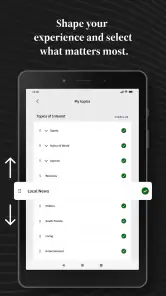
The application is designed for readers interested in local and regional journalism. Content may include breaking news, crime and public safety reports, local government, education, business, outdoor activities, sports, weather, events, and community features. Coverage is particularly useful for people who want information about Bellingham and northwest Washington rather than only national headlines.
Pros
- Provides local news focused on Bellingham and northwest Washington.
- Covers breaking stories
- politics
- weather
- and community events.
- Offers convenient access to regional reporting from a mobile device.
- Supports staying informed about nearby issues and local developments.
- Content is presented in a familiar newspaper-style format.
Cons
- Some articles or features may require a paid subscription.
- Coverage is highly regional and may not suit readers elsewhere.
- Advertising can make parts of the app feel visually crowded.
- Push notifications may become frequent during major news events.
- App performance and available features may vary by device.
- Category
- News & Magazines
- Version
- 11.1.16