Bakesy: Home Bakery Biz App
- 191.00
- 4.6
- Installs
- 100.00K
- Price
- Free

Screenshots
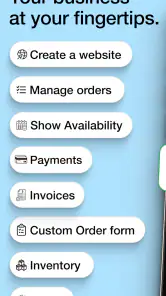
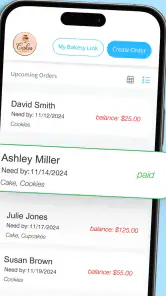

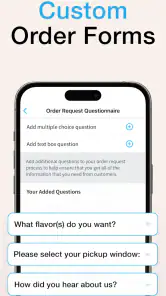

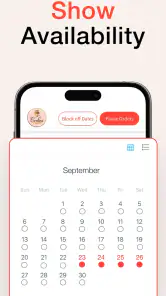
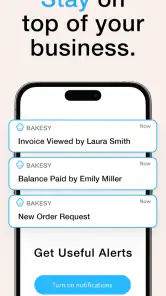

Analysis by Reviewed
Running a home bakery often becomes an exercise in remembering too many small things at once. A customer sends an order through one channel, asks for a change somewhere else, and expects a pickup reminder later. Meanwhile, I still need to track what is due, what has been paid, and which orders are ready. That recurring problem is where Bakesy: Home Bakery Biz App makes sense. It is a free business app from Bakesy, built around the practical needs of people selling baked goods from home rather than managing a conventional retail operation.
My impression is that Bakesy is most useful when your baking has moved beyond occasional favors for friends. Once several customers, dates, products, and payments are involved, a general notes app starts to feel improvised, while a full accounting or customer-management platform can feel excessive. Bakesy sits between those two extremes. It aims to put the everyday business workflow in one place, reducing the amount of mental switching required to keep a small bakery moving.
The app is available at no upfront cost, with optional in-app purchases ranging from $9.99 to $17.99 per item. That makes it approachable for a new baker who wants to test a more organized system before committing to a larger business platform. It is rated for Everyone, so the presentation is easy to approach, and its Android listing shows a 4.6 average from around 1.1 thousand ratings, with more than 100 thousand installs. Those figures suggest that it has found a real audience among small food businesses, although popularity alone does not guarantee that every workflow will suit every baker.
Where Bakesy earns its place in a home bakery workflow
The first setup should focus on how you actually sell
The best way to approach Bakesy is not to treat it as another app to fill with information. I would begin by thinking through the path an order takes in my business: how a customer asks for something, how I confirm the details, how I prepare it, and how the customer receives it. That simple exercise helps separate useful setup from busywork.
For a home baker, the important details are rarely limited to the product name. A cake may have a flavor, size, decoration request, event date, pickup arrangement, and customer note attached to it. Cookies may be sold in different quantities, while custom orders can change several times before they are final. A business tool becomes valuable when it keeps those details close to the order instead of scattering them across messages, paper notes, and memory.
I would also avoid entering every possible product on the first day. Start with the items people ask for most often, then add less common offerings as real orders require them. This keeps the initial experience manageable and gives you a clearer view of whether the app matches your menu. For a home bakery with a small, changing selection, that gradual approach is more practical than building a perfect catalog before accepting the next order.
One useful habit is to create a consistent naming style for products and options. If one customer writes “vanilla birthday cake” and another writes “vanilla celebration cake,” inconsistent wording can make later review harder. Keeping names and notes predictable helps me scan an order quickly, especially on a busy preparation day. This is not a flashy feature; it is the kind of small discipline that determines whether an all-in-one tool actually saves time.
More From Our News Desk

Clash of Clans Is Won Between the Battles

Android Auto Makes the Case for Quieter Car Software

MobiOffice: Transforming Mobile Productivity with Seamless Integration

EA SPORTS FC™ Mobile Soccer: Redefining Mobile Sports Gaming

How Microsoft OneDrive Became a Mobile Productivity Giant

How Google Translate Breaks Language Barriers Effortlessly
A realistic order day
Imagine a Saturday pickup schedule with a dozen orders spread across the morning and afternoon. One customer wants cupcakes for a school event, another needs a decorated cake, and a third is collecting a recurring cookie order. Without a central workflow, I might keep checking conversations to confirm quantities, search a calendar for dates, and look at payment notes separately. The real cost is not just the minutes spent searching. It is the uncertainty created each time I wonder whether an instruction was missed.
With Bakesy, the useful goal is to make each order a working record rather than a temporary message. I can review what needs to be made, when it is needed, and what the customer expects before I begin the baking session. That changes the rhythm of the day. Instead of asking, “What did I promise?” I can focus on “What is the next confirmed task?”
This is particularly helpful for custom work. A standard batch can often be repeated from memory, but a custom cake cannot. A note about colors, wording, dietary preferences, or collection timing can be more important than the product title itself. I would read the order details before shopping for ingredients and again before packing the finished item. That two-stage check is a simple way to use the app as a quality-control aid, not merely as an order list.
The same workflow helps when plans change. Home bakery customers sometimes adjust quantities or collection times, and the baker may need to decide whether the change is still realistic. Updating one central record is safer than leaving the original request in place and relying on a later message to remember the correction. The app cannot remove the need to communicate clearly, but it can reduce the chance that the final agreement is buried in an old conversation.
Where the time saving really happens
The strongest benefit is not a single dramatic automation. It is the accumulation of small reductions in friction. I spend less energy reconstructing the week from fragments and more energy deciding what can actually be produced. That distinction matters for a home bakery because the owner is usually also the baker, buyer, scheduler, packer, and customer-service person.
A central business workspace is especially useful when orders arrive at irregular times. A customer may contact me while I am decorating, shopping, or cleaning the kitchen. If I capture the important details in the same place each time, I do not have to trust a hurried handwritten note or an unread message notification. The value appears later, when I review the workload and discover that the information is still understandable.
Another practical advantage is separating customer communication from production planning. A conversation is good for asking questions, but it is not always a good production checklist. Once an order is confirmed, I want to look at it as work to complete, not as a long exchange of greetings and revisions. Bakesy is appealing because it is designed around the business side of home baking rather than forcing me to adapt a general chat or notes product.
The biggest time saving comes from reducing repeated checking, not from eliminating every manual task. I still need to verify orders, prepare ingredients, bake accurately, and communicate with customers. What changes is the amount of searching and remembering around those tasks. That is an important expectation to set before using it: Bakesy can organize the work, but it cannot replace a reliable baking process.
Useful habits for busy weeks
I would use a short review routine at the start and end of each working day. In the morning, I would check upcoming orders, identify anything needing an early start, and look for customer details that could affect preparation. At the end of the day, I would update the status of completed work and make sure changes are reflected in the order record. A routine like this turns the app into a dependable reference instead of a place I open only when something goes wrong.
For larger custom orders, I would break the work mentally into checkpoints even if the app does not replace a dedicated production-management system. Confirm the design, confirm the timing, prepare the components, finish the decoration, and check the collection details. Keeping those checkpoints in my own process helps prevent the common mistake of treating a confirmed order as finished simply because it has been written down.
I would also use the app to identify the orders that create the most uncertainty. If a customer repeatedly changes details or if a product takes much longer than expected, the record can help me notice the pattern during review. That insight is valuable when deciding which offerings to keep, simplify, or stop accepting. The app therefore has a planning role as well as an administrative one, even though the final business decision still belongs to the baker.
What it replaces, and what it does not
The usual alternative for a small home bakery is a mixture of tools: a messaging app for customer conversations, a calendar for dates, a spreadsheet for money, and a notebook for production notes. That approach can work, especially when order volume is low and products are simple. It is also flexible and familiar. The problem appears when I need to cross-check information between those tools. A calendar may show a pickup date, but not the full decoration request. A spreadsheet may show a total, but not the latest customer change.
Bakesy is more appealing than that patchwork when the main issue is fragmentation. It gives the business a dedicated home instead of asking me to remember where each detail lives. The trade-off is that a dedicated app may feel more structured than a notebook. If I only sell a few items each month, the setup may take more effort than the problem deserves.
At the other end are broad business platforms with deeper accounting, inventory, reporting, or customer-management tools. Those products may be better for a bakery with staff, complex stock control, formal bookkeeping, or multiple sales channels. Bakesy is more focused on the home-bakery stage, where the priority is keeping orders and day-to-day administration understandable. I would not choose it as a substitute for professional accounting when tax records and detailed financial reporting become central responsibilities.
That distinction answers an important question: is it suitable for a growing bakery? Yes, if growth mainly means more customer orders and more coordination. I would reassess the choice if growth brings employees, wholesale accounts, detailed ingredient inventory, or accounting requirements that demand specialized systems. A tool can be perfectly suited to one stage and still become limiting later.
Small-business realities and points of friction
The free entry point is a genuine advantage, but optional purchases mean the long-term cost needs attention. I would explore the free experience first and identify which parts of my workflow genuinely save time before paying for anything. A purchase is easier to justify when it replaces a recurring administrative headache, not when it merely adds another place to store information.
There is also a learning curve whenever a baker moves from informal notes to a structured business app. The first few orders may take longer because I am deciding what to record and how much detail is useful. That does not necessarily indicate a problem with Bakesy; it is the normal cost of creating a repeatable process. Still, someone who wants an instant, zero-setup checklist may find the transition frustrating.
Another limitation is the danger of over-recording. It is tempting to turn every customer message into a long entry, but excessive detail can make the important information harder to see. I would keep notes focused on decisions that affect production, collection, payment, or customer satisfaction. Short, specific records are easier to review than a complete transcript of every conversation.
Reliability also depends on disciplined use. If I accept an order in a message but postpone entering it, the app cannot protect me from that gap. If I change a collection time but forget to update the central record, the same confusion remains. Bakesy reduces friction after information is captured consistently; it does not automatically repair a scattered workflow.
For that reason, I would not recommend it to someone who strongly prefers paper and handles only occasional orders. A notebook may be faster for a very small operation. I would also look elsewhere if the main requirement is advanced bookkeeping, detailed stock management, or a full point-of-sale setup. Bakesy makes the most sense for the middle ground: a home baker with enough regular business to need structure, but not so much complexity that a large enterprise platform is justified.
Compatibility, cost, and everyday accessibility
On Android, the current version is 3.3.11 and requires Android 7.0 or later. That gives the app a fairly accessible baseline for people using older supported phones, while users on very old devices should check compatibility before planning a full business workflow around it. Since a bakery may rely on the phone during shopping, preparation, and pickup, device access matters more here than it would for an app used only occasionally.
The Everyone content rating is appropriate for the app’s business purpose and makes it straightforward to consider in a family-run bakery where more than one person may help with administration. The developer is Bakesy, and the product has been available since July 20, 2021. Its continued presence and current version indicate an established app rather than a brand-new experiment, although I would still keep a separate backup of essential business information for peace of mind.
That last point is a general business habit worth emphasizing. An app can be the main workspace without becoming the only place where critical information exists. I would retain whatever records are necessary for my own financial and customer obligations, especially for completed orders. This is not a criticism unique to Bakesy; it is sensible protection whenever a business depends on a digital service.
Who will benefit most
Bakesy is a strong candidate for a home baker who has started receiving regular custom orders and feels that administration is taking time away from baking. It should also appeal to someone moving from social-media messages and handwritten notes toward a more repeatable process. The app’s all-in-one approach is most valuable when the business owner is doing nearly everything alone and needs one dependable place to review the workload.
It is less compelling for a baker with a highly specialized operation that already uses professional accounting, inventory, and sales systems successfully. Replacing a mature workflow just because a tool is designed for home bakeries would not automatically improve the business. Likewise, someone who rarely sells and does not need to track multiple active orders may gain little from the setup.
For a friend starting to sell cakes, cookies, or other baked goods from home, I would recommend trying Bakesy early, before the order process becomes unmanageable. I would not wait until missed details and rushed replies have already become normal. The best time to introduce structure is when the business is still small enough to adjust its habits without a painful migration.
My final assessment
After looking at the app through the lens of time saved, friction removed, and reliability, I see Bakesy as a practical organizing tool rather than a magic solution. Its value comes from bringing the home-bakery workflow closer together: customer requests, order details, preparation planning, and the administrative tasks that are easy to overlook when baking is the main focus.
I like that it addresses a specific type of small business without demanding the complexity of a much larger platform. The free starting point lowers the risk, while the optional purchases make it sensible to test the workflow before spending money. The main caution is to keep expectations realistic. It will not make production faster by itself, and it is not a replacement for specialist accounting or advanced operations software when a bakery grows beyond its original scale.
My recommendation is therefore straightforward: try it if your home bakery has enough orders that you are repeatedly searching through messages, checking several lists, or relying on memory. Set it up around your real products, keep notes concise, and make a daily review part of the routine. If your business is still occasional or already runs smoothly through a more powerful system, the change may not be worth it. For the baker caught between casual selling and full-scale business management, however, Bakesy offers a focused way to make the work feel less scattered and more dependable.
Bakesy: Home Bakery Biz App Frequently Asked Questions
Can I use Bakesy on my current phone or tablet?
Bakesy is a mobile app for managing a home bakery business, so it may be a convenient fit if you prefer handling orders and customer communication from a phone or tablet. It requires Android 7.0 or later. Before downloading, check that your device meets this requirement and that you have enough space for the app and its updates.
Who develops Bakesy, and is it suitable for younger users?
Bakesy is developed by Bakesy and is intended as a business tool for people running or planning a home bakery. Its content rating is Everyone, but the app’s business features are most relevant to bakers and their customers rather than children looking for a game or entertainment app. Anyone setting up a bakery should also consider the responsibilities involved in selling food.
What is Bakesy: Home Bakery Biz App used for?
Bakesy is designed to help home bakers manage and grow a small baking business from a mobile device. It can bring together customer orders, menus, payments, pickup or delivery details, and business communication in one place. The app is especially useful for bakers who sell cakes, cookies, cupcakes, bread, or other homemade products and want a more organized alternative to handling everything through messages and spreadsheets.
Is Bakesy suitable for beginners who are starting a home bakery?
Yes, Bakesy can be useful for beginners because it focuses on practical business tasks rather than requiring advanced technical knowledge. New sellers can use it to present their products, collect order information, communicate with customers, and keep track of upcoming work. However, users should still check the available setup options carefully, since creating an effective menu, pricing products, setting policies, and managing local legal or food-safety requirements remains the baker’s responsibility.
Can customers place orders and make payments through Bakesy?
Bakesy is built to simplify the ordering process by giving customers a clearer way to view products and submit order details instead of relying solely on social media direct messages. Depending on the plan, region, and enabled features, payment collection and checkout options may vary. Before downloading or subscribing, home bakers should confirm which payment methods are supported, whether transaction fees apply, and how deposits, refunds, and cancellations are handled.
Pros
- Simple order management helps home bakers track customer requests.
- Custom pricing and product options support different bakery business models.
- Customer details can be kept organized in one convenient place.
- Useful for managing repeat orders and building customer relationships.
- Designed specifically for small home-based baking businesses.
Cons
- Some features may require time to set up before they become useful.
- Not ideal for large bakeries needing advanced inventory controls.
- Business tools may feel limited compared with full ecommerce platforms.
- Reliance on mobile access can be inconvenient during busy baking sessions.
- Availability of certain features may vary by region or subscription plan.
- Category
- Business
- Version
- 3.3.11