ATG Tickets - Theater Tickets
- 12.00
- 4.8
- Installs
- 100.00K
- Price
- Free

Screenshots





Analysis by Reviewed
Booking a theatre night sounds simple until you are comparing venues, checking show dates, finding seats, and trying to keep several people aligned. I found ATG Tickets most useful when I treated it as a focused starting point for that process rather than as a general entertainment app. It is an Events app from ATG Entertainment, built around finding and booking Broadway and US theatre tickets, including New York shows and musicals.
The first impression is encouraging. The app is free, available for Everyone, and has reached over 100 thousand installs. Its average rating sits at 4.8 from around 2.5 thousand ratings, which suggests that many people find the basic ticket-search experience dependable. My own view is more measured: it is a practical choice when the performance you want is represented in its catalogue, but it is not a universal replacement for every theatre website or ticket marketplace.
How I use ATG Tickets from search to booking
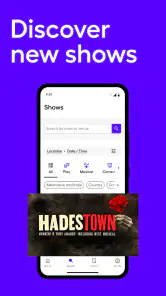
My usual workflow begins with the event rather than the venue. If I already know the musical or play, I search for that title first and then narrow the result by location and date. This is less tiring than opening several theatre pages one after another, especially when planning a New York evening and trying to fit dinner, transport, and another appointment around the performance.
When I am flexible about the show, I reverse the process. I start with the city or theatre area, browse the available productions, and compare dates before becoming attached to one title. That habit matters because the cheapest or most convenient option is not always the production I initially had in mind. A ticket app is most helpful when it reduces the number of separate pages I need to check, and this is where ATG Tickets earns its place on my phone.
I also recommend deciding your non-negotiables before browsing. Write down the evening you can attend, the latest finishing time you can tolerate, and whether you need a particular seating preference. Without that preparation, it is easy to spend time comparing attractive listings that cannot actually work for your group. The app helps with discovery, but it cannot make an unsuitable date or location convenient.
For a realistic example, imagine arranging a Saturday theatre trip with two friends. I would search for the preferred show, check the available performance times, and send the group a short list of two workable options instead of asking everyone to browse independently. Once the group agrees, I would return to the same listing and complete the booking while the choice is still clear. This avoids the familiar problem of three people discussing different performances without noticing.
The app is especially useful for that early coordination stage. It gives me one place to inspect theatre choices instead of relying entirely on search-engine results, social posts, or saved browser tabs. I still read the event details carefully before paying, because a clean browsing experience does not remove the need to verify the date, venue, and ticket selection.
One practical habit is to pause before the final confirmation and repeat the booking details aloud or to a companion: show, day, start time, venue, and seat area. This sounds overly cautious, but theatre mistakes are often caused by selecting the right production on the wrong date. A mobile interface makes it easy to move quickly, and speed is not always an advantage at that point.
ATG Entertainment is the developer behind the app, and the product feels aimed at people who want a direct route from theatre discovery to ticket purchase. I would not describe it as a social planner or a broad city guide. Its value is narrower and clearer: it helps me investigate performances and move toward a booking without making me manage every theatre separately.
What I check before relying on a listing
I look beyond the title and promotional image. The important questions are whether the performance time fits my day, whether the venue is practical, and whether the seating choice suits the people attending. A show can appear perfect until the travel time or late finish makes it a poor match for the occasion.
I also consider whether I am booking for myself or for a group. Solo bookings are forgiving because I can change my preference quickly. Group bookings require more patience: I need to make sure everyone understands the same performance and that the selected seats make sense together. The app can support the search, but the decision still benefits from a simple shared plan.
Another useful distinction is between browsing and committing. I use the app freely while exploring, but I slow down once I have selected a performance. This two-stage approach prevents casual browsing from turning into an accidental choice. It also makes it easier to compare a weekday option with a weekend option without confusing the details.
Settings and phone habits worth checking
There is no reason to treat every app setting as something that must be changed immediately. I would first make sure the phone itself is ready for ticket use: notifications are allowed if I want booking updates, the device has enough battery for the journey, and the app is updated before I begin an important purchase. These are ordinary checks, but they matter more for a ticket than for a casual browsing app.
The current version is 1.3.1 and requires iOS or Android 10 or later. That makes the app accessible on many reasonably recent phones, while still giving older-device users a clear compatibility point to check before planning around it. I would not wait until the theatre entrance to discover that the phone cannot run the app or that an update is needed.
I prefer to keep notifications purposeful rather than allowing every application to interrupt me. For ATG Tickets, reminders connected with a booking can be useful, while general promotional alerts may be less important to someone who only visits the theatre occasionally. The best choice depends on how often you attend shows, but a quieter notification setup makes it easier to notice the messages that actually matter.
I also keep the app in a predictable place on my home screen during a booking period. That small shortcut saves time when I need to reopen the listing or retrieve booking information. It is more reliable than assuming I will remember which browser tab contained the details, particularly when I am travelling or coordinating with other people.
One setting-related trade-off is convenience versus concentration. The faster the phone lets me jump back into a purchase, the more important it becomes to check that I have returned to the correct event. I would rather spend a few seconds reviewing the details than rely on an automatic habit that could carry an old search into a new decision.
Faster patterns for repeat theatre planning
Experienced use is less about tapping quickly and more about reducing unnecessary decisions. I keep a short note with the preferred city, possible dates, and any seating requirements before opening the app. That turns the first search into a targeted task instead of an endless browse.
For recurring theatre trips, I use a repeatable sequence: search the production, compare suitable performance times, check the venue, review the seats, and then confirm the booking details. Following the same order prevents me from jumping between unrelated screens and forgetting what I have already checked.
Another efficient pattern is to separate discovery from group approval. I can identify realistic options on my own, then share the show name, date, and time with friends. Once they agree, I return to complete the booking. This is faster than asking a group to explore every possibility at once, and it reduces the chance that someone approves a different performance from the one I am viewing.
If I am choosing between several shows, I make a small comparison outside the app rather than repeatedly reopening the same pages. I note the performance time, venue, and how well each option fits the evening. The app supplies the event information; a simple personal checklist handles the planning logic that the app is not designed to provide.
For last-minute decisions, I would use the app to narrow the choice quickly but would avoid rushing the final screen. A short search is useful when I already know the title or location. It is less useful when I am trying to discover an unfamiliar production while travelling, because I may need more context than a ticket-focused interface provides.
I also find it helpful to open the app before leaving home when the booking will be needed during the journey. This is not a claim that every ticket detail is available offline; it is simply good preparation. I want to know where the booking information is and whether I can access it comfortably before I am standing outside a busy venue.
Where the app is strong, and where it stops
The strongest part of ATG Tickets is its focus. People who already want Broadway, New York theatre, US shows, or musicals can begin in a relevant environment instead of sorting through unrelated event categories. The free price also makes it easy to install for occasional browsing, particularly when I am deciding whether a theatre trip is worth organising.
Its limitation is the same as its strength: focus can feel narrow. If I want a complete night-out plan involving restaurants, transport, local attractions, and events from many unrelated providers, I would use a broader city or ticket service alongside it. ATG Tickets is better at helping me find and book a theatre performance than at managing the entire outing.
I would also avoid assuming that an app search automatically represents every possible ticket route. When a show is especially important, I compare the result with the venue’s own information and inspect the final booking details carefully. That is not a criticism unique to this app; it is a sensible habit whenever money and fixed performance times are involved.
Another trade-off concerns users who want extensive research before choosing. A dedicated theatre app can get me to relevant listings quickly, but a general search engine may provide more surrounding discussion, reviews, travel advice, or venue background. I use ATG Tickets for the practical ticket path and other sources for broader context, rather than expecting one tool to do both jobs equally well.
People with older phones should check compatibility before depending on it, since the minimum operating-system requirement is Android or iOS 10. People who dislike installing a separate app for occasional purchases may prefer using a browser or the theatre’s own digital route. The app is most worthwhile when its focused search and repeat access will save more effort than the installation itself.
There is also a human limitation that no interface can solve: popular performance times can create pressure to decide quickly. I would not let that pressure replace a careful check of the date, venue, and seating selection. A smooth path to checkout is valuable, but a smooth wrong booking is still a wrong booking.
Who should use it for theatre decisions
I recommend ATG Tickets to someone who regularly looks for Broadway or US theatre tickets, especially if they prefer checking several shows in one focused app. It is also a sensible choice for visitors planning a New York theatre evening who want to organise performances before arriving rather than starting from scattered venue pages.
It suits practical planners more than passive browsers. If I know roughly when I can attend and what kind of production interests me, the app helps me move through the decision efficiently. The experience is less compelling for someone who wants a deep editorial guide to every cultural event in a city or a complete itinerary builder.
Occasional users can still benefit because the app is free and rated Everyone, but they should keep their expectations realistic. Installing it will not replace checking travel arrangements, reading the booking conditions, or confirming that the selected performance works for the whole group. It is a useful instrument, not a personal concierge.
The rating of 4.8 and the community of around 2.5 thousand ratings give me confidence that the core experience has worked well for many users. I treat those figures as a helpful signal rather than a guarantee, because my own satisfaction depends on the show I want, the venue involved, and how much planning support I expect from the app.
My verdict after building a repeatable routine
ATG Tickets succeeds when I use it with a clear purpose: find relevant theatre performances, compare workable dates, choose carefully, and keep the booking details organised. Its best feature is not a flashy extra but the reduction of friction between wanting to attend a show and locating a suitable ticket path.
I would install it for Broadway and US theatre planning, particularly for New York shows and musicals. I would not use it as my only source for a complicated city itinerary, nor would I skip the final checks simply because the search feels straightforward. The app is strongest when paired with good planning habits.
With a current version of 1.3.1, a free download, and support for devices running Android or iOS 10 and later, it is easy to try without a financial commitment. After using it, my recommendation is clear but specific: choose ATG Tickets when theatre discovery and ticket booking are the centre of your plan. If that is what you need, it is a focused and convenient companion; if you need a complete event marketplace or travel planner, another tool will likely serve you better alongside it.
Pros
- Browse and buy tickets for a wide range of Broadway shows.
- Official ticket availability helps reduce the risk of invalid tickets.
- Mobile tickets make entry quick and convenient at the theater.
- Useful filters help narrow shows by date
- venue
- and performance.
- The app provides show details
- seating information
- and ticket prices.
Cons
- Popular performances can sell out quickly
- especially on weekends.
- Ticket fees may noticeably increase the final checkout price.
- Some listings may have limited seat choices at busy times.
- Refund and exchange options can depend on the individual show.
- The app is less useful if you only attend small local productions.

- Category
- Events
- Version
- 1.3.1