Antique Identifier, Appraisal
- 233.00
- 4.6
- Installs
- 100.00K
- Price
- Free

Screenshots
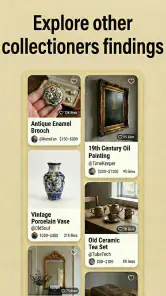
Analysis by Reviewed
When I find an unfamiliar brooch, lamp, watch, or piece of furniture at a flea market, my first question is usually simple: what am I looking at, and is it worth learning more about? Antique Identifier, Appraisal is built around that first step. It is an education app from Brite Technologies LLC that uses a photo-based approach to help identify antiques, jewelry, and vintage objects. I see it less as a final authority and more as a quick visual starting point when an object has no label and the seller has little information.
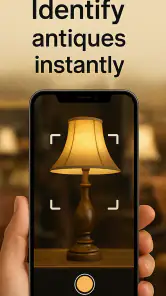
The central capability is easy to understand: take a picture of an item and use the result to begin researching its identity and possible value. That sounds modest, but it can change how you browse secondhand items. Instead of searching broad phrases such as “old gold ring” or “wooden table vintage,” I can begin with a more focused description suggested by the image. The real benefit is not instant certainty; it is turning a vague object into a better research question.
That distinction matters. A visual identification tool can be useful for recognizing styles, materials, periods, or familiar object types, but an image alone cannot reliably establish authenticity, condition, provenance, or a professional market valuation. I would use this app to decide what deserves closer inspection, not to make a high-value purchase or sale without independent evidence.
What the photo-based capability feels like in everyday use
The app belongs to the Education category, which fits my experience better than treating it like a shopping or auction tool. Its most useful role is helping a curious owner learn the vocabulary around an object. Once I have a possible style or category to investigate, I can compare hallmarks, construction details, maker marks, materials, and similar examples elsewhere. That makes the app valuable even when the first identification needs correction.
I found that the quality of the photograph becomes part of the process. A dark image, a cluttered background, or a distant shot gives the app less visual information to work with. For jewelry, I would photograph the front, back, clasp, setting, and any visible mark separately. For furniture or ceramics, I would include the overall shape first and then capture labels, stamps, joints, signatures, and areas of wear. This is a more reliable workflow than taking one attractive picture and assuming it contains everything needed.
Lighting is another practical detail. Soft daylight helps show surface texture and color without creating harsh reflections. That is especially important for polished metal, glass, glazed ceramics, and framed pieces. I also avoid cleaning an unfamiliar object before documenting it. Patina, wear, old repairs, and residue may be useful clues, and aggressive polishing can remove information or damage a finish.
The app is free to install, with optional purchases listed from $4.99 to $69.99 per item. I would begin with the free experience and judge whether the results fit my needs before spending anything. The purchase range makes it particularly important to understand what is included at the moment an upgrade is offered, rather than assuming every user receives the same level of appraisal help.
More From Our News Desk

Clash of Clans Is Won Between the Battles

Android Auto Makes the Case for Quieter Car Software

MobiOffice: Transforming Mobile Productivity with Seamless Integration

EA SPORTS FC™ Mobile Soccer: Redefining Mobile Sports Gaming

How Microsoft OneDrive Became a Mobile Productivity Giant

How Google Translate Breaks Language Barriers Effortlessly
How I would use the result without overtrusting it
After receiving an identification, I would treat it as a hypothesis and build a small verification checklist. First, I would look for physical clues that support the suggested category. Does the construction match the supposed period? Does the mark appear consistent with that maker? Are the materials plausible? Does the condition explain the proposed value, or is the estimate ignoring damage, replacements, or missing parts?
For jewelry, a suggested style is only the beginning. I would inspect the hallmark with a magnifying glass, check whether stones are original, and look closely at the clasp and soldering. For furniture, I would examine the underside, drawer construction, hardware, veneer, and signs of restoration. For ceramics, I would compare the mark and shape with reference examples rather than relying on the object’s age alone. These steps prevent a confident-sounding result from becoming an expensive assumption.
One useful habit is to photograph details in a deliberate order. I start with a full view so the object’s proportions are clear, then capture the most diagnostic detail, then document damage and alterations. Keeping those images together gives me a visual record for later comparisons. It also helps when I ask a dealer, collector, or specialist for a second opinion, because I can show both the attractive front view and the less glamorous evidence.
Another practical tip is to record the context separately. Where was the item found? Was there a receipt, family story, old box, or matching set? Context does not prove authenticity, but it can guide research. The app can help with the visual side; it cannot replace the history attached to the object. I would never discard that background simply because the image suggests a different category.
The strongest scenario: deciding what deserves deeper research
The best use case for me is a weekend visit to a flea market or estate sale. Imagine finding a small pendant in a tray of mixed jewelry. It has an unusual setting, a worn mark, and no useful label. I can photograph it before buying, use the result to narrow the style, and then decide whether to spend more time checking the hallmark and condition. The app does not need to prove that the pendant is valuable to be helpful. It only needs to tell me that the piece deserves a slower look instead of being dismissed as ordinary costume jewelry.
The same workflow works at home. A relative may leave behind a box of watches, silverware, postcards, or decorative objects with no documentation. Photographing each piece can help organize the collection into sensible groups. I can then research one group at a time rather than searching randomly. That is where the educational value becomes clear: the app can reduce the confusion that makes inherited collections feel impossible to sort.
It is also useful before donating or selling items, provided I keep expectations realistic. If the app points toward a recognizable maker or period, I may choose to obtain a specialist opinion before giving the object away. Conversely, if it suggests a common category and the physical evidence supports that conclusion, I can save time and avoid paying for an appraisal that is unlikely to change my decision.
For students, design enthusiasts, and people learning about decorative arts, the visual starting point can make research less intimidating. Instead of memorizing every style in advance, I can use an object in front of me as the lesson. I then learn why certain shapes, materials, and marks matter. That is more engaging than reading a general guide with no real object to examine.
Where the app should not be treated as the final answer
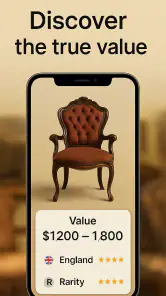
The main trade-off is the gap between identification and appraisal. An object may be correctly recognized yet still have little resale value because of damage, reproduction status, missing components, weak demand, or uncertain history. The reverse can also happen: an apparently ordinary object may deserve attention because of a rare maker mark or unusual variant that a casual image cannot establish.
I would be especially cautious with claims involving precious metals, gemstones, signed works, luxury watches, and objects described as rare. A photograph cannot perform a metal test, verify a stone, establish a chain of ownership, or detect every restoration. In those situations, I would use the app to prepare questions for a qualified appraiser, auction specialist, jeweler, or relevant collector group. The app is most responsible when it helps me ask better questions rather than encouraging a quick financial decision.
There is also a natural limitation when objects look alike across different periods. Reproductions often copy popular antique designs, and a worn modern item can resemble an older one in a photograph. Surface color is not the same as age, and decorative style is not proof of manufacture date. If the result conflicts with the object’s marks or construction, I would trust the physical evidence enough to investigate further rather than forcing the item to fit the first suggestion.
Compared with a traditional reference book, this app is faster and more approachable, especially when I do not know the correct search terms. A book or specialist database is usually better for deep comparison, maker histories, regional variations, and documented examples. Compared with a general web image search, the app gives me a more direct first step, but web research remains important for checking whether the proposed identification matches genuine examples. Compared with a professional appraisal, it is more convenient and accessible, but it does not serve the same purpose for insurance, estate division, or a serious sale.
What the current release means for prospective users
The current version is 3.0.0, and the app supports devices running Android 7.0 or later. That makes it accessible to people using older Android phones, although the practical experience will still depend on camera quality, lighting, and screen size. Since the task is image-based, a newer phone may produce more useful photographs even when an older device can run the application.
The app is rated for Everyone, which matches its broad educational purpose. I can imagine using it with a family member who is sorting inherited belongings, or with a teenager who is beginning to explore vintage design. Still, “Everyone” should not be confused with “risk-free.” The financial decisions around antiques can be serious, so younger users and inexperienced buyers should involve an adult or specialist before spending substantial money based on an identification.
Its store presence shows a 4.6 average from around 5.6 thousand ratings, with over 100 thousand installs. That suggests the concept has found an audience, but popularity does not remove the need for careful verification. I pay more attention to whether the app helps me form a sensible research process than to whether a single result sounds impressive.
Because the app is free to start, it is easy to test on objects whose identity I already know. That is the fairest personal trial. I would photograph a familiar item, compare the result with what I can verify from its label or documentation, and then try a less obvious object. This approach tells me more than testing only a mysterious treasure, where my own uncertainty makes the result difficult to judge.
Who will get the most from it
I think Antique Identifier, Appraisal is best for curious owners, flea-market shoppers, families organizing inherited collections, and beginners who need help finding the right terms for further research. It is also a good companion for anyone who enjoys vintage objects but does not yet know how to distinguish a style, a material, a maker mark, and a valuation claim.
The people who should skip it are those looking for a legally defensible appraisal, a guaranteed selling price, or a substitute for testing and authentication. If I were insuring a valuable collection, dividing an estate, buying a supposedly rare gemstone, or negotiating a major auction sale, I would choose a qualified professional and use this app only as preparation. The convenience is attractive, but the consequences of a wrong assumption are too high in those cases.
My most useful takeaway is to use the app in two passes. First, photograph the object cleanly and accept the result as a research direction. Second, return to the object with the suggested category in mind and inspect the details that could confirm or challenge it. That two-step method turns a quick scan into a more careful learning exercise and reduces the temptation to treat an automated impression as a verdict.
Overall, I would recommend Antique Identifier, Appraisal as an approachable educational tool for the first stage of antique and vintage research. It earns its place when it helps you notice what to investigate next, not when you expect it to settle a valuable object’s authenticity by itself. With sensible photography, patient checking, and professional help for high-stakes items, it can make unfamiliar objects easier to understand and everyday discoveries much more interesting.
Antique Identifier, Appraisal Frequently Asked Questions
Is Antique Identifier, Appraisal free to download, and what might cost extra?
Antique Identifier, Appraisal is free to download, so you can try the app before deciding whether to pay for additional features. It offers in-app purchases, with prices ranging from around $5 to $70 per item. Check the purchase details in your app store before confirming, and consider whether any paid option suits how often you expect to identify objects.
Who makes Antique Identifier, Appraisal, and what devices can run it?
The app is made by Brite Technologies LLC and is listed for devices running operating system version 7.0 or later. It is an education app intended for anyone interested in identifying antiques and vintage objects, and its content rating is Everyone. Check your device’s operating system before downloading to make sure it meets the app’s minimum requirement.
What is Antique Identifier, Appraisal used for?
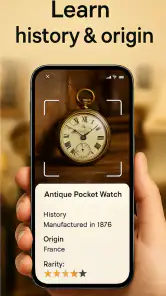
Antique Identifier, Appraisal is designed to help users recognize and learn more about antiques, collectibles, furniture, artwork, jewelry, and other potentially valuable objects. You can typically provide a photograph or description, and the app analyzes visible details to suggest an identification, historical context, estimated category, or possible value range. It is best treated as a convenient first reference rather than a definitive professional appraisal.
How accurate are the identifications and price estimates?
The app can be useful for generating an initial opinion, especially when an object is photographed clearly and includes recognizable marks, patterns, materials, or design features. However, automated results may be incomplete or inaccurate because condition, authenticity, provenance, regional demand, and hidden damage can significantly affect an item’s value. For insurance, selling, inheritance, or legal purposes, confirm the result with a qualified appraiser or specialist.
What kind of photos should I upload for the best results?
Use sharp, well-lit photographs taken against a simple background, and avoid reflections, heavy shadows, filters, or excessive cropping. Photograph the entire object first, then include close-ups of signatures, maker’s marks, labels, stamps, serial numbers, construction details, damage, and unusual features. Multiple angles are especially helpful for furniture, ceramics, jewelry, and sculptures because important identifying details may not appear in one image.
Pros
- Quickly identifies many antiques from photos.
- Useful for preliminary research before visiting an expert.
- Simple interface makes scanning items easy.
- Can help organize and compare potential finds.
- Helpful for learning about unfamiliar antique styles.
Cons
- Photo results may be inaccurate for rare or unusual objects.
- Appraisals should not replace a certified valuation.
- Some features may require a subscription or in-app purchase.
- Poor lighting or damaged items can reduce recognition quality.
- Results may vary depending on the quality of available references.
- Category
- Education
- Version
- 3.0.0