AnSo Anaesthesia Sonoanatomy
- 39.00
- 2.5
- Installs
- 50.00K
- Price
- Free
Screenshots
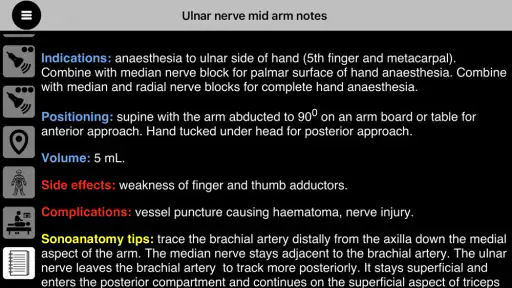
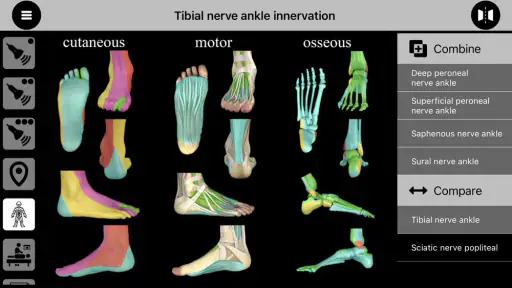
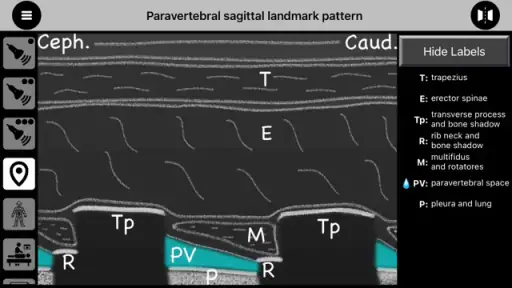
Analysis by Reviewed
I approached AnSo Anaesthesia Sonoanatomy as a focused medical reference rather than a general ultrasound-learning platform. Its purpose is clear: help anaesthesia learners and practitioners connect ultrasound views with the anatomy they need to recognize during regional anaesthesia and related procedures. That narrow focus is its main appeal, but it also explains why the app will feel highly relevant to one audience and almost unnecessary to another.
Developed by Sumo Enterprises, this free medical app is aimed at an Everyone-rated audience, although its subject matter is naturally much more useful to healthcare students and professionals than to casual users. It has passed the fifty-thousand-install mark and holds an average rating of 2.5 from roughly five hundred ratings, with several dozen written reviews. I would treat those figures as a reason to approach it thoughtfully, not as a final verdict: a specialist reference can be valuable even when its public reception is mixed, but it needs to fit your exact learning routine.
How AnSo fits into real ultrasound learning
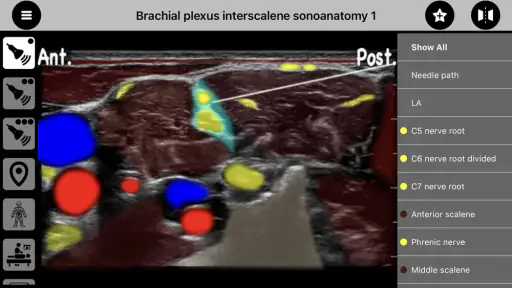
A compact reference for anatomy under the probe
When I study ultrasound-guided anaesthesia, the difficult part is rarely memorizing a single label. The real challenge is moving between three things quickly: the patient’s anatomy, the ultrasound image, and the practical decision about where the needle or local anaesthetic should go. AnSo is built around that connection. It is not trying to replace supervised scanning, anatomy teaching, or clinical judgement. Instead, it works best as a visual reminder before a session, during revision, or after seeing an unfamiliar image.
That distinction matters. A conventional anatomy textbook can explain structures in depth, while a broad ultrasound app may cover abdominal, cardiac, vascular, and emergency examinations. AnSo is more specialized. Its value comes from keeping the attention on sonoanatomy relevant to anaesthesia rather than making the user search through unrelated body systems.
I found that the most sensible way to use it is with a specific question in mind. For example, before a teaching list, I might review the expected relationship between muscles, nerves, vessels, and fascial planes for a block. Afterward, I could return to the same topic and compare what I saw on the patient with the idealized anatomy. That two-stage workflow is more useful than opening the app casually and scrolling without a learning goal.
Who is likely to benefit most
The strongest audience is a trainee who already understands basic anatomy and wants more confidence interpreting ultrasound images in anaesthesia. It can also suit a clinician who occasionally performs regional techniques and wants a quick visual refresher without carrying a large reference book. Educators may find it useful as a prompt for discussion, especially when asking learners to identify structures before revealing the explanation.
I would be more cautious about recommending it as a first and only resource for someone completely new to ultrasound. Beginners need explanations of probe handling, orientation, image optimization, artefacts, needle visibility, safety, and clinical decision-making. A specialist sonoanatomy reference can support that education, but it cannot provide the full practical experience of scanning a living patient under supervision.
More From Our News Desk

Clash of Clans Is Won Between the Battles

Android Auto Makes the Case for Quieter Car Software

MobiOffice: Transforming Mobile Productivity with Seamless Integration

EA SPORTS FC™ Mobile Soccer: Redefining Mobile Sports Gaming

How Microsoft OneDrive Became a Mobile Productivity Giant

How Google Translate Breaks Language Barriers Effortlessly
It is also not the right choice for a person looking for general health advice. The Everyone content rating describes the app’s broad accessibility, not its suitability for self-diagnosis or treatment decisions. This is educational material for a professional field, not a tool for deciding whether a symptom needs urgent care.
A realistic everyday scenario
Imagine a resident preparing for a regional anaesthesia list the next morning. There is limited time, so opening a large textbook feels inefficient. The resident chooses one block, reviews the relevant sonoanatomy, and writes down three things to look for: the target structure, nearby structures that must be protected, and the expected tissue planes. In the operating room, the app stays a preparation tool rather than a substitute for the supervising anaesthetist. After the case, the resident revisits the same topic and notes where the real scan differed.
That is where I see the app making practical sense. It encourages preparation around a procedure instead of passive browsing. The trade-off is that its usefulness depends heavily on the user already knowing how to turn an image into a clinical question. Without that habit, it may become a collection of pictures rather than an effective learning system.
What the current release tells me
The current version is 2.3.7, and the app was released on January 25, 2018. Those details place it in the category of an established specialist reference rather than a brand-new learning product. I would not assume that a long presence automatically means the content is comprehensive or recently refreshed. For medical education, the important question is whether the material remains clear, clinically appropriate, and compatible with the way you currently learn.
For an existing user, a version number is useful mainly as a checkpoint. If the app has been installed for a while, it is worth checking that the current release opens normally on the device and that the material still supports your curriculum. I would also avoid judging the app solely by its age. A focused anatomy resource does not need constant visual redesign to be useful, but medical learners should still compare it with current teaching from their institution and with contemporary clinical guidance.
How I would build a study workflow around it
My preferred approach would be deliberately simple. First, choose one anatomical region or block that you expect to encounter. Second, review the sonoanatomy before scanning, paying attention to relationships rather than trying to memorize every visual detail. Third, use a supervised scan to test recognition in a real patient. Finally, return to the app and identify which structures were easy, which were obscured, and which changed with probe position or patient anatomy.
This workflow exposes an important limitation: a static reference can show a representative view, but real ultrasound is variable. Body habitus, positioning, depth, gain, probe pressure, pathology, and operator technique can all alter the appearance. I would therefore use the app to create expectations, not rigid rules. If your scan does not look exactly like the reference, that should trigger investigation rather than panic.
A second useful habit is to study safety alongside identification. When reviewing a target, I would ask myself what lies nearby and what could be mistaken for it. This turns the app from a recognition exercise into a risk-awareness exercise. The resource is most valuable when it helps you notice relationships, not merely name isolated structures.
A third tip is to use it in short sessions linked to actual clinical exposure. Ten focused minutes before a relevant teaching session may be more productive than a long, unfocused review. Because the app is specialized, its content can become repetitive if you browse without a purpose. A procedure-based schedule keeps that specialization working in your favor.
Where it compares well with usual alternatives
Compared with a printed anatomy atlas, AnSo is easier to consult when your goal is specifically ultrasound-based anaesthesia. A traditional atlas may show beautiful anatomical detail, but it does not always help you translate that detail into the grayscale relationships seen through a probe. The app’s narrower subject makes it faster for a targeted refresher.
Compared with a broad ultrasound-learning platform, it may feel less overwhelming. General resources often cover many specialties and examination types, which is useful for wide training but inefficient when you only need regional anaesthesia anatomy. AnSo’s focus can reduce that search burden.
On the other hand, a larger modern course may be better for structured progression, video demonstrations, quizzes, image interpretation practice, and guided assessment. If you want a complete curriculum with measurable learning stages, I would look beyond this app. Likewise, a current institutional teaching library may offer more context about local techniques and preferred approaches.
The best comparison is not “which resource wins?” but “what job does each resource do?” I would use AnSo for focused visual preparation, a textbook for deeper anatomy, supervised scanning for technique, and current clinical guidance for decisions that affect patient care. Treating one small app as the entire educational pathway would be the wrong trade-off.
Cost, access, and the practical trade-off
The app is free to download, with optional in-app purchases ranging from forty-nine cents to six dollars and forty-nine cents per item. That makes it relatively easy to try without committing to a subscription or a large upfront purchase. Still, I would check what the optional items provide before building a long-term study plan around them. The difference between free access and paid additions can matter if you expect to use the app throughout training.
Because the basic entry cost is low, the sensible approach is to install it, test a few relevant topics, and decide whether its presentation matches your learning style. A low price does not compensate for content that feels difficult to navigate or too limited for your needs. Conversely, if it gives you a useful visual prompt before scans, even occasional use may justify the small optional purchases.
The minimum operating system is Android 7.0. That is helpful for people using older compatible devices, but I would still think about screen size and handling. Ultrasound images and labels are easier to interpret on a larger display than on a small phone. A tablet may be more comfortable for revision, while a phone is more convenient beside a workstation or in a pocket between sessions.
Friction points I would not ignore
The public average of 2.5 suggests that the experience has not worked equally well for everyone. I would not invent a single cause for that rating, but it is enough to lower my expectations about polish and consistency. Specialist apps can be clinically focused while still feeling dated, awkward, or less refined than newer educational products. Before relying on it, I would personally test how quickly I can reach the material I need.
Another concern is the gap between a reference image and clinical reality. If the app presents anatomy in a clean, recognizable form, learners may unconsciously expect every patient scan to look similar. That is a teaching risk rather than a flaw unique to this product, but it means the app should be paired with discussion of variation and image quality. I would never use a familiar-looking picture as permission to proceed without confirming anatomy and following local safety practice.
The narrow scope can also become a weakness. If your training moves from regional anaesthesia into vascular access, lung ultrasound, echocardiography, or emergency scanning, you will need other resources. AnSo may remain useful for its original purpose, but it will not replace a broader point-of-care ultrasound library.
Finally, free access with optional purchases can make it less obvious what the complete experience will be until you explore it. I would avoid purchasing anything immediately. First, identify whether the available material supports your current block of study and whether the organization saves time compared with resources you already trust.
Questions I would answer before installing
If you are wondering whether it is suitable for formal training, my answer is yes as a supplement, not as a standalone course. It can support revision and image recognition, but competence still comes from supervised practice, feedback, anatomy knowledge, and safe clinical protocols.
If you are unsure whether it is useful for experienced anaesthetists, I think the answer depends on frequency of practice. Someone who performs regional techniques regularly may find a compact refresher helpful before an unfamiliar block. Someone seeking advanced troubleshooting, extensive case variation, or detailed procedural videos may outgrow it quickly.
If you are asking whether the free version is enough, I would evaluate it by testing the exact topics you care about. Since optional purchases are available, the right decision depends on whether the included material already supports your workflow. Do not pay simply because the app is specialized; pay only if the added content solves a specific study need.
If you are concerned about using it at the bedside, I would keep its role limited to preparation or quick revision. Patient care should not depend on an app being available, and a reference image should never override direct scanning, supervision, or local guidance.
What I would watch as the app evolves
For future updates, I would look for improvements that make a medical reference easier to trust and easier to use: clearer organization, strong explanations of anatomical relationships, better support for normal variation, and a smoother way to move from a learning topic to a practical review. I would also value transparent separation between educational anatomy and clinical recommendations.
For current users, the most important sign of progress is not a new visual style. It is whether the release continues to make focused revision faster without encouraging overconfidence. A specialist app earns its place when it helps the learner ask better questions before scanning and recognize uncertainty during scanning.
My final view
I see AnSo Anaesthesia Sonoanatomy as a niche tool with a sensible purpose. Its free entry point, anaesthesia-specific focus, and compatibility with Android 7.0 make it easy to try, while the current 2.3.7 release gives existing users a clear point of reference when checking their installation. The mixed 2.5 average means I would approach it with realistic expectations about presentation and polish.
I would recommend it to a student, resident, or clinician who wants a focused visual companion for ultrasound-guided anaesthesia and already has access to supervised clinical teaching. I would skip it if I needed a complete ultrasound curriculum, extensive interactive assessment, or a broad point-of-care reference in one place.
My strongest recommendation is to use it actively: choose a procedure, review the anatomy, scan under supervision, and compare the reference with what you actually see. Its real value is not replacing clinical education; it is helping turn preparation into a more deliberate habit. Used that way, it can earn a place beside—not instead of—the textbooks, teachers, and current guidance that make ultrasound practice safe.
AnSo Anaesthesia Sonoanatomy Frequently Asked Questions
Is AnSo Anaesthesia Sonoanatomy free to download, and are there in-app purchases?
AnSo Anaesthesia Sonoanatomy is free to download, with optional in-app purchases priced from $0.49 to $6.49 per item. You can try the app before deciding whether any paid content is useful to you. Check the purchase details in the app before completing a transaction, and consider whether the available material suits your learning needs.
What devices and operating systems can run AnSo Anaesthesia Sonoanatomy?
The app requires Android 7.0 or later, so check your device’s software version before downloading. It is categorized as a medical app and has an Everyone content rating. If you use an iOS device, check the relevant app store for compatibility before proceeding, as availability and requirements can vary by platform.
What is AnSo Anaesthesia Sonoanatomy used for?
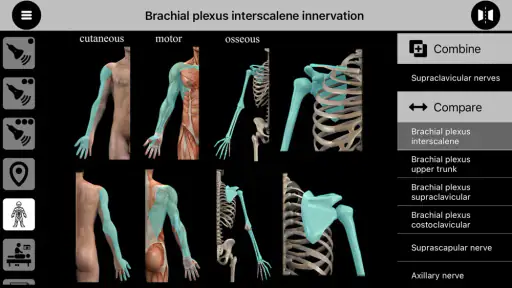
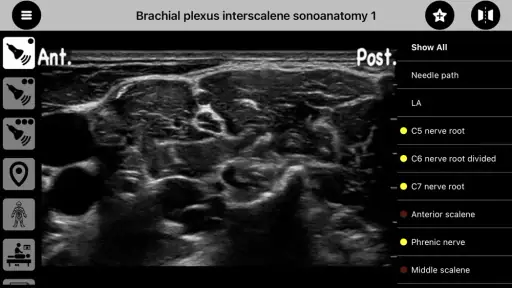
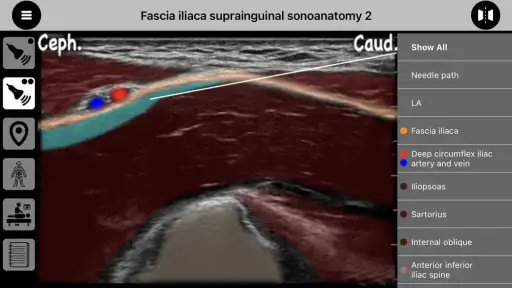
AnSo Anaesthesia Sonoanatomy is an educational reference app designed to help anaesthetists, trainees, and other healthcare professionals study ultrasound anatomy relevant to regional anaesthesia and vascular access. It presents sonoanatomy concepts in a practical format, allowing users to review anatomical structures, ultrasound views, and procedure-related information before applying their knowledge in supervised clinical practice. It should support learning, not replace formal training or clinical judgment.
Is AnSo Anaesthesia Sonoanatomy suitable for beginners?
The app can be useful for beginners because it provides a focused introduction to ultrasound-guided anatomy and common anaesthesia-related structures. However, new learners may need prior knowledge of basic anatomy, ultrasound controls, and regional anaesthesia terminology to understand the material comfortably. Beginners should use it alongside textbooks, teaching sessions, and hands-on instruction rather than relying on the app as their only source of education.
Does the app provide guidance for performing anaesthetic procedures?
AnSo Anaesthesia Sonoanatomy is primarily a learning and visual reference tool, not a substitute for a complete procedural manual or accredited clinical course. Its anatomical information may help users recognize structures on ultrasound, but safe patient care also requires appropriate assessment, consent, equipment knowledge, sterile technique, supervision, and awareness of complications. Always follow local protocols and seek qualified clinical guidance when performing procedures.
Pros
- Clear sonoanatomy references for common regional anesthesia procedures.
- Useful visual support for identifying nerves
- vessels
- and surrounding structures.
- Helps reinforce anatomy knowledge before performing ultrasound-guided blocks.
- Practical reference for anesthesia trainees and early-career clinicians.
- Can be consulted quickly during study sessions or procedure preparation.
Cons
- Specialized content may be difficult for users without anesthesia training.
- It should complement
- not replace
- supervised hands-on ultrasound practice.
- Coverage may not include every block technique or anatomical variation.
- Image quality and usefulness can depend on the device screen size.
- Some users may find the interface and navigation less intuitive at first.
- Category
- Medical
- Version
- 2.3.7