Align: The Human Design App
- 194.00
- 3.3
- Installs
- 100.00K
- Price
- Free

Screenshots
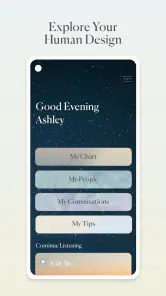
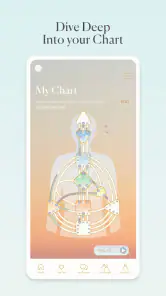
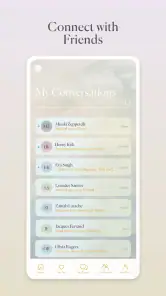
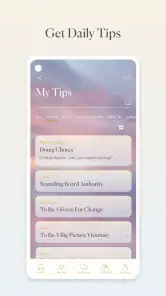
Analysis by Reviewed
I approached Align: The Human Design App as an education app for self-reflection rather than as a conventional course or productivity tool. Its central appeal is the Human Design framework: a way of looking at personal tendencies, decisions, energy, and relationships through an individual chart. In my experience, that makes the app most useful when I treat it as a prompt for observation, not as an unquestionable explanation of my personality.
The app is developed by JennaZoe and is free to download, although it includes optional in-app purchases ranging from $0.99 to $69.99 per item. It is aimed at Teen users, works from Android 9 onward, and the current version is 4.0.8. Those details matter because this is not simply a casual quote app: it presents a personal-development system that younger users may take seriously, so a little critical distance is healthy.
With an average rating of 3.3 from around 740 ratings and more than 100K installs, Align has clearly found an audience, but it is not universally loved. That mixed response matches my own view. The app can give structure to questions I already have about myself, yet it can also feel too interpretive if I expect scientific certainty, clinical guidance, or a complete replacement for ordinary self-knowledge.
Using a personal chart as the app’s main capability
The most important capability here is the attempt to turn Human Design into something personal and usable. Instead of offering only general articles about personality, the experience is built around interpreting who you are supposed to be and how you may make decisions. That focus gives the app a clearer purpose than a broad collection of inspirational lessons.
What I found valuable was the shift from reading a description once to comparing it with real situations. A statement about how I respond to pressure, for example, becomes more useful when I test it against a difficult conversation, a busy workday, or a decision I have been postponing. The app works best as a mirror: I read an idea, notice whether it fits, and then look for patterns in my behavior over time.
That is also where the app’s main limitation appears. Human Design is presented as a personal framework, but a framework can be mistaken for a fixed identity. I would not use a chart to decide whether I am capable of a job, compatible with a partner, or responsible for someone else’s behavior. The practical value comes from reflection and vocabulary, not from handing over every decision to a system.
For that reason, I recommend keeping a small note beside the app. After reading a section, I write down one situation where the idea seemed accurate and one where it did not. This simple habit prevents the experience from becoming a search for confirmation. It also makes the app more educational, because I am actively evaluating the material instead of passively accepting it.
More From Our News Desk

Clash of Clans Is Won Between the Battles

Android Auto Makes the Case for Quieter Car Software

MobiOffice: Transforming Mobile Productivity with Seamless Integration

EA SPORTS FC™ Mobile Soccer: Redefining Mobile Sports Gaming

How Microsoft OneDrive Became a Mobile Productivity Giant

How Google Translate Breaks Language Barriers Effortlessly
What the experience feels like day to day
Align is easier to appreciate in short sessions than in one long reading marathon. I would open it with a specific question, explore the relevant interpretation, and then close it before the content became overwhelming. That approach makes the material feel connected to life rather than like a large block of abstract terminology.
A realistic example would be a day when I have agreed to too many plans. Rather than asking the app to tell me what to do, I could use its perspective to examine why I said yes, whether I was acting from genuine interest, and what physical or emotional signals I ignored. The useful result is not a magical answer. It is a pause between impulse and action, which can make a familiar pattern easier to see.
I also found that the app is better suited to private reflection than to quick social entertainment. Someone looking for shareable daily sayings may find the material more involved than expected. The strength is its personal angle, while the cost is that it asks for patience. You get more from it when you are willing to connect the ideas with actual choices.
One practical workflow is to choose a single theme for a week. I might focus on decision-making first, then notice how I behave when tired, rushed, or trying to please another person. The following week, I could examine relationships separately. Separating themes avoids the common mistake of trying to interpret every part of a personal system at once.
Where it can make a noticeable difference
The strongest use case is a transition period: starting a new role, reconsidering a relationship, changing routines, or feeling unsure why familiar methods no longer work. During those moments, a structured reflection tool can help me ask better questions. Align gives those questions a distinctive Human Design vocabulary, which some people find more engaging than a standard journal prompt.
It can also be useful for people who have already encountered Human Design elsewhere but want a more personal way to revisit it. Rather than searching through disconnected articles, they can keep their attention on their own interpretation. That continuity makes it easier to compare what they read with their everyday experience.
For example, imagine someone who regularly accepts requests immediately and regrets them later. The app will not solve the boundary problem by itself, but it may help that person notice the moment when agreement happens. They can then introduce a practical rule: wait before answering, check their schedule, and decide without pressure. The Human Design material becomes a trigger for a concrete behavior change.
Another useful scenario is preparing for a conversation. I might read a relevant section, identify the reaction I tend to have under stress, and write one sentence I want to remember during the discussion. That turns an abstract insight into a small communication experiment. If the result is poor, I can revise the experiment instead of blaming the framework.
I would not recommend using it during an emotional crisis as the main source of support. When someone is dealing with severe anxiety, depression, abuse, or a major health concern, professional and personal support should come first. A reflective app may complement that support, but it should not be treated as diagnosis, therapy, or emergency advice.
The tradeoff between personal meaning and certainty
The biggest tradeoff is simple: the more personally meaningful the interpretation feels, the more important it is to question it. A description can sound remarkably accurate because it touches common experiences or because I naturally notice the parts that fit. Align becomes healthier when I use it to generate hypotheses about myself rather than final verdicts.
This is also why the app may not satisfy readers who prefer evidence-based psychology. If I want validated personality measurement, structured cognitive exercises, or a clear learning curriculum, a psychology-focused app will probably be a better choice. If I want meditation, sleep support, or habit tracking, dedicated apps in those areas are more direct. Align has a narrower identity and should be judged on that basis.
The free entry point is helpful for exploring the concept without committing financially. Still, the presence of optional purchases means I would pay attention before unlocking anything. I would first decide whether the basic experience is genuinely helping me reflect. Paying for more material only makes sense if I have already developed a regular habit and understand what additional depth would add to my routine.
Another tradeoff is language. Human Design uses its own terms, and unfamiliar terminology can create the impression of precision even when the underlying interpretation remains open to debate. I suggest translating every new term into ordinary language. If I cannot explain an idea simply, I probably have not understood it well enough to apply it.
The Teen content rating is worth considering for families. A teenager interested in identity and self-discovery may enjoy having a structured way to think about choices, but adults should encourage flexibility. No chart should become a label that limits a young person’s ambitions or excuses hurtful behavior. The best conversation is, “Does this help you understand yourself?” rather than, “This is exactly who you are.”
Small habits that improve the results
My first tip is to read with a question already in mind. “Why do I keep changing my plans?” is more useful than “Tell me everything about me.” A focused question gives the interpretation a real-world test and reduces the chance of endlessly browsing for a description that feels flattering.
My second tip is to compare intention with outcome. Before a decision, I can write what I expect to feel and what I hope will happen. Later, I can compare that note with the result. This makes the app part of a feedback loop rather than a one-way source of personal claims.
My third tip is to avoid using the app to categorize other people without their involvement. It is tempting to explain a friend or partner through a system, but that can flatten a complicated person into a label. I get more value when I use the material to examine my own reactions and communication habits.
A fourth useful practice is to set a stopping point. Ten or fifteen quiet minutes can be enough for one reflection. Continuing until every uncertainty has an explanation usually makes the experience less clear, not more. Align is at its best when it opens a thoughtful question that I can carry into the day.
I would also keep ordinary evidence in the picture. Sleep, workload, money, health, family pressure, and past experiences affect decisions in very real ways. If the app’s interpretation conflicts with those facts, I would trust the facts first and use the framework only as an optional perspective.
Who will get the most from it
Align is a good fit for curious people who enjoy symbolic systems, journaling, and personal-development exercises. It may appeal especially to someone who has tried generic personality quizzes but wants a more sustained framework for reflection. The app gives that exploration a personal center instead of leaving the user with a score and little to do afterward.
It is also suitable for a user who likes learning through repeated observation. The strongest results are not immediate certainty but gradually clearer questions: when do I feel pressured, which commitments energize me, and where do I override my own preferences? If those questions sound useful, the app has a reasonable chance of becoming part of a reflective routine.
On the other hand, I would skip it if I want a conventional educational course with lessons, tests, and measurable progress. I would also skip it if I am looking for medical, psychological, financial, or relationship decisions delivered with authority. The app’s style is interpretive, and that is precisely why it should not be mistaken for professional assessment.
People who dislike spiritual or personality frameworks may find the experience vague. That reaction is fair. There is no benefit in forcing myself through a system whose basic assumptions I reject. A plain journal, a cognitive behavioral workbook, or a conversation with a qualified professional may produce more useful results depending on the problem I am trying to solve.
My recommendation after using it
My overall impression is that Align succeeds when it turns curiosity about Human Design into deliberate self-observation. Its best feature is not a promise that the app can define me; it is the opportunity to slow down and examine choices through a consistent lens. That can be surprisingly helpful during periods when my habits feel confusing or automatic.
The app deserves a cautious recommendation rather than unconditional praise. I would start with the free experience, use it for short sessions, and test its ideas against real events. I would not rush into purchases, and I would never use a chart as a reason to avoid responsibility or ignore professional advice.
For me, the deciding question is whether I can hold the framework lightly. If I can say, “This gives me an interesting way to notice a pattern,” Align is worth exploring. If I need objective proof, clinical guidance, or a precise action plan, another education or self-help option will serve me better.
In that role, the app is thoughtful and distinctive, even if its mixed rating reflects that it will not suit everyone. JennaZoe has created a focused tool for people who want to explore identity through Human Design. Used with curiosity, skepticism, and a notebook nearby, it can turn an abstract idea into practical reflection. Used as a rigid rulebook, it becomes far less useful.
Align: The Human Design App Frequently Asked Questions
Who is Align: The Human Design App for, and is it beginner-friendly?
Align is an education app for people curious about Human Design, whether they are encountering the system for the first time or looking for a personal way to explore it. Its chart explanations are intended to make ideas such as energy type and decision-making style easier to consider. The app works best if you approach its interpretations with curiosity and treat them as prompts for reflection, rather than fixed labels.
What should I know about Align before downloading it?
Align: The Human Design App is developed by JennaZoe and is available as a free download, with in-app purchases for some content or features. It is rated for Teen audiences, and its store description presents it as a Human Design app focused on the art and science of who you came here to be. Consider whether you are comfortable with possible paid options before installing.
What is Align: The Human Design App used for?
Align: The Human Design App is designed to help users explore Human Design, a self-reflection system that combines concepts from astrology, the I Ching, chakras, and other traditions. After entering your birth information, the app presents a personalized chart and explanations intended to help you understand your energy type, decision-making style, strengths, challenges, and relationship patterns. It is best viewed as a personal-development and reflection tool rather than a scientific assessment or medical resource.
How do I create my Human Design chart in Align?
To generate a chart, you generally need to provide your birth date, exact birth time, and birthplace. The accuracy of the results depends heavily on the information entered, especially the birth time, because even a small difference can affect parts of the chart. If you do not know your precise birth time, Align may still offer an interpretation, but some details could be less reliable. The app may also request an account or additional profile information depending on the current version.
Does Align: The Human Design App cost money?
Align can typically be downloaded for free, but some of its readings, lessons, personalized insights, or advanced features may require a subscription or in-app purchase. Before starting a trial, carefully review the price, billing period, renewal terms, and cancellation instructions shown in the App Store or Google Play. A free download does not necessarily mean that all content is available without payment, so checking the subscription screen is important.
Pros
- Personalized Human Design charts help users explore their energy type and profile.
- Clear explanations make complex Human Design concepts easier for beginners to understand.
- Daily guidance can encourage reflection
- mindfulness
- and more intentional decisions.
- The app offers a convenient way to revisit chart details anytime and anywhere.
- Useful for users interested in self-discovery
- journaling
- and personal growth.
Cons
- Some advanced readings and features may require a paid subscription.
- Interpretations can feel broad or subjective rather than scientifically validated.
- The amount of chart information may overwhelm new users at first.
- Personal results depend on accurate birth time and location details.
- Daily content may become repetitive for users seeking deeper variety.
- Category
- Education
- Version
- 4.0.8